Perjungti į spausdinamus版作品
 Skaityti daugiau







































 Dėl meno kūrinių ar reprodukcijų, kurių bet kuri pusė yra didesnė nei 105 cm (apie 41 inch), rėmas bus siunčiamas kaip išskaidytas surinkimo rinkinys. Šis metodas užtikrina saugų pristatymą ir apsaugo nuo transportavimo metu galimos žalos.


A Symphony of Geometry and Warmth
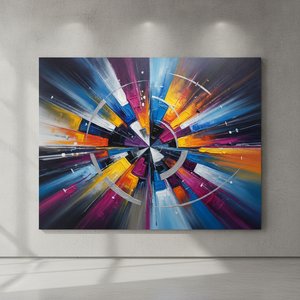
In the realm of Korean abstraction, few works command the room with such visceral energy as this striking composition by the master Yoo Youngkuk. At first glance, the viewer is enveloped by a radiant palette of fiery reds and glowing oranges, a chromatic warmth that seems to pulse from within the canvas itself. The painting is a masterful study in geometric equilibrium, where three distinct triangular forms navigate the space with purposeful intent. A sharp triangle anchors the upper left corner, while another occupies the middle-left expanse, creating a rhythmic tension that is balanced by a third shape descending toward the lower right. This deliberate arrangement of polygons creates a sense of dynamic movement, as if the shapes are caught in a slow, eternal dance across a sun-drenched landscape.
Beyond the primary triangles, the artist introduces subtle rectangular accents—one nestled in the top right and another tucked into the bottom left corner. These smaller elements act as structural anchors, preventing the composition from feeling adrift and instead grounding the viewer in a meticulously balanced universe. The technique reflects Yoo’s profound ability to distill the complexity of the natural world into pure, unadulterated form. There is no attempt at literal representation here; rather, the artist uses the language of geometry to evoke the essence of light, heat, and topographical structure. For the discerning collector or interior designer, this piece offers a sophisticated focal point that marries the boldness of modernism with an inviting, atmospheric glow.
The Legacy of Korean Abstraction
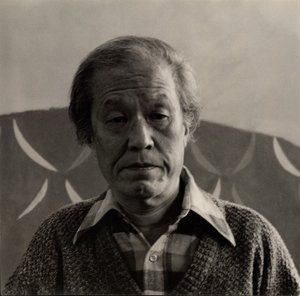
To understand the emotional weight of this work, one must look to the historical soul of its creator. Yoo Youngkuk was not merely a painter of shapes; he was a pioneer who sought to forge a new visual identity for a nation in transition. Born in the coastal beauty of Uljin, his early encounters with the majestic Korean mountains deeply informed his artistic DNA. While his style evolved into a rigorous, geometric abstraction, the spirit of those landscapes remains embedded in every line and color choice. This painting serves as a bridge between the organic world and the intellectual precision of abstract art, capturing the raw vitality of nature through a lens of modern sophistication.
The emotional impact of the piece is both stimulating and meditative. The intense warmth of the red and orange tones can energize a contemporary living space, making it an ideal selection for those looking to introduce a sense of passion and vitality into their decor. Yet, because the composition relies on such disciplined structure, it also provides a sense of order and calm. It is a work that invites long periods of contemplation, rewarding the observer with new layers of depth each time they encounter its vibrant surfaces. For anyone seeking to curate a collection that celebrates the intersection of historical significance and timeless aesthetic beauty, this reproduction stands as a testament to the enduring power of Korean modernism.
Klausimai ir atsakymai
Kaip „Work“ tema susiję su įprastomis Yoo Youngkuk tematikos temos?
„Work“ vaizduoja abstract, geometric, triangles, red and orange, korean abstraction, minimalism, o įrašytos Yoo Youngkuk temos yra korean landscape essence, geometric abstraction, pure form and color, pioneer of korean abstraction, nature distilled into shapes. Šių dviejų lyginimas parodo, kaip šis kūrinys susijęs su įprastais šio kūrybinio veiksmo objektais.
Kas sukūrė „Work“?
Kūrinį „Work“ sukūrė Yoo Youngkuk. Darbas katalogizuojamas Yoo Youngkuk vardu.
Kam rekomenduojamas naudojimui „Work“ – Yoo Youngkuk?
„Work“ – Yoo Youngkuk reprodukcija rekomenduojama Focal. Šis pasiūlymas grindžiamas kūrinio tema, nuotaika ir spalvomis.
Daugiau informacijos apie šį paveikslą
 Peržiūrėti realaus dydžio版
 Pasidalinti
 Dalintis
 Išsamiau
 Vadovas

 Atsisiųsti
 Panašūs eksponatai
 Rentgeno spindulių nuotrauka
 Automatinė diorama
 问答
问答 Statistika