 Perjungti į spausdinamus版作品
 Skaityti daugiau







































 Dėl meno kūrinių ar reprodukcijų, kurių bet kuri pusė yra didesnė nei 105 cm (apie 41 inch), rėmas bus siunčiamas kaip išskaidytas surinkimo rinkinys. Šis metodas užtikrina saugų pristatymą ir apsaugo nuo transportavimo metu galimos žalos.


A Moment Frozen in Time: The Allure of Chase’s Still Life
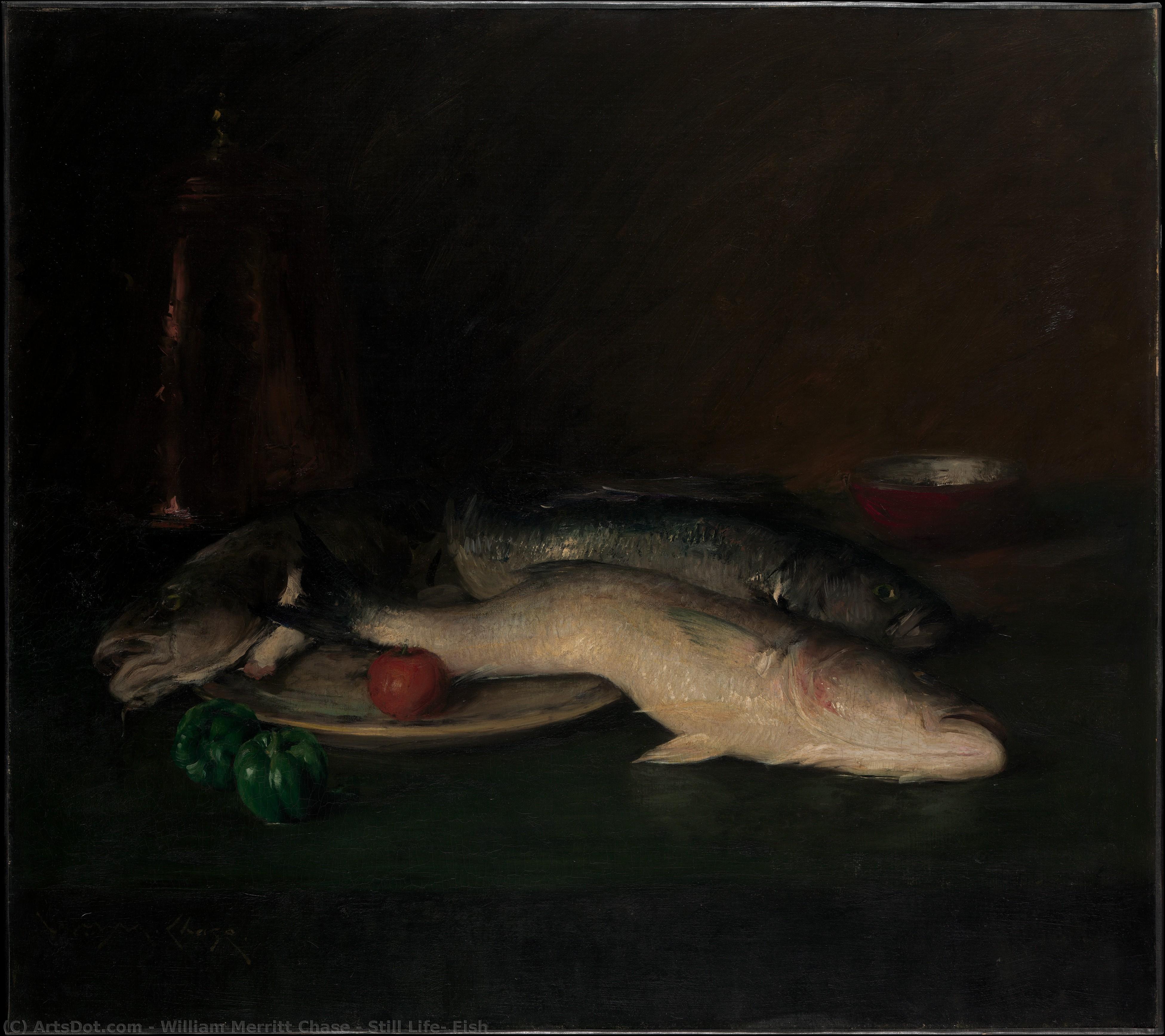
William Merritt Chase's "Still Life: Fish," painted in 1908, isn’t merely a depiction of fruit and fish; it’s a carefully constructed tableau that invites contemplation. This work, executed during a period when Chase was deeply influenced by European artistic traditions – particularly the bold brushwork and somber palettes of his Munich contemporaries like Antoine Vollon – offers a glimpse into the evolving landscape of American art at the turn of the 20th century. The painting’s quiet intensity stems from its masterful use of light, shadow, and texture, creating an atmosphere both familiar and subtly unsettling.
The Language of Form: Composition, Color, and Technique
- Compositional Harmony: The arrangement is deceptively simple yet profoundly effective. A tabletop anchors the scene, providing a horizontal plane for the carefully placed objects – a striped bass and salmon resting on a plate, alongside an apple and peppers. The diagonal line created by the fish’s curves draws the eye through the composition, while the bowl in the background subtly deepens the space.
- A Palette of Shadows: Chase employs a masterful dark palette dominated by browns, greens, and grays, evoking a mood of quiet reflection. Subtle highlights – the silver sheen on the fish’s scales and the blush of the apple – provide delicate points of contrast, preventing the scene from becoming entirely bleak.
- Impasto's Embrace: Chase’s technique is characterized by a generous application of oil paint, utilizing impasto to build up thick layers of texture across the canvas. This tactile approach brings the objects to life, emphasizing their wetness and solidity. The visible brushstrokes aren’t concealed; they are integral to the painting’s expressive power.
Echoes of Tradition: Influences and Symbolism
“Still Life: Fish” is deeply rooted in artistic tradition, drawing inspiration from both Spanish still life paintings – a style championed by Vollon – and the burgeoning Impressionist movement. The influence of Spanish masters is evident in the dramatic lighting and the emphasis on capturing the textures of perishable objects. However, Chase’s work transcends mere imitation; he imbues these familiar subjects with a distinctly American sensibility. The abundance of fish itself can be interpreted as a symbol of prosperity or sustenance, yet it also carries a hint of melancholy – perhaps reflecting the fleeting nature of beauty and life itself.
Beyond the Surface: A Window into Chase’s Vision
Writing in 1917, art connoisseur Leo Stein observed that Chase's fish paintings were “the most expressive” among non-sentimental still lifes. This insight speaks to the artist’s ability to transform a commonplace subject into something deeply engaging. Chase wasn’t simply depicting objects; he was striving to capture their essence – their weight, texture, and inherent drama. The painting's loose brushwork and dynamic composition suggest a deliberate attempt to convey a sense of immediacy and spontaneity, as if the artist were capturing a fleeting moment in time. A reproduction of “Still Life: Fish” offers a remarkable opportunity to experience Chase’s artistic vision firsthand – a testament to his skill and a poignant reminder of the beauty that can be found in the ordinary.
Klausimai ir atsakymai
Kas yra „Still Life: Fish“?
„Still Life: Fish“ – Viljamas Meritas Čejsas temos apima still life, fish, brushwork, palette, tabletop, abundance, reflection. Kartu jie apibendrina šio kūrinio tematiką.
Kur galiu rasti panašių kūrinių kaip „Still Life: Fish“ – Viljamas Meritas Čejsas?
Kūriniai, panašūs į „Still Life: Fish“ – Viljamas Meritas Čejsas, surinkti puslapio Panašūs kūriniai.
Kur galiu peržiūrėti „Still Life: Fish“ išsamiai?
Norėdami peržiūrėti „Still Life: Fish“ – Viljamas Meritas Čejsas reprodukciją, atidarykite kūrinio Peržiūra interjere puslapį.
Daugiau informacijos apie šį paveikslą
 Peržiūrėti realaus dydžio版
 Pasidalinti
 Dalintis
 Išsamiau
 Vadovas

 Atsisiųsti
 Panašūs eksponatai
 Rentgeno spindulių nuotrauka
 Automatinė diorama
 问答
问答 Statistika