Peržiūrėti realaus dydžio版
 Siųsti
 Dalintis
 Išsamiau
 Vadovas

 Atsisiųsti
 Panašūs eksponatai
 Rentgeno spindulių nuotrauka
 Diaporama
 Statistika
The Strode Family


 Rodyti daugiau
Rankų darbo aliejinės reprodukcijos
Rankiniu būdu tapytas aliejus ant droblio jūsų pageidaujamame dydį ir rėmuose – mūsų menininkų darbas pagal užsakymą. ( Perjungti į spausdinimą Perejti prie skaitmeninių vaizdų)




P118B €10

P118H €10

P118W €10

P438Z €10

P508JH €12

P508YH €12

P805H €10

P805Z €10

P919BZ €10

P919G €10

P919XJ €10

P959ZH €10

P968JZ €12

W106C €8

W218G €10

W218JH €8

W218Y €10

W307PJ €10

W316G €10

W316PJ €8

W316Y €10

W398PJ €8

W4111J €10

W500HY €15

W500JH €15

W692G €12

W849H €8

W940BG €15

W953PJ €8




Pasirinkite iš mūsų nustatytų dydžių, atitinkančių originalaus meno kūrinio proporcijas.

Įveskite jums reikiamą plotį ir aukštį, kad paveikslas atitiktų jūsų rėmą ar sieną. Kadangi šis darbas yra rankinio darbo, siekiant išgauti kitokio formos dydį, paveikslas gali būti šiek tiek didesnis (nuo kraštų bus palikta daugiau erdvės) arba mažesnis – pasirinkite jums patogiausią variantą. Prieš pradedant tapyti, atsiųsime jums skaitmeninį maketą patvirtinimui. Šioje puslapio nuotraukoje matomas vaizdas nėra galutinis rezultatas – jį parodys tik sukurtas maketas.
Gavus užsakymą, OriginalUniqueArt.com komanda susisieks su klientu el. paštu dėl instrukcijų ir pateiks maketo pavyzdį
Pristatymas visame pasaulyje () per 3–4 savaites, o ne įprastai – per 5 savaites. (24 spalis). Kokybė lieka nepakeičiama.

Nemokamas greitasis pristatymas visame pasaulyje

Aukštos kokybės lininis drobė

Pilnas siuntimo draudimas

Muitinės mokesčių grąžinimo garantija

Tikro spalvų atitikimo garantija

100 dienų grąžinimo politika (tik esant įtaigoms)

100% pinigų grąžinimo garantija

Nuolaida dideliems užsakymams
 Stiklo variantas prieinamas tik pasirinkus dydį iki 110 cm

The Strode Family
Reprodukcijos technika
Reprodukcijos dydis
-


Visų pasirinktų variantų kaina
€ 373
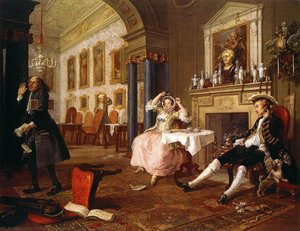
A Glimpse into 18th-Century Family Life: William Hogarth’s *The Strode Family*
William Hogarth's *The Strode Family*, painted around 1738, offers a fascinating and subtly complex portrayal of domesticity within the British upper class. This oil-on-canvas work, measuring approximately 69 x 54 inches (175 x 137 cm), currently resides at Tate Britain and continues to captivate viewers with its blend of realism, social commentary, and artistic skill.Subject & Historical Context
The painting depicts Sir John Strode, a wealthy merchant and politician, alongside his family. Understanding the historical context is crucial; this was an era defined by burgeoning trade, shifting social structures, and increasing anxieties about morality and status. Hogarth masterfully captures these nuances within a seemingly conventional family portrait. The Strodes were a prominent Dorset family with roots stretching back centuries – indeed, there are two Sir John Strodes who could be the subject of this painting (1524-1581 & 1624-1679), adding layers of historical intrigue to the artwork.Style and Technique
Hogarth’s style is uniquely his own – a blend of meticulous observation, narrative storytelling, and gentle satire. While rooted in the Rococo aesthetic prevalent at the time—evident in the opulent interior and elegant clothing—he avoids excessive ornamentation, favoring instead a more grounded and realistic approach. His technique involves detailed brushwork that creates texture and volume, yet maintains a sense of looseness, preventing the painting from feeling overly stiff or formal. The soft, diffused lighting contributes to an intimate atmosphere, drawing the viewer into the scene.Decoding the Composition & Symbolism
At first glance, *The Strode Family* appears as a harmonious depiction of familial contentment. However, Hogarth’s genius lies in his ability to embed subtle layers of meaning within the composition.- Domestic Roles: The father engrossed in his newspaper and the mother occupied with knitting are not merely representations of leisure; they can be interpreted as commentary on societal expectations and potential marital distance.
- Objects as Indicators: The carefully arranged objects – books, tea sets, decorative items – speak to the family’s wealth and social standing. Their placement isn't accidental; each element contributes to the overall narrative.
- Subtle Satire: Hogarth was a master of visual satire. While not overtly critical, he subtly hints at potential vanities or hypocrisies within the upper class, inviting viewers to question appearances and societal norms.
Emotional Impact & Legacy
*The Strode Family* evokes a complex emotional response. It’s not simply a celebration of domestic bliss; it's an invitation to contemplate the complexities of family life, social expectations, and the human condition. The painting’s enduring appeal lies in its ability to resonate with audiences across centuries. Hogarth’s work remains incredibly important within the canon of British art, influencing generations of artists with his innovative approach to portraiture and social commentary. It serves as a valuable window into 18th-century England, offering insights into the values, anxieties, and aspirations of its people. The painting's enduring charm and insightful observations make it a compelling addition to any collection or interior space, sparking conversation and inspiring contemplation for years to come.问答 (or more naturally for a website heading): Klausimai ir atsakymai
Kokią paletę ir kokią emociją sujungia „The Strode Family“?
„The Strode Family“, autorius – Viljamas Hogartas Earthy paletė dera su jo Reflective emociniu tonu. Spalva yra vienas iš būdų, keliais kūrinys perteikia jausmus.
Kaip „The Strode Family“ tema susiję su įprastomis Viljamas Hogartas tematikos temos?
Tarp užfiksuotų Viljamas Hogartas temų – satirical social commentary, 18th-century british life, rococo elegance & critique, moral lessons, cautionary tales, critique of idle aristocracy – kūrinys „The Strode Family“ akcentuoja portraiture, 18th century, family life, social satire, british art, rococo style, domestic scene, wealthy society.
Ar „The Strode Family“ bendroje veikla yra labiau šviesio kūrinys ar tamsus?
„The Strode Family“ bendroji ryškumas yra deep_shadow, o švytėjimas – Dark.
Autoriaus biografija
William Hogarth (1697–1764)
William Hogarth, born into the bustling heart of 18th-century London in 1697, was more than just an artist; he was a visual historian, a keen observer of human nature, and a satirical commentator on the societal currents of his age. His life story is inextricably linked to the very fabric of England during a period of significant transformation – its burgeoning ambitions, underlying anxieties, and pervasive hypocrisies all finding potent expression in his remarkably detailed and often biting works. The son of a struggling Latin schoolmaster, Hogarth’s early experiences instilled within him both a love for learning and a sharp awareness of social inequalities, a foundation that would prove crucial to shaping his artistic vision. Initially apprenticed to an engraver, he quickly demonstrated a talent extending beyond mere technical skill; he possessed an innate ability to observe the nuances of human behavior and translate them into compelling visual narratives. However, he chafed against the constraints of traditional engraving, seeking a more expressive outlet for his burgeoning creativity. This led him to studies at both St Martin’s Lane Academy and under Sir James Thornhill, where he honed his skills in painting and composition, absorbing influences that would later inform his unique style.Early Life and Influences
Young Hogarth's upbringing was marked by hardship. His father, Richard Hogarth, a teacher of Latin, faced considerable difficulties securing employment and endured imprisonment for debt between 1708 and 1712 – an experience that profoundly shaped William’s worldview and fueled his gritty portrayal of London life. He developed a fascination with sketching people he encountered on the streets, mirroring the artistic sensibilities of artists like Pieter de Hooch and Rembrandt van Rijn. Hogarth's formative years instilled in him a deep appreciation for social justice and a critical eye for examining societal hypocrisy—values that would permeate his oeuvre throughout his career. Recognizing the transformative potential of observation, Hogarth embraced painting as a medium for conveying complex ideas and emotions, drawing inspiration from the monumental canvases of Sir James Thornhill, whose daughter he married in 1729. This union solidified his connection to the artistic establishment and provided him with invaluable guidance during his artistic development. He was particularly captivated by Thornhill’s masterful technique—a synthesis of realism and grandeur—which served as a cornerstone for Hogarth's own stylistic innovations.The Birth of Modern Moral Subjects
Hogarth’s true genius lay not simply *what* he painted, but *how*. He pioneered what he termed “modern moral subjects”—series of pictures designed to tell a story, often imbued with a strong satirical edge. These weren't isolated portraits or landscapes; they were visual novels unfolding before the viewer’s eyes, offering pointed commentary on contemporary society. A Harlot’s Progress, created in 1742, stands as perhaps his most iconic achievement—a meticulously crafted chronicle of Mary Burton’s descent into prostitution and its devastating consequences. Each scene is rendered with painstaking detail, populated by archetypal figures that embody the moral failings prevalent within London's social strata. The series exemplifies Hogarth’s commitment to confronting uncomfortable truths about human behavior and societal corruption—a stance reflected in his unflinching depictions of poverty, vice, and despair. Similarly, A Rake’s Progress, begun in 1733, chronicles the ruinous trajectory of Tom Rakewell—a wealthy gentleman consumed by gambling addiction and hedonistic indulgence. Like *A Harlot's Progress*, this series transcends mere narrative storytelling; it serves as a potent indictment of aristocratic excess and moral decay.Technique and Artistic Style
Hogarth’s artistic style was characterized by a masterful fusion of diverse influences—primarily Dutch genre painting and French satirical prints. He skillfully blended realism with dramatic flair, capturing the psychological complexities of his subjects with remarkable sensitivity. His technique revolved around a distinctive cross-hatching method—a meticulous layering of lines that created depth and texture—yielding results that rivaled those of Rembrandt van Rijn. This painstaking approach demanded considerable patience and precision, reflecting Hogarth’s unwavering dedication to achieving artistic excellence. Beyond visual artistry, he drew inspiration from literary works, notably Jonathan Swift's satirical prose, which honed his ability to convey moral judgments through narrative form. He believed that art should serve as a catalyst for social reform—challenging viewers to confront ethical dilemmas and fostering empathy for marginalized communities. Hogarth’s unwavering conviction in this principle underpinned his artistic endeavors and cemented his legacy as one of England's foremost satirists and visual innovators.Legacy and Enduring Influence
William Hogarth died in 1764, leaving behind a profound impact on British art history—a legacy that continues to inspire artists and scholars alike. He is universally recognized as the progenitor of political cartooning and comic strip illustration—establishing a precedent for conveying social critique through visual storytelling. Artists such as James Gillray and George Cruikshank embraced Hogarth’s stylistic precepts, perpetuating his tradition of biting satire and unwavering moral conviction. As Charles Lamb eloquently articulated, “Hogarth's images are like books to be read rather than merely looked at,” encapsulating the enduring significance of his work—a testament to its ability to provoke thought, stimulate debate, and illuminate the human condition. Hogarth’s paintings remain treasured masterpieces—celebrated for their artistic brilliance and their unflinching portrayal of Victorian society. He demonstrated that art could simultaneously entertain and enlighten—challenging audiences to grapple with ethical dilemmas and fostering a critical awareness of social injustices. His enduring influence testifies to his unwavering commitment to artistic integrity and his profound understanding of the human psyche.
Viljamas Hogartas
1697 - 1764 , Didžioji Britanija
Trumpa informacija apie kūrėją
- Artistic Movement Or Style: Satire, Realizmas
- Artists Who Influenced This Artist:
- Pieter de Hooch
- Jonathan Swift
- Date Of Birth: 1697
- Full Name: William Hogarth
- Nationality: Anglų
- Notable Artworks:
- A Harlot's Progress
- A Rake's Progress
- Place Of Birth: Londone
Susiję straipsniai
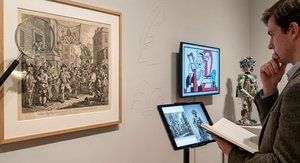
The Sharpest Wit: A Critical Exploration of Satire in Art History – From Hogarth to Contemporary Critique
Explore the history of satire in art! From Hogarth's London to contemporary critique, discover how artists use wit & visual power to reflect and challenge society. Expert insights at OriginalUniqueArt.
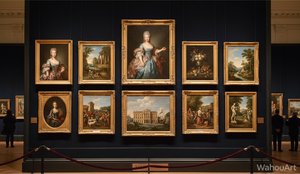
18th Century Masters: 10 Artworks That Define an Era | OriginalUniqueArt
Journey through 18th century art! Explore 10 iconic paintings – from Rococo elegance to Neoclassical grandeur. Discover Fragonard, David & more. Find museum-quality reproductions and elevate your home decor on OriginalUniqueArt.com.

Rožinio Amžius: 10 Šedevrų Apibrėžiančių Rokoko Stilių
Atraskite 10 rokokoko šedevrų, apibrėžiančių prabangą ir grožį! Sužinokite apie žymius dailininkus, spalvotus motyvus bei istorijas. Puikios meno reprodukcijos jūsų namams – OriginalUniqueArt.com.

The Rococo Aesthetic: Opulence, Rebellion & the Pursuit of Pleasure in 18th-Century Art
Explore the opulent world of Rococo art! Discover its origins, key artists like Watteau & Boucher, and lasting influence on design. Expert insights for collectors & enthusiasts.

William Hogarth: Satire, Social Commentary & the Birth of Modern British Art
Explore the satirical world of William Hogarth, pioneering British painter & engraver. Discover his iconic works like *A Rake's Progress* and insightful social commentary on 18th-century London life.