

 Peržiūrėti realybėje
 Pasidalinti
 Dalintis
 Išsamiau

 Atsisiųsti
 Panašūs eksponatai
 Rentgeno nuotrauka
 Automatinė diorama
 Statistika
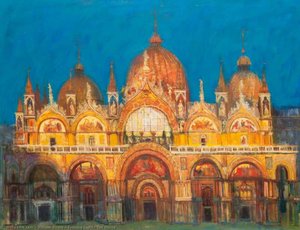
Evening Light, San Marco
 168.0 x 224.0 cm
 Paisley Art Institute Collection
 Skaityti daugiau
Įsigykite aukštos skiriamosios raiškos, patobulintą skaitmeninį vaizdą, gerokai pranašesnį už internetinę peržiūrą.
Kiekvieną failą mūsų specialistai kruopščiai paruošia naudojant pažangias technologijas ir profesionalų rankinį retušavimą. Užtikriname, kad kiekvienas vaizdas pasižymėtų išskirtiniu aiškumu, tikslia spalvų atspalviu ir smulkiomis detalėmis.
Baigiamas failas el. paštu pristatomas per 72 valandas; jis optimizuotas nedelsiant naudojimui profesionalioje, redakcinėje ir spausdinimo aplinkoje. Tai ta pati kokybė, kuria pasitiki aukščiausios klasės dizaino studijos, leidyklos ir galerijos.
Skaitmeninis vaizdas
Atsisiųskite didelės raiškos failą asmeniniam naudojimui, spausdinimui ir kūrybiniams projektams. ( Perejti prie spausdinimo Pirkti rankomis tapytą paveikslą)
Kiekvieną skaitinio vaizdo užsakymą papildė
Profesionalus skaitmeninis pristatymas, garantuotas
Pasirinkę OriginalUniqueArt.com, jūs ne tik gaunate paveikslėlį – jūs gaunate profesionaliai patobudintą skaitmeninį kūrinį, sukurtą itin tikniai ir užtikrinantį pasitenkinimą. Štai viską, kas automatiškai pritékia jūsų užsakymui:

Greitas siuntimas el. paštu
Jūsų aukštos raiškos skaitmeninis vaizdo failas bus išsiųstas jums el. paštu per 72 valaudas nuo užsakymo – paruoštas naudojimui be jokių papildomų veiksmų.

Skaitmeninis failas su dirbtiniu intelektu
Jūsų meno kūrinys profesionaliai optimizuojamas naudojant pažangius dirbtinio intelekto įrankius ir rankinį redagavimą, užtikrinant maksimalią detalę, aiškumą ir spalvų tikslumą.

Nemokamas visam laikui pakartotinis siuntimas
Atsitiktinai ištrytikote ar praradote savo failą? Nebijokite – bet kuriuo metu atsiųsime jį jums vėl nemokamai.

Jokio importo mokesčio – niekada
Mėgaukitės savo meno kūriniu akimirka – skaitiniai failai visada yra neapmokestinami, todėl nereikės mokėti muitinės, mokesčių ar pristatymo mokesčių.

Spalvų tikslumo garantija
Naudodami profesionalią įrangą ir spalvų valdymo sistemas, užtikriname, kad jūsų skaitmeninis vaizdas kuo tiksliau atspindėtų originalias spalvas.

100 dienų patikimumo garantija
Jei nebuvosite patenkinti savo skaitmeniniu vaizdu, mes jį peržiūrėsime arba grąžinsime 100% sumą per 100 dienų – be jokių klausimų.

100% pinigų grąžinimo garantija
Nesitenkinate? Gaukite visą sumokėtą sumą per 100 dienų nuo skaitmeninio failo gavimo – be jokių papildomų klausimų.

Nuolaidos dideliems užsakymams
Pirkti 3 nuotraukas – pasiūla 10% - Pirkti 5 – pasiūla 15% - Pirkti 10 ir daugiau – pasiūla 20%. Puikiai tinka kūrybiniams projektams, galerijoms bei agentūroms.
Autoriaus biografija
William Birnie: A Scottish Vision of Landscape and Light
William Birnie (1929-2006) wasn’t a name immediately recognized in the grand halls of 19th-century art, yet his canvases hold a quiet power—a deeply felt connection to the rugged beauty of Scotland. Born in Bathgate, West Lothian, Birnie's artistic journey was shaped by a unique confluence of influences: a rigorous formal education, a profound love for the landscape, and a deliberate rejection of prevailing trends in favor of a personal, intensely observed style. His work isn’t about grand pronouncements or dramatic gestures; it’s an invitation to slow down, to breathe in the atmosphere of a Highland glen or the muted hues of a winter’s day.
Birnie's early artistic training was rooted in Glasgow School of Art, where he studied under luminaries like William and Mary Armour, David Donaldson, and Geoffrey Squire. This environment fostered experimentation with various techniques – watercolour, oil, and pastel – but it was his time at Hospitalfield House in Arbroath that proved pivotal. This residency provided him with the space and freedom to develop a distinctive approach, prioritizing observation and capturing subtle shifts in light and color. He wasn’t interested in replicating reality; instead, he sought to distill the essence of a place, imbuing his paintings with a sense of mood and atmosphere.
The Kilbarchan Winter Series: A Masterclass in Atmospheric Painting
Birnie's most celebrated work undoubtedly lies within his series of paintings depicting the winter landscape around Kilbarchan, near Glasgow. These works, produced primarily between 1960 and 1980, represent a culmination of his artistic explorations. The subjects – often bleak, snow-covered fields, skeletal trees, and the muted tones of a Highland sky – might seem austere at first glance, but they are imbued with an extraordinary sense of warmth and tranquility. He achieved this through a masterful manipulation of light and color, employing delicate washes of paint to create a shimmering effect that seems to capture the very breath of winter.
What distinguishes Birnie’s approach is his deliberate avoidance of sharp contrasts or dramatic compositions. Instead, he favored subtle gradations of tone, layering thin glazes of paint to build up depth and atmosphere. His brushwork is almost invisible—a testament to his meticulous observation and control. The paintings aren't merely representations of a scene; they are evocations of feeling – the stillness, the solitude, the quiet beauty of a landscape stripped bare by winter’s embrace.
Influences and Artistic Development
While Birnie’s style is undeniably unique, it’s clear that he was influenced by several key artistic movements. The Impressionists, with their focus on capturing fleeting moments of light and color, undoubtedly played a role in shaping his approach. He also drew inspiration from the Scottish Colourists – J.M. Whistler, Joseph Thomson, and Peter McGregor Rae – who sought to paint directly from nature, rejecting academic conventions. However, Birnie’s work transcends mere imitation; he developed a distinct voice that is both deeply rooted in tradition and refreshingly original.
His early training at Glasgow School of Art exposed him to the ideas of Cubism, but he quickly moved beyond these influences, embracing a more traditional approach to landscape painting. He was particularly drawn to the work of Constable and Turner, artists who were masters of capturing atmospheric effects and conveying the beauty of the natural world. Birnie’s paintings share this same sense of reverence for nature, as well as a similar ability to evoke a powerful emotional response in the viewer.
Legacy and Recognition
Despite not achieving widespread fame during his lifetime, William Birnie's work has gained increasing recognition in recent decades. His paintings are now held in major collections across Scotland and beyond, and they continue to be exhibited at galleries and museums throughout the country. His influence can also be seen in the work of contemporary landscape artists who share his commitment to observation, atmosphere, and a deep connection to the natural world.
Birnie’s legacy lies not just in his stunning paintings but also in his quiet dedication to his craft and his unwavering belief in the power of art to capture the beauty and wonder of the Scottish landscape. He reminds us that true artistry is often found not in grand gestures, but in the subtle details—the way light falls on a snow-covered field, the rustle of leaves in the wind, the quiet stillness of a winter’s day.
william birnie
1929 - 2006
Trumpai apie šį kūrėją
- Artistic Movement Or Style: Sculpture, Royal Scottish Academy
- Artists Or Movements Influenced By This Artist: ['Scottish Sculpture']
- Artists Who Influenced This Artist: ['John Rhind (father)']
- Date Of Birth: February 27, 1853
- Date Of Death: July 9, 1933
- Full Name: William Birnie Rhind
- Nationality: British
- Notable Artworks:
- War memorials (Edinburgh)
- Fettes College memorial
- Place Of Birth: Edinburgh, Scotland