

 Peržiūrėti realaus dydžio版
 Siųsti
 Dalintis
 Išsamiau
 Gidas
Gidas

 Atsisiųsti
 Panašūs eksponatai
 Rentgeno spindulių nuotrauka
 Diaporama
 Statistika
Breton Brother and Sister


 Rodyti daugiau
Rankų darbo aliejinės reprodukcijos
Rankiniu būdu tapytas aliejus ant droblio jūsų pageidaujamame dydį ir rėmuose – mūsų menininkų darbas pagal užsakymą. ( Perjungti į spausdinimą Perejti prie skaitmeninių vaizdų)




P118B $10

P118H $10

P118W $10

P438Z $10

P508JH $12

P508YH $12

P805H $10

P805Z $10

P919BZ $10

P919G $10

P919XJ $10

P959ZH $10

P968JZ $12

W106C $8

W218G $10

W218JH $8

W218Y $10

W307PJ $10

W316G $10

W316PJ $8

W316Y $10

W398PJ $8

W4111J $10

W500HY $15

W500JH $15

W692G $12

W849H $8

W940BG $15

W953PJ $8




Pasirinkite iš mūsų nustatytų dydžių, atitinkančių originalaus meno kūrinio proporcijas.

Galite įvesti savo matmenis, kad jie atitiktų konkretų rėmą ar erdvę. Jei pasirinktas dydis neatitinka originalaus paveikslėlio proporcijų, mes arba apkropsime meno kūrinį, arba papildysime tapybą rankomis dažytい elementais. Prieš pradėdami gamybą, jūsų patvirtinimui atsiųsime skaitmeninį maketą.
Atkreipkite dėmesį, kad ekrane rodomas vaizdas neatspindi tikrojo apkarpymo ar papildymo. Tik maketas tiksliai parodys galutinę kompoziciją.
Nors galima rinktis ir individualius dydžius, rekomenduojame pasirinkti matmenis iš nustatytos sąrašo, kad būtų išlaikytos originalios proporcijos.
Gavus užsakymą, OriginalUniqueArt.com komanda susisieks su klientu el. paštu dėl instrukcijų ir pateiks maketo pavyzdį
Pristatymas visame pasaulyje () per 3–4 savaites, o ne įprastai – per 5 savaites. (21 rugsėjis). Kokybė lieka nepakeičiama.

Nemokamas greitasis pristatymas visame pasaulyje

Aukštos kokybės lininis drobė

Pilnas siuntimo draudimas

Muitinės mokesčių grąžinimo garantija

Tikro spalvų atitikimo garantija

100 dienų grąžinimo politika (tik esant įtaigoms)

100% pinigų grąžinimo garantija

Nuolaida dideliems užsakymams
 Stiklo variantas prieinamas tik pasirinkus dydį iki 110 cm

Breton Brother and Sister
Reprodukcijos technika
Reprodukcijos dydis
-


Visų pasirinktų variantų kaina
$ 325
William-Adolphe Bouguereau’s *Breton Brother and Sister*: A Testament to Rural Beauty and Maternal Love
William-Adolphe Bouguereau's “Breton Brother and Sister,” painted around the late 19th century, is a captivating exploration of innocence, familial devotion, and the timeless beauty of rural life. This oil on canvas masterpiece, echoing the sentiments of French Realism, immediately draws the viewer into a scene of profound tenderness – a young mother cradling her child outdoors. The artwork’s power lies not just in its technical brilliance but also in its ability to evoke a deep emotional response, transporting us to a simpler, more harmonious world.
The composition is meticulously crafted, centering on the two figures with a clarity that speaks to Bouguereau's unwavering commitment to realism. The blurred landscape, rendered in soft earth tones and atmospheric perspective, serves as a subtle backdrop, emphasizing the central subjects and creating a sense of depth without distracting from their poignant interaction. The lighting, diffused and gentle, further enhances the scene’s serenity, casting delicate shadows that accentuate the textures of the clothing and skin – a testament to Bouguereau's masterful glazing technique.
A Masterclass in Technique: Bouguereau’s Realist Approach
- Bouguereau was renowned for his painstaking attention to detail, employing a layering technique known as “glazing.” Thin washes of oil paint were meticulously applied and built upon one another, creating an incredibly smooth and polished surface. This method allowed him to achieve luminous color palettes and render textures with astonishing accuracy – the delicate folds of the fabric, the subtle sheen of the child’s skin, all contribute to the painting's remarkable realism.
- His brushwork is almost invisible, a hallmark of his style, resulting in an effect that resembles polished marble rather than painted canvas. This technique was heavily influenced by the Old Masters, particularly Raphael and Titian, whom Bouguereau deeply admired and sought to emulate – not simply copying their styles but absorbing their understanding of form, light, and color.
- The use of warm earth tones—ochres, browns, and muted reds—creates a comforting and nostalgic atmosphere, further enhancing the painting’s emotional impact.
Symbolism and Historical Context: Echoes of Idealized Beauty
Painted during a period when idealized beauty was highly valued in art, “Breton Brother and Sister” reflects Bouguereau's belief that he was not merely depicting what he *saw*, but rather what he believed to be inherently beautiful. The scene embodies themes of maternal love, innocence, and the connection between humanity and nature – values deeply rooted in French Romanticism and Neoclassicism.
The painting’s subject matter—a rural family—was particularly resonant at the time, reflecting a nostalgic yearning for simpler times and a celebration of traditional French life. Its presence in collections like The Metropolitan Museum of Art (originally part of Goupil, Paris) underscores its significance within the broader context of 19th-century art history.
Perfecting the Image: Bouguereau’s Vision
Bouguereau's dedication to achieving a flawless representation of beauty is evident in every detail of “Breton Brother and Sister.” His meticulous technique, combined with his profound understanding of light and color, resulted in a painting that continues to captivate viewers today. A hand-painted reproduction offers an unparalleled opportunity to experience the full impact of this iconic work – a timeless testament to the enduring power of beauty and maternal love.
Autoriaus biografija
William-Adolphe Bouguereau (1825–1905): A Titan of Academic Realism
William-Adolphe Bouguereau, born in La Rochelle, France, in 1825, stands as one of the most recognizable and revered figures within the landscape of French academic art. From his formative years immersed in the pastoral beauty of Vendée – a region profoundly shaped by Impressionist painters like Monet – Bouguereau embarked on an artistic journey characterized by unwavering devotion to classical principles and unparalleled technical prowess. His oeuvre transcends mere visual representation; it embodies a profound belief in the inherent dignity and sublimity of human form, meticulously rendered with breathtaking precision and infused with emotive resonance. He wasn’t merely attempting to depict what he observed; rather, he sought to capture what he considered to be fundamentally beautiful—a pursuit that cemented his place as a cornerstone of 19th-century artistic achievement.Early Influences and Artistic Training
Bouguereau's formative years were marked by exposure to the artistic traditions of Vendée, where he absorbed the stylistic nuances of Impressionism alongside his burgeoning fascination with the grandeur of antiquity. However, it was his enrollment at the École des Beaux-Arts in Paris—under the tutelage of François-Edouard Picquenot—that truly catalyzed his artistic development. Here, he immersed himself in the teachings of Raphael and Titian, absorbing their mastery of anatomy, perspective, and color theory. These masters served as guiding beacons, shaping Bouguereau’s stylistic vision and instilling within him an unwavering commitment to replicating the luminous beauty and idealized form that defined Renaissance art. The École instilled a discipline and rigor that would permeate his entire artistic practice—a dedication to meticulous draftsmanship and anatomical accuracy that distinguishes his work from its contemporaries.The Pursuit of Ideal Beauty: Bouguereau’s Artistic Style
Bouguereau's distinctive artistic style is undeniably rooted in academic realism, yet it transcends mere imitation. He possessed an extraordinary aptitude for capturing the subtleties of human anatomy—the delicate curvature of a shoulder, the subtle blush of skin—with astonishing accuracy. Simultaneously, he demonstrated a masterful command of light and composition, skillfully orchestrating visual elements to evoke emotion and narrative depth. Unlike Impressionists who prioritized fleeting impressions of color and atmosphere, Bouguereau painstakingly reconstructed idealized forms with painstaking detail, striving for a perfection that resonated with the aesthetic sensibilities of his era. His canvases are populated by figures rendered with breathtaking realism—yet they possess an ethereal quality that elevates them beyond mere depiction. Consider *The Birth of Venus*, where Bouguereau transforms Botticelli’s mythological allegory into a luminous celebration of feminine grace and beauty—a testament to his ability to infuse classical themes with emotive resonance.Major Achievements and Recognition
Throughout his illustrious career, Bouguereau achieved unparalleled acclaim within the Parisian Salon—receiving numerous awards and commissions that solidified his reputation as one of France’s foremost artistic luminaries. His paintings graced the homes of royalty and aristocracy alike, demonstrating his enduring popularity among discerning collectors. However, Bouguereau's unwavering adherence to traditional artistic values—a rejection of Impressionism’s radical experimentation—encountered resistance from avant-garde circles in the early 20th century. Despite this initial setback, Bouguereau’s legacy endured—recognized anew by art historians and critics who championed his technical brilliance and artistic integrity. Today, his works are housed in prestigious museums worldwide—including the Musée d’Orsay and The J. Paul Getty Museum—ensuring that his contribution to French art history will continue to inspire awe and admiration for generations to come. His influence can be discerned in contemporary figurative painting—where artists strive to emulate Bouguereau's mastery of form and light—a testament to the enduring power of classical ideals.A Lasting Impression: Bouguereau’s Enduring Appeal
William-Adolphe Bouguereau’s artistic vision transcended mere stylistic convention; it embodied a profound belief in the inherent beauty and dignity of human form—a conviction that continues to captivate audiences today. His meticulous draftsmanship, anatomical accuracy, and emotive expression—combined with his unwavering devotion to classical principles—established him as a titan of academic realism—a figure whose influence reverberates throughout the annals of art history. He remains a pivotal artist of the 19th century—representing the zenith of artistic achievement and offering an enduring testament to the transformative power of beauty.
Viljamas Adolfas Bogušėjus
1825 - 1905 , Prancūzija
Trumpa informacija apie kūrėją
- Artistic Movement Or Style: Akademinis Realizmas
- Artists Or Movements Influenced By This Artist: ['Žanras']
- Artists Who Influenced This Artist:
- Rafaelas
- Titas
- Date Of Birth: 1825
- Date Of Death: 1905
- Full Name: William-Adolphe Bouguereau
- Nationality: Prancūzijoje
- Notable Artworks:
- Šešėlių Šuo
- Mielasis Už Basą
- Place Of Birth: La Rochelle, Prancūzija
Susiję straipsniai
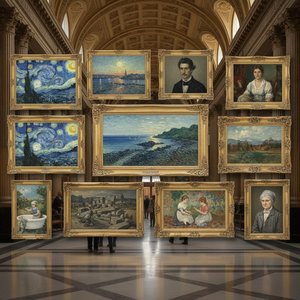
19th Century Masterpieces: 10 Paintings That Defined an Era | OriginalUniqueArt
Journey through 19th century art with OriginalUniqueArt! Explore 10 iconic paintings – from Monet & Renoir to Courbet – and discover the stories behind Romanticism, Realism & Impressionism. Find museum-quality reproductions for your home decor. Explore the full collection online!

The Enduring Power of Painting: A Historical & Contemporary Exploration of Form and Emotion
Explore the rich history & enduring techniques of oil painting with OriginalUniqueArt. Discover masterpieces, learn about art collecting, and find authentic handmade reproductions crafted by skilled artists.

The Enduring Legacy of Oil on Canvas: Technique, History & Aesthetic Impact
Explore the rich history & techniques of oil painting – from Renaissance masters to Impressionism. Discover pigments, layering methods, and why this timeless medium endures. Expert insights for artists & art enthusiasts.
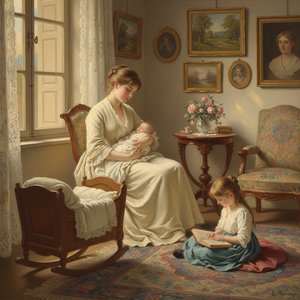
Émile Munier: Capturing 19th-Century French Life with Tender Realism
Discover Émile Munier's tender depictions of 19th-century French life. Explore his Realist style, charming paintings of children & pets, and lasting artistic legacy. Expert insights at OriginalUniqueArt.

Oil on Canvas: A Historical & Technical Exploration of a Timeless Artistic Medium
Explore the rich history & enduring techniques of oil painting on canvas. Discover the science behind its longevity, conservation practices, and contemporary relevance. Expert insights for art enthusiasts.

