

 Peržiūrėti realaus dydžio版
 Pasidalinti
 Dalintis
 Išsamiau
 Vadovas

 Atsisiųsti
 Panašūs eksponatai
 Rentgeno spindulių nuotrauka
 Automatinė diorama
 Statistika
Interjero detalė


 Skaityti daugiau
Giclée / Meno spausdinimas
Muziejų lygio „giclée“ arba drobos spausdinimas: greita gamyba ir lankstios apdailos parinktys. ( Pirkti rankų darbo tapybą Perejti prie skaitmeninių vaizdų)




P118B €10

P118H €10

P118W €10

P438Z €10

P508JH €12

P508YH €12

P805H €10

P805Z €10

P919BZ €10

P919G €10

P919XJ €10

P959ZH €10

P968JZ €12

W106C €8

W218G €10

W218JH €8

W218Y €10

W307PJ €10

W316G €10

W316PJ €8

W316Y €10

W398PJ €8

W4111J €10

W500HY €15

W500JH €15

W692G €12

W849H €8

W940BG €15

W953PJ €8




Pasirinkite iš mūsų nustatytų dydžių, atitinkančių originalaus meno kūrinio proporcijas.

Įveskite jums reikiamą plotį ir aukštį, kad atvaizdas derėtų prie jūsų rėmo ar sienos. Spausdiną galima tik sumažinti, bet nepadidinti virš originalaus paveikslėlio dydžio, todėl keičiant proporcijas, dalis vaizdo prarandama. Prieš spausdinimą atsiųsime jums skaitmeninį maketą patvirtinimui. Šioje puslapio nuotraukoje matomas pjūvis nėra tikslus – jį rodo tik maketas.
Pristatymas visame pasaulyje () per 2 weeks, o ne įprastas 4/5 savaičių laikotarpis. (28 spalis)

Nemokamas greitasis pristatymas visame pasaulyje

Aukštos kokybės lininis drobė

Pilnas siuntimo draudimas

Muitinės mokesčių grąžinimo garantija

Tikro spalvų atitikimo garantija

100 dienų grąžinimo politika (tik esant įtaigoms)

100% pinigų grąžinimo garantija

Nuolaida dideliems užsakymams
 Stiklo variantas prieinamas tik pasirinkus dydį iki 110 cm

Interjero detalė
Giclée / Meno spausdinimas
Reprodukcijos matmenys
-


Bendroji kaina
€ 71
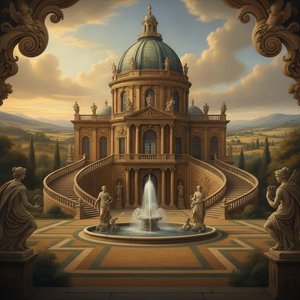
Vincenzo Scamozzi ir Katalinė Van Hemesenės „Interjero Detalis“ – Šlovės Simbolis Renesanso Aukštumoje
Štai vienas iš Renesanso aukštumo laikotauro žymiausių meno kūrinių – Vincenzo Scamozzi 1588 metų „Interjero Detalis“. Šį darbą įvertino istorikai ir meno mėgėjai kaip puikų pavyzdžiūrą neoklasikinės architektūros estetikoje, kurią išraiškino italijos meistras Vincenzo Scamozzi. Nuotraukoje užfiksuota įspūdinga teatro interjero detalė – šiuolaikiniai kolekcionieriai ir dizaineriai gali įvertinti meno kūrinio subtilius niuansus. Štai kaip istorikai analizuoją šį darbą: „Interjero Detalis“ yra išraiška italijos architektūros meistro Vincenzo Scamozzi erudicija ir talentas. Šis kūrinys buvo sukurtas naudojant neoklasikinę techniką, kuri įsikūnijo naudojant marmurą, dekoratyvius ornamentus ir švelnią šviesą – metodus, kurie buvo labai populiarūs tuo metu. Teatro sienos yra puoštos freskomis, kuriuose užfiksuoti klasikiniai motyvai ir scenos, simbolizuojant Renesanso kultūros įvairovę ir šlovėjimą. Štai kaip istorikai įvertina simbolinę reikšmę: „Freskomis dekoruota teatro sienų dalis yra puikus įrodymas Vincenzo Scamozzi erudicijai ir gebėjimui perteikti istoriją meno kalba.“ Teatro viduje naudojamas marmuras suteikia šlovės kūriniui aukštą estetinį išraišką. Štai kaip dizaineriai gali naudoti šį darbą savo projektuose: „Šis kūrinys yra puikus pasirinkimas įrengiant teatro vidų, kuriame svarbu įsikūninti klasikinę architektūrą ir šlovėjimą.“- Štai kaip Vincenzo Scamozzi įveikė technologinius iššūkį tuo metu:
- Štai kaip Vincenzo Scamozzi įveikė technologinius iššūkį tuo metu:
Klausimai ir atsakymai
Kas parduoda rankų darbo kopijas kūrinio „Interjero detalė“ – Vincenzo Scamozzi?
Rankumų „Interjero detalė“ – Vincenzo Scamozzi rankumų kopijos yra parduodamos ši ši internetinė svetainė svetainėje: rankomis dažyta aliejaus reprodukcija ant lininio drobos, užsakomos per jos Rankų darbo aliejinis reprodukcija puslapį.
Koks spausdinimo dydis ir orientacija rekomenduojami kūriniui „Interjero detalė“ – Vincenzo Scamozzi?
Dėl „Interjero detalė“ rekomenduojamas spausdinimo nustatymas yra Didelis dydžio ir Kvadratinis formatas orientacijos.
Kaip galiu peržiūrėti „Interjero detalė“ – Vincenzo Scamozzi reprodukciją?
„Interjero detalė“ Peržiūra interjere puslapio funkcija leidžia peržiūrėti kūrinį prieš užsakant.
Autoriaus biografija
The Architect of Ideal Proportions
Vincenzo Scamozzi was not primarily a visual artist in the traditional sense, but rather a profound Italian architect and theorist whose influence shaped the very fabric of the Renaissance and the dawn of Neoclassicism. Born in Vicenza, Italy, he emerged from a lineage of builders, being the son of Gian Domenico Scamozzi, a surveyor and contractor who served as his first teacher. This early immersion in the practicalities of construction, combined with the architectural principles of Sebastiano Serlio, provided the foundation for a career that would bridge the gap between the late Renaissance and the emerging classical ideals of later centuries.
His professional journey was inextricably linked to the legacy of the legendary Andrea Palladio. Following Palladio's death in 1580, Scamozzi found himself entrusted with several unfinished projects, most notably the prestigious Teatro Olimpico at Vicenza. By bringing these monumental designs to completion, he did more than just finish buildings; he preserved and refined a specific architectural language that would resonate through the ages. His ability to navigate the transition from Palladio's late works to his own distinct vision established him as a pivotal figure in the Republic of Venice area.
A Legacy Written in Stone and Theory
Scamozzi’s contribution to the world of architecture extended far beyond the physical structures he erected. He was a scholar of immense intellect, a man who sought to codify the laws of beauty and symmetry through written word. His monumental two-volume treatise, L'idea dell'architettura universale, published in Venice in 1615, stands as one of the final great works of the Renaissance. In this text, he utilized woodcut illustrations, plans, and elevations to communicate a vision of universal architectural harmony, drawing upon the commentaries of Daniele Barbaro on Vitruvius.
His theoretical reach was complemented by his active practice across the Italian landscape. From the completion of the stables at Villa Capra "La Rotonda" near Vicenza to his ambitious work on the Procuratie Nuove in Piazza San Marco, Venice, Scamozzi’s hand is visible in some of the most significant urban developments of his era. His design for the Procuratie Nuove, which featured alternating triangular and arched pediments and elegant colonnettes, demonstrated a masterful ability to adapt existing architectural traditions into a unified, grander whole.
The Intellectual Father of Neoclassicism
The historical significance of Vincenzo Scamozzi lies in his role as an intellectual bridge. While he operated within the late Renaissance tradition, his rigorous adherence to classical principles and his theoretical depth earned him recognition as one of the intellectual fathers of neoclassicism. His influence was not confined to Italy; through the lineage of architectural thought, his ideas traveled to the German Empire and France, and eventually found a powerful echo in the works of Inigo Jones, who introduced neo-Palladian architecture to England.
Even in his more personal explorations, such as the detailed sketchbook records of his impressions of French architecture, Scamozzi displayed a keen eye for the structural essence of design. Whether he was designing the Teatro Sabbioneta or working on the Church of San Gaetano Thiene in Padua, his work remained a testament to the pursuit of ideal human proportion and the enduring power of classical antiquity. He remains a figure of immense importance, a man whose life's work ensured that the architectural brilliance of the Renaissance would be preserved, understood, and reborn in the centuries to follow.

Vincenzo Scamozzi
1548 - 1616 , Italy
Trumpa informacija
- Artists Who Influenced This Artist: ['Palladio']
- Full Name: Vincenzo Scamozzi
- Nationality: Italian
- Notable Artworks: ["L'Idea della Architettura"]
- Place Of Birth: Vicenza, Italy
- Date Of Birth: 1548
- Date Of Death: 1616
Susiję straipsniai
Baroque Classicism: Reconciling Drama & Order in 17th-Century Art
Explore the captivating world of Baroque Classicism! Discover its history, key artists like Caravaggio & Rubens, and defining characteristics. Expert insights & high-quality reproductions at OriginalUniqueArt.

Bronze Age to Modern Masters: 10 Sculptures That Redefined Art | OriginalUniqueArt
Journey through art history with 10 legendary bronze sculptures – from Michelangelo's David to Rodin’s Thinker. Explore the stories, techniques & timeless beauty of these masterpieces. Find museum-quality reproductions & elevate your home decor on OriginalUniqueArt.com.
Klasikinio Interjero Subalansavimas: Drąsi Abstrakčios Tapybos Pora Klasikiniuose ir Moderniuose Interjeruose
Atraskite, kaip drąsi abstrakčios tapybos integracija subalansuoja klasikiniame interjere! Meno ekspertai padės sukurti unikalų ir prabangų namų dizainą. Individualūs paveikslai pagal užsakymą – OriginalUniqueArt.com.

Baroko Dramatizmas: Elegancijos ir Emocijų Įnešimas į Šiuolaikinius Interjerus
Atraskite baroko dramatiškumą! Meno konsultacijos, rankų darbo reprodukcijos ir patarimai, kaip įnešti eleganciją bei emocijas į jūsų interjerą su OriginalUniqueArt.com. Kokybė garantuota!

Bronze Sculptures That Defined Art History | OriginalUniqueArt
Journey through art history with our Top 10 bronze sculptures! Explore masterpieces by Rodin, Michelangelo & more. Discover stories behind iconic statues and find museum-quality reproductions for your home decor at OriginalUniqueArt.com.
