 Ecsalių versija
 Viskas apie St Augustine







































 Dėl meno kūrinių ar reprodukcijų, kurių bet kuri pusė yra didesnė nei 105 cm (apie 41 inch), rėmas bus siunčiamas kaip išskaidytas surinkimo rinkinys. Šis metodas užtikrina saugų pristatymą ir apsaugo nuo transportavimo metu galimos žalos.


Identification of the Portrait of St Augustine
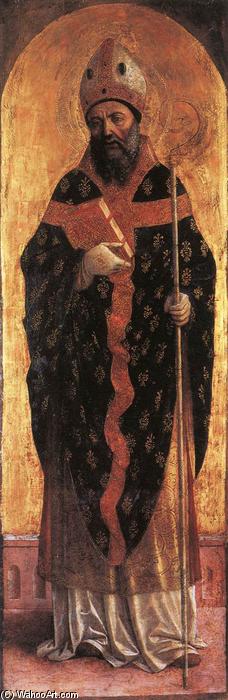
In this quiet depiction, we encounter St Augustine, a work attributed to the hand of Vincenzo Foppa. Created around 1465, the painting captures the influential theologian in a moment of profound contemplation. The figure is rendered with a gravity that reflects his historical importance, presented through the lens of the early Lombard school. It is a piece that invites a closer, more personal inspection of the subject's character.
The work is currently held within the Pinacoteca del Castello Sforzesco in Milan, Italy. This placement allows the portrait to remain connected to the artistic traditions of the region where Foppa established his reputation. The presence of the figure in such a significant collection speaks to the enduring nature of his contribution to Renaissance art. One can sense the deliberate intent behind the composition, focusing entirely on the presence of the saint.
Visual Composition and Subject Details
The figure is presented with a quiet, contemplative expression, his gaze directed slightly to his right as if lost in thought. He possesses a full beard and mustache, with hair that has begun to gray at the temples, suggesting the wisdom of age. A golden halo encircles his head, marking his sanctity and providing a luminous focus against the darker tones of his attire.
He is dressed in a black robe accented by red trim, a garment detailed with intricate patterns and gold embroidery that hints at his high ecclesiastical standing. Over this robe, he wears a pallium, the traditional vestment of a high-ranking prelate. In his left hand, he holds a book, a nod to his life as a theologian and philosopher, while his right hand rests upon a staff, a symbol of his authority.
Artistic Style and Visual Characteristics
The work is executed in a Renaissance style, demonstrating a sophisticated command of perspective and a precise understanding of human anatomy. There is a quiet strength in the way the figure is rendered, achieved through a careful application of light and shadow. This technical skill allows the physical presence of the subject to feel grounded and substantial. The composition is framed within an ornate arch, which lends a sense of architectural grandeur to the presentation.
The color palette is dominated by warm tones that contribute to a solemn and reverent atmosphere. Gold and red are particularly prominent, appearing in the halo and the intricate embroidery of the robes. These colors work in harmony with the darker elements of the vestments to create a sense of depth. The interplay of light across the textures of the fabric and the skin suggests a high level of craftsmanship, drawing the eye to the subtle details of the sitter's expression and the objects he holds.
Related Works by Vincenzo Foppa
To understand the breadth of Foppa's output, one might look toward his later religious commissions. In 1510, he produced St Luke, a work that now resides within San Maurizio al Monastero Maggiore in Milan. This piece reflects the artist's continued engagement with sacred subjects well into his career.
His earlier explorations of maternal themes are also well documented. He painted the Madonna and Child with an Angel in 1479. This specific composition is held in the Galleria degli Uffizi in Florence. Examining these various works allows for a deeper appreciation of the stylistic evolution present in his hand.
Klausimai ir atsakymai
Ar šis kūrinys St Augustine yra sukeitintas rankiniu būdu ar atspausdintas?
Ranko darbas: profesionalus pavežėjas rankiniu būdu nukopijuoja St Augustine aliejuje ant lino drobės.
Kokią dydį turėčiau pasirinkti darbui St Augustine?
Dydviai svyra nuo 55.4 x 18.0 cm (€179) iki 239.8 x 78.1 cm (€712); šioje pusėje pateiktoje lentelėje nurodyti pagrindiniai etapai ir jų kainos.
Kiek trunka pristatymas?
Pristatymas užtruks nuo 4 iki 5 savaičių, naudojant nemokamą ekspresinį siuntimą visame pasaulyje; šioje pusėje taip pat galite rinktis skubios gamybos variantą. Jūs galite grąžinti prekę per 100 dienų ir gauti visą sumokėtą sumą atgal, nepriklausomai nuo bet kokių sąlygų.
Kur yra originalas kūrinio St Augustine?
Originalas yra Castello Sforzesco kolekcijoje, Milanas.
Kokia technika buvo naudojama kūriniui St Augustine autoriu Vincenzo Foppa?
Oil
 Peržiūrėti realaus dydžio版

 Pasidalinti
 Dalintis
 Išsamiau
 Informacinė l lapelė


 Atsisiųsti
 Panašūs eksponatai
 Rentgeno spindulių nuotrauka
 Automatinė diorama
 问答

 Statistika


