Perjungti į spausdinamus版作品
 Skaityti daugiau







































 Dėl meno kūrinių ar reprodukcijų, kurių bet kuri pusė yra didesnė nei 105 cm (apie 41 inch), rėmas bus siunčiamas kaip išskaidytas surinkimo rinkinys. Šis metodas užtikrina saugų pristatymą ir apsaugo nuo transportavimo metu galimos žalos.


A Moment of Profound Transition: Decoding Boccioni’s “The Reaper”
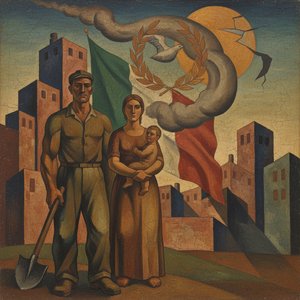
- Subject and Narrative: “The Reaper” presents a deeply moving scene – a man cradling an infant, standing alongside a woman, before the imposing facade of a church. The presence of an umbrella suggests impending or recent rainfall, adding to the painting’s somber atmosphere. While seemingly straightforward, the image resonates with layers of symbolic meaning relating to life, death, and faith.
- Futurist Roots & Departure: Umberto Boccioni (1882-1916) is best known as a leading figure in the Italian Futurist movement. However, “The Reaper” represents a fascinating divergence from his more overtly dynamic and fragmented style – works like *Unique Forms of Continuity in Space*. While traces of his interest in form simplification are present, this painting leans towards a more figurative and emotionally charged representation. It’s believed to be one of Boccioni's last paintings before his untimely death during World War I.
- Technique & Style: The painting demonstrates Boccioni’s evolving technique. Though not fully abandoning representational form, he employs a simplified approach to figures and architecture. Brushstrokes are visible, contributing to the work's textural quality and emotional intensity. The color palette is muted, dominated by earth tones and grays, reinforcing the sense of melancholy and gravity.
- Historical Context & Symbolism: Created during a period of immense social and political upheaval leading up to and during World War I, “The Reaper” can be interpreted as an allegory for loss and mortality. The church in the background symbolizes faith and tradition, while the reaper figure (implied rather than explicitly depicted) evokes themes of death and transition. The baby represents innocence and the continuation of life, creating a poignant contrast with the looming specter of mortality.
- Emotional Impact & Interpretation: “The Reaper” is not merely a depiction of figures; it’s an exploration of universal human experiences – grief, hope, and the search for meaning in the face of adversity. The painting evokes a sense of quiet contemplation and invites viewers to reflect on their own mortality and connection to something larger than themselves. The ambiguity inherent in the scene allows for multiple interpretations, making it a compelling work for both personal reflection and artistic analysis.
- For Collectors & Designers: This artwork’s subdued palette and emotionally resonant subject matter make it suitable for a variety of interior settings. It would complement spaces designed to foster contemplation or evoke a sense of history and depth. A high-quality reproduction captures the painting's textural nuances and emotional power, adding a touch of artistic sophistication to any collection.
Klausimai ir atsakymai
Kokia „The Reaper“ – Umbertas Bočonis švytėjimo (luminance) intensyvumas?
Įrašytas kūrinio „The Reaper“ – Umbertas Bočonis šviesumas yra Soft Shadow.
Ar studentams skirtas informacinis lapelis apie „The Reaper“ – Umbertas Bočonis yra prieinamas?
Dėl „The Reaper“ – Umbertas Bočonis yra prieinama Informacinė medžiaga puslapio: spausdinamas informacinis lapelis apie kūrinį, skirtas studentams ir mokomajamiam procesui klasėje.
Kokią nuotaiką ir emociją sujungia „The Reaper“?
„The Reaper“ kūryboje Nostalgic nuotaika lydi Melancholic emociją.
Daugiau informacijos apie šį paveikslą
 Peržiūrėti realaus dydžio版
 Pasidalinti
 Dalintis
 Išsamiau
 Vadovas

 Atsisiųsti
 Panašūs eksponatai
 Rentgeno spindulių nuotrauka
 Automatinė diorama
 问答
问答 Statistika