Romanticism
A gun crew (Tomas Stothardas)
Tomas Stothardas (1755–1834) sukūrė A gun crew. Šis kūrinys priklauso Romanticism kieruliui. Pagaminta naudojant Oil On Canvas.
- Oil On Canvas

 Peržiūrėti

 Rankinio darbo aliejinės imitacijos paveikslas
 Pasidalinti
 Dalintis
 Informacinė lLapelė


 Atsisiųsti
 Panašūs eksponatai
 Rentgeno spindulių nuotrauka
 Automatinė diorama
 Klausimai ir atsakymai

 Statistika
A gun crew, trumpai
- Pavadinimas
- A gun crew
- Autorius
- Tomas Stothardas (1755–1834)
- Autorius gimęs
- Londonas, Jungtinė Karalystė
- Technika
- Oil On Canvas
- Judėjimas
- Romanticism
- Laikotarpis
- 19th Century
- Tema
- maritime struggle, shipwreck rescue, human resilience, dramatic coastline, 18th century seafaring, historical labor
Ką vaizduoja A gun crew?
The Subject and Artist of the Work
In the dramatic scene of A gun crew, the viewer finds themselves amidst a chaotic struggle on a rugged, rocky shore. Sailors strain with every ounce of their strength, their bodies leaning into the heavy weight of a massive object—perhaps a piece of a shipwreck or a heavy fragment of debris—as they attempt to haul it from the sea. The air feels thick with the exertion of these men, caught in a moment of intense physical toil against the unyielding elements. This struggle highlights the sheer hardship and resilience required to survive the unpredictable nature of the ocean.
The artist behind this intense depiction is Thomas Stothard. Born in London, United Kingdom, Stothard brings a sense of narrative urgency to the canvas, focusing on the human cost of maritime life. He moves away from mere stillness to capture the very essence of desperation and the precariousness of existence at sea. Every figure in the composition seems locked in a battle against overwhelming forces, both natural and man-made, as they fight to reclaim something from the waves.
Composition and Visual Elements
The scene unfolds within a tightly packed space that pulls the viewer directly into the heart of the chaos. Figures cluster together in a frantic mass, their bodies overlapping to convey a sense of urgent, shared struggle. Every movement feels compressed, as if the very air is heavy with the effort of the men. Diagonal lines, formed by the straining ropes and the angled limbs of the sailors, cut through the frame to lead the eye toward the central point of action. This arrangement creates a feeling of immediacy, trapping the viewer within the struggle.
A flattened perspective heightens this sense of claustrophobia, making the rocky shore and the wreckage feel as though they are pressing inward. Light does not merely fall upon the scene; it seems to emanate from multiple sources, pouring down from above and glowing from within the wreckage itself. These light sources cast dramatic shadows that define the rugged textures of the environment and the straining muscles of the crew. The interplay of light and shadow emphasizes the desperation of the moment, highlighting the raw power of nature as it clashes against human resilience.
Technique and Artistic Style
The oil paint clings to the canvas with a heavy, impasto-like texture, particularly where the wreckage meets the shore. This thick application of pigment gives the scene a tactile, rugged quality, making the struggle feel physically present. The brushwork is not precise; instead, it is loose and expressive, using energetic strokes to capture the sudden movement and the chaotic energy of the sailors. Every layer of paint contributes to a sense of depth and turmoil, as if the medium itself is caught in the same upheaval as the figures on the rocks.
The style leans heavily into Romanticism, prioritizing raw emotion and the intensity of the moment over clinical realism. This emotional weight is carried by a dark and earthy color palette. Deep browns and blacks dominate the shadows, while strong, sudden bursts of red pull the eye through the darkness. Light emanates from multiple sources, appearing to glow from within the wreckage itself and from above, casting dramatic shadows that heighten the sense of urgency. The result is a scene defined by tension and the visceral power of the elements.
A gun crew dididraudžios kokybės vaizdai
Viešoji domenė: suregalis mirė 1834 m.
Tomas Stothardas, A gun crew. Viešoji domenė
Atsakimai į klausimus apie A gun crew
Kokia technika buvo panaudota kūriniam darbui „A gun crew“ – Tomas Stothardas?
Tomas Stothardas kūriniui „A gun crew“ panaudojo Oil On Canvas techniką. Ši technika apibrėžė originalaus kūrinio medžiaginę prigimtį.
Ką vaizduoja „A gun crew“ – Tomas Stothardas?
„A gun crew“ – Tomas Stothardas vaizdeletas: maritime struggle, shipwreck rescue, human resilience, dramatic coastline, 18th century seafaring, historical labor, force of nature.
Ar „A gun crew“ – Tomas Stothardas vaizdą galima laisvai reprodukcijaoti?
Kalbant apie autorišką teisę, „A gun crew“ yra yra viešosios erdvės dalis – jo autorinė teisė pasibaigusi.
Kas yra „A gun crew“ kūrybos autorius?
„A gun crew“ kūrybinį darbą sukūrė Tomas Stothardas. Šioje puslapio informacijoje aprašomas Tomas Stothardas originalus kūrinys.
Kokiam stiliui priklauso „A gun crew“?
„A gun crew“ yra Romanticism stiliaus kūrinys. Šis dailos kryptis nurodo meninę tradiciją, kurios šis darbas yra dalis.
Kokio Tomas Stothardas kūrybos laikotarpio priklauso „A gun crew“?
„A gun crew“ priklauso Tomas Stothardas kūrybos karjeros Mature Period etapui. Ši klasifikacija atspindi kūrinio ryšį su menininko evoliucija.
Kokia yra autorinės teisės situacijos priežastis kūriniam darbui „A gun crew“ – Tomas Stothardas?
„A gun crew“, kurį sukūrė Tomas Stothardas, yra yra viešosios erdvės dalis – jo autorinė teisė pasibaigusi. Autorinės teisės apsaugos terminai skaičiuojami nuo autoriaus mirties, o Tomas Stothardas mirė 1834 m.
Kokią vietą Tomas Stothardas kūrybos ešėlyje užima „A gun crew“?
„A gun crew“ priklauso Tomas Stothardas Romanticism kūrybai, kurios įrašytoms temoms priskiriamas classical & romantic blend, seafaring hardship depicted, humanity vs. nature's force, british maritime history, stothard's sentimental style, illustrative historical scenes, moralizing narrative art.
Ar „A gun crew“ yra būdingas tam, ką Tomas Stothardas paprastai kūrė?
Tarp užfiksuotų Tomas Stothardas temų – classical & romantic blend, seafaring hardship depicted, humanity vs. nature's force, british maritime history, stothard's sentimental style, illustrative historical scenes, moralizing narrative art – kūrinys „A gun crew“ akcentuoja maritime struggle, shipwreck rescue, human resilience, dramatic coastline, 18th century seafaring, historical labor, force of nature.
Apie menininką Tomas Stothardas

1755–1834, Jungtinė Karalystė
Tomas Stothardas
Thomas Stothard: Sapnių audėjas ir istorinės aidai Gimęs 1755 m. pulsuojančiame Londone, Thomas Stothard gyvenimas buvo audinys, sukurtas iš delicate gražos, meninės mokymosi ir neblėstančios pasakojimo meilės threadų. Jo ankstyvoji vaikystė buvo pažymėta silpna sveikata – dėl savo kergtuvybės jis daug laiko praleido ਤੋਂ namų – tačiau ši laikotarpis jame užaugino gilią ramybės ir kontemplacijos vertę, kuri vėliau tapo jo meno pagrindu. Savo meninę kelionę jis pradėjo kaip brokato šilko raštų dizaineris – ši įgūdžiai jam suteikė itin jautrią detalės pastebėjimą bei gilią tekstūros ir spalvų suvokimą, kokybės jis vėliau perkėlė į savo garsiąsias iliustracijas.
Taip pat Tomas Stothardas darbai
 The Supper by the Fountain1820
 Portrait Of General Francis Marion )1732
 The Return of Othello, 'Othello,' Act II, Scene II1799
 The Horrors of War, Sketch for Burghley House Mural1800
Esdai apie A gun crew
 Emotion vs. Observation: A Guide to Romanticism and RealismMaster the differences between Romanticism and Realism through expert analysis. Discover the art of emotion versus observation now.
 Echoes of Conflict: A Curated Exploration of Art Capturing the Intensity of War and Human ResilienceExplore a profound collection of historical war art. From visceral realism to poignant depictions of human resilience, discover museum-qual…
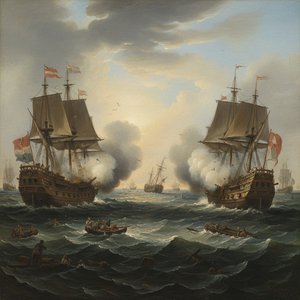 Masterpieces of Maritime Warfare: The Artistry and Intensity of Naval Combat in Historical PaintingExplore the dramatic intensity of naval combat through art history. From Romanticism to classical maritime masterpieces, discover how legen…