

 Peržiūrėti realaus dydžio版
 Siųsti
 Dalintis
 Išsamiau
 Vadovas

 Atsisiųsti
 Panašūs eksponatai
 Rentgeno spindulių nuotrauka
 Diaporama
 Statistika
The Diaries


 Rodyti daugiau
Šiame puslapyje rodomas meno kūrinys yra saugomas autorių teisių įstatymais, todėl neturime teisės legaliai kurti ar parduoti jo identiškos reprodukcijos. Ši apsauga užtikrinama remiantis tokiais tarptautiniais susitarimais kaip Bernės konvencija ir pagal nacionalines įstatymų nuostatas, įskaitant tas, kurias nurodo JAV autoriškos teisės įstatymas – 17-asis skyrius.
Kaip pagarbią ir teisėtą alternatyvą, mes siūlome pagal užsakymą rankomis dažytus paveikslus, įkvėptus originalo. Mūsų įgudę ir profesionalūs menininkai kruopščiai tiria originalo stilių, nuotaiką ir meninę esmę, kad sukurtų naują, unikalią kūrinį, kuris sukelia tą paties jausmą – išlikdamas tuo tarciau originaliu, savarankišku kūrybiniu darbu.
Šis metodas visiškai atitinka autorių teises, nes jame nėra kūrinio kopijavimo ar dubliavimo. Tai yra kūrybinė reinterpretacija – naujas paveikslas, kurį įkvėpė originalas, tačiau kuris nėra jo identiškas.
Rankų darbo aliejinės reprodukcijos
Rankiniu būdu tapytas aliejus ant droblio jūsų pageidaujamame dydį ir rėmuose – mūsų menininkų darbas pagal užsakymą. ( Perjungti į spausdinimą Perejti prie skaitmeninių vaizdų)




P118B €10

P118H €10

P118W €10

P438Z €10

P508JH €12

P508YH €12

P805H €10

P805Z €10

P919BZ €10

P919G €10

P919XJ €10

P959ZH €10

P968JZ €12

W106C €8

W218G €10

W218JH €8

W218Y €10

W307PJ €10

W316G €10

W316PJ €8

W316Y €10

W398PJ €8

W4111J €10

W500HY €15

W500JH €15

W692G €12

W849H €8

W940BG €15

W953PJ €8




Pasirinkite iš mūsų nustatytų dydžių, atitinkančių originalaus meno kūrinio proporcijas.

Įveskite jums reikiamą plotį ir aukštį, kad paveikslas atitiktų jūsų rėmą ar sieną. Kadangi šis darbas yra rankinio darbo, siekiant išgauti kitokio formos dydį, paveikslas gali būti šiek tiek didesnis (nuo kraštų bus palikta daugiau erdvės) arba mažesnis – pasirinkite jums patogiausią variantą. Prieš pradedant tapyti, atsiųsime jums skaitmeninį maketą patvirtinimui. Šioje puslapio nuotraukoje matomas vaizdas nėra galutinis rezultatas – jį parodys tik sukurtas maketas.
Gavus užsakymą, OriginalUniqueArt.com komanda susisieks su klientu el. paštu dėl instrukcijų ir pateiks maketo pavyzdį
Pristatymas visame pasaulyje () per 3–4 savaites, o ne įprastai – per 5 savaites. (22 spalis). Kokybė lieka nepakeičiama.

Nemokamas greitasis pristatymas visame pasaulyje

Aukštos kokybės lininis drobė

Pilnas siuntimo draudimas

Muitinės mokesčių grąžinimo garantija

Tikro spalvų atitikimo garantija

100 dienų grąžinimo politika (tik esant įtaigoms)

100% pinigų grąžinimo garantija

Nuolaida dideliems užsakymams
 Stiklo variantas prieinamas tik pasirinkus dydį iki 110 cm

The Diaries
Reprodukcijos technika
Reprodukcijos dydis
-


Visų pasirinktų variantų kaina
€ 262
The Diaries: An Exploration of Form and Ideology
Peter Friedl’s *The Diaries* (2015) presents a deceptively simple image—a bookshelf crammed with books—yet it embodies a profound conceptual engagement with art history and the broader anxieties surrounding representation. Born in Munich, Austria, in 1967, Friedl is recognized for his ability to dissect formal conventions while simultaneously interrogating their ideological underpinnings. This artwork exemplifies his signature approach: layering hollowed-out forms against one another to disrupt established hierarchies of power and offering a counterpoint to the modernist project’s promises.Conceptual Framework & Historical Context
Friedl draws inspiration from Mieke Bal's assertion that “nothing goes without saying,” prioritizing visual literacy as a crucial element in interpreting art. His work actively resists passive reception, prompting viewers to confront contradictions inherent within artistic endeavors and historical narratives. Specifically referencing the US Department of Housing and Urban Development’s American Homelessness Prevention and Rapid Re-Housing Program—a project designed to combat homelessness through financial assistance—Friedl utilizes the architectural scale model as a symbolic device. This model isn't merely a depiction of space; it represents a political stance, advocating for a future shaped by confronting societal inequities. The series underscores Friedl’s belief that art can serve as a catalyst for critical reflection and social change.Stylistic Characteristics & Technique
The painting itself is characterized by its deliberate austerity. Presented without contextual framing—a conscious decision to isolate the bookshelf—the sculpture invites contemplation on the history of modernism. Friedl employs a technique rooted in meticulous observation, capturing the textures and variations of light across the books’ surfaces. The arrangement isn't random; it reflects Friedl’s interest in presenting disparate concepts within a unified visual form. This juxtaposition highlights the tension between seemingly incompatible ideas—a core element of Friedl’s artistic philosophy. The use of muted colors contributes to an atmosphere of quiet contemplation, mirroring the contemplative mood conveyed by the subject matter itself.Symbolism & Emotional Resonance
The bookshelf serves as more than just a visual motif; it symbolizes knowledge, memory, and the accumulation of experience—themes central to Friedl’s oeuvre. The books themselves represent diverse voices and perspectives, reflecting the complexities of human history and intellectual discourse. By confronting viewers with this densely populated image, Friedl encourages them to engage in a dialogue about representation and its role in shaping our understanding of the world. Ultimately, *The Diaries* resonates with an emotional depth that transcends mere visual aesthetics—it speaks to the enduring human desire for connection and meaning amidst the uncertainties of contemporary life.Concluding Remarks
Thomas Peter Friedl’s *The Diaries* stands as a testament to his unwavering commitment to artistic innovation and intellectual rigor. It exemplifies his ability to transform seemingly commonplace subjects into vehicles for profound philosophical inquiry, cementing his place among the most influential artists of our time. Its understated elegance and conceptual complexity continue to inspire admiration and provoke discussion within the art world.问答 (or more naturally for a website heading): Klausimai ir atsakymai
Ką vaizduoja „The Diaries“, autorius – Thomas Peter Friedl ir kokią nuota sukelia?
„The Diaries“, autorius – Thomas Peter Friedl sujungia architecture, housingprogram, ideology, scalemodel, textimagerelation, historicalpowerstructures, modernism ir Calm atmosferą.
Kokia naudojimo paskirtis ir erdvė rekomenduojama „The Diaries“, autorius – Thomas Peter Friedl?
„The Diaries“ siūloma naudoti Accent, o rekomenduojama erdvė – Living Room.
Kam rekomenduojamas naudojimui „The Diaries“ spausdinys?
Rekomenduojamas „The Diaries“ spausdinio naudojimas yra Accent.
Autoriaus biografija
The Architect of Memory
In the quiet corners of Munich, where his story began in 1967, a mind was forming that would eventually seek to dismantle the very structures we use to understand history. Before he became an interlocutor of representational forms, he moved through the world with a different kind of lens, working as a theater critic. This early immersion in drama and linguistics shaped his later ability to treat the visual field as a stage where power and identity are constantly being reenacted. He did not merely observe; he learned how the placement of a prop or the cadence of a line could alter the perception of truth.
As he moved toward Berlin, his practice began to expand into a multidisciplinary exploration that refused to be pinned down by a single medium. He turned to photography, painting, video, and even architectural scale models to investigate how we construct our political and aesthetic consciousness. His work often functions through a strategy of radical neutrality, where the artist avoids arguing for a specific reading but instead exposes the conditions underging the creation of meaning itself. By using hollowed-out forms and layering disparate elements, he sought to resolve the contradictions found within modernism.
The Weight of the Model
Much of his most profound inquiry resides in the physical presence of the model. In his series known as Rehousing, which spanned from 2012 to 2019, he utilized architectural scale models to reflect on history and ideology. These were not mere miniatures but case studies for a mental geography. He reconstructed the childhood home of his parents in Austria alongside much more politically charged spaces, such as the cabin of Martin Heidegger in the Black Forest, the residence of Ho Chi Minh in Hanoi, and even a slave hut from a plantation in Louisiana. Each structure carried the weight of its own history, acting as a vessel for the ideologies that built them.
This fascination with the intersection of text and image led to monumental installations like The Diaries in 2015. In this work, a bookshelf crammed with over 400 handwritten notebooks presented a deceptively simple image that actually interrogated the anxieties of representation. He used these objects to explore themes of knowledge, memory, and experience, forcing a confrontation with the textures of light and the accumulation of human thought. Through such meticulous observation, he demonstrated that nothing goes without saying.
A Stage for Social Critique
His later explorations often turned toward the theatricality of social struggle. In works like Teatro Popular and his video installations, he utilized techniques from puppet theater and tableaux vivant to highlight the mechanisms of historiography. He was particularly drawn to the permeability of language and the boundaries of identity. His video work Report, created for documenta 14, examined how language can both connect and divide, using the empty stage of a national theater to let actors recite texts in their own mother tongues.
Even when dealing with heavy themes of racial bias and colonial legacies, his approach remained rooted in a piercing dramaturgy. In Liberty City, he staged a reversal of a violent historical event in Miami, using the blurry, uncut quality of footage to mimic an amateur recording. This method allowed him to walk the line between documentation and fiction, challenging the viewer's compassion and their preconceived notions of justice. His career remains a continuous effort to use the tools of art to question the very aesthetics of cultural memory.

Thomas Peter Friedl
1967 - , Germany
Trumpa informacija apie kūrėją
- Full Name: Thomas Peter Friedl
- Notable Artworks:
- The Diaries
- German Village
- Installation View
- Place Of Birth: Munich, Germany
- Date Of Birth: 1967
Susiję straipsniai
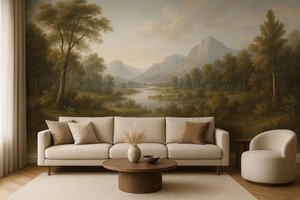
Monumentalios Sienų Tapybos Užsakymai: Individualizavimas, Mastelis ir Montavimo Niuanai Aukšto Lygio Kolekcineriams – OriginalUniqueArt.com F.A.Q.
Užsakomieji monumentalios sienų tapybos projektai aukšto lygio kolekcionieriams iš OriginalUniqueArt.com. Individualus dizainas, profesionalus montavimas ir garantuota kokybė. Investicija į ilgalaikę meno vertę.
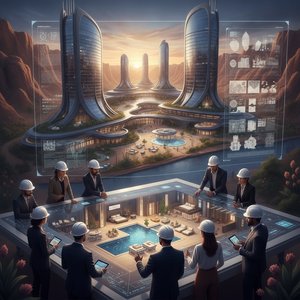
Digital Illustration Guide: Scaling Art Procurement Efficiency for Large-Scale Hospitality Projects
Master large-scale art procurement with our guide for hotel designers. Learn to leverage digital illustration, custom mockups, and efficient bulk ordering to scale high-quality, hand-painted reproductions across global hospitality projects with precision and cost-efficiency.
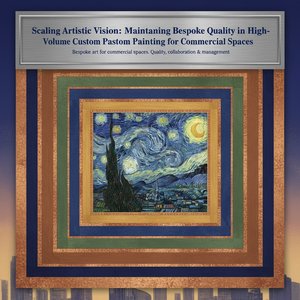
Personalizuotų paveikslų gamyba: kokybės užtikrinimas dideliuose komerciniuose projektuose
Aukštos kokybės personalizuoti paveikslai interjero dizaineriams ir komercinėms erdvėms. Užsakykite unikalius meno kūrinius, garantuojame patikimumą, greitį ir pinigų grąžinimo galimybę. Patirkite profesionalų požiūrį!
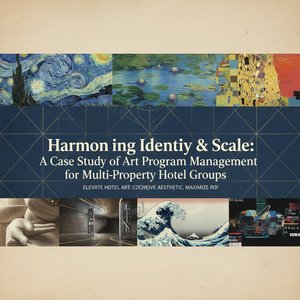
Harmonizuojant identitetą ir mastelį: Meno programų valdymas viešbučių grupėse – atvejų studija
Atraskite, kaip profesionalios meno konsultacijos ir strategijos padeda viešbučių grupėms kurti unikalų identitetą ir didinti svečių patirtį. Ekspertizė interjero dizaine ir meno integracijoje. Patikimi sprendimai jūsų verslui.
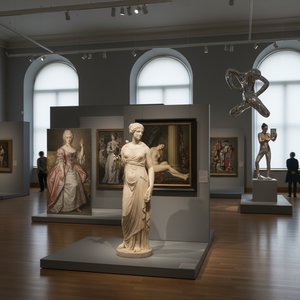
The Allure of the Pose: Representations of 'Model' Through Art History
Explore the fascinating history of the 'art model' through centuries of painting! Discover academic techniques, social contexts & the evolving role of models in art. OriginalUniqueArt offers custom reproductions and expert consultation.