- Pradžia

- Spausdinimas ant drobės
- Tomas Kole
- Winnipesaukee
 Užsisakyti kopiją Pirkti skaitmeninį paveikslą
 Pasidalinti
 Dalintis
 Išsamiau
 Pridėti į mėgstamiausius

 Atsisiųsti
 Panašūs eksponatai
 Rentgeno nuotrauka
 Automatinė diorama
Winnipesaukee


 Skaityti daugiau
Giclée / Meno spausdinimas
Muziejų lygio „giclée“ arba drobos spausdinimas: greita gamyba ir lankstios apdailos parinktys.




P118B $10

P118H $10

P118W $10

P438Z $10

P508JH $12

P508YH $12

P805H $10

P805Z $10

P919BZ $10

P919G $10

P919XJ $10

P959ZH $10

P968JZ $12

W106C $8

W218G $10

W218JH $8

W218Y $10

W307PJ $10

W316G $10

W316PJ $8

W316Y $10

W398PJ $8

W4111J $10

W500HY $15

W500JH $15

W692G $12

W849H $8

W940BG $15

W953PJ $8




Pasirinkite iš mūsų nustatytų dydžių, atitinkančių originalaus meno kūrinio proporcijas.

Galite nurodyti savo matmenis, kad vaizdas atitiktų konkretų rėmą ar erdvę. Jei pasirinktas dydis nesutaps su originalaus paveikslėlio proporcijomis, mes arba apkirpsime kūrinį, arba išplėsime vaizdą naudojant veideliu atspindėtą arba vientisą šoną. Skaitmeninis maketas bus išsiųstas jums patvirtinti prieš pradedant gamybą.
Atkreipkite dėmesį, kad ekrane matomas vaizdinys neatspindi tikrojo apkirpimo ar išplėtimo. Tik maketas tiksliai parodytų galutinę kompoziciją.
Nors galima rinktis ir individualius dydžius, rekomenduojame pasirinkti vieną iš išanksti nustatytų matmenų, kad būtų išlaikytos originalios proporcijos.
Pristatymas visame pasaulyje () per 2 weeks, o ne įprastas 4/5 savaičių laikotarpis. (20 liepa)

Nemokamas greitasis pristatymas visame pasaulyje

Aukštos kokybės lininis drobė

Pilnas siuntimo draudimas

Muitinės mokesčių grąžinimo garantija

Tikro spalvų atitikimo garantija

60 dienų grąžinimo politika (tik esant gamyklinėms defektams)

100% pinigų grąžinimo garantija

Nuolaida už kelias reprodukcijas
 Stiklo variantas prieinamas tik pasirinkus dydį iki 110 cm

Winnipesaukee
Giclée / Meno spausdinimas
Reprodukcijos matmenys
-


Galutinė kaina
-
Kolekcinio eksponato aprašymas
The Sublime Majesty of the American Wilderness
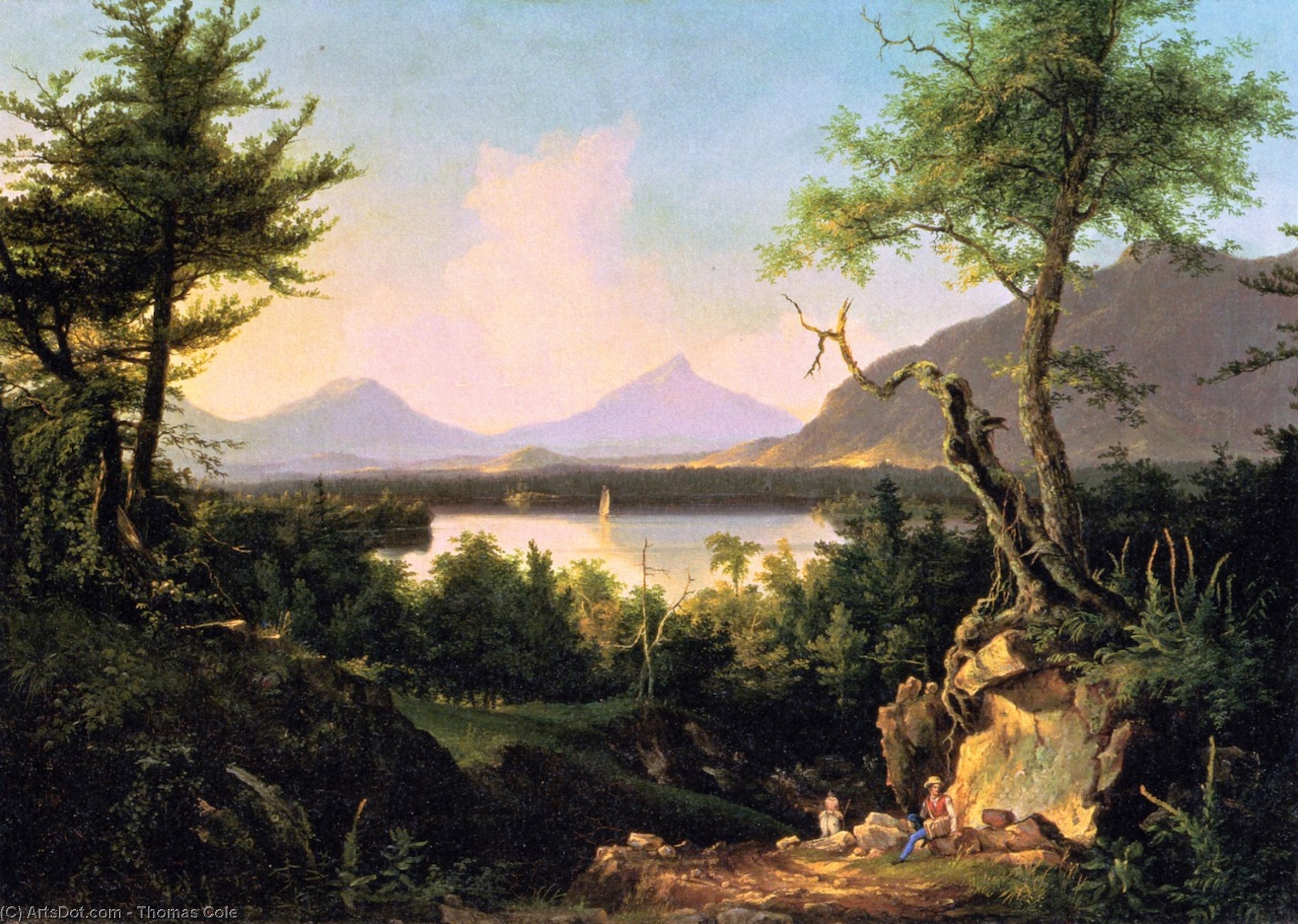
To gaze upon Thomas Cole's Winnipesaukee is not merely to observe a landscape; it is to be enveloped by a profound sense of sublime tranquility. Painted in 1827, this oil on canvas masterpiece stands as a quintessential testament to the Romantic movement and the burgeoning spirit of American identity. Cole, who would become the guiding force behind the Hudson River School, possessed an unparalleled gift for translating the raw, untamed grandeur of the American wilderness onto linen. Here, the viewer is invited into a scene where nature reigns supreme, yet human life coexists with it in perfect, harmonious balance.
Composition and the Art of Light
The eye is immediately drawn across the serene expanse of water, mirroring the majestic sweep of the distant mountain range. Cole masterfully employs depth, drawing the viewer deep into the pictorial space. The composition is a careful orchestration of elements: the solid permanence of the mountains anchoring the background, the fluid grace of the lake occupying the foreground, and the delicate placement of trees along the banks. Notice the subtle inclusion of human figures and the two visible boats; these details are crucial. They do not diminish nature's power but rather serve to measure it, providing a sense of scale against the overwhelming backdrop of natural beauty. The handling of light is particularly breathtaking—a warm, enveloping glow that suggests either early morning or late afternoon, imbuing every leaf and ripple with an almost palpable warmth.
Romanticism and National Spirit
Historically, Winnipesaukee speaks volumes about the cultural moment from which it emerged. In the early decades of the American republic, artists like Cole sought to define a visual language for a continent undergoing rapid expansion and self-definition. His work transcended mere topographical record; it was imbued with allegory. The landscape becomes a metaphor—a reflection of the nation's own potential, its inherent beauty, and its spiritual promise. This Romantic sensibility elevates the scene from a picturesque view to an almost sacred encounter with creation itself.
Bringing the Vista Home
For those who wish to capture this enduring feeling of pastoral grandeur within their own walls, owning a high-quality reproduction of Winnipesaukee is acquiring more than just decoration. It is acquiring a piece of artistic narrative. The rich depth of Cole's oils and the evocative subject matter—the meeting point of water, mountain, and human endeavor—make it an unparalleled focal point for any room. Whether adorning a formal drawing-room or lending quiet dignity to a study, this artwork promises to infuse your space with the enduring sense of peace and awe that Thomas Cole so brilliantly captured on canvas.
Autoriaus biografija
A Pioneer of American Landscape Painting
Thomas Cole, a name synonymous with the birth of distinctly American art, stands as a pivotal figure in 19th-century painting. Born in Bolton le Moors, Lancashire, England, in 1801, his early life offered little indication of the profound impact he would have on the artistic landscape. Emigrating to the United States with his family in 1818 and settling in Ohio, Cole’s journey was one of self-discovery and artistic awakening. Initially working as an itinerant portrait painter—a common trade at the time—he soon found himself captivated by the untamed beauty of the American wilderness. This shift wasn't merely a change in subject matter; it represented a fundamental divergence from European artistic traditions, which often prioritized historical or mythological narratives. Cole’s landscapes weren’t simply depictions of scenery; they were imbued with a spiritual and allegorical depth that resonated deeply with a nation forging its own identity. His move to Catskill, New York, in 1825 proved transformative, providing him with both inspiration and a permanent base from which to explore the surrounding Hudson River Valley—a region destined to become inextricably linked with his artistic legacy. The Hudson River School and Romantic Ideals Cole is rightfully regarded as the founder of the Hudson River School, an art movement characterized by its romantic portrayal of the American landscape. However, labeling him solely a “landscape painter” feels inadequate. His work transcended mere representation; it was profoundly philosophical, frequently delving into themes of humanity’s relationship with nature, the passage of time, and the rise and fall of civilizations. Influenced by European Romanticism—particularly the works of Claude Lorrain and J.M.W. Turner—Cole adapted these sensibilities to an American context. Where European Romantics often depicted dramatic, sublime landscapes as reflections of inner turmoil, Cole’s paintings frequently conveyed a sense of optimism and divine presence within the natural world. He perceived in the vastness of the American wilderness a symbol of national potential and spiritual renewal. The Oxbow (1836), arguably his most iconic creation, exemplifies this perfectly—a sweeping vista that juxtaposes the wild, untamed river valley with cultivated farmlands, representing both promise and challenge during westward expansion. This masterful composition demonstrates Cole’s meticulous attention to detail and his ability to capture the essence of a particular moment in time. Allegory and The Course of Empire Beyond realistic landscape painting, Cole possessed an ambitious artistic vision extending into allegory—a technique designed to convey complex moral and philosophical ideas through symbolic imagery. He brilliantly showcased this talent in his monumental series The Course of Empire, commencing in 1833 and concluding in 1836. Consisting of five canvases—"Savage State," "Pastoral State," "Arcadian State," "Consummation," and “Destruction”—the series chronicles the cyclical history of civilization from its primordial origins to inevitable decline. The paintings aren’t merely historical narratives; they serve as cautionary tales about the perils of unchecked ambition and the fragility of human achievement. Cole's masterful use of color, light, and composition powerfully communicates these themes—demonstrating his profound understanding of artistic principles. The Course of Empire resonated deeply with contemporary audiences grappling with rapid industrialization and westward expansion, cementing Cole’s reputation as a visionary artist capable of addressing societal concerns through art. Notable Works and Artistic Development Cole's oeuvre encompasses numerous celebrated paintings that solidified his position as one of America’s foremost landscape artists. Among these masterpieces are The Oxbow (1836), capturing the dramatic contrast between river valley and cultivated farmland; A View from Mount Etna (1840), depicting the volcanic eruption with breathtaking realism and conveying a sense of awe and wonder; and The Voyage of Life (1837-1840), illustrating the stages of human existence through symbolic landscapes—a testament to Cole’s artistic skill and imaginative vision. His early portraits established him as a skilled draftsman, while his subsequent landscape paintings showcased his mastery of color and composition—reflecting his evolving artistic sensibilities throughout his career. Legacy and Enduring Influence Thomas Cole's untimely demise in 1848 at the age of 47 curtailed his creative life but ensured that his legacy endured. He directly mentored Frederic Edwin Church, who would become a prominent figure within the second generation of Hudson River School painters—passing on Cole’s artistic principles and fostering a continuing tradition of landscape painting. Cole's unwavering devotion to observation from nature combined with a deeply personal symbolic approach profoundly impacted American art. His paintings continue to be exhibited in prestigious museums across the United States, including the New-York Historical Society, the National Gallery of Art in Washington D.C., and the Smithsonian American Art Museum—inspiring viewers to contemplate their connection to the natural world and pondering timeless questions about humanity’s role within it. Cole's artistic influence extends beyond painting; he championed a philosophical stance emphasizing originality, spirituality, and reverence for nature—a perspective that continues to resonate with artists and thinkers today.
Tomas Kole
1801 - 1848 , Jungtinė Karalystė
Trumpa informacija
- Artistic Movement Or Style: Hudson River Šuola
- Artists Or Movements Influenced By This Artist: ['Asher B. Durand']
- Date Of Birth: Feb 1, 1801
- Date Of Death: Feb 11, 1848
- Full Name: Thomas Cole
- Nationality: Amerikalas
- Notable Artworks:
- The Oxbow
- A View from Mount Etna
- The Voyage of Life
- Place Of Birth: Bolton, UK
Susiję straipsniai

Hudson River School: 10 Šedevrai, Apibrėžę Amerikos Peizažo Meną
Atraskite 10 legendinių Hudson River School kūrinių! Thomas Cole, Frederic Church ir kiti meistrai sukuria nepakartojamą gamtos grožio vaizdą. Išmokite apie jų techniką ir įkvėpkite savo interjerą aukštos kokybės reprodukcijomis iš OriginalUniqueArt.com!
Metropoliteno meno muziejaus perlai: 25 įspūdingiausi kūriniai jūsų interjerui
Atraskite 25 įspūdingiausius Metropoliteno meno muziejaus kūrinius! Claude Monet, van Gogh ir kiti meistrai – paveikslų istorijos, spalvų paletės bei interjero dekoravimo idėjos. Meno reprodukcijos aukščiausia kokybe OriginalUniqueArt.com

10 Romantinių Peizažų Simbolių: Tapybos Majestatės Viršūnės
Atraskite 10 legendinių romantinio peizažo kūrinių! Pasinerkite į Claude Lorrain, Caspar David Friedrich ir J.M.W. Turner genijaus pasaulį. Išmokite apie tapybos meistriškumą bei gamtos grožį. Aukščiausios kokybės meno reprodukcijos – OriginalUniqueArt.com. Tyrinėkite kolekciją!
Nacionalinės galerijos meno perlas: 25 paveikslai, įkvėpę kartas | OriginalUniqueArt.com
Atraskite 25 Nacionalinės galerijos meno perlus! Išsami istorija apie Monet, Picasso ir kitų žymiausių dailininkų kūrinius. Įkvėpimo interjerui ir aukštos kokybės meno reprodukcijos – OriginalUniqueArt.com

Sir Alfred Munnings' Masterpieces: 25 Paintings That Define Equine Art | OriginalUniqueArt
Explore 25 iconic Sir Alfred Munnings paintings! Discover the beauty of British Impressionism, equine art & rural England. Find museum-quality reproductions and elevate your home decor with OriginalUniqueArt. Explore the full collection online.