

 Peržiūrėti realaus dydžio版
 Siųsti
 Dalintis
 Išsamiau
 Vadovas

 Atsisiųsti
 Panašūs eksponatai
 Rentgeno spindulių nuotrauka
 Diaporama
 Statistika
Astronomical Compendium


 Rodyti daugiau
Rankų darbo aliejinės reprodukcijos
Rankiniu būdu tapytas aliejus ant droblio jūsų pageidaujamame dydį ir rėmuose – mūsų menininkų darbas pagal užsakymą. ( Perjungti į spausdinimą Perejti prie skaitmeninių vaizdų)




P118B €10

P118H €10

P118W €10

P438Z €10

P508JH €12

P508YH €12

P805H €10

P805Z €10

P919BZ €10

P919G €10

P919XJ €10

P959ZH €10

P968JZ €12

W106C €8

W218G €10

W218JH €8

W218Y €10

W307PJ €10

W316G €10

W316PJ €8

W316Y €10

W398PJ €8

W4111J €10

W500HY €15

W500JH €15

W692G €12

W849H €8

W940BG €15

W953PJ €8




Pasirinkite iš mūsų nustatytų dydžių, atitinkančių originalaus meno kūrinio proporcijas.

Įveskite jums reikiamą plotį ir aukštį, kad paveikslas atitiktų jūsų rėmą ar sieną. Kadangi šis darbas yra rankinio darbo, siekiant išgauti kitokio formos dydį, paveikslas gali būti šiek tiek didesnis (nuo kraštų bus palikta daugiau erdvės) arba mažesnis – pasirinkite jums patogiausią variantą. Prieš pradedant tapyti, atsiųsime jums skaitmeninį maketą patvirtinimui. Šioje puslapio nuotraukoje matomas vaizdas nėra galutinis rezultatas – jį parodys tik sukurtas maketas.
Gavus užsakymą, OriginalUniqueArt.com komanda susisieks su klientu el. paštu dėl instrukcijų ir pateiks maketo pavyzdį
Pristatymas visame pasaulyje () per 3–4 savaites, o ne įprastai – per 5 savaites. (24 spalis). Kokybė lieka nepakeičiama.

Nemokamas greitasis pristatymas visame pasaulyje

Aukštos kokybės lininis drobė

Pilnas siuntimo draudimas

Muitinės mokesčių grąžinimo garantija

Tikro spalvų atitikimo garantija

100 dienų grąžinimo politika (tik esant įtaigoms)

100% pinigų grąžinimo garantija

Nuolaida dideliems užsakymams
 Stiklo variantas prieinamas tik pasirinkus dydį iki 110 cm

Astronomical Compendium
Reprodukcijos technika
Reprodukcijos dydis
-


Visų pasirinktų variantų kaina
€ 263
A Celestial Treasury in Gold and Shadow
In the quiet halls of the Naval Museum in Madrid, there exists a window into the sixteenth century that transcends mere craftsmanship, offering instead a profound meditation on man's relationship with the cosmos. Thobias Volckmer the Elder, a master whose name resonates with the precision of a mathematician and the soul of an artist, captured in 1596 a breathtaking Astronomical Compendium. This work is not merely a depiction of objects; it is a visual symphony of discovery. The painting presents two magnificent gold-colored boxes, their surfaces etched with such intricate detail that one can almost feel the weight of the precious metal and the delicate texture of the engravings. Through a masterful use of light and shadow, Volcklar invites us to peer into an era where science and art were inextricably linked, bound together by the shared pursuit of understanding the heavens.
The composition is anchored by a captivating duality. To the left, a clock rests within its gilded housing, its presence serving as a rhythmic heartbeat for the piece—a reminder of the relentless passage of time that governs both human life and planetary motion. Opposite this temporal anchor, occupying much of the right side of the frame, sits a celestial globe. This sphere, rendered with an almost tactile realism, represents the vastness of the known universe brought down to a scale that can be held in one's hands. The interplay between the clock and the globe creates a powerful symbolic dialogue: the measurement of time against the mapping of space, the finite human experience set against the infinite expanse of the stars.
The Artistry of Precision and Prestige
Technically, the painting is a triumph of late Renaissance precision. Volckmer utilizes a rich, luminous palette that emphasizes the brilliance of the gold, making the instruments appear to glow from within. The artist’s ability to render reflections and the subtle gradations of light on metallic surfaces demonstrates a sophisticated command of texture. For the discerning collector or interior designer, this piece offers more than just aesthetic beauty; it provides a focal point of intellectual depth. The meticulous detail found in the engravings suggests a level of devotion to accuracy that was essential for the navigators and astronomers of the age.
Beyond its historical significance, the Astronomical Compendium possesses an emotional resonance that is both grounding and aspirational. It evokes a sense of wonder, transporting the viewer to an age of exploration when every new measurement of the stars was a leap into the unknown. As a reproduction, this artwork serves as a sophisticated addition to any curated space, whether it be a private library, a study, or a grand salon. It brings with it an atmosphere of scholarly elegance and timeless curiosity, making it an ideal choice for those who wish to surround themselves with pieces that celebrate the enduring human spirit of inquiry and the breathtaking beauty of our universe.
问答 (or more naturally for a website heading): Klausimai ir atsakymai
Kur galiu įsigyti „Astronomical Compendium“, autorius – Thobias Volckmer The Elder skaitmeninį vaizdą?
Skaitmeninį „Astronomical Compendium“, autorius – Thobias Volckmer The Elder vaizdą galima įsigyti šio kūrinio puslapio Skaitmeninis vaizdas skiltyje: aukštos raiškos skaitmeninio vaizdo atsisiuntimas.
Kokia yra „Astronomical Compendium“, autorius – Thobias Volckmer The Elder dominuojanti spalva?
Per „Astronomical Compendium“, autorius – Thobias Volckmer The Elder bėgioja Ochre to Sepia atspalvis.
Kam „Astronomical Compendium“, autorius – Thobias Volckmer The Elder būtų tinkama dovana?
„Astronomical Compendium“ siūloma kaip dovana Corporate Gift, atsižvelgiant į Conversation.
Autoriaus biografija
The Master of Precision and Gold
Thobias Volckmer the Elder was not a visual artist in the traditional sense of a painter, but rather a master German clockmaker, mathematician, and goldsmith whose work bridged the gap between scientific utility and exquisite artistry. Born in Nuremberg, Germany, he established himself as a progenitor of a distinguished family of instrument makers whose influence endured through the end of the seventeenth century. His life was defined by the pursuit of precision, serving with great distinction as the Mathematician and Goldsmith to the Dukes of Bavaria from 1594. In this prestigious role, his workshop became a crucible where the rigors of mathematics met the delicate touch of the goldsmith, producing objects that were as much triumphs of engineering as they were masterpieces of decorative art.A Legacy of Scientific Artistry
The production of Volckmer’s workshop, which began around 1582, was characterized by an extraordinary level of complexity and fine craftsmanship. Working alongside his son, Tobias Volckmer junior, he created a variety of instruments that were essential to the era's burgeoning scientific understanding of the cosmos. His repertoire included:- Astrolabes that allowed for the determination of time and direction through the stars.
- Sundials and quadrants designed with meticulous accuracy.
- Intricate clocks and horological instruments that served as both functional tools and symbols of prestige.
Historical Significance and Impact
Volckmer’s significance lies in his role during an era when science and art were inextricably linked. His instruments, such as the golden quadrant produced in 1609 or the complex astrolabes, represent a period of profound discovery where the measurement of time and the mapping of space were paramount. By creating tools that could bring the vastness of the known universe down to a scale that could be held in one's hands, he contributed to the intellectual fabric of the late Renaissance. His work remains a testament to an age of exploration, where the precision of a mathematician and the soul of a craftsman combined to illuminate the heavens.
Thobias Volckmer The Elder
1560 - 1625 , Germany
Trumpa informacija apie kūrėją
- Full Name: Thobias Volckmer the Elder
- Nationality: German
- Notable Artworks: ['Astronomical Compendium']
- Profession: German clockmaker and goldsmith
- Place Of Birth: Nuremberg, Germany
- Date Of Birth: 1560
- Date Of Death: 1625
Susiję straipsniai

Golden Glow: How to Use Metallic Gold Artworks to Elevate Your Home Decor with Timeless Luxury
Discover how to elevate your home with the timeless elegance of metallic gold artworks. From sculptural metal pieces to gilded oil paintings, learn expert interior design tips for integrating luxurious gold accents into your space with sophistication and grace.

Golden Masterpieces: 10 Paintings That Define Art History | OriginalUniqueArt
Explore 10 breathtaking paintings where gold leaf shines! From Klimt to Byzantine icons, discover art history’s most gilded masterpieces. Find museum-quality reproductions & elevate your home decor with OriginalUniqueArt. Explore the full collection online.
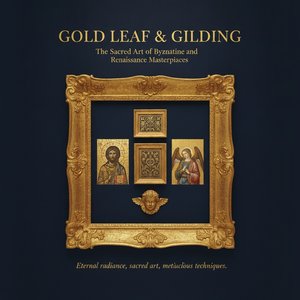
The Sacred Glow: Mastering Gold Leaf and Gilding in Byzantine Art
Explore the divine mastery of Byzantine gold leaf and gilding. Discover how ancient artisans used gold ground and mosaics to create celestial light, a timeless legacy of spiritual splendor and technical excellence in sacred art history.
Golden Splendor: An Editorial Journey Through Art's Most Radiant Masterpieces
Embark on a visual journey through the world's most radiant masterpieces. Discover how gold leaf, impasto textures, and gilded tones define luxury in fine art, from Byzantine icons to modern abstracts. Explore the eternal allure of gold in curated, museum-quality art collections.
The Allure of Gold in Art History: Symbolism, Technique & Cultural Significance
Explore the rich history of gold in art! Discover symbolism, techniques & cultural significance from ancient civilizations to Klimt's masterpieces. Expert insights for collectors at OriginalUniqueArt.