

 Peržiūrėti realybėje
 Pasidalinti
 Dalintis
 Išsamiau

 Atsisiųsti
 Panašūs eksponatai
 Rentgeno nuotrauka
 Automatinė diorama
 Statistika
The reading girl


 Skaityti daugiau
Įsigykite aukštos skiriamosios raiškos, patobulintą skaitmeninį vaizdą, gerokai pranašesnį už internetinę peržiūrą.
Kiekvieną failą mūsų specialistai kruopščiai paruošia naudojant pažangias technologijas ir profesionalų rankinį retušavimą. Užtikriname, kad kiekvienas vaizdas pasižymėtų išskirtiniu aiškumu, tikslia spalvų atspalviu ir smulkiomis detalėmis.
Baigiamas failas el. paštu pristatomas per 72 valandas; jis optimizuotas nedelsiant naudojimui profesionalioje, redakcinėje ir spausdinimo aplinkoje. Tai ta pati kokybė, kuria pasitiki aukščiausios klasės dizaino studijos, leidyklos ir galerijos.
Skaitmeninis vaizdas
Atsisiųskite didelės raiškos failą asmeniniam naudojimui, spausdinimui ir kūrybiniams projektams. ( Perejti prie spausdinimo Pirkti rankomis tapytą paveikslą)
Kiekvieną skaitinio vaizdo užsakymą papildė
Profesionalus skaitmeninis pristatymas, garantuotas
Pasirinkę OriginalUniqueArt.com, jūs ne tik gaunate paveikslėlį – jūs gaunate profesionaliai patobudintą skaitmeninį kūrinį, sukurtą itin tikniai ir užtikrinantį pasitenkinimą. Štai viską, kas automatiškai pritékia jūsų užsakymui:

Greitas siuntimas el. paštu
Jūsų aukštos raiškos skaitmeninis vaizdo failas bus išsiųstas jums el. paštu per 72 valaudas nuo užsakymo – paruoštas naudojimui be jokių papildomų veiksmų.

Skaitmeninis failas su dirbtiniu intelektu
Jūsų meno kūrinys profesionaliai optimizuojamas naudojant pažangius dirbtinio intelekto įrankius ir rankinį redagavimą, užtikrinant maksimalią detalę, aiškumą ir spalvų tikslumą.

Nemokamas visam laikui pakartotinis siuntimas
Atsitiktinai ištrytikote ar praradote savo failą? Nebijokite – bet kuriuo metu atsiųsime jį jums vėl nemokamai.

Jokio importo mokesčio – niekada
Mėgaukitės savo meno kūriniu akimirka – skaitiniai failai visada yra neapmokestinami, todėl nereikės mokėti muitinės, mokesčių ar pristatymo mokesčių.

Spalvų tikslumo garantija
Naudodami profesionalią įrangą ir spalvų valdymo sistemas, užtikriname, kad jūsų skaitmeninis vaizdas kuo tiksliau atspindėtų originalias spalvas.

100 dienų patikimumo garantija
Jei nebuvosite patenkinti savo skaitmeniniu vaizdu, mes jį peržiūrėsime arba grąžinsime 100% sumą per 100 dienų – be jokių klausimų.

100% pinigų grąžinimo garantija
Nesitenkinate? Gaukite visą sumokėtą sumą per 100 dienų nuo skaitmeninio failo gavimo – be jokių papildomų klausimų.

Nuolaidos dideliems užsakymams
Pirkti 3 nuotraukas – pasiūla 10% - Pirkti 5 – pasiūla 15% - Pirkti 10 ir daugiau – pasiūla 20%. Puikiai tinka kūrybiniams projektams, galerijoms bei agentūroms.
A Moment of Quiet Introspection
In the soft, amber glow of a world captured in 1886, Théodore Roussel invites us into a sanctuary of profound stillness. The Reading Girl is not merely a portrait; it is an immersive experience of solitude and intellectual pursuit. At the heart of the composition sits a nude woman, her form rendered with a delicate balance of classical grace and raw vulnerability. She is lost in the pages of a book, her concentration so absolute that the surrounding world seems to fade into a mere whisper. This singular focus creates a magnetic pull for the viewer, drawing us into her private orbit where time itself appears to have paused.
The scene is rich with an atmospheric depth that speaks to the mastery of Roussel’s technique. While the central figure commands our attention, the artist subtly populates the periphery with life. A shadowy figure stands behind her, acting as a silent sentinel to her privacy, while another presence lingers in the distance, adding a layer of narrative mystery. The placement of everyday objects—the wooden backrest of her chair and the scattered handbags resting on the floor—grounds this ethereal moment in a tangible, domestic reality. These details suggest a lived-in space, a room where the echoes of daily movement have settled into a peaceful, scholarly quietude.
The Mastery of Light and Realism
Roussel, a self-taught artist who found his true voice later in life, utilizes light not just to illuminate, but to sculpt. In The Reading Girl, the dramatic interplay of light and shadow—often referred to as chiaroscuro—serves to emphasize the soft contours of the subject's skin against the darker, more textured elements of the room. The technique is a beautiful marriage of classical realism and a burgeoning interest in the symbolic depth found in late 19th-century works. Every brushstroke contributes to a sense of weight and texture, from the grain of the wooden chair to the heavy, silent air of the chamber.
For the discerning collector or interior designer, this piece offers an unparalleled emotional resonance. It possesses a quiet authority that can anchor a room, providing a focal point that encourages contemplation rather than mere observation. The painting’s palette, rich with earthy tones and warm highlights, makes it a versatile masterpiece for sophisticated spaces. Whether placed in a sunlit library or a moody, contemporary study, the artwork brings with it an aura of timeless elegance and a profound respect for the beauty found in life's most quiet, unobserved moments.
Autoriaus biografija
A Late Bloomer’s Journey: The Life and Art of Théodore Roussel
Théodore Casimir Roussel, a name perhaps less instantly recognizable than some of his contemporaries, occupies a fascinating niche in the landscape of late 19th and early 20th-century art. Born in Orléans, France, in 1847, his path to becoming a painter was decidedly unconventional. Unlike artists who demonstrated precocious talent from youth, Roussel embarked on his artistic journey relatively late, around 1872, after fulfilling his military service. Entirely self-taught, he initially explored scenes of everyday life, grounding himself in the techniques of the Old Masters—a foundation that would later be brilliantly transformed by a unique and deeply personal vision. This early work, while skillful, lacked the distinctive voice that would eventually set him apart, hinting at the potential within but not yet revealing the artist he was destined to become.London Calling: A Crucible of Artistic Development
A pivotal moment arrived in 1878 with Roussel’s relocation to London. This move proved transformative, shaping his artistic career in profound ways. Two years later, marriage to Frances Amelia Smithson Bull, a distant relative of James Smithson, further cemented his ties to British society. However, it was an encounter in 1885 that truly ignited his aesthetic development: his meeting with the celebrated James McNeill Whistler. This marked the beginning of a lifelong friendship and mentorship, one that would indelibly influence Roussel’s sensibilities. Whistler encouraged him to embrace etching as a medium, guiding him towards a “free etching” style—drawing directly onto the copper plate from nature, preserving spontaneity and lightness. This period wasn't merely about technical instruction; it was an immersion into a particular philosophy of art, one that valued aesthetic harmony and suggestive beauty over strict realism.Controversy and Recognition: “The Reading Girl” and Beyond
Roussel’s arrival on the London art scene wasn't without its initial shockwaves. His debut at the New English Art Club exhibition in 1887 with a life-size nude, “The Reading Girl,” caused an immediate sensation—and not of the entirely positive kind. A scathing review in *The Spectator* condemned it as “realism of the worst kind,” finding it vulgar and crude. Yet, this very notoriety proved to be a catalyst for his career. Ironically, decades later, Sir William Orpen would declare it the best nude painting of its period—a testament to the enduring power and artistic merit that transcended initial critical backlash. The model for this groundbreaking work was Hetty Pettigrew, along with her sisters Rose and Lily, all popular figures in the London art world, having posed for artists like Whistler, Holman Hunt, and Millais. Roussel’s personal life continued to evolve; after his first wife's passing, he married Ethel Melville, the widow of Arthur Melville, forging further connections within the artistic community.Landscapes, Etchings, and a Lasting Legacy
Following the exhibition of “The Reading Girl,” Roussel settled in Parsons Green and dedicated himself primarily to painting atmospheric landscapes, often depicting scenes along the River Thames. These weren’t simply picturesque views; they were explorations of light, mood, and the subtle nuances of the English countryside. Simultaneously, he became a pioneer of color etching in England, skillfully blending Impressionistic techniques with his own distinct style. He regularly exhibited at the Royal Society of British Artists and the Royal Scottish Academy, solidifying his position within the artistic establishment. In 1908, Roussel further cemented his involvement by becoming a founding member of the Allied Artists’ Association. His landscapes continued to evolve, characterized by muted tones, loose brushwork, and an almost poetic sensitivity to atmosphere. He wasn't merely *representing* nature; he was conveying its emotional resonance. Théodore Roussel passed away in 1926, leaving behind a body of work that represents a compelling intersection of French and English artistic traditions—a legacy increasingly recognized for its originality, technical innovation, and enduring beauty.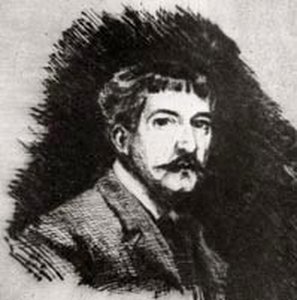
Théodore Roussel
1847 - 1926 , France
Trumpai apie šį kūrėją
- Artistic Movement Or Style: Impressionism, Etching
- Artists Who Influenced This Artist: ['James McNeill Whistler']
- Date Of Birth: 1847
- Date Of Death: 1926
- Full Name: Théodore Casimir Roussel
- Nationality: French-English
- Notable Artworks:
- The Reading Girl
- Battersea From Cheyne Walk
- The Great Oaks of Old Bas-Breau
- Place Of Birth: Orléans, France