

 Siųsti
 Dalintis
 Išsamiau
 Vadovas

 Atsisiųsti
 Panašūs eksponatai
 Diaporama
 Statistika
High Life


 Rodyti daugiau
Šiame puslapyje rodomas meno kūrinys yra saugomas autorių teisių įstatymais, todėl neturime teisės legaliai kurti ar parduoti jo identiškos reprodukcijos. Ši apsauga užtikrinama remiantis tokiais tarptautiniais susitarimais kaip Bernės konvencija ir pagal nacionalines įstatymų nuostatas, įskaitant tas, kurias nurodo JAV autoriškos teisės įstatymas – 17-asis skyrius.
Kaip pagarbią ir teisėtą alternatyvą, mes siūlome pagal užsakymą rankomis dažytus paveikslus, įkvėptus originalo. Mūsų įgudę ir profesionalūs menininkai kruopščiai tiria originalo stilių, nuotaiką ir meninę esmę, kad sukurtų naują, unikalią kūrinį, kuris sukelia tą paties jausmą – išlikdamas tuo tarciau originaliu, savarankišku kūrybiniu darbu.
Šis metodas visiškai atitinka autorių teises, nes jame nėra kūrinio kopijavimo ar dubliavimo. Tai yra kūrybinė reinterpretacija – naujas paveikslas, kurį įkvėpė originalas, tačiau kuris nėra jo identiškas.
Rankų darbo aliejinės reprodukcijos
Rankiniu būdu tapytas aliejus ant droblio jūsų pageidaujamame dydį ir rėmuose – mūsų menininkų darbas pagal užsakymą. ( Perjungti į spausdinimą Perejti prie skaitmeninių vaizdų)




































Pasirinkite iš mūsų nustatytų dydžių, atitinkančių originalaus meno kūrinio proporcijas.

Įveskite jums reikiamą plotį ir aukštį, kad paveikslas atitiktų jūsų rėmą ar sieną. Kadangi šis darbas yra rankinio darbo, siekiant išgauti kitokio formos dydį, paveikslas gali būti šiek tiek didesnis (nuo kraštų bus palikta daugiau erdvės) arba mažesnis – pasirinkite jums patogiausią variantą. Prieš pradedant tapyti, atsiųsime jums skaitmeninį maketą patvirtinimui. Šioje puslapio nuotraukoje matomas vaizdas nėra galutinis rezultatas – jį parodys tik sukurtas maketas.
Gavus užsakymą, OriginalUniqueArt.com komanda susisieks su klientu el. paštu dėl instrukcijų ir pateiks maketo pavyzdį
Pristatymas visame pasaulyje () per 3–4 savaites, o ne įprastai – per 5 savaites. (22 spalis). Kokybė lieka nepakeičiama.

Nemokamas greitasis pristatymas visame pasaulyje

Aukštos kokybės lininis drobė

Pilnas siuntimo draudimas

Muitinės mokesčių grąžinimo garantija

Tikro spalvų atitikimo garantija

100 dienų grąžinimo politika (tik esant įtaigoms)

100% pinigų grąžinimo garantija

Nuolaida dideliems užsakymams
 Stiklo variantas prieinamas tik pasirinkus dydį iki 110 cm

High Life
Reprodukcijos technika
Reprodukcijos dydis
-


Visų pasirinktų variantų kaina
€ 263
The Alchemy of the Everyday: Subodh Gupta’s High Life
In the vast landscape of contemporary sculpture, few artists possess the ability to transmute the mundane into the monumental quite like Subodh Gupta. His work, High Life, serves as a breathtaking testament to this transformative power. At first glance, the viewer is confronted by a massive, shimmering orb that seems to defy gravity, suspended in mid-air with an ethereal lightness. Yet, upon closer inspection, the sheer complexity of the piece reveals itself through a meticulous mosaic of hundreds of silver spoons. This striking juxtaposition—the heavy, industrial presence of a large metal sphere contrasted with the delicate, repetitive arrangement of domestic utensils—creates a visual tension that is both mesmerizing and deeply profound.
The technique employed in High Life is a masterclass in sculptural accumulation. Gupta eschews traditional bronze or marble, opting instead for the humble vocabulary of the kitchen. By meticulously attaching each spoon to the central form, he creates a textured, reflective surface that catches the light from every conceivable angle. This interplay of light and shadow does more than just showcase craftsmanship; it breathes life into the metal, making the sphere appear to pulse with an internal energy. For the discerning collector or interior designer, this piece offers a dynamic focal point that changes character depending on the lighting of the room, providing a sophisticated layer of texture and brilliance to any high-end space.
Symbolism and the Soul of Modernity
Beyond its dazzling exterior, High Life is steeped in layers of cultural and social symbolism. Subodh Gupta, rooted in the traditions of rural India, uses these everyday objects to explore themes of globalization, ritual, and the shifting tides of identity. The spoon, a universal tool of sustenance, carries with it the weight of domesticity, family, and the basic human need for nourishment. By aggregating these singular, intimate objects into a grand, celestial-like form, Gupta elevates the concept of the "everyday" to something sacred and extraordinary.
The title itself, High Life, invites a contemplative dialogue regarding class, consumption, and the aspirations of a modernizing society. There is a poignant irony in using mass-produced kitchenware to create an object of such perceived luxury and grandeur. It prompts the viewer to reflect on how our material possessions define us and how the remnants of our daily rituals can be recontextualized to tell a larger story about humanity's place in a globalized world. This emotional depth ensures that the artwork remains intellectually stimulating long after the initial visual impact has faded.
A Timeless Addition to Contemporary Collections
For those seeking to curate an environment of distinction, a high-quality reproduction of High Life offers an unparalleled opportunity to introduce contemporary brilliance into a home or gallery. The piece functions as a bridge between the familiar and the avant-garde, making it an ideal selection for spaces that value both comfort and intellectual rigor. Its reflective surfaces and intricate detail provide a sense of movement and luxury, while its conceptual roots offer a conversation starter of immense depth.
Whether placed in a minimalist modern loft or a classic, richly textured study, the presence of Gupta’s vision brings an air of sophisticated wonder. Owning a piece that captures this specific alchemy—the turning of steel and silver into poetry—allows a collector to possess not just a beautiful object, but a profound meditation on the beauty hidden within the ordinary rhythms of our lives.
问答 (or more naturally for a website heading): Klausimai ir atsakymai
Ar „High Life“, autorius – Subodh Gupta spalvos yra ryškios ar išblukusios?
„High Life“, autorius – Subodh Gupta spalvų nasyginimas yra Balanced Soft. Nasyginimas apibūdina, kokių spalvos yra ryškių arba išblukusių.
Kas yra „High Life“?
„High Life“, autorius – Subodh Gupta vaizdeletas: silver spoons, metal ball, brick wall, shiny metal, suspended sphere.
Kokio erdvės spalvos derėtų prie „High Life“, autorius – Subodh Gupta spalvų?
„High Life“, autorius – Subodh Gupta Earthy spalvos dera su rekomenduojama erdvė: tai Hotel Lobby.
Autoriaus biografija
The Alchemy of the Everyday: The Visionary World of Subodh Gupta
In the quiet, dust-moted landscapes of Khagaul, Bihar, a journey began that would eventually reshape the global perception of contemporary Indian art. Born in 1964, Subodh Gupta’s early life was steeped in the textures of rural India—a world where the rhythms of tradition and the necessity of survival were inextricably linked. His formative years, marked by the loss of his father and a childhood spent navigating the simplicity of village life, instilled in him a profound reverence for the mundane. This deep-seated connection to the elemental is the heartbeat of his mature practice. Before he was an international icon, Gupta was a student of the tangible, finding inspiration in the way light hit a steel plate or how the communal ritual of eating bound a community together. His education at the College of Arts & Crafts in Patna provided the technical foundation, but it was the lived experience of India’s shifting social fabric that provided his true medium.
Gupta’s artistic language is one of transformation, where the humble becomes monumental. He possesses a singular ability to take the ubiquitous—stainless steel tiffin boxes, milk pails, bicycles, and thali pans—and elevate them into profound sculptural statements. These are not merely objects; they are vessels of memory and symbols of a nation in flux. By meticulously arranging mass-produced utensils into sweeping, geometric installations, Gupta invokes the spirit of Minimalism while imbuing it with a heavy, cultural weight. To a viewer in the West, these gleaming steel structures might appear as exotic artifacts of a distant land; yet, to those familiar with the Indian household, they are intimate, domestic echoes of daily life. This duality allows his work to act as a bridge, navigating the complex tensions between local tradition and the relentless tide of globalization.
Symbolism and the Sculptural Narrative
The power of Gupta’s work lies in its capacity to hold contradictory truths simultaneously. His sculptures often function as icons of both sustenance and scarcity, reflecting the economic transformations of modern India. In his most celebrated installations, such as the monumental Untitled (Chimta), the repetition of steel trays creates an imposing visual rhythm that mirrors the sheer scale of India's population and its collective identity. There is a sacredness in his use of materials; by incorporating elements like rice, spices, or even cow dung, he touches upon the ritualistic nature of Indian life, where food and earth are deeply intertwined with faith and survival.
As his career progressed, Gupta’s focus underwent a subtle but significant evolution. While his early fame was built upon the pristine, reflective surfaces of new stainless steel, he began to gravitate toward found objects that bore the scars of previous ownership. This shift introduced a poignant layer of human narrative into his work. The scratches, dents, and patinas on these weathered items serve as traces of lives lived, turning inanimate utensils into vessels of storytelling. Through this lens, his art becomes an exploration of migration and dislocation, capturing the essence of individuals moving through a world that is constantly being redefined by economic and social shifts.
A Global Legacy and Artistic Significance
Subodh Gupta’s ascent to the pinnacle of the contemporary art world has been nothing short of meteoric. Often referred to with reverence as a towering figure in Indian art, his presence in major international institutions—from the Tate Modern in London to the Venice Biennale—has cemented his status as a global messenger. His ability to translate local vernacular into a universal aesthetic has allowed him to transcend cultural boundaries, making him one of the most influential artists of his generation.
The historical significance of Gupta’s contribution can be summarized through several key pillars of his impact:
- Redefining Materiality: He successfully challenged the hierarchy of sculptural materials, proving that the most common, mass-produced objects can carry immense conceptual and aesthetic weight.
- Cultural Translation: His work serves as a vital medium for exploring how Indian identity is negotiated within the context of a globalized, interconnected world.
- The Intersection of Ritual and Modernity: By utilizing everyday objects to evoke ancient rituals, he creates a dialogue between the historical past and the industrial present.
- Global Representation: He has been instrumental in bringing the complexities of contemporary Indian social reality to the forefront of the international art discourse.
Today, as Gupta continues to live and work in New Delhi, his practice remains an ongoing investigation into the soul of the everyday. He remains an artist who does not merely observe the world but reconstructs it, one steel spoon at a time, inviting us all to find the extraordinary within the ordinary.
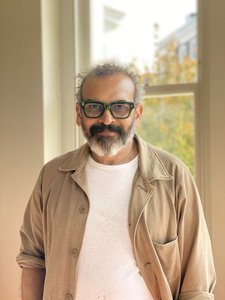
Subodh Gupta
1964 - , India
Trumpa informacija apie kūrėją
- Full Name: Subodh Gupta
- Nationality: Indian
- Date Of Birth: 1964
- Place Of Birth: Khagol, India
- Notable Artworks:
- Rani
- The Other Thing (Chimta)
- High Life
- Artistic Movement Or Style: Contemporary art
- Artists Or Movements Influenced By This Artist: ['Bharti Kher']
Susiję straipsniai

The Enduring Form: Exploring Themes & Techniques in Sculpture Across Historical Periods
Explore the rich history of sculpture from ancient masterpieces to contemporary innovations. Discover key techniques, influential artists & investment potential for discerning art collectors.

Bronze Sculptures That Defined Art History | OriginalUniqueArt
Journey through art history with our Top 10 bronze sculptures! Explore masterpieces by Rodin, Michelangelo & more. Discover stories behind iconic statues and find museum-quality reproductions for your home decor at OriginalUniqueArt.com.

The Enduring Form: Sculpture Across History, Technique & Emotional Resonance
Explore the rich history of sculpture with OriginalUniqueArt. Discover key techniques, influential artists & investment potential for discerning collectors. Expert insights into valuing and collecting timeless masterpieces.

Metal Art for Commercial Spaces: A Procurement Guide to Durable & Modern Large-Scale Decor Solutions
Expert procurement guide for hotel designers and managers. Discover durable, large-scale metal art solutions for commercial spaces. Learn about material selection, maintenance, and efficient bulk ordering for high-traffic hospitality and corporate interiors.

Forged in Fire: The Timeless Strength and Ethereal Beauty of Metal Art
Discover the enduring allure of metal art. Explore how masterfully forged sculptures blend industrial strength with organic elegance to create timeless investment pieces for sophisticated collectors and luxury interiors.