Peržiūrėti realaus dydžio版
 Pasidalinti
 Dalintis
 Išsamiau
 Vadovas

 Atsisiųsti
 Panašūs eksponatai
 Rentgeno spindulių nuotrauka
 Automatinė diorama
 问答
问答 Statistika
Francis Junius (1591–1677)

- 25.0 x 22.0 cm


 Skaityti daugiau
Giclée / Meno spausdinimas
Muziejų lygio „giclée“ arba drobos spausdinimas: greita gamyba ir lankstios apdailos parinktys. ( Pirkti rankų darbo tapybą Perejti prie skaitmeninių vaizdų)




P118B €10

P118H €10

P118W €10

P438Z €10

P508JH €12

P508YH €12

P805H €10

P805Z €10

P919BZ €10

P919G €10

P919XJ €10

P959ZH €10

P968JZ €12

W106C €8

W218G €10

W218JH €8

W218Y €10

W307PJ €10

W316G €10

W316PJ €8

W316Y €10

W398PJ €8

W4111J €10

W500HY €15

W500JH €15

W692G €12

W849H €8

W940BG €15

W953PJ €8




Pasirinkite iš mūsų nustatytų dydžių, atitinkančių originalaus meno kūrinio proporcijas.

Įveskite jums reikiamą plotį ir aukštį, kad atvaizdas derėtų prie jūsų rėmo ar sienos. Spausdiną galima tik sumažinti, bet nepadidinti virš originalaus paveikslėlio dydžio, todėl keičiant proporcijas, dalis vaizdo prarandama. Prieš spausdinimą atsiųsime jums skaitmeninį maketą patvirtinimui. Šioje puslapio nuotraukoje matomas pjūvis nėra tikslus – jį rodo tik maketas.
Pristatymas visame pasaulyje () per 2 weeks, o ne įprastas 4/5 savaičių laikotarpis. (4 lapkritis)

Nemokamas greitasis pristatymas visame pasaulyje

Aukštos kokybės lininis drobė

Pilnas siuntimo draudimas

Muitinės mokesčių grąžinimo garantija

Tikro spalvų atitikimo garantija

100 dienų grąžinimo politika (tik esant įtaigoms)

100% pinigų grąžinimo garantija

Nuolaida dideliems užsakymams
 Stiklo variantas prieinamas tik pasirinkus dydį iki 110 cm

Francis Junius (1591–1677)
Giclée / Meno spausdinimas
Reprodukcijos matmenys
-


Bendroji kaina
€ 72
A Portrait of Contemplation: Francis Junius by Sir Anthony van Dyck
Sir Anthony van Dyck’s “Francis Junius (1591–1677)” is more than just a portrait; it's a carefully constructed tableau of intellect, serenity, and the quiet dignity of scholarly life. Painted in 1640, during his influential years at the English court, this work offers a rare glimpse into the mind of a man deeply engaged with the classical world – Francis Junius, a pioneering German philologist whose meticulous study of ancient texts laid the groundwork for modern linguistic scholarship. Van Dyck, already establishing himself as a master of aristocratic portraiture, here demonstrates his remarkable ability to capture not just physical likeness but also the very essence of character.
The painting immediately draws the eye to Junius’s face – a study in thoughtful repose. His long hair, meticulously rendered with a subtle blend of light and shadow, frames a countenance marked by seriousness and perhaps even a hint of melancholy. The beard, equally detailed, adds to his air of learned wisdom. Van Dyck's mastery of chiaroscuro is evident here; the soft illumination highlights Junius’s features while subtly receding into the background, creating a sense of depth and drawing the viewer into his gaze. His hands, clasped together in front of him, speak volumes – not of grand gestures or outward expression, but of inner contemplation, suggesting a man lost in thought, absorbed in the complexities of language and history.
The Setting: A Window to Knowledge
Beyond Junius’s figure lies a carefully orchestrated backdrop that reinforces his intellectual pursuits. An open window reveals a sky – not a dramatic, tempestuous one, but a muted, atmospheric vista. This isn't merely decorative; it subtly symbolizes the vastness of knowledge and the connection between the individual scholar and the wider world of ideas. The inclusion of two books—one positioned near the bottom left corner, the other towards the top right—is particularly significant. These aren’t simply props; they are emblems of Junius’s profession – a testament to his dedication to textual analysis and historical research. The placement suggests a deliberate act of engagement with these works, a constant dialogue between the scholar and his subject.
Van Dyck's choice of composition is deliberately restrained. The figures are positioned centrally within the frame, creating a sense of balance and formality. The lack of excessive ornamentation—no elaborate clothing or opulent furnishings—further emphasizes Junius’s intellectual stature. The overall effect is one of understated elegance and quiet sophistication – hallmarks of Van Dyck's style.
A Master at Work: Van Dyck’s Technique and Context
“Francis Junius” exemplifies van Dyck’s evolving artistic approach during his time in England. While he continued to employ the rich, velvety textures characteristic of his earlier Flemish work, there is a noticeable shift towards greater naturalism and a more nuanced understanding of human expression. His brushwork becomes looser, allowing for subtle gradations of tone and color – a departure from the smoother, more polished surfaces favored by some of his contemporaries. This reflects a growing interest in capturing not just the appearance but also the inner life of his subjects.
Painted in 1640, this portrait emerges during a period of significant cultural exchange between England and continental Europe. Van Dyck’s presence at the English court was instrumental in shaping the development of portraiture in Britain, introducing new techniques and stylistic influences. Junius himself represents a vital link between classical scholarship and the burgeoning intellectual landscape of the 17th century. His work, particularly his editions of ancient texts, profoundly impacted the study of language and literature, establishing him as a towering figure in the history of philology.
A Timeless Reflection: Reproduction and Artistic Legacy
OriginalUniqueArt is proud to offer a meticulously hand-painted reproduction of “Francis Junius” by Sir Anthony van Dyck. Our artists recreate the painting’s subtle nuances, capturing the depth of its emotional resonance and the exquisite detail of Van Dyck's technique. This reproduction serves not only as a beautiful work of art but also as a window into a fascinating period of intellectual history – a testament to the enduring power of scholarship and the artistry of one of Europe’s greatest portraitists.
Whether displayed in a study, a library, or a sophisticated interior space, “Francis Junius” will undoubtedly serve as a captivating focal point, inviting contemplation and sparking conversation. It's an investment in both artistic beauty and intellectual heritage – a piece that speaks to the enduring value of knowledge, wisdom, and the human spirit.
Klausimai ir atsakymai
Kokia technika buvo panaudota kūriniui „Francis Junius (1591–1677)“ ir kada jis buvo sukurtas?
„Francis Junius (1591–1677)“ – Šarūnės Meistras technika – Acrylic On Canvas, kūrybinė data – 1640.
Kokią nuotaiką „Francis Junius (1591–1677)“ – Šarūnės Meistras išreiškia Baroque Portraiture kontekste?
„Francis Junius (1591–1677)“ pasižymi Reflective emociniu tonu, būdingu Baroque Portraiture stiliui.
Ar galiu naudoti papildytojąjį realybės technologiją, kad pamatytumėte „Francis Junius (1591–1677)“ – Šarūnės Meistras savo kambaryje?
„Francis Junius (1591–1677)“ galima peržiūrėti papildytoji realybės formatu: kūrinio Peržiūra papildintajai realybei puslapyje, naudodami suderinamą įrenginį, galite pamatyti jį savo erdvėje.
Autoriaus biografija
A Flemish Master at the Courts of Europe
Sir Anthony van Dyck, born in Antwerp on March 22, 1599, emerged as one of the most celebrated and influential portraitists of the Baroque era. His life, though tragically cut short at just forty-two years old, was a whirlwind of artistic exploration and prestigious commissions that took him from his native Flanders to Italy and ultimately to the heart of the English court. From an early age, van Dyck displayed remarkable talent, entering Hendrick van Balen’s workshop as a young apprentice and quickly absorbing the prevailing styles of the time. However, it was his association with Peter Paul Rubens – not merely as a student but as a collaborator – that truly shaped his artistic foundation. He learned from Rubens' dynamic compositions, rich color palettes, and masterful handling of light and shadow, yet van Dyck soon began to forge his own distinct path, one characterized by an elegance and refinement that would become his signature.Early Influences and Artistic Training
Rubens’ influence was profound; he instilled in van Dyck a belief in dramatic expression and the importance of capturing emotion alongside physical likeness. This approach contrasted sharply with earlier portrait conventions, prioritizing psychological depth over mere representation. Van Dyck's apprenticeship under Rubens honed his skills in oil painting and etching—techniques he would master with unparalleled precision. He diligently studied Rubens’ monumental canvases, absorbing his compositional strategies and experimenting with innovative color harmonies. These formative years established the groundwork for van Dyck’s distinctive artistic style, characterized by a luminous palette and masterful rendering of texture.Italian Sojourn and Style Development
Around 1621, Van Dyck embarked on a transformative journey to Italy—primarily Genoa—where he gained patronage from wealthy aristocratic families. During this period, he cultivated the refined style for which he would become renowned: graceful poses, luxurious fabrics, and an almost palpable sense of nobility. Unlike Rubens’ energetic brushstrokes, van Dyck's Italian portraits exuded composure, capturing not just physical likeness but also inner character and social standing. He skillfully employed chiaroscuro—the dramatic interplay of light and shadow—to sculpt figures with remarkable realism and to heighten their emotional impact. This technique became a hallmark of his oeuvre, distinguishing him from many of his contemporaries. His artistic explorations in Italy solidified his reputation as a visionary innovator, pushing the boundaries of portraiture while upholding the highest standards of aesthetic excellence.The King's Painter: Van Dyck in England
In 1632, Van Dyck received an invitation that would forever alter his career trajectory—a summons from Charles I of England to become the court painter. This appointment marked a turning point, not only for van Dyck but also for English portraiture. He arrived in London with considerable renown and swiftly became indispensable to the king, tasked with creating images that projected an aura of power, majesty, and divine right. Van Dyck’s portraits of Charles I are particularly noteworthy; he moved away from stiff conventions, portraying the king as a dynamic leader—a man brimming with charisma and intellect. He employed innovative techniques—dramatic lighting, sweeping gestures, and carefully chosen backgrounds—to create images that were both visually stunning and politically charged. His influence extended beyond the royal family, shaping the visual culture of the English aristocracy for generations to come.Legacy and Enduring Influence
Van Dyck’s untimely death in December 9, 1641, robbed the art world of a prodigious talent—yet his legacy endures to this day. His impact on English portraiture is immeasurable; he established a standard of elegance and sophistication that subsequent artists would strive to emulate. He was a master of both oil painting and etching—constantly experimenting with new techniques. His portraits are characterized by their graceful poses, luxurious fabrics, and subtle psychological insights. He skillfully employed chiaroscuro—the dramatic interplay of light and shadow—to sculpt figures with remarkable realism and to heighten their emotional impact. Beyond his technical prowess, van Dyck possessed an exceptional ability to capture the essence of his sitters—their personality, their social standing, and their aspirations. His works continue to captivate audiences with their beauty, elegance, and enduring psychological depth. The Balbi Children, Charles I in Three Positions, and countless other masterpieces stand as testaments to his genius, ensuring that Sir Anthony van Dyck remains one of the most celebrated artists of the Baroque period. His influence can still be seen today in fashion, photography, and contemporary portraiture—a testament to the timeless appeal of his art.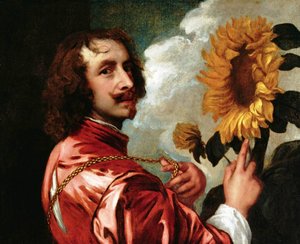
Šarūnės Meistras
1599 - 1641 , Belgija
Trumpa informacija
- Artistic Movement Or Style: Baroque
- Artists Or Movements Influenced By This Artist: ['English portrait painting']
- Artists Who Influenced This Artist: ['Peter Paul Rubens']
- Date Of Birth: March 22, 1599
- Date Of Death: December 9, 1641
- Full Name: Sir Anthony van Dyck
- Nationality: Flemish
- Notable Artworks:
- Portrait of a woman and child
- Equestrian portrait of Charles I
- Lord John Stuart & brother
- Place Of Birth: Antwerp, Belgium
Susiję straipsniai

Francis Bacon: 25 Šedevrai, Atspindintys Sielos Gilumą | OriginalUniqueArt.lt
Atraskite 25 įspūdingiausius Francis Bacon paveikslus! Gilūs portretai, ekspresionizmo spalvos ir sielos gilumos istorijos. Meno kolekcija jūsų interjerui – OriginalUniqueArt.com.
Sir Anthony van Dyck: Courtly Portraiture & the Shaping of Baroque Identity
Explore the life & legacy of Sir Anthony van Dyck, the leading court painter of his era. Discover his innovative portraiture, Baroque masterpieces, and investment potential for discerning collectors. Learn more at OriginalUniqueArt.

Rembrandto van Rijn šedevrai: 25 paveikslai, įkvėpę amžius | OriginalUniqueArt
Atraskite 25 įspūdingiausius Rembrandto paveikslus! Išsami istorija, meno technikos ir simbolika. Olandų baroko šedevrai jūsų interjerui – aukštos kokybės reprodukcijos OriginalUniqueArt.com. Explore the full collection online!
Masterpieces of the 17th Century: Art, History & Decor Inspiration | OriginalUniqueArt
Journey through 17th century art with masterpieces by Rembrandt, Vermeer & Caravaggio. Explore Baroque paintings, Dutch Golden Age techniques & timeless beauty. Find museum-quality reproductions and elevate your home decor on OriginalUniqueArt.com.
The Grandeur of Baroque Portraiture: Power, Emotion & Artistic Innovation
Explore the grandeur of Baroque portraiture! Discover Rubens, Van Dyck & the masters of 17th-century art. Uncover symbolism, techniques & lasting influence. Expert insights for collectors and enthusiasts.