Text size

() ·

A painting made for you, by hand

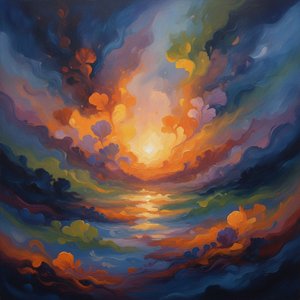
Abstract Composition

Rankų darbo aliejinės reprodukcijos

Rankiniu būdu tapytas aliejus ant droblio jūsų pageidaujamame dydį ir rėmuose – tai mūsų menininkų pagal užsakymą sukurtas darbas. ( Perjungti į spausdinamus版作品 Perejti prie skaitmeninių vaizdų)

Kolekcinio objekto aprašas

A vibrant symphony of geometric shapes and lyrical abstraction defines this 1954 masterpiece by Serge Poliakoff, offering a bold interplay of color that invites you to bring this iconic piece of the École de Paris home.

Autoriaus biografija

Explore Serge Poliakoff's abstract paintings & vibrant compositions. A key figure of Tachisme & the 'New' École de Paris, his work blends lyrical abstraction with bold color palettes. Discover museums showcasing Poliakoff's art.

from ·

Chapter 1

How large should it be?

Slide to change the size; the picture on the left shows the frame at its real width. The proportions of the original are kept.

Standartinis dydis
pagal užsakymą
CM
INCH

Pasirinkite iš mūsų nustatytų dydžių, atitinkančių originalaus meno kūrinio proporcijas.

plotis
aukštis

Įveskite jums reikiamą plotį ir aukštį, kad paveikslas atitiktų jūsų rėmą ar sieną. Kadangi šis darbas yra rankinio darbo, siekiant išgauti kitokios formos dydį, paveikslas gali būti šiek tiek didesnis (nuo kraštų bus palikta daugiau erdvės) arba mažesnis – pasirinkite jums patogiausią variantą. Prieš pradedant tapyti, atsiųsime jums skaitmeninį maketą patvirtinimui. Šioje puslapio nuotraukoje matomas vaizdas nėra galutinis rezultatas – jį parodys tik sukurtas maketas.

Chapter 2

How should it arrive?

Choose the edges of the stretched canvas

Choose your frame

Corner sample of the WhiteWrap canvas edge finish, stretched on solidus medžio

**Improved version:**
solidus medis bars
White €1
Corner sample of the BlurSideWrap canvas edge finish, stretched on solidus medžio

**Improved version:**
solidus medis bars
Blurside €1
Corner sample of the ExtendedWrap canvas edge finish, stretched on solidus medžio

**Improved version:**
solidus medis bars
Extended €1
Corner sample of the P118B picture frame: lieto polistirolo detalės, 5 cm wide and 3 cm thick
P118B €10
Corner sample of the P118H picture frame: lieto polistirolo detalės, 5 cm wide and 3 cm thick
P118H €10
Corner sample of the P118W picture frame: lieto polistirolo detalės, 5 cm wide and 3 cm thick
P118W €10
Corner sample of the P438Z picture frame: lieto polistirolo detalės, 5.5 cm wide and 3.5 cm thick
P438Z €10
Corner sample of the P508JH picture frame: lieto polistirolo detalės, 7 cm wide and 3.5 cm thick
P508JH €12
Corner sample of the P508YH picture frame: lieto polistirolo detalės, 7 cm wide and 3.5 cm thick
P508YH €12
Corner sample of the P805H picture frame: lieto polistirolo detalės, 5 cm wide and 3.5 cm thick
P805H €10
Corner sample of the P805Z picture frame: lieto polistirolo detalės, 5 cm wide and 3.5 cm thick
P805Z €10
Corner sample of the P919BZ picture frame: lieto polistirolo detalės, 7 cm wide and 3.5 cm thick
P919BZ €10
Corner sample of the P919G picture frame: lieto polistirolo detalės, 7 cm wide and 3.5 cm thick
P919G €10
Corner sample of the P919XJ picture frame: lieto polistirolo detalės, 7 cm wide and 3.5 cm thick
P919XJ €10
Corner sample of the P959ZH picture frame: lieto polistirolo detalės, 5 cm wide and 3 cm thick
P959ZH €10
Corner sample of the P968JZ picture frame: lieto polistirolo detalės, 6 cm wide and 4 cm thick
P968JZ €12
Corner sample of the W106C picture frame: solidus medžio

**Improved version:**
solidus medis, 5 cm wide and 3 cm thick
W106C €8
Corner sample of the W218G picture frame: solidus medžio

**Improved version:**
solidus medis, 5 cm wide and 3 cm thick
W218G €10
Corner sample of the W218JH picture frame: solidus medžio

**Improved version:**
solidus medis, 5 cm wide and 3 cm thick
W218JH €8
Corner sample of the W218Y picture frame: solidus medžio

**Improved version:**
solidus medis, 5 cm wide and 3 cm thick
W218Y €10
Corner sample of the W307PJ picture frame: solidus medžio

**Improved version:**
solidus medis, 6 cm wide and 3 cm thick
W307PJ €10
Corner sample of the W316G picture frame: solidus medžio

**Improved version:**
solidus medis, 6 cm wide and 3 cm thick
W316G €10
Corner sample of the W316PJ picture frame: solidus medžio

**Improved version:**
solidus medis, 6 cm wide and 3 cm thick
W316PJ €8
Corner sample of the W316Y picture frame: solidus medžio

**Improved version:**
solidus medis, 6 cm wide and 3 cm thick
W316Y €10
Corner sample of the W398PJ picture frame: solidus medžio

**Improved version:**
solidus medis, 5 cm wide and 3 cm thick
W398PJ €8
Corner sample of the W4111J picture frame: solidus medžio

**Improved version:**
solidus medis, 6.5 cm wide and 3.5 cm thick
W4111J €10
Corner sample of the W500HY picture frame: solidus medžio

**Improved version:**
solidus medis, 7 cm wide and 5 cm thick
W500HY €15
Corner sample of the W500JH picture frame: solidus medžio

**Improved version:**
solidus medis, 7 cm wide and 5 cm thick
W500JH €15
Corner sample of the W692G picture frame: solidus medžio

**Improved version:**
solidus medis, 8 cm wide and 4 cm thick
W692G €12
Corner sample of the W849H picture frame: solidus medžio

**Improved version:**
solidus medis, 5 cm wide and 3 cm thick
W849H €8
Corner sample of the W940BG picture frame: solidus medžio

**Improved version:**
solidus medis, 7.5 cm wide and 4.5 cm thick
W940BG €15
Corner sample of the W953PJ picture frame: solidus medžio

**Improved version:**
solidus medis, 6 cm wide and 3.5 cm thick
W953PJ €8
Corner sample of the H24-GOLD picture frame: medžio skulptūra su gipso sluosniu, 10 cm wide and 6 cm thick
H24-GOLD €30
Corner sample of the H24-SILVER picture frame: medžio skulptūra su gipso sluosniu, 10 cm wide and 6 cm thick
H24-SILVER €30
Corner sample of the H36-GOLD picture frame: medžio skulptūra su gipso sluosniu, 15 cm wide and 6.5 cm thick
H36-GOLD €45
Corner sample of the H36-SILVER picture frame: medžio skulptūra su gipso sluosniu, 15 cm wide and 6.5 cm thick
H36-SILVER €45
Rėmo peržiūra
Įrėmintas

Moulding: . Overall size with the frame: .

Chapter 3

Who paints it, and should anything change?

Examples of what can be changed: Replace face with customer photo; Add pet (e.g., replace cat with dog); Include hidden message in background; Change background landscape or elements.
After order, OriginalUniqueArt.com team will email client for instructions and provide a mockup preview

Pristatymas visame pasaulyje () per 3–4 savaites, o ne įprastai – per 5 savaites. (1 lapkritis). Kokybė lieka nepakeičiama.

Chapter 4

The finishing touches

A nameplate, as in a museum?

Išgraviruotos bronzinės plokštelės detalės

This elegant plaque features the artist's name and the title of the artwork, finely engraved for a timeless presentation.

It is made from bronze with a refined, elegant finish. The text is precisely laser-engraved for a sharp and permanent result. Measuring 9x2 cm, the plaque is compact yet easy to read. It's built to be durable and scratch-resistant, offering a professional, museum-quality look. Mounting is simple thanks to the included adhesive backing.

Skaidrios akrilo plokštelės informacija

The plaque includes essential engraved details such as the artist's name, the title of the artwork, the date it was created, the type of media used-like oil on canvas or watercolor-a brief description of the piece, and a QR code that links to the complete artwork information.

It is crafted from clear acrylic, offering a sleek, modern appearance. The text is UV-engraved in black to ensure strong visual contrast. With a size of 10x15 cm, it ensures optimal readability. It comes equipped with two metal hooks for secure wall mounting. The plaque is designed to be weather-resistant, making it suitable for various environments, and it includes interactive features that work seamlessly with smartphone scanning.

Juodos akrilo plokštelės informacija

This elegant plaque includes engraved information such as the artist's name, the title of the artwork, the date it was created, the type of media used (like oil on canvas or watercolor), a short description of the artwork, and a QR code for quick access to more information.

The plaque itself is made from refined black acrylic with a premium finish. The text is laser-engraved in white for high contrast and readability. Its size is 10x15 cm, designed to be easy to read. It comes with two metal hooks for professional mounting. The design is sleek and fits any interior style. It is also weather-resistant and durable, with built-in digital integration for mobile compatibility.

A protective varnish?

When do you need it?

Chapter 5

Your painting, as you ordered it

Abstract Composition

Reprodukcijos technika

Reprodukcijos matmenys

-

Aukščiausios klasės meistras

Daugiau detalių, meistriškumo ir papildomo gamybos laiko

-

Reprodukcijos rėmėjimo parinktys

-

-

Dėl meno kūrinių ar reprodukcijų, kurių bet kuri pusė yra didesnė nei 105 cm (apie 41 inch), rėmas bus siunčiamas kaip išskaidytas surinkimo rinkinys. Šis metodas užtikrina saugų pristatymą ir apsaugo nuo transportavimo metu galimos žalos.

Reikalingas profesionalus surinkimas – tai nėra „pasidaryk pats“ (DIY) produktas.
Rinkinys turi būti surinktas, o drobė išplėsta naudojant patyrį profesionalų rėmininką, medžio klijus (nėra įtraukti į rinkinį), drobės plėšimo kleslę bei presas, kad rėmo rėžiai išliktų tiesūs, kol klijai išdžiūvus. Netinkamas surinkimas arba netolydus drobės įtampa gali negrįžtamai sugadinti meno kūrinį, todėl šie atvejai nėra užtraukiami mūsų garantijos.

  • Į komplektą įeina visi vientisos medienos elementai, tiksliai išpjauti pagal dydį.

  • Surmontinama naudojant pridėtus varžtus bei papildomai reikalingą medžio kliją kampų jungtims, kuris nėra pridėtas ir turi būti parinktas rėmininkui.

  • Reikalingi profesionalūs įrankiai, kurie nėra įtraukti į rinkinį: drobės kėlimo plytelės (stiprintuvai) ir klemiai, laikantys rėmo strygius tiesiu kampu, kol džiūsta lipas.

Svarbu:
Kampų jungtims reikalingi medžio klijai, barams reikia laikyti naudojant presas, kol klijai visiškai išdžiūvės, o surinktam rėmui įtempiamai privilgti būtinos drobės įtempimo plytযুক্ত. Šios priemonės į rinkinį neįtrauktos. Prieš užsakydami šio dydžio rinkinį, rekomenduojame pasimalkoti patyrusiu rėmų meistru.

Pavadinimo lentelė

-

-

Apsauginis lakas

Blizgus lakas (ryškina spalvas, saugo nuo šviesos ir drėgmės)

-

Personalizuoti kūrinį

Ką galima pakeisti (pavyzdžiui): pakeisti veidą klientui skirta nuotrauka; pridėti augintinį (pvz., katę pakeisti šuniu); įtraukti paslėptą žinutę fone; pakeisti fono kraštovaizdį ar elementus.

-

Skubiai

Pristatymas visame pasaulyje () per 3–4 savaites, o ne įprastai – per 5 savaites. (1 lapkritis). Kokybė lieka nepakeičiama.

-

Skubus pristatymas

Pristatymas visame pasaulyje () per 5 weeks. (8 lapkritis).

Įskaičiuota

Bendroji kaina

€ 267

Visos kainos suma € 267

Stiklo variantas prieinamas tik pasirinkus dydį iki 110 cm

Included with every order

  • Nemokamas greitasis pristatymas visame pasaulyje
  • Aukštos kokybės lininis drobė
  • Pilnas siuntimo draudimas
  • Muitinės mokesčių grąžinimo garantija
  • Tikro spalvų atitikimo garantija
  • 100 dienų grąžinimo politika (tik esant įtaigoms)
  • 100% pinigų grąžinimo garantija
  • Nuolaida dideliems užsakymams

A Symphony of Form and Color

In the vast landscape of mid-century abstraction, few works capture the rhythmic tension between structure and spontaneity as masterfully as Serge Poliakoff’s Abstract Composition. Created in 1954, this piece serves as a profound testament to the artist's ability to translate complex human emotions into a visual language of pure geometry and vibrant pigment. At first glance, the eye is immediately arrested by a commanding red square that anchors the center of the canvas, acting as a heartbeat for the entire arrangement. This central weight is balanced by a delicate dance of smaller rectangles, blue triangles, and golden circles, creating a composition that feels both meticulously planned and organically alive. It is not merely a collection of shapes, but a carefully orchestrated movement where each element breathes alongside its neighbor.

The technique employed in this work reflects the essence of the Tachisme movement and the 'New' École de Paris, where the texture of the paint itself becomes a character in the narrative. Poliakoff’s approach to color is nothing short of symphonic; he utilizes a palette that ranges from deep, somber blacks and earthy greens to brilliant yellows and piercing blues. The interplay between these hues creates a sense of depth that invites the viewer to linger. As light seems to shift across the different planes of the canvas, one perceives a layered complexity—a mosaic of color where the boundaries between geometric precision and fluid, organic forms blur into a singular, captivating experience.

Historical Resonance and Emotional Depth

To understand this masterpiece, one must look toward the soul of its creator. Born in Moscow amidst the grandeur of Russian tradition and the spiritual gravity of Orthodox iconography, Poliakoff brought a unique duality to his work. This 1954 composition embodies that very tension: the struggle between order and chaos, between the rigid lines of modernism and the fluid, unpredictable nature of human feeling. The painting does not seek to represent the physical world, but rather to evoke the internal landscapes of the psyche. The way the blue triangle pierces the upper corner or how the yellow circle provides a moment of warmth amidst more structured elements suggests a cosmic balance, much like the celestial movements Poliakoff often sought to capture through abstraction.

For the discerning collector or the interior designer, this artwork offers more than just aesthetic beauty; it provides a focal point of intellectual and emotional intrigue. Its large-scale presence (81 x 100 cm) allows it to command a room, transforming a contemporary space into a gallery of contemplative thought. Whether placed in a minimalist setting to provide a burst of energetic color or integrated into a classic study to add historical weight, this reproduction of Poliakoff’s vision brings a sense of timeless sophistication. It is an invitation to rediscover the joy of pure abstraction—a piece that continues to resonate with the same vigor and mystery it possessed decades ago.

Klausimai ir atsakymai

Kada buvo sukurta „Abstract Composition“?

„Abstract Composition“ sukurta 1954 m. Ši data leidžia įvardyti kūrinį Serge Poliakoff kūrybinėje karjeroje bei jo epochoje.

Atsižvelgiant į kūrinio datą, prie kokios Serge Poliakoff karjeros etapos galima priskirti „Abstract Composition“?

„Abstract Composition“, sukurta 1954 m., priklauso Serge Poliakoff kūrybinio karjeros laikotarpio Mature Period.

Kokia „Abstract Composition“ – Serge Poliakoff nuotaika yra apibūdinama?

„Abstract Composition“ – Serge Poliakoff nuotaika apibūdinama kaip Bold. Ši klasifikacija gali padėti priderinti kūrinį prie aplinkos.

More about this painting

Peržiūrėti realaus dydžio版 Peržiūrėti AR realybėje Perjungti į spausdinamus版作品 Perejti prie skaitmeninių vaizdų Pasidalinti
Išsamiau Vadovas Pridėti į mėgstamiausius Atsisiųsti Panašūs eksponatai Rentgeno spindulių nuotrauka Automatinė diorama Q&A Statistika

In numbers

  • 1954the year it was painted
  • 29frames to choose from
  • standard sizes, in its own proportions
  • 5weeks to paint and deliver it

About the original

Matmenys
81.0 x 100.0 cm
Serge Poliakoff

Serge Poliakoff

1900 - 1969

Quick facts about Serge Poliakoff

  • Full Name: Serge Poliakoff
  • Nationality: Russian-French
  • Date Of Birth: 1900
  • Date Of Death: 1969
  • Place Of Birth: Moscow, Russia
  • Notable Artworks:
    • Untitled (727)
    • Abstract Composition
    • Untitled (478)
  • Artistic Movement Or Style: Tachisme, Abstract
  • Artists Who Influenced This Artist:
    • Wassily Kandinsky
    • Sonia Delaunay
    • Robert Delaunay
    • Otto Freundlich
  • Artists Or Movements Influenced By This Artist:
    • École de Paris
    • Tachisme

Autoriaus biografija

Serge Poliakoff: A Symphony of Color and Form

Serge Poliakoff, a name synonymous with lyrical abstraction and the vibrant energy of the ‘New’ École de Paris, was more than just a painter; he was a translator of emotion onto canvas. Born in Moscow in 1900 amidst a landscape of familial grandeur – his father a horse breeder supplying the Russian army, his mother deeply rooted in the Orthodox Church – Poliakoff's early life instilled within him a profound appreciation for both tradition and a restless spirit. This duality would profoundly shape his artistic journey, informing his distinctive approach to color, composition, and ultimately, the very essence of his art.

His childhood was a rich tapestry woven with threads of cultural contrasts: the austere formality of Moscow’s elite circles juxtaposed against the spiritual solace found in religious icons. This inherent tension fueled a lifelong exploration of balance – a delicate equilibrium between structure and spontaneity, order and chaos. A pivotal moment arrived in 1918 when, fleeing the upheaval of the Russian Revolution, he embarked on a nomadic existence, drifting through Constantinople, Sofia, Belgrade, Vienna, and Berlin, honing his skills as a guitarist to sustain himself while absorbing the diverse artistic currents flowing through Europe’s capitals. It was during this period of itinerant travel that Poliakoff began to develop his unique visual language, experimenting with color and form in a way that would later define his oeuvre.

Paris, arriving in 1923, proved to be the crucible where Poliakoff's artistic vision truly crystallized. Initially working as a musician, playing in Russian cabarets to earn a living, he gradually transitioned into painting, seeking guidance from influential figures like Wassily Kandinsky, Sonia and Robert Delaunay, and Otto Freundlich. These encounters were transformative, exposing him to the revolutionary possibilities of abstraction and influencing his exploration of luminous color fields and interlocking geometric forms. A crucial turning point occurred in 1935-37 during a sojourn in London, where he encountered the monumental Egyptian sarcophagi – their intricate patterns and vibrant hues ignited within him a deep fascination with rhythm, repetition, and the power of visual harmony.

The Development of Style: From Academic Roots to Abstract Expression

Early works reveal Poliakoff’s initial grounding in academic traditions. His paintings from the late 1920s and early 1930s demonstrate a clear adherence to classical techniques, characterized by meticulous draftsmanship and a focus on realistic representation. However, this foundational training served merely as a springboard for his subsequent artistic evolution. The influence of Kandinsky’s exploration of color theory, coupled with the dynamic compositions of Delaunay's Orphism, gradually led him away from representational forms towards increasingly abstract explorations.

The pivotal shift occurred in 1942, when Poliakoff began to embrace a purely abstract style. He abandoned traditional perspective and employed a system of interlocking geometric shapes – circles, squares, triangles – arranged within vibrant color fields. This technique, often described as “luminous abstraction,” created a sense of dynamic movement and visual excitement. His paintings became less about depicting objects or scenes and more about conveying emotions and sensations through the interplay of color and form. The use of contrasting hues—bold reds, yellows, blues—generated a powerful emotional resonance, inviting viewers to engage with the artwork on a deeply intuitive level.

The 1947 training at Gordes, under Jean Deyrolle, surrounded by fellow artists like Gérard Schneider, Victor Vasarely and others, solidified this approach. This environment fostered experimentation and collaboration, pushing Poliakoff’s artistic boundaries further. The resulting works are characterized by a remarkable sense of spontaneity and freedom, reflecting the artist's evolving understanding of color and composition.

Key Characteristics & Techniques

Poliakoff’s art is immediately recognizable through several key characteristics: his masterful use of color—often employing complementary hues to create dynamic contrasts—his distinctive interlocking geometric forms, and his exploration of rhythm and repetition. Unlike many abstract artists who relied solely on pure form, Poliakoff infused his compositions with a sense of lyricism and emotional depth.

His technique involved layering thin washes of color onto the canvas, creating a luminous effect that seemed to emanate from within the artwork itself. He frequently employed a “patchwork” approach, assembling fragments of color and form into complex, visually engaging arrangements. The artist’s meticulous attention to detail—particularly in the precise placement of each element—contributed to the overall sense of harmony and balance within his paintings.

Furthermore, Poliakoff's work is notable for its inherent dynamism. The interlocking shapes create a visual flow that draws the eye across the canvas, generating a sense of movement and energy. This dynamic quality is further enhanced by the use of contrasting colors and textures, which add depth and complexity to the compositions.

Legacy & Recognition

Serge Poliakoff’s contribution to the ‘New’ École de Paris and the broader development of abstract art is undeniable. His work bridged the gap between academic training and radical abstraction, demonstrating a remarkable ability to synthesize diverse influences into a uniquely personal style. His paintings are now held in prestigious collections worldwide, including the Museum of Modern Art in New York, the Tate Gallery in London, and the Musée National d’Art Moderne in Paris.

Despite facing challenges during his lifetime—including periods of financial instability and artistic uncertainty—Poliakoff remained a prolific and dedicated artist until his death in 1969. His legacy continues to inspire artists today, serving as a testament to the power of color, form, and emotion in the realm of abstract art. His work stands as a vibrant reminder of the enduring beauty and expressive potential of the human spirit.

Trumpa informacija

  • Dimensions: 81 x 100 cm
  • Year: 1954
  • Artist: Serge Poliakoff
  • Subject or theme: Color, form, and visual complexity