Ecsalių versija
 Viskas apie Brattata







































 Dėl meno kūrinių ar reprodukcijų, kurių bet kuri pusė yra didesnė nei 105 cm (apie 41 inch), rėmas bus siunčiamas kaip išskaidytas surinkimo rinkinys. Šis metodas užtikrina saugų pristatymą ir apsaugo nuo transportavimo metu galimos žalos.


Brattata: A Bold Echo of WWII Pilot Training
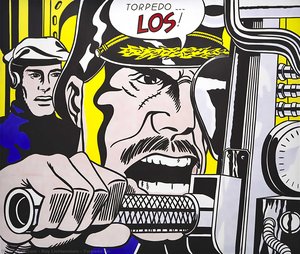
Roy Lichtenstein’s “Brattata,” completed in 1962, stands as a quintessential example of Pop Art's fascination with comic book aesthetics and its deliberate rejection of traditional artistic conventions. More than just a visual representation, it encapsulates the anxieties and aspirations surrounding American military preparedness during the Cold War era – specifically, the rigorous training undertaken by fighter pilots preparing for aerial combat.
The artwork’s genesis lies in DC Comics' “All-American Men of War” #89, published in January–February 1962. Lichtenstein meticulously adapted a panel from this publication, transforming it into a dynamic and emotionally charged composition that prioritizes clarity of form over realistic depiction. The central figure—a pilot wearing a black mask—fires arrows with forceful precision against a stark white background punctuated by bold black outlines.
Stylistic Innovation: Ben-Day Dots and Geometric Precision
Lichtenstein’s signature technique – the use of Ben-Day dots – dominates the visual landscape. These multicolored halftone dots create an illusion of texture and shading, mimicking the printing process employed in comic books. This deliberate stylistic choice wasn't merely decorative; it served to heighten the sense of immediacy and excitement associated with wartime action. Geometric shapes—circles, rectangles, and triangles—are strategically deployed to define the pilot’s features and arrows, reinforcing the artwork’s simplified perspective.
The artist skillfully captures the tension inherent in combat scenarios. The mask symbolizes anonymity or menace, while the mechanical devices subtly hint at a technologically driven environment – perhaps reflecting anxieties about Soviet military advancements during the period. Lichtenstein's meticulous attention to detail—particularly in rendering skin tones and shadows—adds a palpable sense of realism despite the stylized approach.
Symbolism Beyond the Surface
“Brattata” transcends its immediate visual narrative, delving into deeper symbolic layers. The artwork speaks to themes of courage, determination, and the psychological pressures faced by military personnel. Lichtenstein’s masterful use of color—primarily black, white, and red—creates a dramatic contrast that amplifies the emotional impact of the scene.
Furthermore, the composition mirrors the training exercises undertaken by WWII pilots – focusing on visual acuity and rapid reaction time. The artist's deliberate simplification of perspective underscores the importance of conveying essential information effectively. As Russ Heath accurately depicted, Lichtenstein meticulously reproduced the gun sight and cockpit control panel, mirroring the tools used by fighter pilots during combat.
A Legacy of Pop Art Influence
“Brattata” cemented Lichtenstein’s position as a pioneer of Pop Art, demonstrating how commonplace imagery could be elevated to artistic expression. Its enduring appeal lies in its ability to capture both the excitement of wartime action and the broader anxieties surrounding Cold War geopolitics—a testament to Lichtenstein's astute observation of his time and his transformative approach to painting.
Klausimai ir atsakymai
Ar šis kūrinys Brattata yra sukeitintas rankiniu būdu ar atspausdintas?
Ranko darbas: profesionalus pavežėjas rankiniu būdu nukopijuoja Brattata aliejuje ant lino drobės.
Kokią dydį turėčiau pasirinkti darbui Brattata?
Dydviai svyra nuo 31.7 x 31.5 cm (€178) iki 240.3 x 239.0 cm (€1843); šioje pusėje pateiktoje lentelėje nurodyti pagrindiniai etapai ir jų kainos.
Kiek trunka pristatymas?
Pristatymas užtruks nuo 4 iki 5 savaičių, naudojant nemokamą ekspresinį siuntimą visame pasaulyje; šioje pusėje taip pat galite rinktis skubios gamybos variantą. Jūs galite grąžinti prekę per 100 dienų ir gauti visą sumokėtą sumą atgal, nepriklausomai nuo bet kokių sąlygų.
Ar originalus kūrinys Brattata yra piešinys ar paveikslas?
Piešinys: Roy Lichtenstein jį sukūrė naudojant Piešiniai rašalu ant popieriaus.
 Peržiūrėti realaus dydžio版

 Pasidalinti
 Dalintis
 Išsamiau
 Informacinė l lapelė


 Atsisiųsti
 Panašūs eksponatai
 Rentgeno spindulių nuotrauka
 Automatinė diorama
 问答

 Statistika