

 Peržiūrėti realaus dydžio版
 Siųsti
 Dalintis
 Išsamiau
 Vadovas

 Atsisiųsti
 Panašūs eksponatai
 Rentgeno spindulių nuotrauka
 Diaporama
 Statistika
Homage to Chirico
 Romanticism
 1944
1944 70.0 x 59.0 cm
 Museo Mural Diego Rivera
 Rodyti daugiau
Giclée / Meno spausdinimas
Muziejų lygio „giclée“ arba drobos spausdinimas: greita gamyba ir lankstios apdailos parinktys. ( Pirkti rankomis tapytą reprodukciją Perejti prie skaitmeninių vaizdų)




































Pasirinkite iš mūsų nustatytų dydžių, atitinkančių originalaus meno kūrinio proporcijas.

Galite nurodyti savo matmenis, kad vaizdas atitiktų konkretų rėmą ar erdvę. Jei pasirinktas dydis nesutaps su originalaus paveikslėlio proporcijomis, mes arba apkirpsime kūrinį, arba išplėsime vaizdą naudojant veideliu atspindėtą arba vientisą šoną. Skaitmeninis maketas bus išsiųstas jums patvirtinti prieš pradedant gamybą.
Atkreipkite dėmesį, kad ekrane matomas vaizdinys neatspindi tikrojo apkirpimo ar išplėtimo. Tik maketas tiksliai parodytų galutinę kompoziciją.
Nors galima rinktis ir individualius dydžius, rekomenduojame pasirinkti vieną iš išanksti nustatytų matmenų, kad būtų išlaikytos originalios proporcijos.
Pristatymas visame pasaulyje () per 2 weeks, o ne įprastas 4/5 savaičių laikotarpis. (26 rugsėjis)

Nemokamas greitasis pristatymas visame pasaulyje

Aukštos kokybės lininis drobė

Pilnas siuntimo draudimas

Muitinės mokesčių grąžinimo garantija

Tikro spalvų atitikimo garantija

100 dienų grąžinimo politika (tik esant įtaigoms)

100% pinigų grąžinimo garantija

Nuolaida dideliems užsakymams
 Stiklo variantas prieinamas tik pasirinkus dydį iki 110 cm

Homage to Chirico
Giclée / Meno spausdinimas
Reprodukcijos dydis
-


Visų pasirinktų variantų kaina
$ 80
Autoriaus biografija
Early Life and Artistic Foundations
Roberto Montenegro Nervo, born February 19, 1885, in Guadalajara, Mexico, emerged from a family steeped in the social fabric of the Porfirio Díaz era. His father, Colonel Ignacio L. Montenegro, and his aunt, poet Amado Nervo, provided a backdrop of both military tradition and artistic sensibility that would subtly shape the young artist’s path. Early inclinations toward drawing surfaced during his schooling in Guadalajara, leading him to Félix Bernardelli, who introduced him to the flowing lines and decorative motifs of Art Nouveau—a style that initially captivated Montenegro's imagination. This early exposure proved pivotal, laying a foundation for his later explorations of form and color. In 1903, he journeyed to Mexico City, briefly considering architecture before fully embracing his artistic calling at the Academy of San Carlos. There, amidst peers like Diego Rivera, Ángel Zárraga, and Saturnino Herrán, Montenegro honed his skills under the guidance of Leandro Izaguirre, Germán Gedovius, and Alberto Fuster.European Influences and a Unique Artistic Voice
A turning point arrived in 1906 when Montenegro secured a grant to study in Europe, an opportunity that propelled him into the heart of the avant-garde. Madrid’s Academy of San Fernando provided initial training, but it was Paris—from 1907 to 1910 and again from 1913 to 1916—that truly ignited his artistic evolution. The city pulsed with revolutionary ideas; Montenegro found himself in the orbit of Pablo Picasso, Georges Braque, and other pioneers of Cubism. While deeply affected by this burgeoning movement, he resisted complete assimilation, choosing instead to forge a distinctive path that blended European modernism with the rich traditions of Mexican folk art. His travels extended beyond Paris—to London, Italy, and Mallorca—each locale contributing layers to his evolving aesthetic sensibility. In Mallorca, particularly, he found inspiration in local life, capturing scenes like Pescador de Mallorca (1915), a painting that foreshadowed his lifelong fascination with fantasy and tradition.The Rise of Muralism and Beyond
Montenegro was among the first artists to engage with the burgeoning Mexican muralism movement following the Revolution. However, his approach differed significantly from contemporaries like Diego Rivera. While Rivera’s murals were characterized by dramatic narratives and social commentary, Montenegro's work tended toward a more lyrical and decorative style. His most substantial mural project took place at the former San Pedro and San Pablo monastery, but its relative lack of overt political messaging led to a gradual diminishing of his prominence within the dominant narrative of Mexican muralism. Undeterred, Montenegro channeled his energies into illustration, portrait painting, and—most importantly—the promotion of Mexican handcrafts and folk art. He became a tireless advocate for these often-overlooked cultural treasures, recognizing their intrinsic beauty and historical significance.A Champion of Mexican Identity
Montenegro’s dedication to preserving and celebrating Mexican culture extended far beyond his artistic practice. He published numerous books on the subject, including Máscaras mexicanas (1926), Pintura mexicana (1880-1860) (1933), and Retablos de México (1950), each a testament to his deep understanding and appreciation of the nation’s artistic heritage. He organized exhibitions both in Mexico and the United States, most notably collaborating with Miguel Covarrubias on Twenty Centuries of Mexican Art (1940) for MoMA in New York. Through these endeavors, Montenegro played a crucial role in shaping international perceptions of Mexican art, highlighting its unique blend of indigenous traditions, colonial influences, and modern sensibilities.Legacy and Enduring Influence
Roberto Montenegro Nervo passed away on October 13, 1968, in Mexico City, leaving behind a diverse body of work that continues to captivate audiences today. While often overshadowed by his more overtly political contemporaries, Montenegro’s contribution to Mexican art remains significant. His unique blend of folk art, modernism, and illustration—coupled with his tireless advocacy for Mexican culture—established him as a pivotal figure in the post-Revolution era. He demonstrated that artistic expression could take many forms, from monumental murals to delicate illustrations, and that true cultural preservation lay in celebrating the beauty and diversity of a nation’s heritage. His paintings, such as Homage to Chirico (1944), with its dramatic composition and rich texture, continue to resonate with viewers, offering a glimpse into the complex artistic vision of a truly remarkable artist.
Trumpa informacija apie kūrėją
- Artistic Movement Or Style: Mexican Muralism, Modernism
- Artists Who Influenced This Artist:
- Pablo Picasso
- Georges Braque
- El Greco
- Goya
- Date Of Birth: February 19, 1885
- Date Of Death: October 13, 1968
- Full Name: Roberto Montenegro Nervo
- Nationality: Mexican
- Notable Artworks:
- Homage to Chirico
- The Worthy Poet’s Grocery
- Place Of Birth: Guadalajara, Mexico
Susiję straipsniai
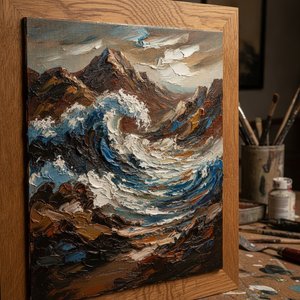
Oil on Panel: The Ultimate Guide to Bold, High-Impact Texture & Depth
Master the art of impact with our expert guide to oil on panel. Discover how impasto textures and heavy-body pigments create 3D depth and bold visual energy for modern interiors. Elevate your space with high-impact, hand-painted masterpieces designed for maximum aesthetic punch.
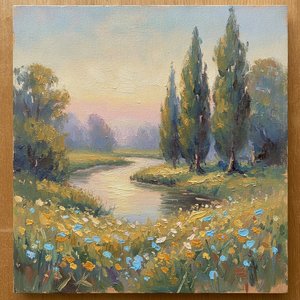
The Timeless Charm of Oil on Board: Reimagining Texture and Light through the Impressionist Lens
Discover the profound intimacy of oil on panel. Explore how Impressionist masters used rigid supports to capture light, texture, and impasto depth through exquisite, handmade oil reproductions for discerning collectors.
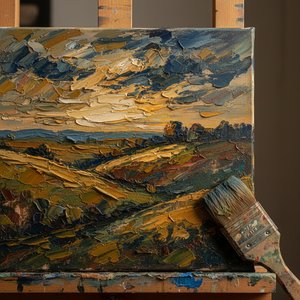
The Timeless Beauty of Oil on Canvas: A Masterclass in Texture, Impasto, and Artistic Mastery
Discover the profound allure of oil on canvas. Explore the mastery of impasto textures, the science of pigment longevity, and expert guides to selecting museum-quality reproductions that elevate your collection with timeless elegance and tactile depth.

The Enduring Legacy of Oil on Canvas: Technique, History & Aesthetic Impact
Explore the rich history & techniques of oil painting – from Renaissance masters to Impressionism. Discover pigments, layering methods, and why this timeless medium endures. Expert insights for artists & art enthusiasts.

The Soul of Impressionism: Why Oil on Canvas Captures Eternal Light and Timeless Emotion
Discover the enchanting alchemy of Impressionism. Explore how the mastery of oil on canvas, through glazing and impasto, captures eternal light and emotion. Perfect for lovers of Monet and Van Gogh seeking the profound depth of hand-painted fine art.