Pop Art · 1955
Collection (Robertas Raušenbergas, 1955)
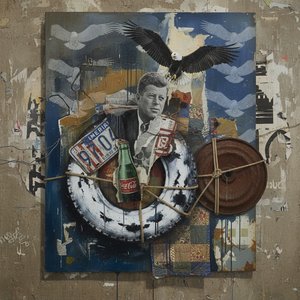
Robertas Raušenbergas (1925–2008) sukūrė Collection. Šis kūrinys datuojamas 1955 m. Šis kūrinys priklauso Pop Art kieruliui. Pagaminta naudojant Mixed Media. Eksponatas saugomas San Francisco modernio meno muziejus San Francisco, JAV. Matmenys – 203 × 243 cm.
- 1955
- Mixed Media
- 203 × 243 cm
- San Francisco modernio meno muziejus

 Peržiūrėti

 Rankinio darbo aliejinės imitacijos paveikslas
 Pasidalinti
 Dalintis
 Informacinė lLapelė


 Atsisiųsti
 Panašūs eksponatai
 Rentgeno spindulių nuotrauka
 Automatinė diorama
 Klausimai ir atsakymai

 Statistika
Collection, trumpai
- Pavadinimas
- Collection
- Autorius
- Robertas Raušenbergas (1925–2008)
- Autorius gimęs
- Port Artūras, Jungtinės Amerikos Valstijos
- Data
- 1955
- Technika
- Mixed Media
- Dalių matmenys
- 203 × 243 cm
- Kur galima pamatyti
- San Francisco modernio meno muziejus, San Francisco, JAV
- Judėjimas
- Pop Art
- Laikotarpis
- Modern
- Tema
- combine painting, collage, fabric, wood scraps, color field, everyday objects
Ką vaizduoja Collection?
A Symphony of Chaos and Color: Rediscovering Rauschenberg’s “Collection”
In the mid-1950s, the art world was gripped by the intense, often brooding emotionalism of Abstract Expressionism. Yet, amidst this era of heavy shadows and singular gestures, Robert Rauschenberg emerged with a vision that refused to be contained by the edges of a traditional canvas. His 1955 masterpiece, “Collection,” serves as a breathtaking manifesto of this new era—a work that does not merely sit upon a wall but breathes with the vibrant, messy, and beautiful energy of life itself. To encounter this piece is to witness a pivotal moment in American art history, where the boundaries between the high art of the gallery and the raw textures of the street began to dissolve into something entirely new.
The visual impact of “Collection” is immediate and overwhelming. Spanning an impressive 203 x 243 cm, the work presents a kaleidoscopic tapestry that defies monochromatic simplicity. Instead of the somber tones favored by his contemporaries, Rauschenberg orchestrates a brilliant dialogue between deep reds, sunny yellows, calming blues, and fiery oranges. This is not a painting of static shapes, but a dynamic landscape of layered complexity. As your eyes wander across the surface, you encounter an asymmetrical dance of elements: fragments of weathered wood scraps juxtaposed against unexpected textures, and even the subtle, haunting presence of a mirror positioned off-center, which invites the viewer to physically enter the artwork’s space.
The Alchemy of the Combine: Technique and Texture
At the heart of this work lies Rauschenberg’s revolutionary “Combine” technique, a method that fundamentally redefined what a painting could be. He moved beyond the brush to embrace the world around him, seamlessly blending traditional painting with the tactile reality of collage. Through the use of silkscreen printing alongside meticulously applied fabric and found objects, he achieved a textural richness that is almost sculptural in nature. This hybrid approach allows light to play differently across the canvas, catching on raised surfaces and receding into deep, shadowed crevices.
For the discerning collector or interior designer, this piece offers an unparalleled depth of character. The way the artwork incorporates various shades—from verdant greens to stark whites—creates a sense of movement that changes depending on the lighting of a room. It is a work that demands attention, providing a sophisticated focal point that bridges the gap between modern abstraction and contemporary installation art. The inclusion of diverse shapes, including a delicate bird figure that drifts through the composition, adds a layer of narrative intrigue, making every viewing a new discovery.
A Legacy of Freedom and Artistic Rebellion
To understand “Collection” is to understand the spirit of rebellion that defined Rauschenberg’s career. Born in the oil fields of Texas, his life was one of transition and movement, a nomadic sensibility that allowed him to see beauty in the discarded and the everyday. By integrating found objects into his work, he sought to liberate painting from the rigid confines of form and content, mirroring the broader cultural shifts of a post-war America seeking new modes of expression. He rejected the perceived heaviness of the New York School in favor of a more democratic, inclusive aesthetic.
Ultimately, “Collection” is an invitation to embrace complexity. It symbolizes the beauty found in the collision of disparate parts—the way chaos can be orchestrated into harmony. For those seeking to bring a sense of historical significance and avant-garde energy into a curated space, a high-quality reproduction of this work offers more than just decoration; it offers a piece of the revolution. It is a profound statement of artistic freedom that continues to inspire awe, reminding us that art is not just something to be looked at, but something to be lived within.
Kuriame muziejuje eksponuojama karya Collection?
San Francisco modernio meno muziejus
San Francisco, JAV
Institucijos kilmė ir istorija San Francisco modernio meno muziejus buvo įkurtas 1935 metais. Dirigiuojama Grace L. McCann Morley, institucija pradinai veikė kaip San Francisco meno muziejus.


Collection dididraudžios kokybės vaizdai

Apsaugotas autoriškomis teisėmis: šie failai skirti asmeniniam peržiūrėjimui, o ne perraštiniam naudojimui.
Robertas Raušenbergas, Collection (1955), San Francisco modernio meno muziejus.
Atsakimai į klausimus apie Collection
Kur galima pamatyti „Collection“ – Robertas Raušenbergas originalą?
Kūrinys „Collection“ – Robertas Raušenbergas rodomas San Francisco modernio meno muziejus, San Francisco, JAV. Muziejaus informacija nuoroda į originalą, o ne į reprodukciją.
Kuriem metais buvo sukurta „Collection“ – Robertas Raušenbergas?
„Collection“ sukurta 1955 m. Ši data leidžia įvardyti kūrinį Robertas Raušenbergas kūrybinėje karjeroje bei jo epochoje.
Kokia technika panaudota kūriniui „Collection"]?
„Collection“ – Robertas Raušenbergas technika – Mixed Media. Kopijos siekia atkartoti šios technikos vaizdą.
Kokie yra „Collection“ – Robertas Raušenbergas realūs matmenys?
Originalaus dydžio kūrinys „Collection“ yra 203 x 243 cm. Originalūs matmenys padeda lengviau išsirinkti tinkamą reprodukcijos dydį.
Kas yra „Collection“?
„Collection“ – Robertas Raušenbergas temos apima combine painting, collage, fabric, wood scraps, color field, everyday objects, abstract forms. Kartu jie apibendrina šio kūrinio tematiką.
Ar „Collection“ yra viešosios teisės kūrinys?
Autorių teisių statusas kūriniui „Collection“ – Robertas Raušenbergas: kūrinys priklauso vis dar saugoma autorineje teisėje. Tai nulemia, ar galima laisvai reprodukciuoti šį vaizdą.
Kas sukūrė „Collection“?
Kūrinį „Collection“ sukūrė Robertas Raušenbergas. Darbas katalogizuojamas Robertas Raušenbergas vardu.
Kokiam meno stiliui priklauso „Collection“ – Robertas Raušenbergas?
Kūrinio „Collection“ – Robertas Raušenbergas stilius – Pop Art. Ši klasifikacija leidžia šį darbą įtraukti į bendrą susijusių menininkų ir kūrinių kontekstą.
Kokio Robertas Raušenbergas kūrybos laikotarpio priklauso „Collection“?
„Collection“ priklauso Robertas Raušenbergas kūrybos karjeros Combine Era etapui. Ši klasifikacija atspindi kūrinio ryšį su menininko evoliucija.
Apie menininką Robertas Raušenbergas

1925–2008, Jungtinės Amerikos Valstijos
Robertas Raušenbergas
Gyvenimo Pradžia ir Formavimasis Robertas Rauschenbergas, tikruoju vardu Milton Ernest Rauschenbergas, gimė 1925 metais Port Artūre, Teksaso valstijoje, JAV. Jo gyvenimas nuo pat pradžių atspindėjo dinamišką energiją ir transformacinį dvasią, kuri vėliau tapo jo meno pasaulio bruožais. Vaikystę menininkas praleido keliaujant po įvairius kraštus – tėvo profesija reikalavo nuolatinio persikraustymo. Šis klajokliškas gyvenimo būdas subtiliai ugdė jo receptivumą skirtingoms vizualinėms stimuliacijoms ir pasiryžimą priimti pokyčius.
Apie Robertas Raušenbergas Žinomiausi Robertas Raušenbergas darbai
Taip pat Robertas Raušenbergas darbai
 Valda1963
 Žeimos1970
 Barge1963
 Odalisk1958
Esdai apie Collection
 Robert Rauschenberg: Bridging Painting & Life – A Comprehensive Exploration of Combines, Silkscreens, and the Erasure of BoundariesExplore the revolutionary art of Robert Rauschenberg – Combines, silkscreens & more. Discover his impact on Pop Art, investment potential &…
 Mastering Art Collecting: A Professional Guide to Acquiring Museum-Quality Famous ReproductionsMaster the art of collecting with our expert guide to museum-quality oil reproductions. Learn to distinguish hand-painted masterpieces from…
 Beyond the Subject: The Raw Power of Abstract Expressionism | A Definitive Guide for the Modern CollectorExplore the visceral power of Abstract Expressionism. From the New York School to action painting, discover how to collect high-impact, han…