Minimalism · 1968
Untitled (Robert Morris, 1968)
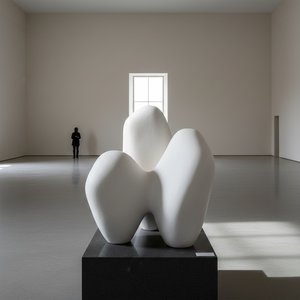
Robert Morris (1931–2018) sukūrė Untitled. Šis kūrinys datuojamas 1968 m. Šis kūrinys priklaulo Minimalism kieruliui. Pagaminta naudojant Acrylic. Eksponatas saugomas Tate Modern Londras, Jungtinė Karalienija.
- 1968
- Acrylic
- Tate Modern, Londras

 Peržiūrėti realaus dydžio版

 Rankinio darbo aliejinės imitacijos paveikslas
 Pasidalinti
 Dalintis
 Vadovas


 Atsisiųsti
 Panašūs eksponatai
 Rentgeno spindulių nuotrauka
 Automatinė diorama
 问答

 Statistika
Untitled: pagrindinė informacija
- Pavadinimas
- Untitled
- Autorius
- Robert Morris (1931–2018)
- Dizainere/is gimęs
- Kansas City, United States
- Data
- 1968
- Mediumas
- Acrylic
- Kur galima pamatyti
- Tate Modern, Londras, Jungtinė Karalienija
- Judėjimas
- Minimalism
- Tema
- sculpture, minimalism, organic, form, space, suspension
Ką vaizduoja Untitled?
Robert Morris’s “Untitled”: A Meditation on Absence and Form
Robert Morris’s “Untitled,” created in 1968, stands as a cornerstone of Minimalism and a profound exploration into the very nature of perception within art. More than simply a sculpture, it's an invitation to contemplate the space between object and viewer, a deliberate rejection of representational imagery in favor of pure form and process. The piece, often realized in cast concrete or resin – though variations exist – presents a single, elongated form suspended from the ceiling, seemingly adrift within a stark white void. This simplicity is deceptive; it’s precisely this lack of overt narrative that generates such a powerful emotional response.
The sculpture's design deliberately avoids any immediately recognizable reference. It’s an organic curve, reminiscent perhaps of a fossilized stone or the attenuated form of a stretched root system – a subtle nod to the natural world without resorting to direct depiction. The surface is rarely smooth; instead, it bears the marks of its creation: subtle undulations, slight variations in tone, and even traces of the casting process itself. These imperfections aren’t flaws but integral elements of the work's philosophy, emphasizing the inherent materiality of the object and rejecting the illusionistic qualities of traditional sculpture. The deliberate roughness invites a tactile engagement, prompting us to consider the physicality of the piece and its relationship to our own bodies within the space.
The Philosophical Undercurrents of Minimalism
“Untitled” is deeply rooted in the burgeoning philosophical currents of the late 1960s. Minimalist artists like Morris were reacting against the perceived excesses of Abstract Expressionism, rejecting subjective emotion and personal expression in favor of a more objective approach to art-making. They sought to strip away all unnecessary elements – color, texture, narrative – leaving only the essential form and its relationship to space. Morris’s work directly engages with questions of perception: how do we see? How does our mind construct meaning from visual information? The sculpture's stark simplicity forces us to confront our own assumptions about art and representation.
Crucially, Morris wasn’t simply creating a visually pleasing object. He was interested in the *experience* of seeing – the way the form interacts with the surrounding space, the effect it has on the viewer’s perception of reality. The work's placement within a white room is deliberate; it isolates the sculpture and forces us to focus entirely on its shape and presence. This creates a sense of quiet contemplation, inviting viewers to slow down and engage with the artwork in a more mindful way.
Materiality and Process: A Key to Understanding
The choice of materials – typically cast concrete or resin – is significant. These durable, industrial substances lend an air of solidity and permanence to the sculpture, yet their inherent imperfections subtly undermine this sense of stability. The casting process itself becomes part of the artwork’s narrative; the marks left by the mold are not concealed but deliberately revealed, emphasizing the labor involved in its creation. This transparency – a key characteristic of Minimalism – invites us to consider the artist's hand and the physical processes that shaped the final form.
Morris often experimented with different casting techniques, manipulating the pour to create variations in texture and surface quality. These subtle differences contribute to the sculpture’s overall sense of ambiguity and complexity. The work is not about achieving a perfect, idealized form; it's about exploring the possibilities inherent within the materials and processes themselves.
Symbolism and Emotional Resonance
While “Untitled” resists easy interpretation, it evokes a powerful sense of stillness and contemplation. The elongated form suggests a reaching gesture – perhaps towards an unknown horizon or a deeper understanding – while its suspended position conveys a feeling of vulnerability and precariousness. The work’s simplicity can be surprisingly unsettling, prompting us to confront our own anxieties about the world and our place within it.
Ultimately, “Untitled” is not a statement but an experience. It's a reminder that art doesn't always need to tell a story; sometimes, its power lies in its ability to simply *be* – a quiet meditation on form, space, and the mysteries of perception. It remains a profoundly influential work, continuing to challenge our assumptions about what constitutes art and how we engage with it.
Kuriame muziejuje eksponuojamas karya Untitled?
Tate Modern
Londras, Jungtinė Karalienija
Tate Modern istorija ir kilmė Tate Modern buvimas Jungtinėje Karalienijoje, Londone, yra glaudžiai susijęs su pramoninės Southwark skylės istorija. Ši vieta anksčiau buvo užimama Bankside elektrine stotis – konstrukcija, kuri veikė tris dešimtmečius, kol galiausiai nebeveikė. Ekonominiai pokyiai, ypač drastiškas naftos kainų augimas, privertė elektrinę stotį uždaryti 1981 m.


Untitled dididžioja:resoliucija

Autorių teisės apsaugotos: vaizdas pateikiamas tik informacinėms tikslams.
Daugiau variantų, iškaržymų ir citavimo →Robert Morris, Untitled (1968), Tate Modern.
Dalykas Untitled: klausimai
Kaip „Untitled“ stilius susijęs su kūrėjo laikmečiu?
„Untitled“ priklauso Minimalism krypčiai, o jo kūrėjas dirbo Modern laikotarpiu.
Iš kokios šalies kilęs Minimalism kūrinys „Untitled“?
Minimalism stiliaus kūrinys „Untitled“ sukurtas menininko, gimęs United States.
Kodėl „Untitled“ autoriškos teisės statusas yra toks, koks yra?
Autorinės teisės statusas kūriniui „Untitled“ – vis dar saugoma autorineje teisėje – nustatomas remiantis to, kad menininkas mirė 2018 m.
Kokią emociją sukelia „Untitled“?
Emocinis tonas, nurodytas kūriniui „Untitled“ – Robert Morris, yra Reflective. Jis apibūdina jausmą, kurį išreiškia šis darbas.
Kokia paletė ir pagrindinė spalva apibrėžė „Untitled“?
„Untitled“ – Robert Morris kūryboje naudojama Neutrals paletė, kurioje dominuoja Celadon (#b3b5a7) spalva.
Ar galiu pamatyti „Untitled“ – Robert Morris skirtingame apšvietime?
„Untitled“ galima tyrinėti sluoksniu sluoksnį naudojant kūrinio Rentgeninis vaizdas puslapį – interaktyvą vaizdo peržiūrą, įkvėptą restauratoriaus šviesos stalo, kuriame pateikiamos vien ambivalentiškos vaizdo interpretacijos iš vienylies optinių sluoksnių.
Kam rekomenduojamas naudojimui „Untitled“ spausdinys?
Rekomenduojamas naudojimo būdas kūriniui „Untitled“ – Robert Morris yra Reflective. Jis taip pat gali būti naudojamas kitoms paskritis.
Kokią vietą Robert Morris kūrybos ešėlyje užima „Untitled“?
Robert Morris kūryboje „Untitled“ atlieka Minimalism stilių, susijęs su minimalist abstraction, process-oriented, conceptual space, perceptual inquiry, deconstructed form, reduced elements, systematic approach, formal exploration temomis.
Ar galėčiau pamatyti „Untitled“ – Robert Morris ant savo sienos prieš pirkdama/pirkdamas?
„Untitled“ galima peržiūrėti papildytoji realybės formatu: kūrinio Peržiūra papildintajai realybei puslapyje, naudodami suderinamą įrenginį, galite pamatyti jį savo erdvėje.
Apie šį menininką, Robert Morris

1931–2018, United States
Robert Morris
The Architect of Perception: The Life and Legacy of Robert Morris In the vast, often turbulent landscape of twentieth-century American art, few figures cast as long or as intellectually profound a shadow as Robert Morris. Born in 1931 in Kansas City, Missouri, Morris did not merely participate in the movements of his time; he provided the theoretical and physical scaffolding upon which much of contemporary art was built. His journey began with a rigorous multidisciplinary foundation, blending the precision of engineering with the expressive potential of fine art. This unique duality—the ability to dissect a form through a technical lens while simultaneously questioning its philosophical essence—became the hallmark of his career.
Taip pat Robert Morris darbai
 Document
 Bull Wall
Esdai apie Untitled
 The Triadic Resonance of Artistic Choice: Exploring Emotional Response to Multiple Interpretations of a Singular ConceptExplore the emotional power of art & discover how skilled artists create lasting masterpieces. Custom paintings, expert consultations, & mu…
 The Subtlety of Form: Exploring Minimalism’s Evolution & Enduring InfluenceExplore the evolution of Minimalism with OriginalUniqueArt. Discover key artists like Judd & Martin, core principles, collecting insights, …
 The Subtlety of Form: Exploring Emotional Resonance in Minimalist ArtExplore the emotional depth of minimalist art with OriginalUniqueArt. Discover key artists like Agnes Martin & Donald Judd, investment pote…