Ecsalių versija
 Viskas apie Rythm







































 Dėl meno kūrinių ar reprodukcijų, kurių bet kuri pusė yra didesnė nei 105 cm (apie 41 inch), rėmas bus siunčiamas kaip išskaidytas surinkimo rinkinys. Šis metodas užtikrina saugų pristatymą ir apsaugo nuo transportavimo metu galimos žalos.


The Composition of Form and Color
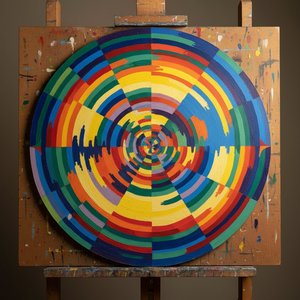
The painting Rythm, dated 1939, presents a central circular structure composed of intersecting geometric shapes and varied color segments. This primary circle is divided into multiple sections, each containing distinct patterns and internal designs. Smaller circles are nested within the larger circular framework, creating a layered effect of concentricity. Two additional circles appear in the periphery: one in the upper right corner and another in the lower left corner. The arrangement of these shapes suggests a spiral or a swirling motion. The surface is characterized by a variety of hues that interact through their proximity, creating a sense of movement across the canvas.
The technique relies on the application of color to define form rather than using line to outline recognizable objects. The artist utilizes the principles of Orphism, focusing on the interaction of light and chromatic intensity. The shapes are not static; they are organized to create a visual rhythm through the interplay of curves and counter-curves. This method uses the physical action of looking to activate the vision, as the eye moves between the contrasting colors and the varying thicknesses of the circular discs.
Historical Context and Artistic Intent
Created in 1939, this work belongs to a period when the artist had moved toward a more radical, non-objective form of abstraction. This phase of production followed a return to the circular forms that characterized earlier explorations of harmony. The composition reflects a departure from figurative subjects, focusing instead on the expressive potential of color alone. The organization of these shapes and their spatial relationships determine the visual tempo of the piece.
The work is situated within the School of Paris movement. It reflects a theoretical interest in how color functions as an active force capable of shaping perception. By utilizing contrasting complementary colors, such as red and green or blue and orange, the painting creates a synchromic effect. This approach seeks to move beyond the representation of the physical world, aiming instead to establish a direct connection between the viewer's eye and the agitation of light and color.
Klausimai ir atsakymai
Ar šis kūrinys Rythm yra sukeitintas rankiniu būdu ar atspausdintas?
Ranko darbas: profesionalus pavežėjas rankiniu būdu nukopijuoja Rythm aliejuje ant lino drobės.
Kokią dydį turėčiau pasirinkti darbui Rythm?
Dydviai svyra nuo 30.2 x 33.2 cm (€178) iki 218.9 x 240.7 cm (€1705); šioje pusėje pateiktoje lentelėje nurodyti pagrindiniai etapai ir jų kainos.
Kiek trunka pristatymas?
Pristatymas užtruks nuo 4 iki 5 savaičių, naudojant nemokamą ekspresinį siuntimą visame pasaulyje; šioje pusėje taip pat galite rinktis skubios gamybos variantą. Jūs galite grąžinti prekę per 100 dienų ir gauti visą sumokėtą sumą atgal, nepriklausomai nuo bet kokių sąlygų.
Kur yra originalas kūrinio Rythm?
Originalas yra Musee d'art Moderne de la Ville de Paris kolekcijoje, Paryžius.
Kokia technika buvo naudojama kūriniui Rythm autoriu Robert Delaunay?
Oil On Canvas
 Peržiūrėti realaus dydžio版

 Pasidalinti
 Dalintis
 Išsamiau
 Informacinė l lapelė


 Atsisiųsti
 Panašūs eksponatai
 Rentgeno spindulių nuotrauka
 Automatinė diorama
 问答

 Statistika