Brandusis Renesansas
Disputa (Rafaelis)
Disputa – tai Rafaelis (1483–1520) kūrinys. Šis kūrinys priklaulo Brandusis Renesansas kieruliui. Pagaminta naudojant Freska.
- Freska

 Rankinio darbo aliejinės imitacijos paveikslas
 Pasidalinti
 Dalintis
 Vadovas


 Atsisiųsti
 Panašūs eksponatai
 Automatinė diorama
 问答

 Statistika
Disputa: pagrindinė informacija
- Pavadinimas
- Disputa
- Autorius
- Rafaelis (1483–1520)
- Dizainere/is gimęs
- Urbinas, Italija
- Mediumas
- Freska
- Judėjimas
- Brandusis Renesansas
- Laikotarpis
- Renesansas
Žvelgiant į Disputa
A Divine Dialogue: Unveiling Raphael’s *Disputa*
Raphael's *Disputa*, painted between 1509 and 1510, is a cornerstone of High Renaissance art, residing within the breathtaking Stanze di Raffaello in the Apostolic Palace at Vatican City. This monumental fresco isn’t merely a painting; it’s a theological statement rendered with unparalleled grace and intellectual depth, inviting viewers into a visual discourse on faith, reason, and divine truth.Subject & Composition: Heaven Meets Earth
The *Disputa* presents a complex yet harmonious composition divided into two distinct realms. The upper portion depicts a celestial gathering of theologians, saints, prophets, and martyrs arranged in a semi-circular formation around Christ and the Virgin Mary. They engage in animated discussion, their gestures conveying reverence and intellectual fervor. Below, on an architectural platform resembling a classical temple apse, earthly theologians – recognizable figures like Saint Augustine, Saint Thomas Aquinas, and Saint Gregory – continue the debate concerning the Holy Sacrament. This deliberate juxtaposition visually represents the convergence of heavenly wisdom and human inquiry. The composition is masterfully structured with a pyramidal form culminating in Christ, drawing the eye upwards towards the divine source.Style & Technique: The High Renaissance Ideal
*Disputa* exemplifies the hallmarks of the High Renaissance: balance, clarity, and idealized beauty. Raphael’s mastery of perspective creates a convincing sense of depth, while his use of *sfumato* – subtle gradations of light and shadow – lends an ethereal quality to the figures. Executed as a fresco, the painting demonstrates Raphael's technical brilliance in applying pigments to wet plaster, resulting in vibrant colors that have endured for centuries. The figures are not static; they possess dynamic poses and expressive faces, conveying a sense of lively intellectual exchange.Historical Context & Symbolism
Commissioned by Pope Julius II as part of the decoration of his private library (the *Stanza della Segnatura*), *Disputa* reflects the humanist spirit of the Renaissance – a renewed interest in classical learning and philosophical inquiry alongside religious faith. The room itself was intended to represent different branches of human knowledge: theology, law, poetry, and philosophy. The painting’s symbolism is rich and layered. The Holy Spirit, represented as a dove emanating light, signifies divine inspiration. The inclusion of prominent theologians underscores the importance of reason and scholarship in understanding religious doctrine. The architectural setting evokes the grandeur of ancient Rome, linking Christian theology to classical tradition.Emotional Impact & Lasting Legacy
*Disputa* transcends its theological subject matter to evoke a profound sense of awe, reverence, and intellectual curiosity. The painting’s harmonious composition and idealized figures inspire contemplation on the nature of truth, faith, and knowledge. It is not merely a depiction of a debate but an invitation to participate in it – to engage with the eternal questions that have occupied humanity for centuries. Raphael's *Disputa* remains a testament to his artistic genius and continues to captivate viewers with its beauty, intellectual depth, and enduring spiritual power.- Explore high-quality reproductions of *The Disputation of the Holy Sacrament* to bring Renaissance grandeur into your space.
- Discover more about Raphael’s life and artistic contributions within the context of the High Renaissance movement.
Disputa dididžioja:resoliucija

Viešoji domenė: suregalis mirė 1520 m.
Daugiau variantų, iškaržymų ir citavimo →Rafaelis, Disputa. Viešoji domenė.
Dalykas Disputa: klausimai
Kokio erdvės spalvos derėtų prie „Disputa“ – Rafaelis spalvų?
Atsižvelgiant į jo Žemiški tonai spalvas, kūrinys „Disputa“ puikiai tiktų Popieriaus svetainė kambariui.
Kam rekomenduojama „Disputa“ – Rafaelis reprodukcija?
Į kokį meno kryžminę ir kokį laikotarpį priskiriama „Disputa“ – Rafaelis?
„Disputa“ priklauso Brandusis Renesansas krypčiai, o jo kūrėjas dirbo Renesansas laikotarpiu.
Ar „Disputa“ pasižymi stipriais šviesos ir tamsos kontrastais?
Kaip „Disputa“ subalansuoja šviesą ir tamsą?
Kokią emociją perteikia Brandusis Renesansas stiliaus kūrinys „Disputa“?
„Disputa“ Dvasinis emocija akompaniuoja jo Brandusis Renesansas stiliui.
Kokio išdėstymo formatas tinka kūriniui „Disputa“ – Rafaelis?
Iš ko ir kokiu stiliumi sukurta „Disputa“?
„Disputa“ sukurta naudojant Freska, Brandusis Renesansas stiliuje.
Kam rekomenduojamas „Disputa“ – Rafaelis kaip dovana?
„Disputa“ siūloma kaip dovana Metinės šventė.
Apie šį menininką, Rafaelis

1483–1520, Italija
Rafaelis
Rafaelo: Renesanso Šviesos ir Grožio Simbolis Rafaelas Sanzias da Urbinas, pasauliui žinomas tiesiog Rafaeliu, iškilęs iš nepaprastai deramo kultūrinio kraštovaizdžio. Gimė 1483 metais Urbino miesto sienų viduje, mažo, bet intelektualiai gyvybingo valstiečių miesto centrinėje Italijoje. Jo ankstyvieji metai buvo įmerkiami į atmosferą, kuri vertino tiek meninę kūrybę, tiek humanistinį mokymąsi. Tėvas, Džovanis Santis, nebuvo tik dailininkas, dirbęs kunigaikščio Federiko da Montefeltro – jis buvo vyras, giliai įsitraukęs į Renesanso minties sroves, poetas, aprašęs kunigaikščio gyvenimą ir aktyviai ieškojęs naujų meninių idėjų iš visos Italijos ir už jos ribų.
Taip pat Rafaelis darbai
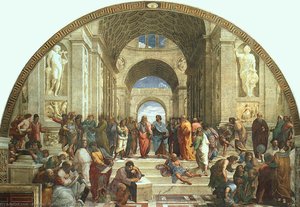 Atėjių mokykla1511
 Sistinė Madona1513
 Kristaus Pakeitimas1520
 Merkelės Santuoka1504

Essays around Disputa
 Giotto di Bondone: Revolutionizing Late Medieval Painting through Narrative InnovationExplore the revolutionary art of Giotto di Bondone! Discover his groundbreaking techniques, iconic frescoes like those in the Arena Chapel,…
 Masterpieces of Light: The Top 25 Artworks by Duccio di BuoninsegnaJourney through the divine elegance of Duccio di Buoninsegna. Explore 25 iconic Sienese masterpieces, from the Maestà to the Rucellai Madon…
 Rafaelio Šedevrai: Top 25 Tapybų Kūriniai Jūsų Interjerui | OriginalUniqueArtAtraskite 25 įspūdingiausius Rafaelio paveikslus! Išsami istorija, technikos ir meno stiliai. Renesanso tapybos šedevrai jūsų interjerui – …