Perjungti į spausdinamus版作品
 Skaityti daugiau







































 Dėl meno kūrinių ar reprodukcijų, kurių bet kuri pusė yra didesnė nei 105 cm (apie 41 inch), rėmas bus siunčiamas kaip išskaidytas surinkimo rinkinys. Šis metodas užtikrina saugų pristatymą ir apsaugo nuo transportavimo metu galimos žalos.


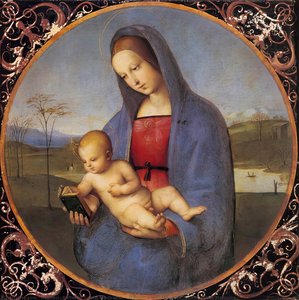
A Vision of Serenity: Exploring Raphael’s *Alba Madonna*
Raphael's *Alba Madonna*, painted in 1511, stands as an unparalleled testament to the High Renaissance – a harmonious fusion of beauty, grace, and spiritual contemplation. This circular oil painting transcends mere portraiture; it offers a tender glimpse into the sacred bond between mother and child, radiating warmth and tranquility that continues to captivate audiences centuries later.Subject & Composition
At its core lies Mary, portrayed with an ethereal luminescence characteristic of Raphael’s signature style. She occupies a tranquil landscape setting, cradling the Christ Child delicately in her lap while John the Baptist stands beside them, attentively observing the scene. The masterful arrangement—a pyramidal structure drawing the eye to Mary's serene visage—creates remarkable balance and visual harmony. Furthermore, the circular *tondo* format, favored for domestic devotional paintings during Florentine Renaissance, imbues the artwork with an intimacy unmatched by other compositional choices of the time.Artistic Style & Technique
Raphael’s genius shines through in his meticulous application of oil painting techniques. The pervasive use of *sfumato*, a subtle blending of colors and tones, generates soft transitions and establishes atmospheric perspective, lending the figures an astonishingly lifelike quality. This technique—combined with a rich color palette dominated by blues, reds, and golds—amplifies the artwork’s visual splendor. Raphael's ability to convey both physical beauty and profound emotion solidified his reputation as one of the foremost artists of his era.Historical Context & Renaissance Ideals
Created during the zenith of the High Renaissance – a period marked by fervent artistic fervor in Italy – *Alba Madonna* embodies the era’s revived fascination with classical antiquity, humanism, and devout religious belief. Raphael himself was deeply influenced by these currents, striving for an ideal equilibrium between naturalistic observation and idealized beauty. Commissioned during Julius II's papacy—a pivotal moment in Roman history—the painting exemplifies the artistic grandeur that defined Rome at this time, reflecting the humanist spirit of the age.Symbolism & Emotional Impact
Beyond its aesthetic merits, *Alba Madonna* is laden with symbolic significance. The landscape backdrop—rolling hills merging into distant buildings—represents earthly splendor alongside a yearning for spiritual transcendence. John the Baptist’s posture foreshadows Christ's future role as savior, adding layers of theological depth to the visual narrative. Most notably, the painting evokes an overwhelming sense of peace and serenity, inviting viewers to contemplate timeless themes of faith, love, and maternal devotion. Its enduring legacy inspires artists and collectors alike—a masterpiece destined to resonate across generations.Klausimai ir atsakymai
Kokia „Alba Madonna“ – Rafaelas orientacija?
„Alba Madonna“ – Rafaelas yra Kvadratinis formatas kompozicija. Prieš renkantis spausdinimo dydį, verta patikrinti proporcijas.
Kaip galiu peržiūrėti „Alba Madonna“ – Rafaelas reprodukciją?
„Alba Madonna“ Peržiūra interjere puslapio funkcija leidžia peržiūrėti kūrinį prieš užsakant.
Kokią emociją sukelia „Alba Madonna“ kaip dovana?
Raminantis kūrinio „„Alba Madonna“ – Rafaelas“ nuotaika dera su jo rekomenduojama progia: Motinos diena.
Daugiau informacijos apie šį paveikslą
 Peržiūrėti realaus dydžio版
 Pasidalinti
 Dalintis
 Išsamiau
 Vadovas

 Atsisiųsti
 Panašūs eksponatai
 Rentgeno spindulių nuotrauka
 Automatinė diorama
 问答
问答 Statistika