Perjungti į spausdinamus版作品
 Skaityti daugiau







































 Dėl meno kūrinių ar reprodukcijų, kurių bet kuri pusė yra didesnė nei 105 cm (apie 41 inch), rėmas bus siunčiamas kaip išskaidytas surinkimo rinkinys. Šis metodas užtikrina saugų pristatymą ir apsaugo nuo transportavimo metu galimos žalos.


The Genesis of Beauty: Raphael’s “Adam and Eve”
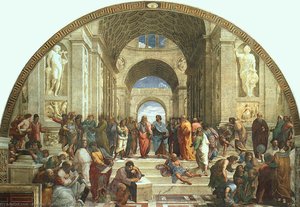
Raphael’s “Adam and Eve,” a cornerstone of the Stanza della Segnatura within the Vatican, isn't merely a depiction of a biblical story; it’s a profound meditation on creation, temptation, and humanity’s fraught relationship with both divinity and itself. Painted between 1508 and 1511 during his formative years in Rome, this fresco embodies the High Renaissance’s pursuit of idealized beauty, harmonious composition, and intellectual depth – qualities that firmly established Raphael as one of history's greatest artists. The scene unfolds within a meticulously rendered Garden of Eden, a space simultaneously idyllic and subtly menacing, reflecting the precariousness of human existence even at its inception.
The painting’s central figures, Adam and Eve, are presented with an arresting naturalism that was revolutionary for its time. Raphael masterfully captures their youthful vigor and innocence, yet hints at the impending consequences of their actions through subtle gestures and expressions. Note particularly the way Eve reaches out to offer Adam the forbidden fruit – a gesture both alluring and fraught with danger. The serpent, coiled around the Tree of Knowledge, isn’t portrayed as a monstrous villain but rather as a cunning strategist, embodying temptation itself. The composition is carefully balanced, drawing the eye from the central action towards the observing figure in the background, adding an element of mystery and suggesting the wider implications of this pivotal moment.
Renaissance Ideals: Symbolism and Technique
Raphael’s artistic choices are steeped in Renaissance symbolism. The Garden itself represents Paradise – a carefully constructed world governed by divine order. The Tree of Knowledge, with its vibrant colors and prominent position, is the focal point of the narrative, symbolizing both enlightenment and transgression. The use of *chiaroscuro*, the dramatic interplay of light and shadow, is expertly employed to create depth and highlight key elements, drawing attention to Adam and Eve’s figures while simultaneously suggesting the looming darkness of sin. Raphael's mastery of oil paint allowed him to achieve a remarkable level of detail and luminosity, capturing the textures of the foliage, the smoothness of skin, and the richness of the fabrics – all hallmarks of his refined style.
Furthermore, the figures themselves are rendered with an idealized beauty that reflects Renaissance humanism’s fascination with classical forms. Adam's muscular physique and Eve’s graceful posture echo ancient Greek sculpture, while their expressions convey a sense of vulnerability and nascent awareness. The careful attention to anatomical accuracy, combined with a profound understanding of human psychology, elevates the painting beyond a simple illustration of a biblical story.
Historical Context & Legacy
“Adam and Eve” resides within the Stanza della Segnatura, one of the most significant rooms in the Vatican Palace. This chamber was commissioned by Pope Julius II as a library and intellectual center, intended to house works that explored philosophy, theology, and classical learning. The fresco’s placement alongside other allegorical paintings – including those depicting Ptolemy and Pythagoras – underscores its role within this broader humanist project. It's important to note that Raphael was working in the shadow of Michelangelo’s Sistine Chapel ceiling, a monumental undertaking that profoundly influenced the artistic landscape of Rome. “Adam and Eve” demonstrates Raphael’s ability to synthesize classical ideals with Christian themes, creating a work of enduring beauty and intellectual resonance.
Reproductions of this iconic masterpiece offer art enthusiasts a unique opportunity to experience the grandeur and sophistication of Renaissance art in their own homes. OriginalUniqueArt's meticulously crafted reproductions capture every nuance of Raphael’s original technique, ensuring that you can bring this timeless story into your space with unparalleled fidelity.
Klausimai ir atsakymai
Kokia yra autorinės teisės situacijos priežastis kūriniam darbui „Adam and Eve“ – Rafaelas?
Autorinės teisės statusas kūriniui „Adam and Eve“ – yra viešosios erdvės dalis – jo autorinė teisė pasibaigusi – nustatomas remiantis to, kad menininkas mirė 1520 m.
Kaip galiu įsigyti „Adam and Eve“ – Rafaelas skaitmeninį vaizdą?
Skaitmeninį „Adam and Eve“ – Rafaelas vaizdą galima įsigyti šio kūrinio Skaitmeninis vaizdas puslapio skiltyje: aukštos raiškos skaitmeninio vaizdo atsisiuntimas.
Kiek plačiai žinomas Rafaelas kūrinys „Adam and Eve“?
„Adam and Eve“ – Rafaelas populiarumumo lygis yra Ikoniniai. Ši klasifikacija atspindi, kaip plačiai šis kūrinys yra atpažįstamas.
Daugiau informacijos apie šį paveikslą
 Peržiūrėti realaus dydžio版
 Pasidalinti
 Dalintis
 Išsamiau
 Vadovas

 Atsisiųsti
 Panašūs eksponatai
 Rentgeno spindulių nuotrauka
 Automatinė diorama
 问答
问答 Statistika