

 Peržiūrėti realaus dydžio版
 Siųsti
 Dalintis
 Išsamiau
 Vadovas

 Atsisiųsti
 Panašūs eksponatai
 Rentgeno spindulių nuotrauka
 Diaporama
 Statistika
Achilles and the Centaur Chiron
 Oil On Canvas
- WallArt
- Baroque Rococo
 1746
1746 159.0 x 127.0 cm
 Uffizi galerija
 Rodyti daugiau
Giclée / Meno spausdinimas
Muziejų lygio „giclée“ arba drobos spausdinimas: greita gamyba ir lankstios apdailos parinktys. ( Pirkti rankomis tapytą reprodukciją Perejti prie skaitmeninių vaizdų)




P118B €10

P118H €10

P118W €10

P438Z €10

P508JH €12

P508YH €12

P805H €10

P805Z €10

P919BZ €10

P919G €10

P919XJ €10

P959ZH €10

P968JZ €12

W106C €8

W218G €10

W218JH €8

W218Y €10

W307PJ €10

W316G €10

W316PJ €8

W316Y €10

W398PJ €8

W4111J €10

W500HY €15

W500JH €15

W692G €12

W849H €8

W940BG €15

W953PJ €8




Pasirinkite iš mūsų nustatytų dydžių, atitinkančių originalaus meno kūrinio proporcijas.

Įveskite jums reikiamą plotį ir aukštį, kad atvaizdas derėtų prie jūsų rėmo ar sienos. Spausdiną galima tik sumažinti, bet nepadidinti virš originalaus paveikslėlio dydžio, todėl keičiant proporcijas, dalis vaizdo prarandama. Prieš spausdinimą atsiųsime jums skaitmeninį maketą patvirtinimui. Šioje puslapio nuotraukoje matomas pjūvis nėra tikslus – jį rodo tik maketas.
Pristatymas visame pasaulyje () per 2 weeks, o ne įprastas 4/5 savaičių laikotarpis. (25 spalis)

Nemokamas greitasis pristatymas visame pasaulyje

Aukštos kokybės lininis drobė

Pilnas siuntimo draudimas

Muitinės mokesčių grąžinimo garantija

Tikro spalvų atitikimo garantija

100 dienų grąžinimo politika (tik esant įtaigoms)

100% pinigų grąžinimo garantija

Nuolaida dideliems užsakymams
 Stiklo variantas prieinamas tik pasirinkus dydį iki 110 cm

Achilles and the Centaur Chiron
Giclée / Meno spausdinimas
Reprodukcijos dydis
-


Visų pasirinktų variantų kaina
€ 70
Pompeo Batoni’s “Achilles and the Centaur Chiron”: A Masterpiece of Baroque Narrative
Pompeo Batoni's "Achilles and the Centaur Chiron," painted in 1746, is more than just a depiction of a classical myth; it’s a profound meditation on mentorship, transformation, and the delicate balance between savagery and civilization. This monumental canvas, now housed within the Galleria degli Uffizi in Florence, immediately captivates with its dramatic lighting, rich textures, and meticulously rendered figures – hallmarks of Batoni's signature Baroque style. The scene unfolds with a palpable sense of intimacy as the young Achilles, barely a man, receives instruction from Chiron, the renowned centaur tutor, a figure steeped in both wisdom and wildness.
Batoni’s artistic approach is deeply rooted in the traditions of Bolognese Classicism, yet he skillfully infuses it with the dynamism and emotional intensity characteristic of the late Baroque. He draws inspiration from Raphael's balanced compositions and Poussin’s masterful use of light and shadow, but elevates them through a heightened sense of theatricality. The painting isn’t merely illustrating a story; it’s actively *performing* it – a carefully orchestrated tableau designed to evoke both wonder and contemplation.
The Symbolism of the Encounter
The central relationship between Achilles and Chiron is laden with symbolic weight. Chiron represents the crucible of transformation, the place where raw potential is honed into refined skill. The centaur’s role as a teacher—a figure often associated with wilderness and instinct—contrasts sharply with Achilles' burgeoning humanity. Batoni subtly emphasizes this duality through the composition: Chiron, despite his animalistic features, possesses an air of serene authority, while Achilles embodies youthful eagerness and vulnerability. The woman standing between them, shrouded in mystery, is believed to be Thetis, Achilles’ mother, acting as a witness to this pivotal moment.
Notably, the lyre that Chiron plays isn't simply an instrument; it symbolizes Apollo, the god of music and healing—a direct link to Chiron’s divine lineage. The act of teaching through music suggests a deeper connection between knowledge, harmony, and the cultivation of virtue. The arrow visible in the upper right corner could represent both Achilles’ future as a warrior and the potential for violence inherent within him – a reminder that even the most noble heroes are shaped by their experiences.
Technique and Artistic Detail
Batoni's technical mastery is immediately apparent in the painting’s exquisite detail. The fabrics of the figures—Achilles’ tunic, Chiron’s cloak—are rendered with astonishing realism, showcasing a deep understanding of texture and drapery. The artist employs *chiaroscuro* – the dramatic contrast between light and shadow – to create a sense of depth and volume, drawing the viewer's eye into the scene. The warm, golden hues of the lighting bathe the figures in an ethereal glow, enhancing their emotional impact.
Furthermore, Batoni’s use of color is particularly noteworthy. He employs a rich palette of reds, blues, and browns to create a sense of warmth and vitality. The subtle variations in tone contribute to the painting's overall harmony and visual appeal. The meticulous attention to detail extends to the background—the ancient tree, the distant landscape—which serves as a carefully constructed stage for this dramatic encounter.
A Legacy of Grandeur
"Achilles and the Centaur Chiron" stands as a testament to Batoni’s artistic genius and his ability to seamlessly blend classical ideals with Baroque drama. It's a painting that continues to resonate with viewers centuries after its creation, inviting us to contemplate themes of mentorship, transformation, and the enduring power of myth. Reproductions of this masterpiece offer an opportunity to bring this captivating scene into any space, imbuing it with a sense of history, grandeur, and timeless beauty.
问答 (or more naturally for a website heading): Klausimai ir atsakymai
Kokia yra „Achilles and the Centaur Chiron“, autorius – Pompejo Batoni kūrybos data?
„Achilles and the Centaur Chiron“, autorius – Pompejo Batoni kūrybos metai – 1746.
Atsižvelgiant į kūrinio datą, prie kokios Pompejo Batoni karjeros etapos galima priskirti „Achilles and the Centaur Chiron“?
„Achilles and the Centaur Chiron“, sukurta 1746 m., priklauso Pompejo Batoni kūrybinio karjeros laikotarpio Mature Period.
Kokia atmosferą sukelia „Achilles and the Centaur Chiron“?
Bendrąsias „Achilles and the Centaur Chiron“, autorius – Pompejo Batoni nuotaikas apibrėžina Dramatic. Ši nuotaika aprašo bendrą kūrinio atmosferą.
Autoriaus biografija
Pradiniai metai ir mokslas
- Gimė: Lucca, Italija (1708 m.)
- Mirė: 1787 m.
- Pompeo Batoni Romai persikėlė 1727 metais.
- Jis mokėsi Agostino Masucci, Sebastiano Conca ir/arba Francesco Imperiali meistravimo požiūriu.
- Jo pirmasis nepriklausomas užsakymas atsirado dėl lietaus, kuri užkalbėjo Romą 1732 m. balandį.
- Dažalas „Šv. Sienos Kotrynos ekstazė“ iliustruoja jo akademinį vėlyvo baroko stiliaus tobulumą.
Meninis stilius ir įtodiniai veiksniai
- Batonio stiliui įkvėpimo suteikė klasikinė antika, prancūziškas Rokoko stilius, Bolonijos klasicizmas bei tokie menininkai kaip Nicolas Poussin, Claude Lorrain ir ypač Raphael.
- Jis laikomas neoklasicizmo šiais paveikintoju.
- Jo kūriniai galima rasti įvairiuose muziejuose, įskaitant Pinacoteca di Brera Milane, Italijoje.
Žinomosios kūriniai ir užsakymai
- Dievo Motina su Kūdikiu ir Šventaisiais
- Rytas Romoje: Charles Cecil Roberts – švęčiamas portretas, vaizduojantis britų keliautoją romėjiškų griūčių fone.
- Venecijos triumfas
- Iš daugeličio altarijų paveikslų Italijos bažnyčioms, pavyzdžiui, Sienos Duomo muziejuje.
- Jis buvo labai paklausus portretų kūrybai, ypač britų keliautojų, vykdančių „Grand Tour“, kurie užsakydavo portretus, vaizduojančius juos ant senovės monumentų fone.
Plėtra ir istorinė reikšmė
- Batoni tapo itin madingu Romos paveiksluotoju po to, kai jo rivalas Anton Raphael Mengs 1761 metais išvyko į Ispaniją.
- Jis draugautą su Winckelmannu ir siekė suvaldyti klasicizmą savo paveiksluose.
- Jo portretai įtrapė „Grand Tour“ eros dvasią, atspindėdami Europos elitų susižavėjimą klasikinia antika.
- Batonio gebėjimas derinti baroko technikas su pradiniais neoklasicizmo idealais paskyrė jį kaip pereinamąją figūrą Italijos meno istorijoje.
Palikimas
- Pompeo Batoni mirė 1787 m. vasario 4 d. Romoje.
- Jis paliko palikimą kaip vienas žinomiausių savo laikų Italijos paveiksluotojų.
- Jo kūriniai ir toliau vertinami dėl techninio meistriškumo, elegantiškos kompozicijos ir įžvalgingo asmenybės vaizdavimo jų istoriniame kontekste.

Pompejo Batoni
1708 - 1787 , इटalinija
Trumpa informacija apie kūrėją
- Artinis Judėjimas Arba Stilius: Neoklasicizmas
- Gimimo Data: 1708
- Gimimo Vieta (Miestas Ir Šalis): Luka, Italija
- Meno Šalių Įtakos Šiam Menininkui:
- Nicolas Poussin
- Claude Loriente
- Raphael
- Mirties Data: 1787
- Tautybė: Italų
- Vardas, Pavardė: Pompeo Batoni
- Žinomos Kūriniai:
- Švč. Mergelė su Kūdikiu ir Šventaisiais
- Rytas Romoje: Charles Cecil Roberts
- Venecijos triumfas
Susiję straipsniai
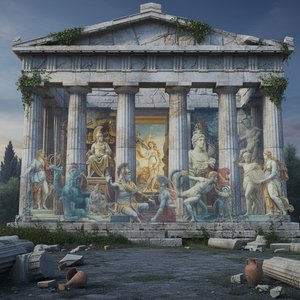
Echoes of Olympus: Mythological Narratives in Western Art Through the Ages
Explore the captivating history of mythological narratives in Western art! From ancient Greece to modern masterpieces, discover iconic artworks & symbolism. Expert analysis and high-quality reproductions at OriginalUniqueArt.

Baroko Šedevrai: 10 Menų Simbolių, Apibūdinusių Epoką | OriginalUniqueArt
Atraskite 10 baroko šedevrų, kurie apibrėžė epoką! Karolis Rubenzas, Berninis ir kiti meistrai – jų kūriniai, istorijos bei spalvos. Aukščiausios kokybės dailės reprodukcijos ir interjero įkvėpimas OriginalUniqueArt.com. Išnagrinėkite visą kolekciją internete!

The Visceral Stage: Exploring Dramatic Narratives & Emotional Intensity in Baroque Art
Explore the dramatic world of Baroque art! Discover iconic masters like Caravaggio & Rembrandt, their techniques, and the movement's lasting impact. Expert insights for collectors & enthusiasts at OriginalUniqueArt.

Baroko Dramatizmas: Elegancijos ir Emocijų Įnešimas į Šiuolaikinius Interjerus
Atraskite baroko dramatiškumą! Meno konsultacijos, rankų darbo reprodukcijos ir patarimai, kaip įnešti eleganciją bei emocijas į jūsų interjerą su OriginalUniqueArt.com. Kokybė garantuota!

The Dramatic Flourish: Exploring the Baroque Movement's Enduring Legacy in Art History
Explore the dramatic world of Baroque art! Discover iconic artists like Caravaggio & Rubens, defining techniques, and its lasting impact on art history. Expert insights for collectors & enthusiasts at OriginalUniqueArt.
