

 Peržiūrėti realaus dydžio版
 Siųsti
 Dalintis
 Išsamiau
 Vadovas

 Atsisiųsti
 Panašūs eksponatai
 Rentgeno spindulių nuotrauka
 Diaporama
 Statistika
Music Lesson
 Oil On Canvas
- WallArt
- Rococo
 1760
1760 62.0 x 49.0 cm
 Staatliche Museen zu Berlin
 Rodyti daugiau
Giclée / Meno spausdinimas
Muziejų lygio „giclée“ arba drobos spausdinimas: greita gamyba ir lankstios apdailos parinktys. ( Pirkti rankomis tapytą reprodukciją Perejti prie skaitmeninių vaizdų)




P118B €10

P118H €10

P118W €10

P438Z €10

P508JH €12

P508YH €12

P805H €10

P805Z €10

P919BZ €10

P919G €10

P919XJ €10

P959ZH €10

P968JZ €12

W106C €8

W218G €10

W218JH €8

W218Y €10

W307PJ €10

W316G €10

W316PJ €8

W316Y €10

W398PJ €8

W4111J €10

W500HY €15

W500JH €15

W692G €12

W849H €8

W940BG €15

W953PJ €8




Pasirinkite iš mūsų nustatytų dydžių, atitinkančių originalaus meno kūrinio proporcijas.

Įveskite jums reikiamą plotį ir aukštį, kad atvaizdas derėtų prie jūsų rėmo ar sienos. Spausdiną galima tik sumažinti, bet nepadidinti virš originalaus paveikslėlio dydžio, todėl keičiant proporcijas, dalis vaizdo prarandama. Prieš spausdinimą atsiųsime jums skaitmeninį maketą patvirtinimui. Šioje puslapio nuotraukoje matomas pjūvis nėra tikslus – jį rodo tik maketas.
Pristatymas visame pasaulyje () per 2 weeks, o ne įprastas 4/5 savaičių laikotarpis. (26 spalis)

Nemokamas greitasis pristatymas visame pasaulyje

Aukštos kokybės lininis drobė

Pilnas siuntimo draudimas

Muitinės mokesčių grąžinimo garantija

Tikro spalvų atitikimo garantija

100 dienų grąžinimo politika (tik esant įtaigoms)

100% pinigų grąžinimo garantija

Nuolaida dideliems užsakymams
 Stiklo variantas prieinamas tik pasirinkus dydį iki 110 cm

Music Lesson
Giclée / Meno spausdinimas
Reprodukcijos dydis
-


Visų pasirinktų variantų kaina
€ 70
A Glimpse into the Rococo Heart of Venice
Pietro Longhi’s “Music Lesson,” painted in 1760, isn't merely a depiction of a musical gathering; it’s a meticulously crafted portal into the vibrant and subtly complex world of 18th-century Venetian society. Far removed from the grand narratives favored by many of his contemporaries, Longhi chose to illuminate the intimate dramas unfolding within the opulent homes of Venice – a departure that cemented his reputation as the ‘Venetian Hogarth,’ capturing the everyday lives with a keen eye for detail and a touch of wry observation. This painting offers a rare intimacy, inviting us into a private salon where social graces, burgeoning desires, and quiet amusement intertwine.

The scene unfolds within a richly appointed interior, dominated by the warm glow of candlelight that casts long shadows and highlights the luxurious textures of the red velvet sofa and dark blue wall adorned with a discreetly placed nude figure – a subtle nod to classical ideals woven into the fabric of Venetian culture. Four figures are engaged in this tableau: a woman seated on the sofa, holding sheet music and seemingly receiving instruction; a man in a black robe, presumably the teacher, gesturing with an open book; another man observing from the side, perhaps awaiting his turn or simply enjoying the performance; and finally, a young woman listening attentively. The composition is carefully balanced, drawing our eye to the central interaction while simultaneously revealing the supporting cast of characters who populate this microcosm of Venetian life.
Masterful Technique and Rococo Charm
Longhi’s skill as a painter lies not only in his ability to capture likenesses but also in his masterful use of color, light, and composition. The warm palette—dominated by reds, golds, and browns—creates an atmosphere of intimacy and comfort, while the strategic placement of candlelight adds depth and drama to the scene. Notice how he employs chiaroscuro – the dramatic contrast between light and shadow – to emphasize key figures and create a sense of movement within the room. The brushwork is remarkably smooth and refined, reflecting Longhi’s training under Antonio Balestra, yet infused with his own distinctive style characterized by a lively energy and a subtle sense of humor.
The painting's adherence to Rococo principles is evident in its emphasis on elegance, grace, and playful ornamentation. The ornate furnishings, the delicate lace sleeves of the woman’s dress, and the overall atmosphere of refined leisure all speak to the prevailing aesthetic sensibilities of the era. However, Longhi doesn’t simply replicate these conventions; he subtly subverts them with his witty observations and understated humor.
Symbolism and Social Commentary
Beyond its surface beauty, “Music Lesson” is rich in symbolic meaning. The music itself represents harmony and social connection, while the attentive young woman suggests a burgeoning interest in the arts and perhaps even romantic possibilities. The presence of the observing man hints at unspoken desires and rivalries within the social circle. Even the discreet nude figure on the wall—a common motif in Venetian art—serves as a reminder of classical ideals and the enduring influence of antiquity. The painting, therefore, offers a subtle commentary on the social dynamics and cultural values of 18th-century Venice – a society where appearances mattered greatly, and where pleasure and refinement were highly prized.
Consider also the detail of the dog mirroring the gesture of the older man; this is a clever visual pun that adds another layer of meaning to the scene. It’s a reminder that Longhi wasn't simply documenting reality; he was actively engaging with it, using his art to explore the complexities of human relationships and social interactions.
Bringing “Music Lesson” Home
A hand-painted reproduction of Pietro Longhi’s “Music Lesson” is more than just a beautiful addition to your home—it's a window into a bygone era. OriginalUniqueArt offers meticulously crafted reproductions that capture the essence of this captivating painting, allowing you to experience the charm and wit of Venetian society firsthand. Whether you are an art enthusiast, a collector, or simply seeking a unique piece of décor, our reproduction will bring a touch of Rococo elegance and historical insight to your space.
问答 (or more naturally for a website heading): Klausimai ir atsakymai
Kaip galiu peržiūrėti „Music Lesson“, autorius – Pietras Longis reprodukciją?
Prežiūrėti „Music Lesson“, autorius – Pietras Longis galima puslapio Peržiūra kūrinio peržiūros puslapyje.
Kaip „Music Lesson“ spalvos dera vienas su kitu?
„Music Lesson“ spalvų harmonija yra įrašyta kaip Softly Mixed Palette.
Kaip suformuota „Music Lesson“, autorius – Pietras Longis spalvų kompozicija?
„Music Lesson“ kūryboje Balanced kontrastas susilieja su Softly Mixed Palette harmonija.
Autoriaus biografija
Venecijietis kasdienio gyvenimo kronikininkas
Pietro Longhi, gimęs Pietro Falca Venecijoje lapkričio 5 dieną, 1701 metais, nevaizdavo didelių istorinių naratyvų ar mitologinių scenų; jis įamžino tylią dramą, vykstančią elegantiškuose miesto namuose ir judriuose gatvelėse. Jis išgarsėjo savo aštriais žanriniais paveikslais – intymiais XVIII amžiaus veneciečių gyvenimo vaizdais, nukrypstančiais nuo to meto vyraujančių meno tendencijų. Alessandro Falca, sidabrininko sūnus, Longhi ankstyvasis mokymas prasidėjo po Veronos dailininko Antonio Balestra, kuris atpažino ir puoselėjo jaunojo menininko talentą. Šis pagrindas tradicinėje technikoje vėliau tarnavo kaip subtilus kontrastas inovacijai, kurią jis įnešė į pasirinktą temą. Pradėjęs meno karjerą, Longhi ėmė naudoti pavardę „Longhi“ – simbolinį atsisakymą nuo tėvo profesijos ir pasišventimą tapybai.Nuо religinių scenų prie venecijietiškų interjerų
Ankstyvieji Longhi darbai atspindėjo to meto lūkesčius: altarpiečiai ir religinės temos dominavo ankstyviajame jo portfolyje. Jo 1732 metų altarpiesis San Pellegrino bažnyčiai demonstruoja įgūdžius tradicinėmis technikomis, rodydamas sulaužytą potepį ir ryškius spalvų sluoksnius, būdingus venecijietiškajai tapybai. Tačiau vėlyvaisiais 1730-aisiais Longhi tikrai rado savo balsą, perėjęs prie mažo formato žanrinių scenų, kurios apibrėžė jo palikimą. Šis perėjimas nebuvo tik teminio pokytis; tai buvo sąmoningas įsitraukimas į augantį to meto socialinį ir kultūrinį poslinkį. XVIII amžiuje pastebėtas didėjantis susidomėjimas buržuazijos privačiu gyvenimu, dėmesys namų ūkiui ir kasdieniniams ritualams. Longhi meistriškai užfiksavo šį poslinkį, siūlydamas žiūrėtojams langą į venecietišką visuomenę, kuris buvo žavus ir subtiliai satyriškas. 1732 metais jis vedė Caterina Maria Rizzi, kartu jie susilaukė vienuolikos vaikų, tačiau suaugę liko tik trys. Šis asmeninis gyvenimas, nors tiesiogiai neatspindėtas jo mene, neabejotinai formavo jo supratimą apie namų sferą, kurią jis taip dažnai vaizdavo.„Venecijietis Hogarthas“ ir satyriška akis
Longhi greitai pelnė pravardę „venecijietis Williamas Hogarthas“, liudijantis jo gebėjimą į aparentemente nekaltas scenas įpūsti sluoksnius socialinių komentarų. Kaip ir Hogarthas, Longhi nesibijo vaizduoti žmogaus silpnybių ir visuomenės prieštaravimų. Tačiau nors Hogartho satyra dažnai buvo aštri ir moralizuojanti, Longhi tendencija buvo subtilesnė, įkvėpta švelnios ironijos. Jo paveiksluose gausu kaukėtų figūrų – pritarimas Venecijos karnavaliniams renginiams – užsiimančių įvairia veikla: lošimu, flirtavimu, slaptomis susitikimais ir abejotinais sandoriais. Pavyzdžiui, Laiškas pristato sceną, kupina numanomo netinkamo elgesio, užuominų apie Venecijos visuomenės paslėptus srovimus. Jis ne tik fiksavo gyvenimą tokį, koks jis buvo; jis siūlė slaptą komentarą apie jo sudėtingumą ir prieštaravimus. Jo gebėjimas užfiksuoti šiuos niuansus jį išskiria, pakeldamas jo žanrines scenas virš paprasto dokumentavimo į įžvalbius socialinius stebėjimus.Technika, įtaka ir ilgalaikis palikimas
Longhi technika buvo tokia pat savita kaip ir jo tema. Jis mėgo mažus drobės, kruopščiai atliktus subtiliu prisilietimu ir aštriu dėmesiu detalėms. Jo interjerai apšviesti švelnia šviesa, sukuriant intymumo ir realizmo atmosferą. Jis turėjo nepaprastą gebėjimą vaizduoti tekstūras – šilko blizgesį, medžio šiurkštumą, subtilius audinio raukšles – pridedant gilumo ir autentiškumo jo scenoms. Būdamas įtakotas ankstesnių venecijietiškų meistrų, tokių kaip Giuseppe Maria Crespi, Longhi nutiesė savo kelią, numatydamas vėlesnius žanrinės tapybos pokyčius. Jo darbai rezonavo su šiuolaikinėmis auditorijomis, kurios vertino jo gebėjimą užfiksuoti savo laiko dvasią. Netgi ėjo Venecijos piešimo ir skulptūros akademijos direktoriaus pareigas nuo 1763 metų, toliau įtvirtindamas savo padėtį venecijietiškame meno pasaulyje. Jo sūnus Alessandro Longhi taip pat tapo dailininku, padėdamas jam vėlesnių portretinių užsakymų atlikime. Pietro Longhi mirė gegužės 8 dieną, 1785 metais, palikęs kūrinius, kurie ir šiandien žavi ir intriguoja žiūrėtojus. Jis išlieka gyvybinga figūra venecijietiškos meno istorijoje, švenčiamas dėl savo unikalios stebėjimo, aštraus intelekto ir techninio įgūdžio kombinacijos – tikras XVIII amžiaus gyvenimo kronikininkas.Žymūs darbai
- Siuvėjas (Gallerie dell'Accademia, Venecija)
- Krikštynos (Fondazione Querini Stampalia, Venecija)
- Dailininkas savo studijoje (Ca’ Zenobio, Venecija)
- Koncertas
- Šarlatanas
- Rinoceroso paroda (Nacionalinė galerija, Londonas)

Pietras Longis
1701 - 1785 , Italija
Trumpa informacija apie kūrėją
- Gimimo Data: 1701 m. lapkričio 5 d.
- Gimimo Vieta: Venecija, Italija
- Menininkai Kuriuos Įtakojo: ['William Hogarth']
- Meninis Stilius: Venecijos tapyba, Rokoko
- Mirties Data: 1785 m. gegužės 8 d.
- Pilietybė: Italas
- Pilnas Vardas: Pietro Longhi
- Įtakoję Menininkai:
- Antonio Balestra
- Giuseppe Crespi
- Žymiausi Darbai:
- Siuvėjas
- Krikštas
- Tapytojo studija
Susiję straipsniai
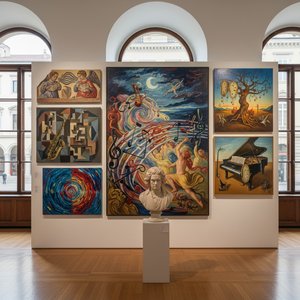
Harmonies on Canvas: Exploring the Visual Representation of Music in Art History
Explore the fascinating history of music's visual representation in art! From ancient symbolism to modern abstraction, discover how artists have captured sound and emotion on canvas. Expert insights & stunning examples.

Pietro Longhi's Venetian Scenes: A Study of Rococo Society & Domestic Life
Explore the captivating world of Pietro Longhi's Venetian scenes! Discover insightful analysis of his Rococo masterpieces & social commentary on 18th-century life. Learn about this 'Venetian Hogarth' and his lasting artistic legacy.

Rožinio Amžius: 10 Šedevrų Apibrėžiančių Rokoko Stilių
Atraskite 10 rokokoko šedevrų, apibrėžiančių prabangą ir grožį! Sužinokite apie žymius dailininkus, spalvotus motyvus bei istorijas. Puikios meno reprodukcijos jūsų namams – OriginalUniqueArt.com.

The Rococo Aesthetic: Opulence, Rebellion & the Pursuit of Pleasure in 18th-Century Art
Explore the opulent world of Rococo art! Discover its origins, key artists like Watteau & Boucher, and lasting influence on design. Expert insights for collectors & enthusiasts.

Francesco Guardi: Venetian Light, Atmospheric Perspective & the Rococo to Neoclassical Transition
Explore the captivating world of Francesco Guardi, master of Venetian light and atmosphere. Discover his transition from Rococo to Neoclassicism, influence on Impressionism & investment potential with OriginalUniqueArt.