
() ·
A painting made for you, by hand
Rankų darbo aliejinės reprodukcijos
Rankiniu būdu tapytas aliejus ant droblio jūsų pageidaujamame dydį ir rėmuose – tai mūsų menininkų pagal užsakymą sukurtas darbas. ( Perjungti į spausdinamus版作品 Perejti prie skaitmeninių vaizdų)
Kolekcinio objekto aprašas
Discover 'L'adultera E I Farisei' by Pietro Della Vecchia – a stunning Baroque painting of intrigue & drama. Explore this masterpiece’s rich history & artistic style.
Autoriaus biografija
Pietro della Vecchia (1602-1678) was a versatile Venetian painter known for altarpieces, portraits, genre scenes & masterful pastiches of 16th-century masters like Titian. Also an art restorer & expert.
 Skaityti daugiau
from ·
Chapter 1
How large should it be?
Slide to change the size; the picture on the left shows the frame at its real width. The proportions of the original are kept.
Pasirinkite iš mūsų nustatytų dydžių, atitinkančių originalaus meno kūrinio proporcijas.

Įveskite jums reikiamą plotį ir aukštį, kad paveikslas atitiktų jūsų rėmą ar sieną. Kadangi šis darbas yra rankinio darbo, siekiant išgauti kitokios formos dydį, paveikslas gali būti šiek tiek didesnis (nuo kraštų bus palikta daugiau erdvės) arba mažesnis – pasirinkite jums patogiausią variantą. Prieš pradedant tapyti, atsiųsime jums skaitmeninį maketą patvirtinimui. Šioje puslapio nuotraukoje matomas vaizdas nėra galutinis rezultatas – jį parodys tik sukurtas maketas.
Chapter 2
How should it arrive?
Choose the edges of the stretched canvas
Choose your frame

White €1

Blurside €1

Extended €1

P118B €10

P118H €10

P118W €10

P438Z €10

P508JH €12

P508YH €12

P805H €10

P805Z €10

P919BZ €10

P919G €10

P919XJ €10

P959ZH €10

P968JZ €12

W106C €8

W218G €10

W218JH €8

W218Y €10

W307PJ €10

W316G €10

W316PJ €8

W316Y €10

W398PJ €8

W4111J €10

W500HY €15

W500JH €15

W692G €12

W849H €8

W940BG €15

W953PJ €8

H24-GOLD €30

H24-SILVER €30

H36-GOLD €45

H36-SILVER €45
Įrėmintas
Moulding: . Overall size with the frame: .
Chapter 3
Who paints it, and should anything change?
After order, OriginalUniqueArt.com team will email client for instructions and provide a mockup preview
Pristatymas visame pasaulyje () per 3–4 savaites, o ne įprastai – per 5 savaites. (31 spalis). Kokybė lieka nepakeičiama.
Chapter 4
The finishing touches
A nameplate, as in a museum?
Išgraviruotos bronzinės plokštelės detalės
This elegant plaque features the artist's name and the title of the artwork, finely engraved for a timeless presentation.
It is made from bronze with a refined, elegant finish. The text is precisely laser-engraved for a sharp and permanent result. Measuring 9x2 cm, the plaque is compact yet easy to read. It's built to be durable and scratch-resistant, offering a professional, museum-quality look. Mounting is simple thanks to the included adhesive backing.
Skaidrios akrilo plokštelės informacija
The plaque includes essential engraved details such as the artist's name, the title of the artwork, the date it was created, the type of media used-like oil on canvas or watercolor-a brief description of the piece, and a QR code that links to the complete artwork information.
It is crafted from clear acrylic, offering a sleek, modern appearance. The text is UV-engraved in black to ensure strong visual contrast. With a size of 10x15 cm, it ensures optimal readability. It comes equipped with two metal hooks for secure wall mounting. The plaque is designed to be weather-resistant, making it suitable for various environments, and it includes interactive features that work seamlessly with smartphone scanning.
Juodos akrilo plokštelės informacija
This elegant plaque includes engraved information such as the artist's name, the title of the artwork, the date it was created, the type of media used (like oil on canvas or watercolor), a short description of the artwork, and a QR code for quick access to more information.
The plaque itself is made from refined black acrylic with a premium finish. The text is laser-engraved in white for high contrast and readability. Its size is 10x15 cm, designed to be easy to read. It comes with two metal hooks for professional mounting. The design is sleek and fits any interior style. It is also weather-resistant and durable, with built-in digital integration for mobile compatibility.
A protective varnish?
When do you need it?
Chapter 5
Your painting, as you ordered it

L'adultera E I Farisei
Reprodukcijos technika
Reprodukcijos matmenys
-

Aukščiausios klasės meistras
Daugiau detalių, meistriškumo ir papildomo gamybos laiko
-

Reprodukcijos rėmėjimo parinktys
-
-
Dėl meno kūrinių ar reprodukcijų, kurių bet kuri pusė yra didesnė nei 105 cm (apie 41 inch), rėmas bus siunčiamas kaip išskaidytas surinkimo rinkinys. Šis metodas užtikrina saugų pristatymą ir apsaugo nuo transportavimo metu galimos žalos.
Reikalingas profesionalus surinkimas – tai nėra „pasidaryk pats“ (DIY) produktas.
Rinkinys turi būti surinktas, o drobė išplėsta naudojant patyrį profesionalų rėmininką, medžio klijus (nėra įtraukti į rinkinį), drobės plėšimo kleslę bei presas, kad rėmo rėžiai išliktų tiesūs, kol klijai išdžiūvus. Netinkamas surinkimas arba netolydus drobės įtampa gali negrįžtamai sugadinti meno kūrinį, todėl šie atvejai nėra užtraukiami mūsų garantijos.
 Dėl meno kūrinių ar reprodukcijų, kurių bet kuri pusė yra didesnė nei 105 cm (apie 41 inch), rėmas bus siunčiamas kaip išskaidytas surinkimo rinkinys. Šis metodas užtikrina saugų pristatymą ir apsaugo nuo transportavimo metu galimos žalos.
Į komplektą įeina visi vientisos medienos elementai, tiksliai išpjauti pagal dydį.
Surmontinama naudojant pridėtus varžtus bei papildomai reikalingą medžio kliją kampų jungtims, kuris nėra pridėtas ir turi būti parinktas rėmininkui.
Reikalingi profesionalūs įrankiai, kurie nėra įtraukti į rinkinį: drobės kėlimo plytelės (stiprintuvai) ir klemiai, laikantys rėmo strygius tiesiu kampu, kol džiūsta lipas.
Svarbu:
Kampų jungtims reikalingi medžio klijai, barams reikia laikyti naudojant presas, kol klijai visiškai išdžiūvės, o surinktam rėmui įtempiamai privilgti būtinos drobės įtempimo plytযুক্ত. Šios priemonės į rinkinį neįtrauktos. Prieš užsakydami šio dydžio rinkinį, rekomenduojame pasimalkoti patyrusiu rėmų meistru.

Pavadinimo lentelė
-
-

Apsauginis lakas
Blizgus lakas (ryškina spalvas, saugo nuo šviesos ir drėgmės)
-

Personalizuoti kūrinį
Ką galima pakeisti (pavyzdžiui): pakeisti veidą klientui skirta nuotrauka; pridėti augintinį (pvz., katę pakeisti šuniu); įtraukti paslėptą žinutę fone; pakeisti fono kraštovaizdį ar elementus.
-

Skubiai
Pristatymas visame pasaulyje () per 3–4 savaites, o ne įprastai – per 5 savaites. (31 spalis). Kokybė lieka nepakeičiama.
-
Skubus pristatymas
Pristatymas visame pasaulyje () per 5 weeks. (7 lapkritis).
Įskaičiuota
Bendroji kaina
€ 267
Stiklo variantas prieinamas tik pasirinkus dydį iki 110 cm
Included with every order
- Nemokamas greitasis pristatymas visame pasaulyje
- Aukštos kokybės lininis drobė
- Pilnas siuntimo draudimas
- Muitinės mokesčių grąžinimo garantija
- Tikro spalvų atitikimo garantija
- 100 dienų grąžinimo politika (tik esant įtaigoms)
- 100% pinigų grąžinimo garantija
- Nuolaida dideliems užsakymams


 Peržiūrėti realaus dydžio版
 Pasidalinti
 Dalintis
 Išsamiau
 Vadovas

 Atsisiųsti
 Panašūs eksponatai
 Rentgeno spindulių nuotrauka
 Automatinė diorama
 Q&A
Q&A Statistika
In numbers
- 29frames to choose from
- standard sizes, in its own proportions
- 5weeks to paint and deliver it
About the original


Pietro della Vecchia
1602 - 1678, Italy
Quick facts about Pietro della Vecchia
- Full Name: Pietro della Vecchia
- Nationality: Italian
- Date Of Birth: 1602
- Date Of Death: 1678
- Place Of Birth: Vicenza, Italy
- Notable Artworks:
- The Fortune Teller
- Soldiers Play Dices for Christ
- Interno Della Chiesa Dei Santi Pietro E Paolo Di Casalvecchio
- Artistic Movement Or Style: Baroque
- Artists Who Influenced This Artist:
- Carlo Saraceni
- Jean Leclerc
- Alessandro Varotari
- Artists Or Movements Influenced By This Artist: ['Titian']
Autoriaus biografija
The Versatile Virtuoso: The Life and Legacy of Pietro della Vecchia
In the vibrant, water-bound world of seventeenth-century Venice, few figures embodied the spirit of artistic mimicry and technical mastery quite like Pietro della Vecchia. A painter of extraordinary breadth, his career was defined not by a single, rigid style, but by a profound ability to inhabit the souls of the masters who preceded him. Whether crafting solemn altarpieces, intimate portraits, or whimsical genre scenes, della Vecchia moved through the art world with the agility of a chameleon, blending the grandeur of the High Renaissance with the dramatic tension of the Baroque era.
The early life of the artist remains shrouded in a certain historical mist, as much of the documentation regarding his formative years is subject to scholarly debate. Born around 1602, likely in Vicenza or Venice, he was the son of Gasparo, a painter already established within the prestigious Venetian painters' guild. While some historians once erroneously linked him to the name Pietro Muttoni—a confusion born from early biographical errors—modern scholarship has reclaimed his true identity as a scion of the well-known Venetian dalla Vecchia family. His early training is a fascinating puzzle; while Alessandro Varotari, known as Il Padovanino, was long cited as his mentor, stylistic evidence suggests that della Vecchia’s true foundations were laid under the influence of Carlo Saraceni and Jean Leclerc. This connection to the Caravaggesque tradition infused his early works with a striking use of light and shadow, a hallmark of the Roman style that would later harmonize with his Venetian sensibilities.
A Master of Pastiche and Imitation
What truly sets Pietro della Vecchia apart in the annals of Italian art is his celebrated talent for pasticcio—the creation of works that intentionally imitated the styles of the sixteenth-century masters. He did not merely copy; he reimagined the brushwork of Titian and the compositions of the great Renaissance giants, breathing new life into their aesthetic languages. This penchant for looking backward was so profound that some later historians mistakenly believed d'ella Vecchia—meaning "of the old"—was a mere nickname reflecting his devotion to antiquity, rather than his actual family name.
His repertoire was remarkably diverse, showcasing a skill set that extended far beyond the canvas:
- Altarpieces: Large-scale religious works designed to command the sacred spaces of Venetian churches.
- Portraits: Character studies that captured the psychological depth and social standing of his subjects.
- Genre Scenes: Evocative depictions of everyday life, often imbued with a sense of theatricality or humor.
- Grotesques: Intricate and imaginative designs that played with the whimsical boundaries of form.
- Mosaics: The creation of detailed cartoons intended for the permanent, shimmering medium of mosaic.
Beyond his creative output, della Vecchia was a man of deep technical knowledge. He served as an art restorer and a sought-after expert, possessing the discerning eye necessary to perform valuations and authenticate the works of others. This dual identity as both creator and conservator suggests a profound intimacy with the physical substance of paint and pigment, allowing him to replicate the textures of the past with uncanny precision.
Historical Significance and Enduring Impression
The historical significance of Pietro della Vecchia lies in his role as a bridge between eras. In an age where the Baroque was pushing toward extreme movement and drama, he maintained a vital connection to the classical elegance of the previous century. His ability to navigate the shifting tides of taste—from the tenebrism of Caravaggio to the lushness of the Venetian school—makes him a pivotal figure in understanding the fluidity of seventeenth-century Italian art.
Though his life ended in 1678, leaving behind a legacy that is as much about scholarly intrigue as it is about visual beauty, his impact remains. He reminds us that art is not always a linear progression toward the new, but often a continuous, beautiful dialogue with the old. Through his pastiches and portraits, della Vecchia ensured that the brilliance of the Renaissance continued to glow within the heart of the Baroque, preserving the aesthetic heritage of Venice for generations to come.
Susiję straipsniai
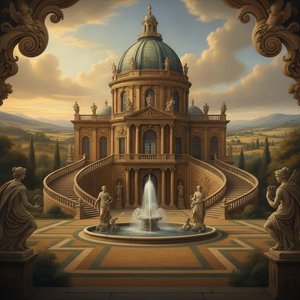
Baroque Classicism: Reconciling Drama & Order in 17th-Century Art
Explore the captivating world of Baroque Classicism! Discover its history, key artists like Caravaggio & Rubens, and defining characteristics. Expert insights & high-quality reproductions at OriginalUniqueArt.

Baroko meno estetika: kaip suprasti XVII amžiaus dramą, šviesos žaidimą ir dinamišką judesį
Sužinokite baroko meno paslaptis, šviesos ir dramatos techniką. Atskleiskite XVII amžiaus meistriškumą su mūsų ekspertu.

Pietro da Cortona: Baroque Grandeur & the Synthesis of Roman Painting
Explore the life & masterpieces of Pietro da Cortona, a defining figure of the Italian Baroque. Discover his stunning frescoes at Palazzo Barberini and lasting influence on Roman art history. Learn more with OriginalUniqueArt.

Baroque Classicism: The Grandeur of Order and Drama in 17th-Century Art History
Explore the profound elegance of Baroque Classicism. Discover how 17th-century masters synthesized dramatic emotion with classical order through the lens of the Counter-Reformation and the works of legends like Carlo Maratta and Andrea Sacchi.