
 Peržiūrėti realaus dydžio版
 Pasidalinti
 Dalintis
 Išsamiau
 Vadovas

 Atsisiųsti
 Panašūs eksponatai
 Rentgeno spindulių nuotrauka
 Automatinė diorama
 Q&A
Q&A Statistika
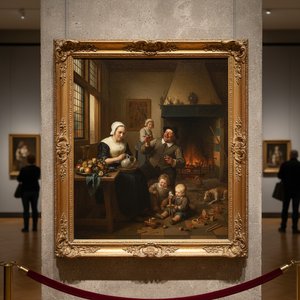
At the Forge

- 47.0 x 55.0 cm

 Skaityti daugiau
Giclée / Meno spausdinimas
Muziejų lygio „giclée“ arba drobos spausdinimas: greita gamyba ir lankstios apdailos parinktys. ( Pirkti rankų darbo tapybą Perejti prie skaitmeninių vaizdų)




































Pasirinkite iš mūsų nustatytų dydžių, atitinkančių originalaus meno kūrinio proporcijas.

Įveskite jums reikiamą plotį ir aukštį, kad atvaizdas derėtų prie jūsų rėmo ar sienos. Spausdiną galima tik sumažinti, bet nepadidinti virš originalaus paveikslėlio dydžio, todėl keičiant proporcijas, dalis vaizdo prarandama. Prieš spausdinimą atsiųsime jums skaitmeninį maketą patvirtinimui. Šioje puslapio nuotraukoje matomas pjūvis nėra tikslus – jį rodo tik maketas.
Pristatymas visame pasaulyje () per 2 weeks, o ne įprastas 4/5 savaičių laikotarpis. (1 lapkritis)

Nemokamas greitasis pristatymas visame pasaulyje

Aukštos kokybės lininis drobė

Pilnas siuntimo draudimas

Muitinės mokesčių grąžinimo garantija

Tikro spalvų atitikimo garantija

100 dienų grąžinimo politika (tik esant įtaigoms)

100% pinigų grąžinimo garantija

Nuolaida dideliems užsakymams
 Stiklo variantas prieinamas tik pasirinkus dydį iki 110 cm

At the Forge
Giclée / Meno spausdinimas
Reprodukcijos matmenys
-


Bendroji kaina
€ 71
A Glimpse into Rural Life: "At the Forge" by Pieter van Bloemen
Step into a vibrant snapshot of 17th-century rural life with Pieter van Bloemen’s captivating genre painting, “At the Forge.” This dynamic scene transports viewers to a bustling workshop or stable, likely situated in the Dutch countryside. The artwork is a testament to the everyday labor and social interactions that defined the era, offering a fascinating window into the lives of ordinary people during the Dutch Golden Age. Van Bloemen masterfully captures a moment centered around a shoemaker diligently attending to his horses, surrounded by observing figures – a scene brimming with activity and a palpable sense of community.Style & Technique: Baroque Realism with Dramatic Flair
Van Bloemen’s style is firmly rooted in the principles of Baroque realism, yet infused with a dramatic flair characteristic of the period. The painting showcases meticulous attention to detail, evident in the rendering of horses, figures, and architectural elements. Oil paint on canvas allows for rich layering of colors and visible brushstrokes that contribute to the artwork's textural depth. Notice how light streams through an arched doorway, dramatically illuminating key areas while casting deep shadows – a technique employed to create a sense of spatial depth and heighten the emotional impact. While grounded in realism, Van Bloemen subtly idealizes proportions and employs dramatic lighting to elevate the scene beyond mere documentation, transforming it into a compelling narrative.Historical Context & Symbolism
“At the Forge” provides valuable insight into the social fabric of 17th-century Dutch society. The painting reflects the importance of agriculture and craftsmanship in the economy, highlighting the role of skilled laborers like the shoemaker. The presence of animals – horses being essential for transportation and labor – further underscores this connection to rural life. Symbolically, the scene speaks to themes of hard work, community, and perhaps even a subtle commentary on social hierarchy within the village setting. The tools scattered throughout the composition are not merely props but represent the tangible fruits of human effort and ingenuity. Van Bloemen’s work aligns with the broader Dutch Golden Age tradition of genre painting, which sought to depict everyday life with honesty and detail.Emotional Impact & Artistic Legacy
Beyond its historical significance, “At the Forge” evokes a powerful emotional response. The bustling activity, combined with the dramatic lighting, creates a sense of immediacy and vitality. The viewer is drawn into the scene, almost able to hear the sounds of the forge and feel the energy of the workshop. Pieter van Bloemen (1657-1720), hailing from an artistic family in Antwerp, was influenced by earlier masters and traveled extensively, including journeys to Rome that shaped his style. His ability to capture dynamic animal scenes and everyday life established him as a significant figure within Flemish art, and this painting exemplifies his skill in blending realism with dramatic storytelling – a legacy that continues to resonate with audiences today.Klausimai ir atsakymai
Ar „At the Forge“ spalvos atrodo ryškios ar švelnios?
Šiame paveikslėlyje „„At the Forge“ – Pieter van Bloemen“ spalvų intensyvumas yra Monochromatic.
Kur galiu peržiūrėti „At the Forge“ išsamiai?
Norėdami peržiūrėti „At the Forge“ – Pieter van Bloemen reprodukciją, atidarykite kūrinio Peržiūra interjere puslapį.
Ar galėčiau pamatyti „At the Forge“ – Pieter van Bloemen ant savo sienos prieš pirkdama/pirkdamas?
„At the Forge“ – Pieter van Bloemen puslapio Peržiūra papildintajai realybei funkcija naudoja papildytojąjį realybės technologiją, kad suderinamame įrenginyje parodytų kūrinį jūsų erdvėje.
Autoriaus biografija
Pieter van Bloemen (1657-1720): A Flemish Painter of Animals, Landscapes, and Roman Scenes
Early Life and Training
- Born: Antwerp, Belgium, January 17, 1657
- Died: Antwerp, Belgium, March 6, 1720
- Apprenticed to Simon Johannes van Douw from a young age (possibly as early as age 10), receiving foundational training in artistic techniques.
- Became a master of the Guild of Saint Luke in Antwerp in 1674, demonstrating his proficiency and acceptance within the established art community.
- Family Background: Pieter came from an artistic family; both his younger brothers, Jan Frans and Norbert, were also painters.
Travels and Artistic Development
- Early Travels (1674 & 1689): Initial journeys to Rome likely influenced his later style, exposing him to Italian landscapes and artistic trends.
- Lyon Period (1684): Collaboration with Dutch painters Adriaen van der Cabel and Gillis Weenix in Lyon broadened his exposure to different painting styles and techniques. His brother Jan Frans joined him during this time.
- Rome & the Bentvueghels (1688-1694): A significant period spent in Rome, registered with the parish of Sant’Andrea delle Fratte alongside his brothers. Became a member of the *Bentvueghels*, an association of foreign artists in Rome, earning the nickname "Standaart" likely referencing banners depicted in his military scenes.
- Travels within Italy: Explored Naples, Sicily, and Malta, further enriching his understanding of Italian landscapes and culture.
- Collaboration with Jan Frans: A fruitful partnership where Pieter focused on figures while Jan Frans specialized in landscape (vedute) painting.
Artistic Style and Major Works
- Subject Matter: Known for dynamic depictions of animals, equestrian scenes, market life, military encampments, and genre paintings set within Italianate landscapes.
- Italianizing Landscapes: Adopted the tradition of representing the Roman Campagna with inns, ruins, and animals, creating a distinctive "Roman" atmosphere.
- Bamboccianti Influence: Incorporated elements of the *bamboccianti* style, depicting everyday scenes and trivial subjects, often with meticulous detail.
- Distinctive Features: Characterized by lively coloring in figures' costumes contrasting with the more subdued tones of animals and ruins; a focus on groups of animals presented as "still-lifes" within landscapes.
- Notable Works: The Duke of Marlborough and the Earl of Cadogan at Blenheim (Hochstadt) (where he painted the horses), *Military Encampment*, *At the Forge*, *Mules Halting by the Wayside*, and *Landscape with Herdsmen and Animals in front of the Baths of Diocletian, Rome*.
- Drawing Practice: Produced numerous drawings depicting landscapes, figure studies, and animal observations from life.
Legacy and Historical Significance
- Prolific Output: A highly productive artist with a diverse body of work spanning various genres.
- Dean of the Guild of Saint Luke (1699): Held a prestigious position within the Antwerp art community, demonstrating his respect and influence.
- Teacher: Mentored his younger brothers Jan Frans and Norbert, as well as other artists like Peeter van Aken and Frans van Alter.
- Collaboration & Recognition: Frequently sought after for his skill in painting horses, collaborating with prominent artists like Balthasar van den Bossche.
- Contribution to Baroque Art: Van Bloemen’s work exemplifies the dynamism and detail characteristic of Baroque art, particularly within the Flemish tradition. His Italian experiences infused his paintings with a unique blend of Northern European realism and Southern European landscape aesthetics.

Pieter van Bloemen
1657 - 1720 , Belgium
Trumpa informacija
- Full Name: Pieter van Bloemen
- Nationality: Flemish
- Date Of Birth: 1657
- Date Of Death: 1720
- Place Of Birth: Antwerp, Belgium
- Notable Artworks:
- Military Encampment
- At the Forge
- Mules Halting by the Wayside
- Landscape with Herdsmen and Animals
- Artistic Movement Or Style: Baroque
- Artists Who Influenced This Artist: ['Simon Johannes van Douw']
Susiję straipsniai

Golden Age Reflections: Dutch Baroque Painting & Cultural Innovation
Explore the Dutch Golden Age of painting! Discover key artists like Vermeer & ter Borch, their innovative techniques, and the rich cultural context behind these Baroque masterpieces. Learn about collecting & appreciating this iconic art period.

Golden Light & Dutch Skies: The Timeless Magic of Dutch Golden Age Landscapes
Discover the breathtaking beauty of Dutch Golden Age landscapes. Explore the mastery of light, chiaroscuro, and 17th-century realism through an expert art history lens, celebrating the enduring legacy of the Dutch Masters for discerning collectors and art lovers.

Olandijos Aukso Amžius: 10 Šedevrų, Apibrėžiančių Meną ir Stilių
Atraskite Olandijos Aukso Amži\u017us meninius šedevrus! 10 legendin\u017iŴ paveikslžiai – Rembrandto, Vermeerio ir kt. darbai. Sužnkitę j\u016ungo namus aukso amži\u017us grožiu! Āukrai, interjero dizainas – viskas OriginalUniqueArt.com. Ižirkite kolekciją internete!

Illuminating Innovation: Exploring the Dutch Golden Age of Painting
Explore the Dutch Golden Age of painting with OriginalUniqueArt. Discover Rembrandt, Vermeer & other Masters. Learn about key characteristics, iconic artworks, and lasting influence. Expert insights for collectors & enthusiasts.
Genre Painting: A Window into Daily Life & Societal Values of the Dutch Golden Age
Explore the captivating world of Dutch Golden Age genre painting! Discover realistic depictions of daily life, masterful artists like Ostade & Metsu, and hidden symbolism. Learn about this influential art movement with OriginalUniqueArt.