

 Peržiūrėti realaus dydžio版
 Siųsti
 Dalintis
 Išsamiau
 Vadovas

 Atsisiųsti
 Panašūs eksponatai
 Rentgeno spindulių nuotrauka
 Diaporama
 Statistika
Paying the Hostess
 Oil On Canvas
- WallArt
- Baroque
 1670
1670 95.0 x 111.0 cm
 Metropolitano muziejus
 Rodyti daugiau
Rankų darbo aliejinės reprodukcijos
Rankiniu būdu tapytas aliejus ant droblio jūsų pageidaujamame dydį ir rėmuose – mūsų menininkų darbas pagal užsakymą. ( Perjungti į spausdinimą Perejti prie skaitmeninių vaizdų)




P118B €10

P118H €10

P118W €10

P438Z €10

P508JH €12

P508YH €12

P805H €10

P805Z €10

P919BZ €10

P919G €10

P919XJ €10

P959ZH €10

P968JZ €12

W106C €8

W218G €10

W218JH €8

W218Y €10

W307PJ €10

W316G €10

W316PJ €8

W316Y €10

W398PJ €8

W4111J €10

W500HY €15

W500JH €15

W692G €12

W849H €8

W940BG €15

W953PJ €8




Pasirinkite iš mūsų nustatytų dydžių, atitinkančių originalaus meno kūrinio proporcijas.

Įveskite jums reikiamą plotį ir aukštį, kad paveikslas atitiktų jūsų rėmą ar sieną. Kadangi šis darbas yra rankinio darbo, siekiant išgauti kitokio formos dydį, paveikslas gali būti šiek tiek didesnis (nuo kraštų bus palikta daugiau erdvės) arba mažesnis – pasirinkite jums patogiausią variantą. Prieš pradedant tapyti, atsiųsime jums skaitmeninį maketą patvirtinimui. Šioje puslapio nuotraukoje matomas vaizdas nėra galutinis rezultatas – jį parodys tik sukurtas maketas.
Gavus užsakymą, OriginalUniqueArt.com komanda susisieks su klientu el. paštu dėl instrukcijų ir pateiks maketo pavyzdį
Pristatymas visame pasaulyje () per 3–4 savaites, o ne įprastai – per 5 savaites. (23 spalis). Kokybė lieka nepakeičiama.

Nemokamas greitasis pristatymas visame pasaulyje

Aukštos kokybės lininis drobė

Pilnas siuntimo draudimas

Muitinės mokesčių grąžinimo garantija

Tikro spalvų atitikimo garantija

100 dienų grąžinimo politika (tik esant įtaigoms)

100% pinigų grąžinimo garantija

Nuolaida dideliems užsakymams
 Stiklo variantas prieinamas tik pasirinkus dydį iki 110 cm

Paying the Hostess
Reprodukcijos technika
Reprodukcijos dydis
-


Visų pasirinktų variantų kaina
€ 308
A Quiet Moment in Delft: Pieter de Hooch’s “Paying the Hostess”
Pieter de Hooch's "Paying the Hostess," painted around 1670, isn’t merely a depiction of a transaction; it’s a masterful distillation of Dutch Golden Age life—a fleeting glimpse into the subtle social dynamics and quiet elegance of a Delft inn. The painting immediately draws the eye with its luminous quality, achieved through de Hooch's signature use of light and shadow, creating an atmosphere both intimate and subtly charged. It’s a scene brimming with unspoken narratives, inviting viewers to become silent observers of this private moment within a bustling world. De Hooch was a pivotal figure in the Delft School of painting, known for his ability to capture the essence of domestic life—not grand portraits or heroic scenes, but rather the everyday rituals and interactions that shaped the lives of the burgeoning middle class. His work stands apart through its remarkable realism, capturing not just appearances but also the nuances of human behavior and the play of light on surfaces.The Composition: A Dance of Observation
The composition itself is a testament to de Hooch’s skill. The scene unfolds within what appears to be a modest inn yard—a space simultaneously public and private. A smartly dressed gentleman, likely a wealthy merchant or official, stands poised before a young woman, presumably the hostess, as she presents him with a bill. Their hands are subtly overlapping, creating an immediate visual tension – a delicate dance of negotiation and perhaps even flirtation. The background is deliberately blurred, populated by other patrons engaged in their own conversations and activities—a lively tableau that hints at the inn’s vibrant atmosphere without distracting from the central drama. Notice how de Hooch uses architectural details—the rough-hewn beams of the barn, the simple wooden furniture, the straw bales – to ground the scene in a tangible reality. The placement of figures within the space is carefully considered, creating depth and guiding the viewer’s eye through the composition.Technique and Style: Light, Shadow, and Texture
De Hooch's technique is characterized by its meticulous attention to detail and his masterful manipulation of light. He employed a technique known as *chiaroscuro*, using strong contrasts between light and shadow to create a sense of volume and drama. The light streams in from the open doorway on the left, illuminating the figures and casting long shadows across the yard, adding depth and atmosphere. The artist’s brushwork is remarkably subtle—a delicate layering of paint that creates a rich texture without sacrificing clarity. You can almost feel the roughness of the wooden surfaces, the warmth of the straw bales, and the softness of the fabrics. This textured approach adds to the painting's realism and invites close inspection. The use of muted colors – browns, grays, and ochres – further enhances the sense of atmosphere and contributes to the painting’s overall mood.Symbolism and Context: A Glimpse into Dutch Society
“Paying the Hostess” offers a fascinating window into 17th-century Dutch society. The scene is not simply about settling an account; it's laden with symbolic meaning. The overlapping hands of the couple suggest a complex interplay of power, attraction, and social expectations. In Dutch art of this period, such interactions often carried connotations of flirtation and even illicit desire – a subtle commentary on the constraints and freedoms of the time. The presence of other guests in the background underscores the importance of social interaction within the community. The inclusion of the delivery boy with sheaves of wheat hints at the economic realities of rural life—the exchange of goods and services that underpinned the prosperity of the region. The painting reflects a shift towards a more secular, bourgeois culture, where commerce and social interactions were increasingly valued alongside religious piety.Emotional Resonance: A Moment Frozen in Time
Ultimately, “Paying the Hostess” is a profoundly evocative work of art. It’s not a grand statement or a dramatic event; it's a quiet moment—a snapshot of everyday life that captures something essential about the human condition. The painting invites us to contemplate the complexities of social interaction, the subtle nuances of human relationships, and the beauty found in the ordinary. It possesses a timeless quality, resonating with viewers across centuries because it speaks to universal themes of connection, negotiation, and the quiet dramas that unfold within our daily lives. It’s a piece that rewards careful observation and invites repeated viewing, revealing new layers of meaning with each encounter.问答 (or more naturally for a website heading): Klausimai ir atsakymai
Kokio vietos išdėstymo formatas „Paying the Hostess“, autorius – Piteris De Hoochas tinka?
Savo Landscape forma „Paying the Hostess“ reprodukcija siūloma Living Room kambariui.
Kaip „Paying the Hostess“ spalvos dera vienas su kitu?
„Paying the Hostess“, autorius – Piteris De Hoochas pasižymi Unified Palette spalvų harmonija.
Kokia „Paying the Hostess“, autorius – Piteris De Hoochas orientacija?
„Paying the Hostess“, autorius – Piteris De Hoochas kūrinio formatas yra Landscape. Formatas aprašo kompozicijos proporcijas.
Autoriaus biografija
ankstygy ir mokslas
Pieter de Hooch, viena iš ryškiausių figūrų olandžių aukso amžiui, gimė 1629 m. gruodžio 20 d. Rotterdame, Nylandijoje. Jis buvo vykadžiausias iš penkių vaikų, augintų mūrininkui Hendrickui Hendrickszui de Hooch ir akšininkei Annetge Pieters. Nors apie jo ankstyvąjį gyvenimą žinoma nedaug, manoma, kad jis dirbo Rotterdame, Delftuje ir Amsterdami. De Hooch meno mokslai vyko Haarleme, dirbant su paisaječių paveikslų meistru Nicolaes Berchem bei Jacob Ochtervelt. Šis laikotarpis padėjo pagrindus jo būsimai sėkmei kaip tylių namų scenų meistrui, pasižinantamiam atvirais durų angomis.meninės stiliai ir temos
De Hooch kūrybai būdingas itin dėmesys detalėms, naturalizmas ir šviesos naudojimas. Jo paveiksluose dažnai atvivždijamas kasdienis gyvenimas, atspindintis pradinės klasės žmonių vertybes ir siekius. Žymus šio stiliaus pavyzdys yra „namo kiemas Delfte“ (1658), kuriame jis geba įamžinti paprastiausias kasdienybės detales. Nors de Hooch kūrybos temas ir kompozicijas bendrina su Emanuel De Witte, būtent dėmesys žmonėms ir jų tarpusavio ryšiams išskiria jį iš šio meistro. Tai itin akivaizdu paveiksluose „moteris žindanti vaiką“ (1658) bei „moteris su kūdikiu ant antstulės“ (1658), kurie demonstruoja jo meilę buičiai vaizduojant.žymūs darbai ir palikimas
Kai kuriuose de Hooch meno šedevruose galima rasti:- „linksma girtuojas“ (apie 1650 m.)
- „lobiuotojai saulės apšiltoje kambaryje“ (1658)
- „moteris rengia duoną ir sviestą berniukui“ (1661)
muziejai ir kolekcijos
De Hooch kūrybiniai darbai galima rasti įvairiuose muziejuose, įskaitant Koninklijk Museum voor Schone Kunsten Antverpije, Belgijoje, kuri saugo milžinišką Europos meno kolekciją nuo XV iki XX amžiaus. Sužinokite daugiau apie Pieter de Hooch ir jo kūrybą OriginalUniqueArt: [https://OriginalUniqueArt.com/@/pieter-de-hooch](https://OriginalUniqueArt.com/@/pieter-de-hooch) /lt/art/show/art-d3b4kt-lt/ (atraskite Belgijos Koninklijk Museum voor Schone Kunsten šedevrus).
Piteris De Hoochas
1629 - 1694 , Nyderlandai
Trumpa informacija apie kūrėją
- Artistic Movement Or Style: Delftų mokykla, Olandijos aukso amžius
- Artists Or Movements Influenced By This Artist: ['Jan Vermeer']
- Artists Who Influenced This Artist: ['Nicolaes Berchem']
- Date Of Birth: 1629 m. gruodžio 20 d.
- Full Name: Pieter Hendricksz de Hooch
- Nationality: Olandas
- Notable Artworks:
- Tuščia stiklinė
- Moteris, skaitanti laišką
- Žaidėjai plaidoje, apšauctoje saulės
- Moteris, ruošiasi duoną su sviestu
- Place Of Birth: Rotterdamas, Nyლlandija
Susiję straipsniai

Golden Age Reflections: Dutch Baroque Painting & Cultural Innovation
Explore the Dutch Golden Age of painting! Discover key artists like Vermeer & ter Borch, their innovative techniques, and the rich cultural context behind these Baroque masterpieces. Learn about collecting & appreciating this iconic art period.

Francisco Goya Šedevrai: 25 Išskirtiniai Darbai Jūsų Interjerui | OriginalUniqueArt
Atraskite 25 įspūdingiausius Francisco Goya šedevrus! Ispanų romantizmo meistro paveikslai, portretai ir juodoji tapyba. Įkvėpkite interjerui su aukštos kokybės Goya reprodukcijomis | OriginalUniqueArt.com
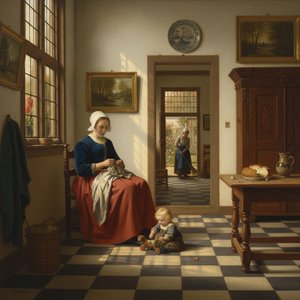
Pieter de Hooch: Illuminating Dutch Domestic Life & Golden Age Charm
Explore the captivating world of Pieter de Hooch, a master of Dutch Golden Age painting. Discover his innovative use of light, intimate domestic scenes, and lasting influence on art history. Learn more at OriginalUniqueArt.

Willem van de Velde the Elder: Master of Maritime Painting & Chronicler of the Dutch Golden Age
Discover the captivating maritime paintings of Willem van de Velde the Elder, a master chronicler of the Dutch Golden Age. Explore his unparalleled realism and lasting influence on naval art history.

Olandijos Aukso Amžius: 10 Šedevrų, Apibrėžiančių Meną ir Stilių
Atraskite Olandijos Aukso Amži\u017us meninius šedevrus! 10 legendin\u017iŴ paveikslžiai – Rembrandto, Vermeerio ir kt. darbai. Sužnkitę j\u016ungo namus aukso amži\u017us grožiu! Āukrai, interjero dizainas – viskas OriginalUniqueArt.com. Ižirkite kolekciją internete!
