
 Peržiūrėti realaus dydžio版
 Pasidalinti
 Dalintis
 Išsamiau
 Vadovas

 Atsisiųsti
 Panašūs eksponatai
 Rentgeno spindulių nuotrauka
 Automatinė diorama
 Q&A
Q&A Statistika
In the Bedroom


 Skaityti daugiau
Giclée / Meno spausdinimas
Muziejų lygio „giclée“ arba drobos spausdinimas: greita gamyba ir lankstios apdailos parinktys. ( Pirkti rankų darbo tapybą Perejti prie skaitmeninių vaizdų)




P118B €10

P118H €10

P118W €10

P438Z €10

P508JH €12

P508YH €12

P805H €10

P805Z €10

P919BZ €10

P919G €10

P919XJ €10

P959ZH €10

P968JZ €12

W106C €8

W218G €10

W218JH €8

W218Y €10

W307PJ €10

W316G €10

W316PJ €8

W316Y €10

W398PJ €8

W4111J €10

W500HY €15

W500JH €15

W692G €12

W849H €8

W940BG €15

W953PJ €8




Pasirinkite iš mūsų nustatytų dydžių, atitinkančių originalaus meno kūrinio proporcijas.

Įveskite jums reikiamą plotį ir aukštį, kad atvaizdas derėtų prie jūsų rėmo ar sienos. Spausdiną galima tik sumažinti, bet nepadidinti virš originalaus paveikslėlio dydžio, todėl keičiant proporcijas, dalis vaizdo prarandama. Prieš spausdinimą atsiųsime jums skaitmeninį maketą patvirtinimui. Šioje puslapio nuotraukoje matomas pjūvis nėra tikslus – jį rodo tik maketas.
Pristatymas visame pasaulyje () per 2 weeks, o ne įprastas 4/5 savaičių laikotarpis. (3 lapkritis)

Nemokamas greitasis pristatymas visame pasaulyje

Aukštos kokybės lininis drobė

Pilnas siuntimo draudimas

Muitinės mokesčių grąžinimo garantija

Tikro spalvų atitikimo garantija

100 dienų grąžinimo politika (tik esant įtaigoms)

100% pinigų grąžinimo garantija

Nuolaida dideliems užsakymams
 Stiklo variantas prieinamas tik pasirinkus dydį iki 110 cm

In the Bedroom
Giclée / Meno spausdinimas
Reprodukcijos matmenys
-


Bendroji kaina
€ 71
A Glimpse into Domestic Harmony: Pieter de Hooch's "In the Bedroom"
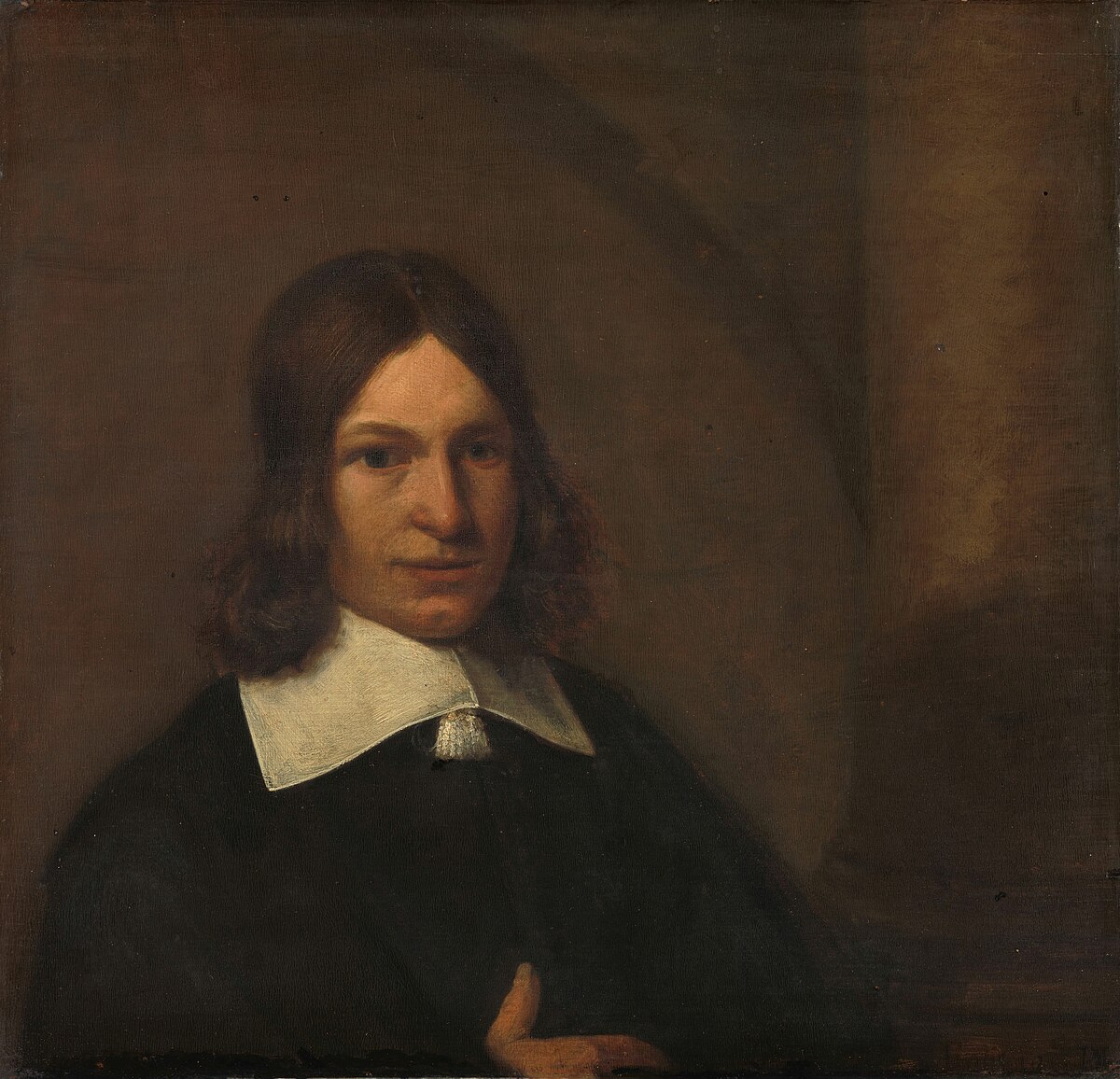
Pieter de Hooch’s “In the Bedroom,” painted around 1660, isn’t merely a depiction of an interior; it’s a carefully constructed tableau of Dutch Golden Age life – a quiet meditation on motherhood, domesticity, and the subtle interplay of light and shadow. Within the confines of this modestly furnished room in Delft, De Hooch masterfully captures a fleeting moment of serene intimacy, inviting us to step into a world of understated elegance and profound emotional resonance. The painting’s enduring appeal lies not just in its technical brilliance but also in its ability to evoke a sense of timelessness, transporting the viewer to a bygone era where domestic tranquility held immense value.
The Language of Light and Shadow: De Hooch’s Technique
De Hooch was a pioneer in his use of light, earning him recognition as one of the most innovative painters of his time. “In the Bedroom” exemplifies this mastery. He employs a technique known as *chiaroscuro*, dramatically contrasting areas of bright illumination with deep shadows to sculpt forms and create a sense of depth and atmosphere. The light, originating from an unseen window on the right, washes over the room in a soft, diffused glow, highlighting the textures of the fabrics – the rough weave of the clothing, the worn surface of the wooden furniture, and the subtle details of the plaster walls. This careful manipulation of light isn’t simply decorative; it serves to draw our attention to key elements within the composition and imbue the scene with a palpable sense of warmth and intimacy.
His brushwork is remarkably delicate and layered, achieved through meticulous application of thin glazes of oil paint. This technique allows him to build up color gradually, creating subtle gradations of tone and luminosity that mimic the way light interacts with surfaces in reality. The resulting effect is a remarkable sense of realism – not photographic, but rather an impressionistic rendering of domestic life, capturing the fleeting qualities of light and atmosphere.
A Window into Dutch Society: Symbolism and Context
“In the Bedroom” offers a fascinating glimpse into the social and cultural values of 17th-century Holland. The scene depicts a modest interior, suggesting a working-class family – a common subject matter for De Hooch’s paintings. The presence of a young girl attending to her mother is particularly significant, symbolizing the nurturing role of women in Dutch society. The open doorway, a recurring motif in De Hooch's work, invites the viewer into the scene and creates a sense of voyeurism, as if we are observing a private moment within a domestic sphere. The arrangement of objects – the chamber pot, the airing rack – speaks to the practicalities of daily life and the importance placed on cleanliness and order.
Furthermore, the painting’s focus on quiet observation reflects the Dutch penchant for *gezelligheid* – a concept encompassing warmth, conviviality, and a sense of shared comfort. De Hooch wasn't interested in grand narratives or dramatic events; instead, he sought to capture the subtle beauty of everyday moments, fostering a feeling of connection between the viewer and the scene.
A Timeless Masterpiece: Emotional Resonance
Despite its seemingly simple subject matter, “In the Bedroom” possesses a profound emotional depth. The painting’s muted color palette – dominated by browns, grays, and subtle reds – contributes to a sense of melancholy or introspection, reflecting the quiet realities of domestic life. The figures are rendered with remarkable sensitivity, conveying a sense of tenderness and affection. It's a scene that invites contemplation—a reminder of the enduring power of family, home, and the beauty found in the ordinary.
Reproductions of “In the Bedroom” capture this essence beautifully, allowing us to bring this evocative Dutch Golden Age painting into our own homes and spaces. Whether as a statement piece or a subtle addition to a serene interior, De Hooch’s masterpiece continues to resonate with viewers today, offering a timeless glimpse into the heart of domestic life.
Klausimai ir atsakymai
Ar galėčiau pamatyti „In the Bedroom“ – Piteris De Hoochas ant savo sienos prieš pirkdama/pirkdamas?
„In the Bedroom“ – Piteris De Hoochas puslapio Peržiūra papildintajai realybei funkcija naudoja papildytojąjį realybės technologiją, kad suderinamame įrenginyje parodytų kūrinį jūsų erdvėje.
Ar kūrinys „In the Bedroom“ – Piteris De Hoochas saugomas originalaus paveikslautojo valstybėje?
Ne – kūrinys saugomas užsienyje. Piteris De Hoochas gimtoji šalis yra Nyderlandai, o kūrinio „In the Bedroom“ originalas saugomas muziejuje, esančiame Vokietija.
Atsižvelgiant į spalvų paletę, kur rekomenduojama eksponuoti kūrinį „In the Bedroom"]?
Dėl savo Earthy paletės, „„In the Bedroom“ – Piteris De Hoochas“ rekomenduojamas Living Room. Spalvų derinys yra viena iš šios rekomendacijos priežasčių.
Autoriaus biografija
ankstygy ir mokslas
Pieter de Hooch, viena iš ryškiausių figūrų olandžių aukso amžiui, gimė 1629 m. gruodžio 20 d. Rotterdame, Nylandijoje. Jis buvo vykadžiausias iš penkių vaikų, augintų mūrininkui Hendrickui Hendrickszui de Hooch ir akšininkei Annetge Pieters. Nors apie jo ankstyvąjį gyvenimą žinoma nedaug, manoma, kad jis dirbo Rotterdame, Delftuje ir Amsterdami. De Hooch meno mokslai vyko Haarleme, dirbant su paisaječių paveikslų meistru Nicolaes Berchem bei Jacob Ochtervelt. Šis laikotarpis padėjo pagrindus jo būsimai sėkmei kaip tylių namų scenų meistrui, pasižinantamiam atvirais durų angomis.meninės stiliai ir temos
De Hooch kūrybai būdingas itin dėmesys detalėms, naturalizmas ir šviesos naudojimas. Jo paveiksluose dažnai atvivždijamas kasdienis gyvenimas, atspindintis pradinės klasės žmonių vertybes ir siekius. Žymus šio stiliaus pavyzdys yra „namo kiemas Delfte“ (1658), kuriame jis geba įamžinti paprastiausias kasdienybės detales. Nors de Hooch kūrybos temas ir kompozicijas bendrina su Emanuel De Witte, būtent dėmesys žmonėms ir jų tarpusavio ryšiams išskiria jį iš šio meistro. Tai itin akivaizdu paveiksluose „moteris žindanti vaiką“ (1658) bei „moteris su kūdikiu ant antstulės“ (1658), kurie demonstruoja jo meilę buičiai vaizduojant.žymūs darbai ir palikimas
Kai kuriuose de Hooch meno šedevruose galima rasti:- „linksma girtuojas“ (apie 1650 m.)
- „lobiuotojai saulės apšiltoje kambaryje“ (1658)
- „moteris rengia duoną ir sviestą berniukui“ (1661)
muziejai ir kolekcijos
De Hooch kūrybiniai darbai galima rasti įvairiuose muziejuose, įskaitant Koninklijk Museum voor Schone Kunsten Antverpije, Belgijoje, kuri saugo milžinišką Europos meno kolekciją nuo XV iki XX amžiaus. Sužinokite daugiau apie Pieter de Hooch ir jo kūrybą OriginalUniqueArt: [https://OriginalUniqueArt.com/@/pieter-de-hooch](https://OriginalUniqueArt.com/@/pieter-de-hooch) /lt/art/show/art-d3b4kt-lt/ (atraskite Belgijos Koninklijk Museum voor Schone Kunsten šedevrus).
Piteris De Hoochas
1629 - 1694 , Nyderlandai
Trumpa informacija
- Artistic Movement Or Style: Delftų mokykla, Olandijos aukso amžius
- Artists Or Movements Influenced By This Artist: ['Jan Vermeer']
- Artists Who Influenced This Artist: ['Nicolaes Berchem']
- Date Of Birth: 1629 m. gruodžio 20 d.
- Full Name: Pieter Hendricksz de Hooch
- Nationality: Olandas
- Notable Artworks:
- Tuščia stiklinė
- Moteris, skaitanti laišką
- Žaidėjai plaidoje, apšauctoje saulės
- Moteris, ruošiasi duoną su sviestu
- Place Of Birth: Rotterdamas, Nyლlandija
Susiję straipsniai

Olandijos Aukso Amžius: 10 Šedevrų, Apibrėžiančių Meną ir Stilių
Atraskite Olandijos Aukso Amži\u017us meninius šedevrus! 10 legendin\u017iŴ paveikslžiai – Rembrandto, Vermeerio ir kt. darbai. Sužnkitę j\u016ungo namus aukso amži\u017us grožiu! Āukrai, interjero dizainas – viskas OriginalUniqueArt.com. Ižirkite kolekciją internete!

Willem van de Velde the Elder: Master of Maritime Painting & Chronicler of the Dutch Golden Age
Discover the captivating maritime paintings of Willem van de Velde the Elder, a master chronicler of the Dutch Golden Age. Explore his unparalleled realism and lasting influence on naval art history.

Mastering Light & Shadow: A Journey Through the Dutch Golden Age's Luminous Legacy
Embark on a cultural journey through the Dutch Golden Age. Explore the masterful interplay of light and shadow in 17th-century masterpieces, from Rembrandt to Vermeer, and discover how this era of profound realism continues to inspire fine art collectors today.
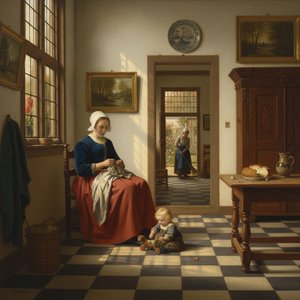
Pieter de Hooch: Illuminating Dutch Domestic Life & Golden Age Charm
Explore the captivating world of Pieter de Hooch, a master of Dutch Golden Age painting. Discover his innovative use of light, intimate domestic scenes, and lasting influence on art history. Learn more at OriginalUniqueArt.

Golden Light & Dutch Skies: The Timeless Magic of Dutch Golden Age Landscapes
Discover the breathtaking beauty of Dutch Golden Age landscapes. Explore the mastery of light, chiaroscuro, and 17th-century realism through an expert art history lens, celebrating the enduring legacy of the Dutch Masters for discerning collectors and art lovers.
