Text size

() ·

A painting made for you, by hand

Self-Portrait

Rankų darbo aliejinės reprodukcijos

Rankiniu būdu tapytas aliejus ant droblio jūsų pageidaujamame dydį ir rėmuose – tai mūsų menininkų pagal užsakymą sukurtas darbas. ( Perjungti į spausdinamus版作品 Perejti prie skaitmeninių vaizdų)

Kolekcinio objekto aprašas

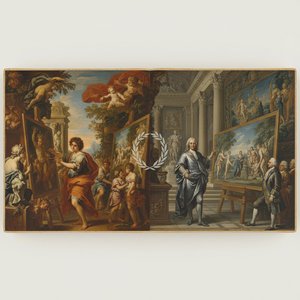
Magnificent Baroque self-portrait by Pierre Mignard (1690). Admire the opulent details & classical grace of this French masterpiece. Hand-painted reproduction available.

Autoriaus biografija

Aplankykite Pierre Mignard (1612-1695) – garsų prancūzų baroko paveikslautoją, garsėjančią elegantiškais portretais bei įtraukiančiomis religinėmis ir mitologinėmis scenomis. Atraskite jo palikimą!

from ·

Chapter 1

How large should it be?

Slide to change the size; the picture on the left shows the frame at its real width. The proportions of the original are kept.

Standartinis dydis
pagal užsakymą
CM
INCH

Pasirinkite iš mūsų nustatytų dydžių, atitinkančių originalaus meno kūrinio proporcijas.

plotis
aukštis

Įveskite jums reikiamą plotį ir aukštį, kad paveikslas atitiktų jūsų rėmą ar sieną. Kadangi šis darbas yra rankinio darbo, siekiant išgauti kitokios formos dydį, paveikslas gali būti šiek tiek didesnis (nuo kraštų bus palikta daugiau erdvės) arba mažesnis – pasirinkite jums patogiausią variantą. Prieš pradedant tapyti, atsiųsime jums skaitmeninį maketą patvirtinimui. Šioje puslapio nuotraukoje matomas vaizdas nėra galutinis rezultatas – jį parodys tik sukurtas maketas.

Chapter 2

How should it arrive?

Choose the edges of the stretched canvas

Choose your frame

Corner sample of the WhiteWrap canvas edge finish, stretched on solidus medžio

**Improved version:**
solidus medis bars
White €1
Corner sample of the BlurSideWrap canvas edge finish, stretched on solidus medžio

**Improved version:**
solidus medis bars
Blurside €1
Corner sample of the ExtendedWrap canvas edge finish, stretched on solidus medžio

**Improved version:**
solidus medis bars
Extended €1
Corner sample of the P118B picture frame: lieto polistirolo detalės, 5 cm wide and 3 cm thick
P118B €10
Corner sample of the P118H picture frame: lieto polistirolo detalės, 5 cm wide and 3 cm thick
P118H €10
Corner sample of the P118W picture frame: lieto polistirolo detalės, 5 cm wide and 3 cm thick
P118W €10
Corner sample of the P438Z picture frame: lieto polistirolo detalės, 5.5 cm wide and 3.5 cm thick
P438Z €10
Corner sample of the P508JH picture frame: lieto polistirolo detalės, 7 cm wide and 3.5 cm thick
P508JH €12
Corner sample of the P508YH picture frame: lieto polistirolo detalės, 7 cm wide and 3.5 cm thick
P508YH €12
Corner sample of the P805H picture frame: lieto polistirolo detalės, 5 cm wide and 3.5 cm thick
P805H €10
Corner sample of the P805Z picture frame: lieto polistirolo detalės, 5 cm wide and 3.5 cm thick
P805Z €10
Corner sample of the P919BZ picture frame: lieto polistirolo detalės, 7 cm wide and 3.5 cm thick
P919BZ €10
Corner sample of the P919G picture frame: lieto polistirolo detalės, 7 cm wide and 3.5 cm thick
P919G €10
Corner sample of the P919XJ picture frame: lieto polistirolo detalės, 7 cm wide and 3.5 cm thick
P919XJ €10
Corner sample of the P959ZH picture frame: lieto polistirolo detalės, 5 cm wide and 3 cm thick
P959ZH €10
Corner sample of the P968JZ picture frame: lieto polistirolo detalės, 6 cm wide and 4 cm thick
P968JZ €12
Corner sample of the W106C picture frame: solidus medžio

**Improved version:**
solidus medis, 5 cm wide and 3 cm thick
W106C €8
Corner sample of the W218G picture frame: solidus medžio

**Improved version:**
solidus medis, 5 cm wide and 3 cm thick
W218G €10
Corner sample of the W218JH picture frame: solidus medžio

**Improved version:**
solidus medis, 5 cm wide and 3 cm thick
W218JH €8
Corner sample of the W218Y picture frame: solidus medžio

**Improved version:**
solidus medis, 5 cm wide and 3 cm thick
W218Y €10
Corner sample of the W307PJ picture frame: solidus medžio

**Improved version:**
solidus medis, 6 cm wide and 3 cm thick
W307PJ €10
Corner sample of the W316G picture frame: solidus medžio

**Improved version:**
solidus medis, 6 cm wide and 3 cm thick
W316G €10
Corner sample of the W316PJ picture frame: solidus medžio

**Improved version:**
solidus medis, 6 cm wide and 3 cm thick
W316PJ €8
Corner sample of the W316Y picture frame: solidus medžio

**Improved version:**
solidus medis, 6 cm wide and 3 cm thick
W316Y €10
Corner sample of the W398PJ picture frame: solidus medžio

**Improved version:**
solidus medis, 5 cm wide and 3 cm thick
W398PJ €8
Corner sample of the W4111J picture frame: solidus medžio

**Improved version:**
solidus medis, 6.5 cm wide and 3.5 cm thick
W4111J €10
Corner sample of the W500HY picture frame: solidus medžio

**Improved version:**
solidus medis, 7 cm wide and 5 cm thick
W500HY €15
Corner sample of the W500JH picture frame: solidus medžio

**Improved version:**
solidus medis, 7 cm wide and 5 cm thick
W500JH €15
Corner sample of the W692G picture frame: solidus medžio

**Improved version:**
solidus medis, 8 cm wide and 4 cm thick
W692G €12
Corner sample of the W849H picture frame: solidus medžio

**Improved version:**
solidus medis, 5 cm wide and 3 cm thick
W849H €8
Corner sample of the W940BG picture frame: solidus medžio

**Improved version:**
solidus medis, 7.5 cm wide and 4.5 cm thick
W940BG €15
Corner sample of the W953PJ picture frame: solidus medžio

**Improved version:**
solidus medis, 6 cm wide and 3.5 cm thick
W953PJ €8
Corner sample of the H24-GOLD picture frame: medžio skulptūra su gipso sluosniu, 10 cm wide and 6 cm thick
H24-GOLD €30
Corner sample of the H24-SILVER picture frame: medžio skulptūra su gipso sluosniu, 10 cm wide and 6 cm thick
H24-SILVER €30
Corner sample of the H36-GOLD picture frame: medžio skulptūra su gipso sluosniu, 15 cm wide and 6.5 cm thick
H36-GOLD €45
Corner sample of the H36-SILVER picture frame: medžio skulptūra su gipso sluosniu, 15 cm wide and 6.5 cm thick
H36-SILVER €45
Rėmo peržiūra
Įrėmintas

Moulding: . Overall size with the frame: .

Chapter 3

Who paints it, and should anything change?

Examples of what can be changed: Replace face with customer photo; Add pet (e.g., replace cat with dog); Include hidden message in background; Change background landscape or elements.
After order, OriginalUniqueArt.com team will email client for instructions and provide a mockup preview

Pristatymas visame pasaulyje () per 3–4 savaites, o ne įprastai – per 5 savaites. (2 lapkritis). Kokybė lieka nepakeičiama.

Chapter 4

The finishing touches

A nameplate, as in a museum?

Išgraviruotos bronzinės plokštelės detalės

This elegant plaque features the artist's name and the title of the artwork, finely engraved for a timeless presentation.

It is made from bronze with a refined, elegant finish. The text is precisely laser-engraved for a sharp and permanent result. Measuring 9x2 cm, the plaque is compact yet easy to read. It's built to be durable and scratch-resistant, offering a professional, museum-quality look. Mounting is simple thanks to the included adhesive backing.

Skaidrios akrilo plokštelės informacija

The plaque includes essential engraved details such as the artist's name, the title of the artwork, the date it was created, the type of media used-like oil on canvas or watercolor-a brief description of the piece, and a QR code that links to the complete artwork information.

It is crafted from clear acrylic, offering a sleek, modern appearance. The text is UV-engraved in black to ensure strong visual contrast. With a size of 10x15 cm, it ensures optimal readability. It comes equipped with two metal hooks for secure wall mounting. The plaque is designed to be weather-resistant, making it suitable for various environments, and it includes interactive features that work seamlessly with smartphone scanning.

Juodos akrilo plokštelės informacija

This elegant plaque includes engraved information such as the artist's name, the title of the artwork, the date it was created, the type of media used (like oil on canvas or watercolor), a short description of the artwork, and a QR code for quick access to more information.

The plaque itself is made from refined black acrylic with a premium finish. The text is laser-engraved in white for high contrast and readability. Its size is 10x15 cm, designed to be easy to read. It comes with two metal hooks for professional mounting. The design is sleek and fits any interior style. It is also weather-resistant and durable, with built-in digital integration for mobile compatibility.

A protective varnish?

When do you need it?

Chapter 5

Your painting, as you ordered it

Self-Portrait

Reprodukcijos technika

Reprodukcijos matmenys

-

Aukščiausios klasės meistras

Daugiau detalių, meistriškumo ir papildomo gamybos laiko

-

Reprodukcijos rėmėjimo parinktys

-

-

Dėl meno kūrinių ar reprodukcijų, kurių bet kuri pusė yra didesnė nei 105 cm (apie 41 inch), rėmas bus siunčiamas kaip išskaidytas surinkimo rinkinys. Šis metodas užtikrina saugų pristatymą ir apsaugo nuo transportavimo metu galimos žalos.

Reikalingas profesionalus surinkimas – tai nėra „pasidaryk pats“ (DIY) produktas.
Rinkinys turi būti surinktas, o drobė išplėsta naudojant patyrį profesionalų rėmininką, medžio klijus (nėra įtraukti į rinkinį), drobės plėšimo kleslę bei presas, kad rėmo rėžiai išliktų tiesūs, kol klijai išdžiūvus. Netinkamas surinkimas arba netolydus drobės įtampa gali negrįžtamai sugadinti meno kūrinį, todėl šie atvejai nėra užtraukiami mūsų garantijos.

  • Į komplektą įeina visi vientisos medienos elementai, tiksliai išpjauti pagal dydį.

  • Surmontinama naudojant pridėtus varžtus bei papildomai reikalingą medžio kliją kampų jungtims, kuris nėra pridėtas ir turi būti parinktas rėmininkui.

  • Reikalingi profesionalūs įrankiai, kurie nėra įtraukti į rinkinį: drobės kėlimo plytelės (stiprintuvai) ir klemiai, laikantys rėmo strygius tiesiu kampu, kol džiūsta lipas.

Svarbu:
Kampų jungtims reikalingi medžio klijai, barams reikia laikyti naudojant presas, kol klijai visiškai išdžiūvės, o surinktam rėmui įtempiamai privilgti būtinos drobės įtempimo plytযুক্ত. Šios priemonės į rinkinį neįtrauktos. Prieš užsakydami šio dydžio rinkinį, rekomenduojame pasimalkoti patyrusiu rėmų meistru.

Pavadinimo lentelė

-

-

Apsauginis lakas

Blizgus lakas (ryškina spalvas, saugo nuo šviesos ir drėgmės)

-

Personalizuoti kūrinį

Ką galima pakeisti (pavyzdžiui): pakeisti veidą klientui skirta nuotrauka; pridėti augintinį (pvz., katę pakeisti šuniu); įtraukti paslėptą žinutę fone; pakeisti fono kraštovaizdį ar elementus.

-

Skubiai

Pristatymas visame pasaulyje () per 3–4 savaites, o ne įprastai – per 5 savaites. (2 lapkritis). Kokybė lieka nepakeičiama.

-

Skubus pristatymas

Pristatymas visame pasaulyje () per 5 weeks. (9 lapkritis).

Įskaičiuota

Bendroji kaina

€ 267

Visos kainos suma € 267

Stiklo variantas prieinamas tik pasirinkus dydį iki 110 cm

Included with every order

  • Nemokamas greitasis pristatymas visame pasaulyje
  • Aukštos kokybės lininis drobė
  • Pilnas siuntimo draudimas
  • Muitinės mokesčių grąžinimo garantija
  • Tikro spalvų atitikimo garantija
  • 100 dienų grąžinimo politika (tik esant įtaigoms)
  • 100% pinigų grąžinimo garantija
  • Nuolaida dideliems užsakymams

A Glimpse of Baroque Grandeur: Self-Portrait by Pierre Mignard

Pierre Mignard’s 1690 “Self-Portrait” is more than just a likeness; it's a meticulously crafted tableau vivant, a window into the world of a prominent figure in 17th-century French art. This painting, measuring a substantial 235 x 188 cm, immediately commands attention with its opulent details and carefully orchestrated composition. It’s a testament to Mignard's skill as a portraitist and his deep understanding of Baroque aesthetics – a style characterized by dramatic lighting, rich textures, and an emphasis on theatricality.

The subject himself is presented in a pose of studied elegance, seated within a richly appointed interior. He’s dressed in a flamboyant gown, complete with a sweeping cape and a gleaming gold sash, indicative of the status and wealth he commanded. A carefully styled wig frames his face, while a meticulously groomed mustache adds to the air of sophistication. The details are exquisite: the velvet of the chair, the sheen of the fabrics, the subtle play of light on polished surfaces – all contribute to an overwhelming sense of luxury and refinement. Notably, Mignard’s gaze is direct and engaging, inviting the viewer into his world.

The Setting: A Stage for Self-Representation

Beyond the central figure, the background subtly enhances the portrait's narrative. Two chairs – one occupied by Mignard himself, the other positioned to his left – create a sense of intimacy and contemplation. A dining table, adorned with a simple bowl, suggests an appreciation for the finer things in life, while three scattered vases introduce a touch of decorative flourish, echoing the Baroque love of ornamentation. These elements aren’t merely decorative; they contribute to a carefully constructed atmosphere that reinforces Mignard's position as a man of taste and refinement.

The painting’s palette is rich and warm, dominated by deep reds, golds, and browns – colors associated with wealth, power, and religious devotion. Mignard masterfully employs chiaroscuro, the dramatic contrast between light and shadow, to sculpt the forms of his subject and create a sense of depth and volume. This technique, characteristic of the Baroque period, draws attention to key features and adds an element of theatricality to the scene.

A Master’s Hand: Technique and Influences

Mignard's style is a fascinating blend of influences. His early training under Jean Boucher instilled in him a foundational understanding of Mannerist principles, particularly his sensitivity to form and composition. However, his subsequent studies with Simon Vouet exposed him to the classical ideals championed by the Venetian master, influencing his use of perspective and idealized forms. Crucially, his time in Rome allowed him to absorb the grandeur of Italianate art, which he then skillfully integrated into his own distinctive style.

The painting’s resemblance to Largillère's portrait of Charles Le Brun is particularly noteworthy. This suggests a conscious effort on Mignard’s part to establish himself within the Parisian artistic circles and perhaps even subtly engage in a rivalry with his contemporary. It’s a deliberate gesture, highlighting both his technical skill and his awareness of the prevailing artistic landscape.

A Legacy of Elegance: Historical Context

Created in 1690, “Self-Portrait” reflects the flourishing Baroque period in France – an era marked by royal patronage, religious fervor, and a fascination with luxury. Mignard’s success as a portraitist was directly linked to his ability to capture the status and personality of his subjects, often members of the aristocracy and clergy. His work served not only as a visual record but also as a powerful statement of social standing.

As an art historian, it's important to note that Mignard’s life was intertwined with political intrigue and artistic competition. His rivalry with Charles Le Brun, the Premier Peintre du Roi, shaped his career and ultimately led to his appointment as director of the Académie royale de peinture et de sculpture. This painting, therefore, offers a glimpse into not only the artist's personal ambitions but also the complex dynamics of the French art world during this pivotal period.

OriginalUniqueArt is proud to offer high-quality hand-painted reproductions of Pierre Mignard’s “Self-Portrait,” allowing you to experience the beauty and artistry of this remarkable masterpiece in your own home or studio. Explore our collection today and bring a touch of Baroque grandeur into your space.

Klausimai ir atsakymai

Ar „Self-Portrait“ pasižymi stipriais šviesos ir tamsos kontrastais?

„Self-Portrait“ – Pjer Mignar pasižymi Serene šviesių ir tamsių sričių kontrastu.

Kokia technika sukurta „Self-Portrait“ – Pjer Mignar?

„Self-Portrait“ – Pjer Mignar technika – Oil On Canvas. Kopijos siekia atkartoti šios technikos vaizdą.

Kokio tipo kūrinys yra „Self-Portrait“ – Pjer Mignar?

„Self-Portrait“ yra WallArt kūrinys.

More about this painting

Peržiūrėti realaus dydžio版 Peržiūrėti AR realybėje Perjungti į spausdinamus版作品 Perejti prie skaitmeninių vaizdų Pasidalinti
Išsamiau Vadovas Pridėti į mėgstamiausius Atsisiųsti Panašūs eksponatai Rentgeno spindulių nuotrauka Automatinė diorama Q&A Statistika

In numbers

  • 1690the year it was painted
  • 29frames to choose from
  • standard sizes, in its own proportions
  • 5weeks to paint and deliver it
Pjer Mignar

Pjer Mignar

1612 - 1695

Quick facts about Pjer Mignar

  • Artistic Movement Or Style: Barokas
  • Artists Or Movements Influenced By This Artist: ['Prancūzų portretistai']
  • Artists Who Influenced This Artist:
    • Simon Vouet
    • Annibale Carracci
  • Date Of Birth: 1612
  • Date Of Death: 1695
  • Full Name: Pierre Mignard
  • Nationality: Prancūzų
  • Notable Artworks:
    • Dievas Tėvas
    • Vynogienės Švč. Mergelė
    • La Fortune
  • Place Of Birth: Tro, Prancūzija

Autoriaus biografija

Gyvenimas, pas डूबęs į baroko prachtą

Pierre Mignard, gimęs Prancūzijoje, Troyes mieste, 1612 metais, buvo viena svarbiausių figūrų Prancūzijos baroko tapukų pasaulyje, nors dažnai buvo prislėgtas savo samties ir rivalo, Charles Le Brun, šlovės. Kilęs iš paprastos meistrių šeimos, Mignard veik laiko pasidemonstravo meninį polinkį, kuris nukreipė jį į Bourges, ten jis pradėjo mokytis Jean Boucher, tapui, tvirtai įsikibusiame manierizmo tradicijomis. Šis pradinio mokymosi laikotarpis įsidėmėjo jį jautrumu formoms ir kompozicijai, kurią jis vėliau tobulino rūpingu darbių kopijavimo metu Château de Fontainebleau – tikroje galimybių ir įtvirtintų meninių principų mokykloje. Svarbiausia, jo studijos tęsiė Paryžiaus Simon Vouet studijoje – meistro, kuris skatino klasicizmo įtakas ir turėjo plačių tarptautinių ryšių. Šios formavimo patirtys padėjo pagrindus Mignard stiliui, kuriame itališkas didžiumas susilieja su prancūziška elegancija.

Romos svajonės ir „mignardises“ gimimas

Lemtingas Mignard meninės kelionės skyrius prasidėjo 1635 metais, kai jis persikėlė į Romą. Maždaug dvidešimt šešerių metų jis visapusiškai pasinerė į gyvybingą Italijos baroko meno širdį. Būtent čia jis tikrai pasiekė viršūnę, užgavėjo švelnių ir užburėjančių Madonos su Švč. Krikščioniu vaiku vaizduotės – vaizdiniai buvo tokie žavingi ir delikatūs, kad tapo affectionately vadinami „musių mignardises“, kas yra jų saldumo ir rafinuotumo įrodymas. Italijos meistrų įtaka jo romiečių laikoteki darbo kūriniuose yra akivaizdi: dramatiškos kompozicijos, meistriškas šviesos ir šešėlio naudojimas bei bendras teatralumo pojūtis charakterizuoja šį laikotarpį. Be religinių užsakymų, Mignard tobulino savo techninius įgūdžius per reprodukcinį gravirimą, kruopščiai kopijuodamas Annibale Carracci darbus ir gilindamas supratimą apie meninius principus. Jo talentas išsiplėtė ir portretistystėje – jis gavo užsakymus iš žymių Romos asmenų, tokių kaip popiežiai, kardinalai ir elito nariai, užsitikrindamas reputaciją ne tik atvaizduoti panašumą, bet ir su gebėjimu bei elegancija įtrapinti žmogaus charakterį.

Grįžimas į Paryžių ir meninės konfrontacijos Apie 1657 metus Mignard grįžo į Paryžių, sulaukęs kvietimo iš kardinalo Mazarinio, o tai pažymėjo jo įėjimą į konkurencingą prancūziško karališkojo dvaro tapukų pasaulį. Jis greitai pelnė globą iš įtakingų asmenų, įskaitant patį karalių Louis XIV, tačiau jo kilimas sutapino su Charles Le Brun dominavimu, kuris tuo metu heldavo prestižinį *peintre du roi* titulą. Tai neabejotinai lėmė ilgalaikę ir dažnai kartią rivalizaciją tarp dviejų menininkų. Mignėard aktyviai priešinosi Académie Royale de Peinture et Sculpture valdžiai, atsisakydamas jos nustatytos hierarchijos ir gyndamas meninę nepriklausomybę. Nepaisant šio konflikto, jis klestėjo kaip portretistas, drobelėmis amžinindamas tokius iškilmingus asmenis kaip Turenne, Molière, Bossuet ir Madame de Maintenon. Jo portretai yra vertinami ne tik dėl tikslaus vaizdinio, bet ir dėl psichologinės įžvalgos, kurią jie atskleidžia – su neįtikėtinu jautrumu įtrapindamas savo modelių esę.

Palikimas ir ilgalaikė įtaka

Pierre Mignard meninis palikimas remiasi pirmiausia jo meistriškaisiais portretais, kurie vertinami dėl jų elegancijos, kruopštaus detalizavimo ir gebėjimo perteikti charakterį. Jo religiniai kūriniai, ypač Madonos su Švč. Krikščioniu vaiku vaizdai, sukūrti romiečių laikotarpiu, taip pat užima svarčią vietą meno istorijoje. Po Le Brun mirties 1690 metais, Mignard perėmė daugelį jo ankstesnių pareigų, demonstruodamas pagarbą, kurį jis pelnė meniniaisis aplinkose – tai yra jo neblėstančio talento įrodymas. Nors dažnai buvo prislėgtas didesnės Le Brun šlovės ir oficialaus pripaudimo, Mignard išlieka svarbi figūra Prancūzijos baroko tapukų menėje. Jis atstovauja išskirtinį stilių, pasižymintį klasiciniu žavesiu, patobulinta technika ir kruopščiu dėmesiui detalėms, kuris jį išskiria iš kitų. Jo įtaka matoma vėlesniose prancūzių portretistų kartose, kurie siekė imituoti jo gebėjimą įtrapinti tiek fizinį panašumą, tiek vidinę savo modelių sielą. Mignard le Romain, kaip jis buvo žinomas, paliko kūrinių korpusą, kuris ir šiandien sužavė ir įkvėpia, suteikdamas žiūrėtojui pasiūlą į prabangų XVII aməkio Prancūzijos pasaulį ir meistriško portretisto meną.

Trumpa informacija

  • Subject or theme: Self-portraiture
  • Medium: Oil on canvas
  • Year: 1690
  • Dimensions: 235 x 188 cm
  • Artist: Pierre Mignard
  • Movement: Baroque

Karo viktorina

Kiekviename klausime yra tik vienas teisingas atsakymas.

Klausimas 1:
What is the primary subject depicted in Pierre Mignard’s ‘Self-Portrait’?
Klausimas 2:
The painting features several decorative elements. What is NOT depicted in the scene?
Klausimas 3:
Based on the description, what is a notable feature of Mignard’s attire?
Klausimas 4:
Pierre Mignard’s style is often described as blending which two influences?
Klausimas 5:
In what century was ‘Self-Portrait’ created?