
 Peržiūrėti realaus dydžio版
 Pasidalinti
 Dalintis
 Išsamiau
 Vadovas

 Atsisiųsti
 Panašūs eksponatai
 Rentgeno spindulių nuotrauka
 Automatinė diorama
 Q&A
Q&A Statistika
Établissement de l


 Skaityti daugiau
Giclée / Meno spausdinimas
Muziejų lygio „giclée“ arba drobos spausdinimas: greita gamyba ir lankstios apdailos parinktys. ( Pirkti rankų darbo tapybą Perejti prie skaitmeninių vaizdų)




P118B €10

P118H €10

P118W €10

P438Z €10

P508JH €12

P508YH €12

P805H €10

P805Z €10

P919BZ €10

P919G €10

P919XJ €10

P959ZH €10

P968JZ €12

W106C €8

W218G €10

W218JH €8

W218Y €10

W307PJ €10

W316G €10

W316PJ €8

W316Y €10

W398PJ €8

W4111J €10

W500HY €15

W500JH €15

W692G €12

W849H €8

W940BG €15

W953PJ €8




Pasirinkite iš mūsų nustatytų dydžių, atitinkančių originalaus meno kūrinio proporcijas.

Įveskite jums reikiamą plotį ir aukštį, kad atvaizdas derėtų prie jūsų rėmo ar sienos. Spausdiną galima tik sumažinti, bet nepadidinti virš originalaus paveikslėlio dydžio, todėl keičiant proporcijas, dalis vaizdo prarandama. Prieš spausdinimą atsiųsime jums skaitmeninį maketą patvirtinimui. Šioje puslapio nuotraukoje matomas pjūvis nėra tikslus – jį rodo tik maketas.
Pristatymas visame pasaulyje () per 2 weeks, o ne įprastas 4/5 savaičių laikotarpis. (1 lapkritis)

Nemokamas greitasis pristatymas visame pasaulyje

Aukštos kokybės lininis drobė

Pilnas siuntimo draudimas

Muitinės mokesčių grąžinimo garantija

Tikro spalvų atitikimo garantija

100 dienų grąžinimo politika (tik esant įtaigoms)

100% pinigų grąžinimo garantija

Nuolaida dideliems užsakymams
 Stiklo variantas prieinamas tik pasirinkus dydį iki 110 cm

Établissement de l
Giclée / Meno spausdinimas
Reprodukcijos matmenys
-


Bendroji kaina
€ 71
A Grand Gathering Captured in Time
In the sweeping expanse of Établissement de l, we are transported back to the year 1715, a moment frozen in the amber of history. This monumental work by Pierre d’Ulin serves as more than just a portrait; it is a theatrical stage where the past breathes through every brushstroke. The composition presents a dense, vibrant assembly of at least fourteen figures, each meticulously rendered to convey their unique station and role within this historical tableau. As we gaze upon the scene, we find ourselves amidst a sea of period costumes, where the crisp lines of neckties meet the formidable presence of swords, suggesting a gathering of significant political or social weight. The sheer scale of the group creates an immersive experience, pulling the viewer into a crowded, bustling room filled with the whispers of an era long gone.
The artistry of d’Ulin shines through in his ability to manage such a complex arrangement of subjects without losing the narrative thread. There is a palpable sense of movement and interaction; figures lean toward one another, engage in silent dialogue, and occupy the space with a naturalistic grace that defies the rigidity often found in formal group portraits of the early 18th century. Adding a layer of ethereal mystery to the composition, an angelic figure hovers near the top left corner, casting a divine light over the assembly. This celestial presence introduces a profound symbolic dimension, suggesting that the event depicted is not merely a human affair, but one overseen by a higher providence, imbuing the historical moment with a sense of destiny and sacred importance.
Mastery of Light and Historical Grandeur
Technically, the painting is a masterclass in the use of light to direct the eye and evoke emotion. The interplay of shadow and illumination creates depth within the crowded setting, allowing certain faces to emerge from the gloom with startling clarity while others recede into the atmospheric background. This technique lends the work a dramatic, almost cinematic quality that remains captivating even centuries after its creation. For the discerning collector or interior designer, this piece offers an unparalleled sense of prestige. The rich textures of the fabrics and the metallic glint of weaponry are rendered with such precision that they provide a tactile richness to any space they inhabit.
Integrating a high-quality reproduction of Établissement de l into a curated collection or a sophisticated interior allows for the infusion of historical gravity and classical elegance. It serves as a conversation piece that invites contemplation on themes of community, power, and the passage of time. Whether placed in a grand library, a formal dining hall, or a contemporary gallery setting, the painting’s emotional impact is undeniable. It does not merely decorate a wall; it anchors a room, providing a window into a world of ceremony and splendor that continues to inspire awe and wonder in the modern age.
Klausimai ir atsakymai
Kokį Pierre D’Ulin kūrybos etapą atitinka „Établissement de l“ data, nurodyta kaip 1715?
1715 m. data įtraugia „Établissement de l“ į Pierre D’Ulin kūrybinio plėtojimo Mature Period laikotarpį.
Kaip galiu įsigyti „Établissement de l“ – Pierre D’Ulin spausdinį?
Norėdami užsisakyti „Établissement de l“ – Pierre D’Ulin spausdinį, tiesiog jį užsisakykite puslapio Kūrinio spausdinimas aukščiausia kokybe skiltyje: aukščiausios kokybės spausdinys ant medžio siuvinėjamų audinių arba archyvinio kanvas tipo popieriaus.
Kokiam stiliui priklauso „Établissement de l“?
Kūrinio „Établissement de l“ – Pierre D’Ulin stilius – Baroque. Ši klasifikacija leidžia šį darbą įtraukti į bendrą susijusių menininkų ir kūrinių kontekstą.
Autoriaus biografija
The Architectural Foundations of a Painter
Born in Paris, France, Pierre D’Ulin began his journey not with a brush, but with the precise instruments of an architect. The son of an architect, his early education was steeped in the rigorous disciplines of geometry and practical perspective under the guidance of Sébastien Leclerc. This foundational training in structure and spatial logic would later become a hallmark of his visual language. While he was initially directed toward the architectural path by his father, studying under Philippe de La Hire, D’Ulin found himself increasingly drawn to the expressive potential of figures and ornaments. Under the tutelage of Friquet de Vauroze at the Academy of Architecture, his interest shifted from the permanence of stone to the fluidity of paint, a passion that would eventually lead him to defy familial expectations and pursue a career in the fine arts.
His formal entry into the world of painting brought him to the Royal Academy of Painting, where he studied under Bon Boullogne. The influence of this classicist style was profound, shaping his ability to compose scenes with both grandeur and clarity. D’Ulin’s ascent within the Academy was nothing short of meteoric; after an initial attempt at the grand prize, he returned in 1697 to win with such distinction that his talent sparked even rumors of deception. His work, particularly Pharaoh giving his ring to Joseph after the explanation of dreams, displayed a mastery of narrative and form that far exceeded the expectations of his peers, leading the Academy to recognize him as a formidable force in the French art scene.
A Career of Patronage and Roman Inspiration
The trajectory of D’Ulin’s career was deeply intertwined with the influential figures of the French court. His relationship with the Duke of Richelieu proved transformative, providing him with both the stability and the creative freedom to execute monumental works. One of his most significant commissions involved an allegorical subject for a sundial in the garden of Richelieu's hotel in the Place Royale, a task that required a sophisticated understanding of both ornament and time. His devotion to his patron was matched by the Duke’s support, as Richelieu provided D’Ulin with a place at his table and even sought to retain him in Paris through the influence of Mansart. During this period, D’Ulin produced several evocative compositions, including Time, The Three Fates, Daybreak Personified, and The Genie of the Hours.
Driven by an unquenchable thirst for the masters of antiquity, D’Ulin eventually sought the artistic treasures of Italy. Arriving in Rome at the beginning of March 1700, he immersed himself in the study of Raphael’s works within the Vatican. This period of intense observation and copying—notably his work on the Battle of Attila—brought him into the graces of Pope Clement XI. His time in Rome was marked by a synthesis of his architectural training and his classical painting education, exemplified by his altarpiece for the Dominicans in Rome, depicting Saint Thomas Aquinas, kneeling, presenting the Virgin with his book Summa Theologica. This era of his life solidified his reputation as an artist capable of bridging the gap between the structural precision of the French school and the sublime beauty of the Italian Renaissance.
Legacy and Artistic Mastery
The artistry of Pierre D’Ulin is perhaps best characterized by his ability to manage complex, crowded compositions with a sense of theatrical grace. In works such as Établissement de l, created in 1715, he demonstrates a masterful command of light and shadow, using illumination to guide the viewer through dense assemblies of figures. His technique allowed him to render the textures of period costumes and the metallic glint of weaponry with such precision that his scenes felt tangibly real, yet imbued with a certain historical grandeur. Whether executing works in the style of Nicolas Poussin or creating large-scale portraits of the Duke of Richelieu, D’Ulin remained a master of the Baroque spirit.
His contribution to the art world lies in his unique ability to blend the disciplined eye of an architect with the emotive power of a classicist painter. Through his dedication to historical narrative and his skill in capturing the interplay of light and human interaction, D’Ulin left behind a body of work that serves as a window into the social and political weight of his era. His life remains a testament to the triumph of artistic passion over prescribed vocation, leaving a legacy etched in the grand, sweeping canvases of the early 18th century.

Pierre D’Ulin
1669 - 1748 , France
Trumpa informacija
- Artistic Movement Or Style: Baroque
- Artists Who Influenced This Artist:
- Sébastien Leclerc
- Philippe de La Hire
- Bon Boullogne
- Nicolas Poussin
- Full Name: Pierre D’Ulin
- Nationality: French
- Notable Artworks:
- Établissement de l
- Pharaoh giving his ring to Joseph
- Joseph's brothers held as spies
- Time
- The Three Fates
- Daybreak Personified
- The Genie of the Hours
- Party in honor of Bacchus
- Place Of Birth: Paris, France
- Date Of Birth: 1669
- Date Of Death: 1748
Susiję straipsniai

Celestial Messengers: A Comprehensive Exploration of Angelic Representation in Art History
Explore the captivating history of angels in art! Discover symbolism, iconic Renaissance masterpieces & renowned artists. Expert insights for art lovers & collectors at OriginalUniqueArt.
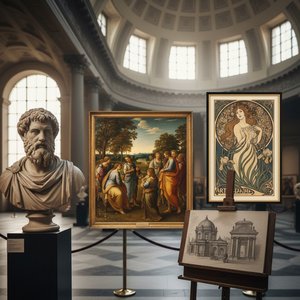
Timeless Resonance: Exploring Classic Vibe in Art – A Historical & Aesthetic Analysis
Explore the rich history & enduring aesthetic of Classicism art! Discover key movements, iconic artists like Raphael & David, and its lasting influence on Western art. Deepen your appreciation today.

Celestial Messengers: Angels in Painting – A Historical & Artistic Exploration
Explore the captivating history of angels in painting! Discover symbolism, iconic Renaissance & Byzantine masterpieces, and renowned artists. Expert insights for art lovers & collectors at OriginalUniqueArt.

Neo-Classicism's Greatest Hits: 10 Masterpieces for Your Home |
Journey through Neo-Classicism's finest! Explore 10 iconic masterpieces by David, Ingres & Canova. Discover art history, techniques & timeless beauty – perfect for inspiring your home decor. Find museum-quality reproductions at
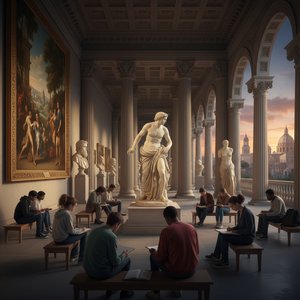
The Enduring Legacy of Classicism: Principles, Evolution & Influence in Western Art
Explore the enduring legacy of Classicism in Western art! Discover its historical context, key principles, iconic masterpieces & lasting influence. Learn about Renaissance and Neoclassical movements with OriginalUniqueArt.