
 Peržiūrėti realybėje
 Pasidalinti
 Dalintis
 Išsamiau

 Atsisiųsti
 Panašūs eksponatai
 Rentgeno nuotrauka
 Automatinė diorama
Enchiridion II


 Skaityti daugiau
Įsigykite aukštos skiriamosios raiškos, patobulintą skaitmeninį vaizdą, gerokai pranašesnį už internetinę peržiūrą.
Kiekvieną failą mūsų specialistai kruopščiai paruošia naudojant pažangias technologijas ir profesionalų rankinį retušavimą. Užtikriname, kad kiekvienas vaizdas pasižymėtų išskirtiniu aiškumu, tikslia spalvų atspalviu ir smulkiomis detalėmis.
Baigiamas failas el. paštu pristatomas per 72 valandas; jis optimizuotas nedelsiant naudojimui profesionalioje, redakcinėje ir spausdinimo aplinkoje. Tai ta pati kokybė, kuria pasitiki aukščiausios klasės dizaino studijos, leidyklos ir galerijos.
Skaitmeninis vaizdas
Atsisiųskite didelės raiškos failą asmeniniam naudojimui, spausdinimui ir kūrybiniams projektams. ( Perejti prie spausdinimo Perejti prie rankinio darbo paveikslėlio)
Kiekvieną skaitinio vaizdo užsakymą papildė
Profesionalus skaitmeninis pristatymas, garantuotas
Pasirinkę OriginalUniqueArt.com, jūs ne tik gaunate paveikslėlį – jūs gaunate profesionaliai patobudintą skaitmeninį kūrinį, sukurtą itin tikniai ir užtikrinantį pasitenkinimą. Štai viską, kas automatiškai pritékia jūsų užsakymui:

Greitas siuntimas el. paštu
Jūsų aukštos raiškos skaitmeninis vaizdo failas bus išsiųstas jums el. paštu per 72 valaudas nuo užsakymo – paruoštas naudojimui be jokių papildomų veiksmų.

Skaitmeninis failas su dirbtiniu intelektu
Jūsų meno kūrinys profesionaliai optimizuojamas naudojant pažangius dirbtinio intelekto įrankius ir rankinį redagavimą, užtikrinant maksimalią detalę, aiškumą ir spalvų tikslumą.

Nemokamas visam laikui pakartotinis siuntimas
Atsitiktinai ištrytikote ar praradote savo failą? Nebijokite – bet kuriuo metu atsiųsime jį jums vėl nemokamai.

Jokio importo mokesčio – niekada
Mėgaukitės savo meno kūriniu akimirka – skaitiniai failai visada yra neapmokestinami, todėl nereikės mokėti muitinės, mokesčių ar pristatymo mokesčių.

Spalvų tikslumo garantija
Naudodami profesionalią įrangą ir spalvų valdymo sistemas, užtikriname, kad jūsų skaitmeninis vaizdas kuo tiksliau atspindėtų originalias spalvas.

60 dienų pasitenkinimo garantija
Jei nebuvate patenkinti savo skaitinio vaizdo, per 60 dienų jį pertaisysime arba grąkinsime 100% sumą – be jokių klausimų.

100% pinigų grąžinimo garantija
Nepat 만족inti? Gaukite visą sumokėtą sumą per 60 dienų nuo skaitmeninio failo gavimo – be jokių papildomų klausimų.

Nuolaidos dideliems užsakymams
Pirkti 3 nuotraukas – pasiūla 10% - Pirkti 5 – pasiūla 15% - Pirkti 10 ir daugiau – pasiūla 20%. Puikiai tinka kūrybiniams projektams, galerijoms bei agentūroms.
Kolekcinio objekto aprašymas
A Symphony of Form and Color
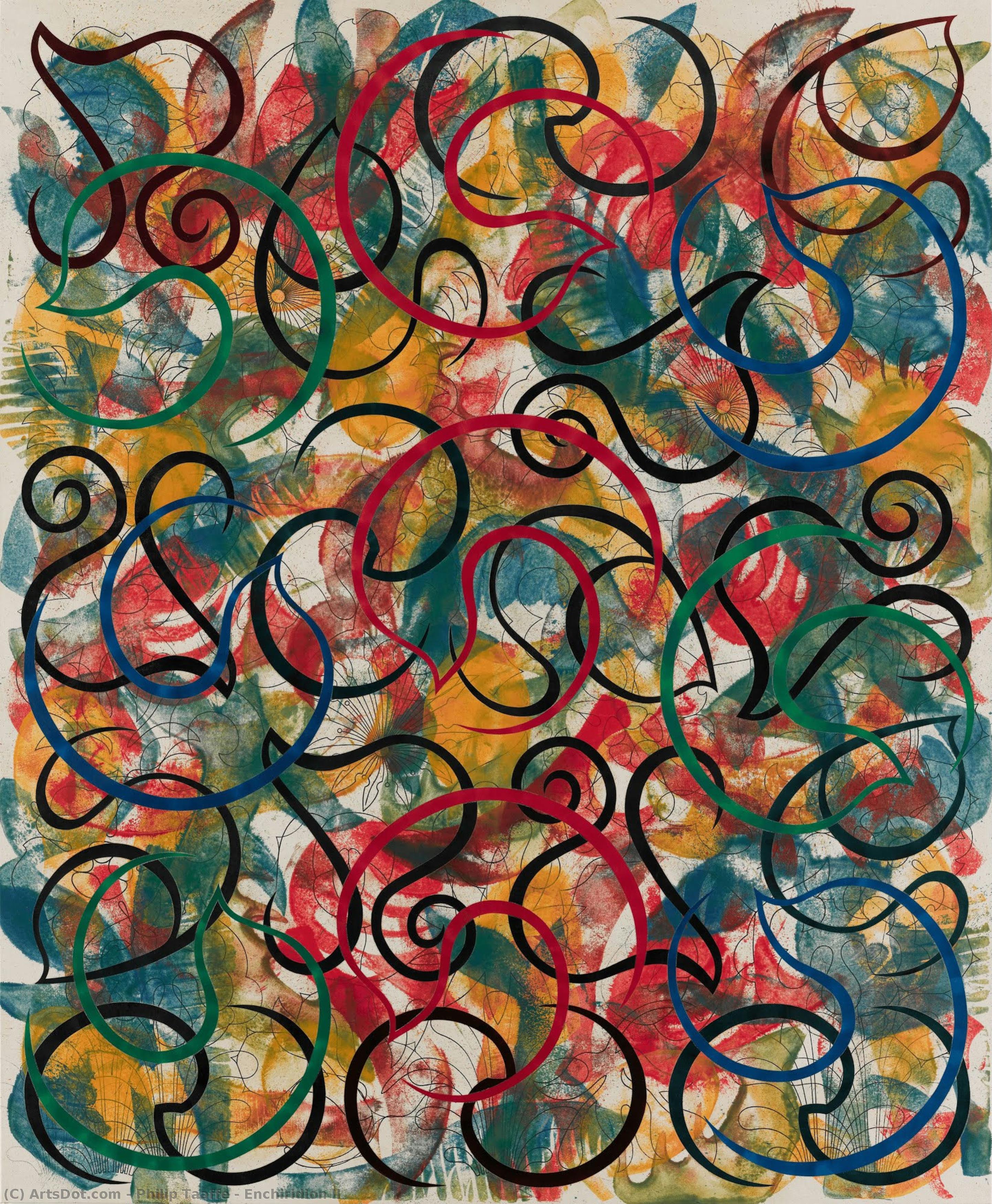
In the mesmerizing expanse of Enchiridion II, the viewer is immediately swept into a rhythmic dance of geometry and light. Created by the contemporary American master Philip Taaffe, this work serves as a vibrant testament to the power of abstract composition. The painting unfolds as a complex tapestry of interlocking circles, swirling motifs, and intricate patterns that seem to pulse with an internal energy. Each element is meticulously placed, creating a visual dialogue between movement and stillness. The palette is nothing short of celebratory, utilizing a spectrum of vivid hues that dance across the canvas, drawing the eye into a labyrinth of color where every turn reveals a new layer of depth and complexity.
The brilliance of this piece lies in its ability to balance chaos with profound harmony. While the surface appears as a dynamic explosion of shapes, there is an underlying structural integrity that anchors the composition. The varying sizes of the circular forms create a sense of perspective and weight, guiding the observer through a curated journey of visual discovery. For the discerning collector or interior designer, this painting offers more than mere decoration; it provides a focal point of intellectual and emotional stimulation, capable of transforming a contemporary space into a sanctuary of contemplative beauty.
The Legacy of Abstraction and Technique
To understand the soul of Enchiridion II, one must look toward the rich lineage of art history that informs Taaffe’s hand. The artist’s technique is deeply rooted in the principles of Synthetic Cubism and the revolutionary color explorations of Henri Matisse. Much like the fragmentation found in Cubist works, Taaffe utilizes layered shapes to deconstruct the canvas, yet he infuses them with a fluidity that avoids rigidity. His method is a sophisticated synthesis of tradition and vision, where the layering of pigment creates a sense of translucency and light, as if the colors themselves were glowing from within.
The artist’s ability to reinterpret the legacies of giants like Barnett Newman and Bridget Riley is evident in the way he manipulates optical rhythms. In Enchiridion II, the repetition of patterns evokes a hypnotic quality, inviting a meditative state in the viewer. This mastery of process-based abstraction ensures that the work remains timeless. For those seeking to adorn a high-end residence or a professional gallery with a hand-painted reproduction, this piece represents an exquisite opportunity to possess a fragment of modern art history—a work that bridges the gap between the avant-garde movements of the twentieth century and the vibrant sensibilities of the present day.
An Emotional Resonance for Modern Spaces
Beyond its technical prowess, Enchiridion II possesses an undeniable emotional magnetism. It is a piece that breathes life into a room, acting as a catalyst for conversation and introspection. The interplay of light and shadow within the painted swirls evokes feelings of joy, curiosity, and wonder. It is an artwork that does not merely sit upon a wall but actively engages with its environment, reflecting changes in ambient light and complementing the textures of a sophisticated interior.
Whether placed in a minimalist setting to provide a burst of chromatic energy or integrated into a richly textured room to add a layer of complex pattern, this painting serves as an anchor of elegance. It is an investment in atmosphere. For the art lover, it offers a window into Taaffe’s unique ability to harmonize disparate elements into a cohesive whole; for the designer, it provides a sophisticated tool to evoke luxury and intellectual depth within any architectural context.
Autoriaus biografija
Philip Taaffe: A Synthesis of Tradition and Vision
Philip Taaffe (born Elizabeth, New Jersey, 1955) stands as a singular figure in contemporary American painting, recognized for his distinctive approach to abstraction—a blend of meticulous technique and profound engagement with art history’s grand narratives. His artistic journey began amidst the burgeoning interest in Synthetic Cubism and Matisse's groundbreaking cut-out collages, influences that would shape his stylistic trajectory and inform his exploration of cultural iconography. Taaffe’s work isn’t merely decorative; it’s a deliberate confrontation with established artistic conventions, prompting viewers to reconsider notions of beauty and representation.- Early Influences: Matisse and Synthetic Cubism provided Taaffe with foundational visual vocabulary—the fragmentation of form and the layering of color—principles he would consistently revisit throughout his career.
- Process-Based Abstraction: Taaffe’s method distinguishes itself through a commitment to experimentation and observation. He meticulously documents his artistic process, utilizing techniques like paper marbling and pigment dispersion to generate complex textural surfaces that resist easy categorization.
- Iconographic Engagement: Recurring motifs—ranging from Roman mosaics to Byzantine altarpieces—are interwoven into Taaffe’s paintings, creating dialogues between past and present. These images aren't simply borrowed; they are transformed through his artistic vision, imbued with new meanings and resonances.
- Cooper Union Education: Studying under influential instructors instilled in Taaffe a disciplined approach to artmaking and fostered an appreciation for the legacy of European masters.
- Travel Experiences: Encounters with cultures beyond Western Europe broadened Taaffe’s artistic perspective, inspiring him to incorporate elements of Islamic art and design into his compositions.
- Newman Influence: Taaffe’s appropriation of Newman’s Zip motif signaled a deliberate engagement with art historical precedents, prompting reflection on the nature of visual experience.
- Riley Inspiration: Exploring Riley's optical illusions underscored Taaffe’s interest in disrupting viewers’ expectations and questioning assumptions about how images convey meaning.

philip taaffe
1955 -
Trumpai apie šį kūrėją
- Artistic Movement Or Style: Synthetic Cubism
- Artists Or Movements Influenced By This Artist: ['Jackson Pollock']
- Artists Who Influenced This Artist:
- Matisse
- Barnett Newman
- Date Of Birth: 1955
- Date Of Death: Living
- Full Name: Philip Taaffe
- Nationality: American
- Notable Artworks:
- Painting with Gemstones
- Entrance with Palms
- Place Of Birth: Elizabeth, New Jersey

