
 Peržiūrėti realaus dydžio版
 Pasidalinti
 Dalintis
 Išsamiau
 Vadovas

 Atsisiųsti
 Panašūs eksponatai
 Rentgeno spindulių nuotrauka
 Automatinė diorama
 问答
问答 Statistika
Shipwreck

- 58.0 x 81.0 cm


 Skaityti daugiau
Giclée / Meno spausdinimas
Muziejų lygio „giclée“ arba drobos spausdinimas: greita gamyba ir lankstios apdailos parinktys. ( Pirkti rankų darbo tapybą Perejti prie skaitmeninių vaizdų)




P118B €10

P118H €10

P118W €10

P438Z €10

P508JH €12

P508YH €12

P805H €10

P805Z €10

P919BZ €10

P919G €10

P919XJ €10

P959ZH €10

P968JZ €12

W106C €8

W218G €10

W218JH €8

W218Y €10

W307PJ €10

W316G €10

W316PJ €8

W316Y €10

W398PJ €8

W4111J €10

W500HY €15

W500JH €15

W692G €12

W849H €8

W940BG €15

W953PJ €8




Pasirinkite iš mūsų nustatytų dydžių, atitinkančių originalaus meno kūrinio proporcijas.

Įveskite jums reikiamą plotį ir aukštį, kad atvaizdas derėtų prie jūsų rėmo ar sienos. Spausdiną galima tik sumažinti, bet nepadidinti virš originalaus paveikslėlio dydžio, todėl keičiant proporcijas, dalis vaizdo prarandama. Prieš spausdinimą atsiųsime jums skaitmeninį maketą patvirtinimui. Šioje puslapio nuotraukoje matomas pjūvis nėra tikslus – jį rodo tik maketas.
Pristatymas visame pasaulyje () per 2 weeks, o ne įprastas 4/5 savaičių laikotarpis. (6 lapkritis)

Nemokamas greitasis pristatymas visame pasaulyje

Aukštos kokybės lininis drobė

Pilnas siuntimo draudimas

Muitinės mokesčių grąžinimo garantija

Tikro spalvų atitikimo garantija

100 dienų grąžinimo politika (tik esant įtaigoms)

100% pinigų grąžinimo garantija

Nuolaida dideliems užsakymams
 Stiklo variantas prieinamas tik pasirinkus dydį iki 110 cm

Shipwreck
Giclée / Meno spausdinimas
Reprodukcijos matmenys
-


Bendroji kaina
€ 72
A Tempestuous Vision: Philip James de Loutherbourg’s “Shipwreck”
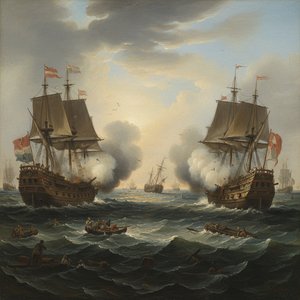
Philip James de Loutherbourg's "Shipwreck," painted in 1793, isn’t merely a depiction of maritime disaster; it’s a visceral exploration of human vulnerability against the overwhelming power of nature. This dramatic landscape, now housed within the Southampton City Art Gallery, transcends simple realism to become a potent allegory for survival, desperation, and the precariousness of existence – themes that resonated deeply with the burgeoning Romantic movement of the late 18th century.
The painting immediately commands attention through its turbulent composition. A colossal wave, rendered in thick, swirling brushstrokes of indigo, ochre, and grey, dominates the scene, threatening to engulf a shattered vessel – the remnants of a once-proud ship now reduced to splintered wood and clinging figures. Loutherbourg masterfully employs chiaroscuro, utilizing stark contrasts between light and shadow to heighten the drama and emphasize the immediate threat. The dark, brooding sky, pregnant with impending storm, mirrors the despair etched on the faces of those struggling for survival amidst the wreckage.
The Baroque Influence & Dramatic Lighting
While firmly rooted in the Romantic sensibility, "Shipwreck" reveals a clear debt to the Baroque tradition, particularly in its theatrical use of light and shadow. Loutherbourg, who had trained under Charles-André van Loo, inherited a penchant for dramatic effects – a skill he honed not only as a painter but also as a stage designer for London’s Drury Lane Theatre. This influence is evident in the painting's heightened emotional intensity and its carefully orchestrated composition, designed to draw the viewer directly into the heart of the scene.
The figures themselves are illuminated from the left, casting long, dramatic shadows that accentuate their vulnerability and heighten the sense of urgency. Loutherbourg’s technique is particularly noteworthy in his rendering of water – not as a smooth, reflective surface, but as a chaotic, dynamic force, teeming with movement and energy. The artist's attention to detail extends to the depiction of the ship itself, meticulously rendered with a sense of both grandeur and impending doom. The use of layered textures—the rough splintered wood, the slickness of the waves, the ragged clothing of the survivors—adds considerable depth and realism to the scene.
Symbolism & The Romantic Spirit
Beyond its immediate depiction of a shipwreck, “Shipwreck” is rich in symbolic meaning. The storm represents not just a natural event but also the unpredictable forces that govern human life – fate, adversity, and the limitations of control. The survivors, huddled together on the rocks, embody the resilience of the human spirit in the face of overwhelming odds. Their desperate struggle for survival speaks to our shared vulnerability and our innate desire to endure.
The inclusion of bandits attacking the lifeboat adds another layer of complexity, suggesting a broader theme of exploitation and injustice. It’s a subtle but powerful commentary on the darker aspects of human nature – the willingness to prey upon the weak in times of crisis. This painting perfectly encapsulates the Romantic spirit's fascination with both the sublime beauty and terrifying power of the natural world, alongside its exploration of profound emotional experiences.
A Legacy of Dramatic Art
Philip James de Loutherbourg’s “Shipwreck” stands as a testament to his artistic versatility and his ability to capture the drama and intensity of human experience. It's a work that continues to resonate with viewers today, prompting reflection on our own vulnerabilities and our capacity for both despair and resilience. The painting’s enduring appeal lies in its masterful composition, its evocative use of light and shadow, and its profound exploration of timeless themes – all rendered with the skill and passion characteristic of a true Romantic artist.
Klausimai ir atsakymai
Kaip „Shipwreck“ subalansuoja šviesą ir tamsą?
Įrašytos „Shipwreck“ – Filipas Džeimas De Luturburgas reikšmės: šviesos intensyvumas – deep_shadow, luminansas – Dark.
Kokie yra originalaus „Shipwreck“ matmenys?
Originalaus dydžio kūrinys „Shipwreck“ yra 58 x 81 cm. Originalūs matmenys padeda lengviau išsirinkti tinkamą reprodukcijos dydį.
Atsižvelgiant į kūrinio datą, prie kokios Filipas Džeimas De Luturburgas karjeros etapos galima priskirti „Shipwreck“?
„Shipwreck“, sukurta 1767 m., priklauso Filipas Džeimas De Luturburgas kūrybinio karjeros laikotarpio Mature Period.
Autoriaus biografija
Philip James de Loutherbourg: Menės, teatro ir intrigų gyvenimas
- Gimė: Strasbūras, Prancūzija (1740)
- <Mirė: 1812 m.
Philip James de Loutherbourg, taip pat žinomas kaip Philip Jacques de Loutherbourg, buvo franko-britų kilmės paveikslų meistras, garsėjantis dramatiškais jūros mūšių vaizdais, veksmingais peizažais ir novatoriškais indėliais į teatro dizainą. Jo karjera, išteskinta per kelias dešimtmečius, pasižymėjo neįtikėtinu meniniu universalumu, trumpu pasinėkimu į okultizmą bei didžiule įtaka būsimoms menininkų kartoms.
Pirmoji gyvenimo dalis ir meninė mokslas
Gimęs 1740 m. Strasbūre, Loutherbourg vaikystę švelniai formavo jo tėvas – garsi gravūras ir miniaturistas. Nors pradinai buvo skiriamas bažnytinio tarnystės keliui, jis ryžtai atsisakė šios lemties, pasirinkdamas meninę karjerą. Jo oficialus mokslas prasidėjo Paryzuje, dirbant su Charles-André van Loo ir Francesco Giuseppe Casanova. Loutherbourg greitai parodyė išimtinį talentą, pelnydami pripažinimą 1763 m. Salone savo peizažu su žmonių ir gyvūnų figūromis. Sėkmingai dalyvavęs tolkesniuose Salonuose, jis sulaukė pagarbos iš tokių įtakingų kritikų kaip Denis Diderot. 1767 m. jis buvo išrinktas į Prancūzijos Akademiją, kas tapo tiesioginiu jo augančios reputacijos įrodymu.
Karjera Anglijoj: Jūros scenos, peizažai ir teatras
1771 m. Loutherbourg persikėlė į Londoną, kur greitai užsitikrino vietą kaip iškilmingas menininkas. David Garrick su Таким asmeniniu įžanga padėjo jam gauti svarbias užsakomas scenografijoms Drury Lane teatrui sukurti. Jo teatrinės inovacijos buvo revoliucinės – nebuvo galima pamiršti 1781 m. sukurtos „Eidophusikon“ sistemos, kuri buvo mechaninis teatras, naudojantis perspektivą ir iliuzijų efektus, kad sukurtų visiškai pasineriančias scenas. Šis išradimas parodė jo išmintį ir padėjo jam tapti teatro technologijų pionieriumi.
Tuo pačiu metu Loutherbourg užsitikrino šlovę savo istorinėms paveikslams, ypač jūros mūšių vaizduotiems kūriniams. Jo garsiausias darbas, Lord Howe's Action, or the Glorious First of June (1795), įamžino svarbų britų pergalę ir padarė jį pagrindiniu jūros įvykių kronikieriumi. Nors jo peizažai kartais buvo kritikuojami dėl tam tikro teatralumo, jie meistriškai įamžino vaizdingą Anglijos kaimo grožį ir atspindėjo to meto estetinę dvasios idealą.
- Žinomos kūriniai: Lord Howe's Action, or the Glorious First of June, The Destruction of the Armada, Coalbrookdale by Night
Okultizmo laikotarpis ir vėlesnieji metai
Netikėtu posūkiu, 1789 m. Loutherbourg laikinai paliko tapinį, siekdamas tyrinėti alchemiją ir supernatūralius reiškinįs. Jis susiejamas su Alessandro di Cagliostro – garsia figūra, žinomą dėl savo melagingų teiginių apie nemortalumą ir okultinį galią. Loutherlaşt burgas keliavo kartu su Cagliostro prieš pat paskutiniam mirties nuosprendžiui, nors šio laikotarpio detalės išlieka kiek paslaptingos. Po visuomenės pasipriešinimo jo tikėjimo gydymo praktikos, jis grįžo prie tapinimo, susikoncentruodamas į istorines temas ir toliau kūrendamas peizažus bei portretus.
Palikimas ir įtaka
Philip James de Loutherbourg paliko neįkainojamą palikimą kaip universalus menininkas, sujungęs istorinį tapiną, peizažų meną ir teatrinį dizainą. Jo inovatyvus „Eidophusikon“ paveikė vėlesnius scenografijos pokyčius, o dramatiškos jūros scenos įamžino epochą, apibrėžtą jūrų kariavės galia. Jo kūriniai galima rasti daugybėje pasaulio muziejų, įskaitant Nacionalinį jūros muziejų ir Britijos muziejų. Jis taip pat pripažįstamas kaip J.M.W. Turnerio įkvėpėjas, demonstruodamas savo didžiulį indėlį į britų romantizmo meno vystymą.

Filipas Džeimas De Luturburgas
1740 - 1812 , Prancūzija
Trumpa informacija
- Artistic Movement Or Style: Romantizmas
- Artists Or Movements Influenced By This Artist: ['Turner']
- Date Of Birth: 1740-10-31
- Date Of Death: 1812-03-11
- Full Name: Philip James de Loutherbourg
- Nationality: Prancūzų-britų
- Notable Artworks:
- Lord Howe's Action, or the Glorious First of June
- The Destruction of the Armada
- Coalbrookdale by Night
- Horseman and Cattle in a Thunderstorm
- Place Of Birth: Strasburgas, Prancūzija
Susiję straipsniai
Masterpieces of Maritime Warfare: The Artistry and Intensity of Naval Combat in Historical Painting
Explore the dramatic intensity of naval combat through art history. From Romanticism to classical maritime masterpieces, discover how legendary painters captured the chaos, light, and heroism of sea battles in breathtaking oil paintings.

About Us
Discover our story! We bring world-class art into your life through expert curation, personalized creations, and free previews. Trusted by individuals and businesses since 2000.

Willem van de Velde the Elder: Master of Maritime Painting & Chronicler of the Dutch Golden Age
Discover the captivating maritime paintings of Willem van de Velde the Elder, a master chronicler of the Dutch Golden Age. Explore his unparalleled realism and lasting influence on naval art history.

Philip James de Loutherbourg: Romantic Visions of Maritime Life & the Sublime
Explore the dramatic naval scenes & landscapes of Philip James de Loutherbourg (1740-1812), a key figure in Romantic painting. Discover his legacy, theatrical innovations & iconic works like 'The Battle of the Nile' at OriginalUniqueArt.

Francisco Goya Šedevrai: 25 Išskirtiniai Darbai Jūsų Interjerui | OriginalUniqueArt
Atraskite 25 įspūdingiausius Francisco Goya šedevrus! Ispanų romantizmo meistro paveikslai, portretai ir juodoji tapyba. Įkvėpkite interjerui su aukštos kokybės Goya reprodukcijomis | OriginalUniqueArt.com
