
 Peržiūrėti realaus dydžio版
 Pasidalinti
 Dalintis
 Išsamiau
 Vadovas

 Atsisiųsti
 Panašūs eksponatai
 Rentgeno spindulių nuotrauka
 Automatinė diorama
 Q&A
Q&A Statistika
Roses

- 73.0 x 97.0 cm


 Skaityti daugiau
Gaukite spausdinimui paruoštą failą, kurio kokybė gerokai viršija internetinę peržiūrą. Kiekvienas mūsų parduodamas skaitmeninis vaizdas yra ištrauktas iš aukštos raiškos pagrindinio failo mūsų duomenų bazėje — paprastai jis siekia nuo 5 000 iki 15 000 pikselių plotio — todėl galite drąsiai spausdinti didelius formatus, apkirpti vaizdą ar reprodukcija užtikrins visas smulkias detales.
Mūsų studijoje nė viena kopija nelieka neapdorota. Skaitmeninio vaizdo ekspertas, lygiu su originaliu paveikslu, patikrina spalvas ir, jei reikia, jas koreguoja, o tada profesionaliais retušavimo įrankiais padidina aiškumą bei detales — visada išlaikydamas ištikimybę autoriaus teptuko traukoms ir stiliui. Rezultatas – vaizdas, kuris atrodo kaip tikras paveikslas, o ne kaip su filtrais apdorotas skenavimas.
Patvirtinate prieš užsakymo pabaigą: mūsų ekspertas per 72 valandas el. laišku atsiųsta vaizdą jūsų peržiūrai. Nepasitenkinate rezultatu? Paprašykite patobulinimų ar pataisymų arba prašykite pinigų grąžinimo, jei kokybė neatitinka jūsų lūkesčių.
Ši kokybė yra patikima leidybos įstaigoms, dizaino studijoms, galerijoms ir spaudos įmonėms.
Skaitmeninis vaizdas
Atsisiųskite didelės raiškos failą asmeniniam naudojimui, spausdinimui ir kūrybiniams projektams. ( Perjungti į spausdinamus版作品 Pirkti rankų darbo tapybą)
Kiekvieną skaitinio vaizdo užsakymą papildė
Profesionalus skaitmeninis vaizdų pristatymas, garantuotas
Pasirinkę OriginalUniqueArt.com, jūs ne tik gaunate paveikslėlį – jūs gaunate profesionaliai patobudintą skaitmeninį kūrinį, sukurtą itin tikniai ir užtikrinantį pasitenkinimą. Štai viską, kas automatiškai pritékia jūsų užsakymui:

Greitas pristatymas el. paštu
Jūsų aukštos raiškos skaitmeninis vaizdo failas bus išsiųstas el. paštu per 72 valandas nuo užsakymo – jis bus paruoštas naudoti be jokių papildomų veiksmų.

Dirbtiniu intelektu tobulintas skaitmeninis failas
Jūsų meno kūrinys profesionaliai optimizuojamas naudojant pažangius dirbtinio intelekto įrankius ir rankinį redagavimą, užtikrinant maksimalią detalę, aiškumą ir spalvų tikslumą.

Nemokamas visam laikui pakartotinis siuntimas
Atsitiktinai ištrytikote ar praradote savo failą? Nebijokite – bet kuriuo metu atsiųsime jį jums vėl nemokamai.

Jokio importo mokesčio – niekada
Mėgaukitės savo meno kūrynu be jokių muitinės mokesčių, įkainų ar pristatymo išlaidų – skaitiniai failai visada yra neapmokestinami.

Spalvų tikslumo garantija
Naudodami profesionalią įrangą ir spalvų valdymo sistemas, užtikriname, kad jūsų skaitmeninis vaizdas kuo tiksliau atspindėtų originalias spalvas.

100 dienų patikimumo garantija
Jei nebuvosite patenkinti įsigyto skaitmeninio vaizdo, mes jį tališkai koreguosime arba grąžinsime 100% sumą per 100 dienų – be jokių klausimų.

100% pinigų grąžinimo garantija
Nesitenkinate? Gaukite visą sumokėtą sumą per 100 dienų nuo skaitmeninio failo gavimo – be jokių papildomų klausimų.

Nuolaidos dideliems užsakymams
Pirkti 3 nuotraukas – 10% nuolaida – Pirkti 5 – 15% nuolaida – Pirkti 10 ir daugiau – 20% nuolaida. Puikiai tinka kūrybiniams projektams, galerijoms bei agentūroms.
A Silver Symphony of Petals and Light
In the vast, textured tapestry of twentieth-century Balkan art, few works capture the delicate transition between tradition and modernity as poignantly as Petar Lubarda’s Roses. Painted in 1937, this masterpiece serves as a luminous gateway into what historians fondly refer to as Lubarda’s "silver period." At first glance, the viewer is greeted by a breathtaking arrangement of blossoms, where the soft, velvety textures of roses mingle with complementary flora, all cradled within a graceful vase. The composition is not merely a study of botanical beauty but a sophisticated dance of light and form. As the eye wanders across the canvas, one notices how the artist employs a masterful balance of depth; certain blooms press forward with vibrant vitality, while others recede into a soft, atmospheric haze, creating a sense of three-dimensional space that breathes within the frame.
The technique displayed in Roses is nothing short of transformative. During this pivotal era of his career, Lubarda was navigating the delicate shift from linear precision to a more fluid, pictorial approach. While his earlier works often relied on defined outlines, here we see the emergence of a "sillevry shine"—a luminous quality where color acts as a deliberate accent against a more ethereal, shimmering background. The brushstrokes are skillful and intentional, capturing the organic weight of the petals and the reflective surface of the vase with an impressionistic touch that recalls the expressive power of Van Gogh, yet remains uniquely anchored in Lubarda’s own visionary language. This interplay of light and shadow lends the painting a rhythmic quality, making the stillness of the still life feel vibrantly alive.
Historical Resonance and Artistic Legacy
Beyond its aesthetic splendor, Roses carries a profound historical and emotional resonance that makes it a cornerstone for any serious collection. The painting was part of the prestigious Pavle Beljanski collection, acquired as early as 1937, marking it as a work of immediate significance. There are even legendary stories surrounding its impact; during an exhibition in Moscow in 1948, one visitor was reportedly captivated by the painting, stating that it was exactly the work he had hoped to paint all his life. This level of reverence speaks to the universal appeal of Lubarda's ability to blend the local spirit of Montenegro with a broader European modernism.
For the discerning collector or interior designer, this piece offers more than just visual beauty; it provides a sense of timelessness. The way the light interacts with the "silver" tones makes it an ideal centerpiece for spaces that value elegance and quiet contemplation. Whether placed in a sun-drenched gallery or a sophisticated contemporary living room, the painting acts as a window into a moment of perfect botanical harmony. It is a work that does not merely decorate a wall but enriches the very atmosphere of a home, inviting viewers to pause and lose themselves in its shimmering, floral depths.
Klausimai ir atsakymai
Ar „Roses“ – Petar Lubarda yra ryškus ar tamsus kūrinys?
Perceptinis „Roses“ – Petar Lubarda ryškumas yra balanced. Jį galima suderinti su intended erdvės apšvietimu.
Kas yra „Roses“ kūrybos autorius?
Kūrinį „Roses“ sukūrė Petar Lubarda. Darbas katalogizuojamas Petar Lubarda vardu.
Kaip atsisiųsti „Roses“ – Petar Lubarda vaizdą?
Kūrinio „Roses“ – Petar Lubarda vaizdą galite atsisiųsti puslapio Atsisiųsti skaitmeninį vaizdą skiltyje: aukštos raiškos skaitmeninio vaizdo atsisiuntimas.
Autoriaus biografija
The Visionary Soul of Montenegro: The Life and Legacy of Petar Lubarda
In the vast, rugged tapestry of twentieth-century Balkan art, few names resonate with as much heroic grandeur and profound emotional depth as Petar Lubarda. Born in 1907 in the village of Ljubotinj, near Cetinje, Lubarda’s very existence was steeped in the spiritual and historical echoes of Montenegro. His formative years were shaped by the solemnity of Byzantine traditions and the narrative power of medieval frescoes, elements that would later become the bedrock of his distinctive artistic language. As a painter, he did not merely seek to replicate the world around him; rather, he sought to capture the very essence of identity, sacrifice, and the enduring spirit of a people.
Lubarda’s journey was one of constant movement and intellectual expansion. His early studies at the Belgrade School of Art in 1925 led him to the vibrant artistic currents of Paris, where he encountered the transformative power of European modernism. It was here that the influence of Flemish realism and the expressive, emotive use of color found in Vincent van Gogh’s work began to permeate his technique. This period of exposure allowed him to bridge the gap between the ancient, iconographic traditions of his homeland and the fluid, avant-garde movements of the West. His ability to synthesize these disparate worlds—the rigid spiritual symbolism of the East and the impressionistic light of the West—created a style that was both timeless and strikingly modern.
A Symphony of Light, Shadow, and History
The evolution of Lubarda’s technique is perhaps most beautifully illustrated in his transition from linear precision to a more atmospheric, painterly approach. During what historians often call his "silver period," exemplified by his 1937 masterpiece Roses, one can witness a breathtaking dance of light and form. In these works, the artist moved away from defined outlines toward a luminous quality where color acts as a deliberate accent against an ethereal, shimmering background. He masterfully employed chiaroscoscuro—a technique reminiscent of Rembrandt—to heighten dramatic tension, allowing certain elements to press forward with vitality while others recede into a soft, mysterious haze.
Beyond the delicate beauty of his still lifes, Lubarda’s oeuvre is defined by its monumental themes. He was a painter of epic proportions, most famously revisited in over thirty different versions of the Battle of Kosovo (1389). These canvases are far more than historical chronicles; they are visceral, psychological explorations of courage and tragedy. Through thick, intentional brushstrokes and a powerful command of composition, he transformed historical struggle into a universal symbol of human resilience. His work often grappled with the weight of history, using the landscape of Montenegro not just as a setting, but as a character imbued with memory and myth.
Enduring Influence and Artistic Triumph
The significance of Petar Lubarda extends far beyond the borders of the Balkans. Throughout his career, he achieved international acclaim, earning prestigious honors such as the Herder Prize in 1968 and recognition from major institutions in Brazil, New York, and across Europe. His role as an educator was equally profound; after surviving the hardships of concentration camps during the war years, he returned to Belgrade and Cetinje to shape the next generation of artists, serving as a professor at the Academy of Fine Arts and establishing vital art institutions in Montenegro.
Lubarda’s legacy is characterized by several key pillars of achievement:
- Synthesis of Traditions: The seamless integration of Byzantine iconography and medieval narrative power with modern European Impressionism.
- Mastery of Emotion: A unique ability to use color and light to convey the psychological complexity of both historical events and natural landscapes.
- Cultural Foundation: His instrumental role in establishing professional art schools and institutions that solidified Montenegro's place in the global art dialogue.
- Iconic Imagery: The creation of a visual vocabulary for Balkan identity, most notably through his monumental depictions of historical struggle.
Today, Petar Lubarda remains a cornerstone of 20th-century art. His paintings continue to serve as luminous gateways into a world where the boundaries between reality and myth are beautifully blurred, leaving behind a legacy that is as enduring and rugged as the Montenegrin mountains from which he emerged.
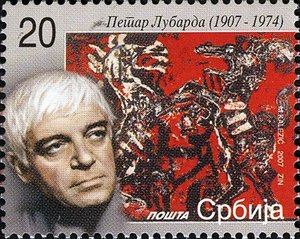
Petar Lubarda
1907 - 1974 , Montenegro
Trumpa informacija
- Full Name: Petar Lubarda
- Nationality: Serbian
- Date Of Birth: 1907
- Date Of Death: 1974
- Place Of Birth: Cetinje, Montenegro
- Notable Artworks: ['Battle of Kosovo']
- Artistic Movement Or Style: Byzantine & Medieval influence
- Artists Who Influenced This Artist:
- Jan van Eyck
- Vincent van Gogh
- Artists Or Movements Influenced By This Artist: ['Belgrade City Museum']