

 Peržiūrėti realaus dydžio版
 Siųsti
 Dalintis
 Išsamiau
 Vadovas

 Atsisiųsti
 Panašūs eksponatai
 Rentgeno spindulių nuotrauka
 Diaporama
 Statistika
Landscape


 Rodyti daugiau
Giclée / Meno spausdinimas
Muziejų lygio „giclée“ arba drobos spausdinimas: greita gamyba ir lankstios apdailos parinktys. ( Pirkti rankomis tapytą reprodukciją Perejti prie skaitmeninių vaizdų)




P118B €10

P118H €10

P118W €10

P438Z €10

P508JH €12

P508YH €12

P805H €10

P805Z €10

P919BZ €10

P919G €10

P919XJ €10

P959ZH €10

P968JZ €12

W106C €8

W218G €10

W218JH €8

W218Y €10

W307PJ €10

W316G €10

W316PJ €8

W316Y €10

W398PJ €8

W4111J €10

W500HY €15

W500JH €15

W692G €12

W849H €8

W940BG €15

W953PJ €8




Pasirinkite iš mūsų nustatytų dydžių, atitinkančių originalaus meno kūrinio proporcijas.

Įveskite jums reikiamą plotį ir aukštį, kad atvaizdas derėtų prie jūsų rėmo ar sienos. Spausdiną galima tik sumažinti, bet nepadidinti virš originalaus paveikslėlio dydžio, todėl keičiant proporcijas, dalis vaizdo prarandama. Prieš spausdinimą atsiųsime jums skaitmeninį maketą patvirtinimui. Šioje puslapio nuotraukoje matomas pjūvis nėra tikslus – jį rodo tik maketas.
Pristatymas visame pasaulyje () per 2 weeks, o ne įprastas 4/5 savaičių laikotarpis. (22 spalis)

Nemokamas greitasis pristatymas visame pasaulyje

Aukštos kokybės lininis drobė

Pilnas siuntimo draudimas

Muitinės mokesčių grąžinimo garantija

Tikro spalvų atitikimo garantija

100 dienų grąžinimo politika (tik esant įtaigoms)

100% pinigų grąžinimo garantija

Nuolaida dideliems užsakymams
 Stiklo variantas prieinamas tik pasirinkus dydį iki 110 cm

Landscape
Giclée / Meno spausdinimas
Reprodukcijos dydis
-


Visų pasirinktų variantų kaina
€ 70
Paul Sérusier’s “Landscape”: A Pioneer of Color and Light
Paul Sérusier's "Landscape," painted in 1912, isn’t merely a depiction of a green field; it’s a pivotal moment in the history of modern art. Born in Paris in 1864, Sérusier was a key figure in the Nabis movement – a group of Symbolist painters who sought to move beyond traditional academic styles and explore the expressive potential of color and form. This particular work embodies the core tenets of that revolutionary approach, representing a radical departure from representational accuracy and a profound embrace of subjective experience.
The painting immediately captivates with its vibrant palette – not a realistic rendering of nature, but an orchestration of pure hues. Deep greens dominate, punctuated by flashes of ochre, cerulean blue, and the warm tones of tree trunks. Sérusier eschewed meticulous detail, opting instead for broad, gestural brushstrokes that suggest movement and atmosphere rather than precise form. The trees themselves are simplified into blocks of color, their outlines blurred and indistinct, contributing to a sense of dreamlike abstraction. This technique, heavily influenced by the theories of Paul Gauguin, who had mentored Sérusier during his time at Pont-Aven in Brittany, was known as “cloisonnism,” where forms were defined by flat planes of color rather than shading or modeling.
The Influence of Breton Symbolism
Sérusier’s journey to this style began with a transformative summer spent in the coastal village of Pont-Aven. There, he encountered a community of artists deeply influenced by Breton folklore and spirituality. The landscape of Brittany, with its rugged coastline, ancient forests, and mystical traditions, provided fertile ground for artistic exploration. Gauguin encouraged Sérusier to “paint what you see, not what you think you should see,” urging him to capture the essence of the scene through color and emotion rather than strict adherence to photographic realism. This instruction proved crucial in shaping Sérusier’s distinctive style – a bold move towards abstraction that would profoundly impact subsequent generations of artists.
The painting's composition subtly evokes Breton legends, with the central tree acting as a focal point, reminiscent of ancient standing stones or sacred groves. The distant figures, barely discernible against the horizon, hint at human presence within this wild and untamed landscape, suggesting a connection between humanity and nature. The cat perched atop one of the trees adds an element of whimsical charm, perhaps symbolizing intuition or a primal connection to the natural world – a recurring motif in Symbolist art.
A Bridge Between Impressionism and Abstraction
"Landscape" stands as a crucial bridge between Impressionism and the nascent movements of abstraction. While rooted in the vibrant color palettes and atmospheric effects of Impressionism, Sérusier’s work transcends mere optical representation. He deliberately simplifies forms, reduces space, and prioritizes emotional expression over objective accuracy – characteristics that would become increasingly prominent in early 20th-century abstract art. It's a testament to his willingness to experiment and push the boundaries of artistic convention.
Emotional Resonance and Artistic Legacy
More than just a beautiful landscape, “Landscape” is an invitation to contemplate the relationship between nature, spirituality, and human perception. The painting’s luminous colors and fluid brushstrokes evoke a sense of tranquility and wonder, inviting the viewer to lose themselves in its dreamlike atmosphere. Sérusier's pioneering work paved the way for artists like Kandinsky and Mondrian, demonstrating that art could be more than just a mirror reflecting reality; it could be a powerful vehicle for expressing inner experience and exploring the depths of human consciousness. Reproductions of this piece offer a captivating glimpse into the heart of early modernism, inviting viewers to appreciate the enduring power of color and form.
问答 (or more naturally for a website heading): Klausimai ir atsakymai
Ar galėčiau „Landscape“ peržiūrėti kaip pilno ekrano nuotraukų rodyklę?
Galima peržiūrėti nuotraukų rodyklę: Diaporama puslapį kūriniam „Landscape“, autorius – Polius Serizjė.
Kokia technika ir stilius charakterizuoja „Landscape“, autorius – Polius Serizjė?
„Landscape“, autorius – Polius Serizjė sujungia Acrylic On Canvas techniką su Nabis Movement stiliumi. Technika ir stilius apibūdina kūrinio gamybos būdą bei estetinį iš Ausdrucką.
Kokią emociją sukelia „Landscape“, autorius – Polius Serizjė?
„Landscape“, autorius – Polius Serizjė perteikia Tranquil pojūtį bendroje Calm nuotaikoje.
Autoriaus biografija
Ankstyvieji gyvenimo ir kūrybos metai
Pranciškus Serjusier (Louis-Paul-Henri Sérusier), gimęs 1864 metų lapkričio 9 dieną Paryžiuje, buvo prancūzų dailininkas, kuris paliko ryškų pėdsaką moderniosios meno istorijoje. Jo kelias į meną prasidėjo Akademijoje Žulian (Académie Julian), kur jis studijavo viduryje aštuntojo dešimtmečio ir greitai tapo mokytoju. Šis laikotarpis žymėjo jo kūrybinės karjeros pradžią, kuri vėliau atvedė jį į abstraktaus meno pradininkų poziciją bei įkvėpimo šaltinį avangardinei “Nabis” grupei, sintetizmui ir kluaizonizmui. Serjusier nebuvo vien tik tapytojas; jis buvo vizionierius, kuris drąsiai ieškojo naujų meno formų ir išreiškimo būdų.
Kūrybinis laikotarpis ir Pont-Aveno įtaka
1888 metų vasarą Serjusier nuvyko į Pont-Aven, Bretanijos regioną, kur susibūrė nedidelė menininkų grupė, sutelkusi dėmesį aplink Paul Gauguin. Būtent ten, po Gaugueno griežtos priežiūros, jis sukūrė paveikslą “Talismanas” – radikalų kluaizonizmo eksperimentą, kuris priartėjo prie grynos abstrakcijos ribos. Šis darbas atskleidė jo novatorišką stilių ir ryžtą eksperimentuoti su naujomis technikomis. Kaip postimpresionistas, Serjusier tapo “Les Nabis” grupės nariu kartu su Pierre Bonnard, Édouard Vuillard ir Maurice Denis. Nors jis nebuvo toks žinomas kaip jo kolegos, Serjusier indėlis abstraktaus meno plėtrai yra nepaneigiamas.
Svarbiausi darbai ir palikimas
Serjusier sukūrė daugybę reikšmingų darbų, tarp kurių:
- “Lietaus audra” (L'Averse), 1893 m., Musée d’Orsay, Paryžius – paveikslas perteikia atmosferos pojūtį ir spalvų harmoniją.
- “Portretas Paul Ranson”, 1890 m., Musée d’Orsay, Paryžius – atspindi Serjusier meistriškumą portreto žanre.
- “Melancholija”, 1890 m. – gili emocinė kompozicija, perteikianti žmogaus vidinį pasaulį.
- “Gyvatės valgytojai” (The Snake Eaters), 1894 m., Muzeum Narodowe, Varšuva – simbolinis darbas, kupinas paslaptingumo ir alegorijų.
Vėlesniais metais Serjusier dėstė Akademijoje Ranson ir 1921 metais išleido knygą “ABC de la peinture”. Jis mirė 1927 metų spalio 7 dieną Morlaix mieste, palikęs po savęs turtingą meno paveldą.
Meno srovės ir įtaka
Serjusier kūrybai didelę įtaką padarė kluaizonizmas – stilius, pasižymintis ryškiais, plokščiais formomis, atskirtais tamsiomis kontūrais. Ši srovė, iškilusi devynioliktojo amžiaus pabaigoje, turėjo reikšmingos įtakos moderniosios meno raidai. Serjusier eksperimentavo su spalvomis ir formomis, siekdamas perteikti ne tik vizualų vaizdą, bet ir emocinę būseną bei simbolinę prasmę. Jo darbai atspindi jo filosofinį požiūrį į meną – norą išlaisvinti spalvas nuo daiktų apribojimų ir leisti joms kalbėti sava kalba.
Pagrindiniai akcentai: * Pranciškus Serjusier buvo prancūzų dailininkas, kuris pradėjo abstraktaus meno raidą ir įkvėpė “Nabis” judėjimą. * Jis studijavo Akademijoje Žulian ir vėliau dėstė Akademijoje Ranson. * Serjusier kūrybai didelę įtaką padarė kluaizonizmas, stilius, pasižymintis ryškiais formomis ir spalvomis.

Polius Serizjė
1864 - 1927 , Prancūzija
Trumpa informacija apie kūrėją
- Gimimo Data: 1864 m. lapkričio 9 d.
- Gimimo Vieta: Paryžius, Prancūzija
- Meninis Stilius: Postimpresionizmas
- Mirties Data: 1927 m. spalio 7 d.
- Pilnas Vardas: Louis-Paul-Henri Sérusier
- Tautybė: Prancūzas
- Įtakoję Menininkai: ['Paul Gauguin']
- Įtakoti Judėjimai: ['Nabis']
- Žymiausi Darbai:
- Talizmanas
- L'Averse
Susiję straipsniai
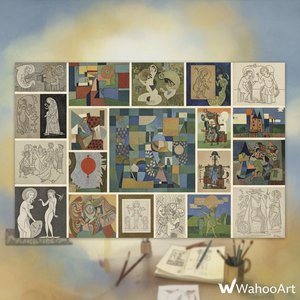
Paul Klee: 25 Šedevrai, Įkvėpę Kartas | Tapyba, Dekorai ir Meninis Palikimas
Atraskite 25 Paul Klee šedevrus! Išsami analizė, meno istorija ir įkvėpimas interjerui. Abstraktaus meno kūriniai, ekspresionizmas, spalvų harmonijos. Aukštos kokybės reprodukcijos – OriginalUniqueArt.com

Impressionistic Landscapes: 10 Masterpieces That Changed Art & Decor
Journey into the heart of Impressionism! Explore 10 masterpieces by Monet, Renoir & Degas that revolutionized landscape art. Discover their stories, techniques & find museum-quality reproductions to elevate your home decor on OriginalUniqueArt.com.

Paul Cézanne: 25 Šedevrai, Keičiantys Meno Pasaulį | OriginalUniqueArt.lt
Atraskite 25 Paul Cézanno šedevrus! Išsami analizė, istorijos ir įkvėpimas interjero dekorui. Modernus menas, impresionizmas, natiurmortai – viskas OriginalUniqueArt.com. Explore the full collection online!
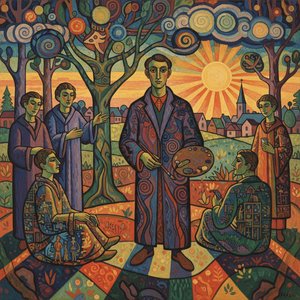
Paul Sérusier: Pioneering Synthetism & The Nabis’ Symbolic Revolution
Discover Paul Sérusier's pivotal role in the Nabis movement & the birth of Synthetism. Explore 'The Talisman,' his influence on modern art, and a deeper understanding of this symbolic revolution. Expert analysis & insights.

Evocations of Place: A Historical Journey Through Landscape Art
Explore the rich history of landscape art with OriginalUniqueArt. Discover renowned artists, movements like Impressionism & Romanticism, and expert guidance for collecting timeless pieces. Find your perfect serene escape today!