Perjungti į spausdinamus版作品
 Skaityti daugiau







































 Dėl meno kūrinių ar reprodukcijų, kurių bet kuri pusė yra didesnė nei 105 cm (apie 41 inch), rėmas bus siunčiamas kaip išskaidytas surinkimo rinkinys. Šis metodas užtikrina saugų pristatymą ir apsaugo nuo transportavimo metu galimos žalos.


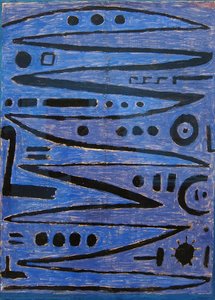
A Fragmented Vision: Unpacking the Enigmatic World of ‘Women’
Paul Klee's “Women,” painted in 1921, isn’t a straightforward depiction; it’s an invitation into a deeply personal and profoundly evocative dreamscape. This work, rendered primarily in shades of charcoal, gray, and deep green punctuated by flashes of red and yellow, immediately arrests the viewer with its fragmented composition and ambiguous subject matter. It's a piece that resists easy interpretation, prompting contemplation rather than offering immediate answers – a hallmark of Klee’s artistic philosophy and his engagement with Expressionism and Primitivism. The painting feels less like a representation of reality and more like a distillation of emotion, memory, and perhaps even the subconscious.
The composition itself is deliberately unsettling. Two central groupings of figures, resembling women holding parasols or branches, are positioned slightly off-center, creating a sense of imbalance and drawing the eye through a complex network of overlapping shapes. These aren’t portraits in the traditional sense; Klee has stripped them down to their essential forms – simplified silhouettes that hint at humanity without revealing individual identity. Horizontal lines establish a grounding depth, while vertical elements define the figures, contributing to a layered effect reminiscent of architectural plans or even musical scores. This deliberate flattening of perspective, characteristic of Klee’s style, further enhances the painting's dreamlike quality.
Color and Line: A Symphony of Contrasts
Klee masterfully employs both sharp and soft lines to achieve a remarkable textural complexity. Geometric shapes – circles, triangles, and squares – are juxtaposed with organic forms, creating a dynamic tension that mirrors the painting’s emotional core. The color palette is deliberately restrained, dominated by dark tones that evoke feelings of melancholy and mystery. However, strategic accents of vibrant red, yellow, and muted green inject moments of visual interest and subtly shift the mood. These colors aren't used realistically; instead, they serve to amplify the painting’s atmosphere and underscore its symbolic weight. The watercolor and ink techniques Klee utilized allowed for subtle gradations in color and texture, lending a remarkable sense of depth and movement to the surface.
Symbolism and Emotional Resonance
“Women” is rich with potential symbolism, though Klee himself often resisted definitive interpretations. The figures holding parasols or branches could represent protection, guidance, or perhaps even the burdens of societal expectations. The overall setting – a fragmented cityscape – suggests alienation and isolation, reflecting themes prevalent in Klee’s work during this period. The painting evokes feelings of melancholy, mystery, and a sense of timelessness. It's not simply about women; it’s about the human condition itself—the complexities of relationships, the search for meaning, and the inherent ambiguity of life. The lack of distinct features on the figures contributes to their universality, suggesting that they represent all women rather than any specific individual.
A Legacy of Playful Abstraction
Paul Klee’s “Women” stands as a testament to his unique artistic vision – a synthesis of Expressionism, Cubism, and Surrealism. The painting's creation in 1921 coincided with a period of intense experimentation for the artist, reflecting his ongoing exploration of color theory, musicality, and the relationship between art and emotion. The work’s influence can be seen in subsequent generations of artists who embraced abstraction and sought to express subjective experience through visual form. Today, reproductions of “Women” continue to captivate viewers with their haunting beauty and enduring mystery. It remains a powerful example of Klee's ability to transform simple forms into profound expressions of the human spirit.
Klausimai ir atsakymai
Ar „Women“ galima peržiūrėti papildydami realybę?
„Women“ galima peržiūrėti papildytoji realybės formatu: kūrinio Peržiūra papildintajai realybei puslapyje, naudodami suderinamą įrenginį, galite pamatyti jį savo erdvėje.
Kokia „Women“ – Paulis Klė orientacija?
„Women“ formatas yra Landscape. Tai padeda planuojant, kur būtų patalpinta reprodukcija.
Ar „Women“ yra būdingas tam, ką Paulis Klė paprastai kūrė?
„Women“ vaizduoja abstraction, women, parasols, geometry, shadows, ambiguity, surrealism, color, o įrašytos Paulis Klė temos yra expressionism, cubism, surrealism, modernity, uncertainty, dreams, symbolic, psychological themes. Šių dviejų lyginimas parodo, kaip šis kūrinys susijęs su įprastais šio kūrybinio veiksmo objektais.
Daugiau informacijos apie šį paveikslą
 Peržiūrėti realaus dydžio版
 Pasidalinti
 Dalintis
 Išsamiau
 Vadovas

 Atsisiųsti
 Panašūs eksponatai
 Rentgeno spindulių nuotrauka
 Automatinė diorama
 问答
问答 Statistika