Abstract Expressionism
Head (Jackson Pollock)
Jackson Pollock (1912–1956) sukūrė Head. Šis kūrinys priklaulo Abstract Expressionism kieruliui. Pagaminta naudojant Acrylic On Canvas.
- Acrylic On Canvas

 Peržiūrėti realaus dydžio版

 Rankinio darbo aliejinės imitacijos paveikslas
 Pasidalinti
 Dalintis
 Informacinė l lapelė


 Atsisiųsti
 Panašūs eksponatai
 Rentgeno spindulių nuotrauka
 Automatinė diorama
 问答

 Statistika
Head, trumpai
- Pavadinimas
- Head
- Autorius
- Jackson Pollock (1912–1956)
- Dizainere/is gimęs
- Kodis, Jungtinės Amerikos Valstijos
- Mediumas
- Acrylic On Canvas
- Judėjimas
- Abstract Expressionism
- Laikotarpis
- Modern
- Tema
- psychological, distortion, multiple eyes, chaos, surrealism, archetypal imagery
Ką vaizduoja Head?
A Visceral Exploration of the Human Condition
Jackson Pollock’s *Head*, a work shrouded in some mystery due to its lack of definitive dating and detailed documentation, presents a profoundly unsettling yet captivating vision. It is not a portrait in any traditional sense; rather, it's a fragmented, distorted exploration of the human form pushed to the very edge of recognition. The image assaults the viewer with a multiplicity of eyes and mouths, scattered across a seemingly chaotic surface. This isn’t an attempt at realistic representation but a raw, visceral expression of inner turmoil, anxiety, and perhaps even existential dread. The painting feels less like looking *at* a head and more like being immersed *within* a fractured psyche.Echoes of Surrealism and the Primal Self
To understand *Head*, one must consider Pollock’s artistic journey during its creation – likely in the late 1930s or early 1940s. He was deeply influenced by the Surrealist movement, which sought to unlock the power of the unconscious mind. However, Pollock wasn't simply mimicking Surrealism; he was forging his own path. The multiple eyes and mouths suggest a breakdown of boundaries – a loss of control over perception and expression. This resonates with Jungian psychology, an area Pollock actively explored through therapy during this period. His psychoanalyst encouraged him to express himself through art, leading to drawings that delved into archetypal imagery and the darker recesses of the human psyche. The work also reveals echoes of Picasso’s explorations of distorted figures, particularly his interpretations of mythological creatures like the Minotaur – a symbol of primal instincts and inner conflict. Pollock wasn't merely copying these influences; he was internalizing them and transforming them into something uniquely his own.The Genesis of a Revolutionary Technique
While *Head* doesn’t yet exhibit Pollock’s signature “drip” technique in its fully developed form, it foreshadows the radical innovations that would soon define his career. The layering of forms, the sense of movement and energy within the composition, hint at the all-over painting style he would later perfect. He was beginning to move away from traditional easel painting and explore more direct, physical ways of applying paint to canvas. This experimentation stemmed from a desire to bypass conscious control and tap into a more authentic, spontaneous form of expression. The very act of creating *Head* – the building up of layers, the distortion of form – can be seen as a precursor to his later action paintings, where the process itself became as important as the final product. It’s a crucial stepping stone in understanding how Pollock moved from representational work towards complete abstraction.A Powerful Statement for Modern Interiors
For those considering a reproduction of *Head*, it's essential to understand its emotional weight and visual impact. This is not a painting that will blend seamlessly into the background; it demands attention, provokes thought, and sparks conversation. Its dark, unsettling energy can be surprisingly effective in modern interiors, particularly those with minimalist or industrial aesthetics. The fragmented forms and bold composition create a striking focal point, adding depth and complexity to any space. *Head* is more than just an artwork; it’s a statement – a testament to the power of art to confront us with uncomfortable truths about ourselves and the world around us. It's a piece that will resonate with those who appreciate challenging, thought-provoking art and are unafraid to embrace the darker side of human experience.Head dididraudžios kokybės vaizdai
Viešoji domenė: suregalis mirė 1956 m.
Jackson Pollock, Head. Viešoji domenė.
Atsakimai į klausimus apie Head
Kokia technika panaudota kūriniui „Head"]?
„Head“ – Jackson Pollock technika – Acrylic On Canvas. Kopijos siekia atkartoti šios technikos vaizdą.
Ką vaizduoja „Head“ – Jackson Pollock?
„Head“ – Jackson Pollock vaizdeletas: psychological, distortion, multiple eyes, chaos, surrealism, archetypal imagery, emotional intensity.
Ar „Head“ – Jackson Pollock vaizdą galima laisvai reprodukcijaoti?
Kalbant apie autorišką teisę, „Head“ yra yra viešosios erdvės dalis – jo autorinė teisė pasibaigusi.
Kas yra „Head“ kūrybos autorius?
Kūrinį „Head“ sukūrė Jackson Pollock. Darbas katalogizuojamas Jackson Pollock vardu.
Kokiam meno stiliui priklauso „Head“ – Jackson Pollock?
Kūrinio „Head“ – Jackson Pollock stilius – Abstract Expressionism. Ši klasifikacija leidžia šį darbą įtraukti į bendrą susijusių menininkų ir kūrinių kontekstą.
Kokį Jackson Pollock kūrybos etapą atspindi „Head“?
„Head“ atspindi Jackson Pollock kūrybinį laikotarpį Mature Period.
Ar Jackson Pollock kūrinys „Head“ yra viešosios nuoslegos ir kodėl?
„Head“, kurį sukūrė Jackson Pollock, yra yra viešosios erdvės dalis – jo autorinė teisė pasibaigusi. Autorinės teisės apsaugos terminai skaičiuojami nuo autoriaus mirties, o Jackson Pollock mirė 1956 m.
Kokią vietą Jackson Pollock kūrybos ešėlyje užima „Head“?
„Head“ kartu su kitais Jackson Pollock kūriniais pasižymi Abstract Expressionism stiliumi ir tamsiomis temomis: surrealist echoes, psychological depth, picasso’s distortion, jungian exploration, early technique foreshadowing.
Kaip „Head“ tema susiję su įprastomis Jackson Pollock tematikos temos?
Tarp užfiksuotų Jackson Pollock temų – surrealist echoes, psychological depth, picasso’s distortion, jungian exploration, early technique foreshadowing – kūrinys „Head“ akcentuoja psychological, distortion, multiple eyes, chaos, surrealism, archetypal imagery, emotional intensity.
Apie šį menininką, Jackson Pollock

1912–1956, Jungtinės Amerikos Valstijos
Jackson Pollock
Varlyvas gyvenimas ir inovacijų sėklosPaul Jacksonas Pollockas, gimęs 1912 m. Kode, Vajingoje, nuo pat pradžių buvo neramios sielos žmogus. Jo ankstyvoji vaikystė lydėjo nuolatiniai persikelojimai, nes jo tėvas dirbo žemės tyrinėjimu visose plačiose Amerikos Vakarų kraštlandžiuose. Šis klajančias gyvenimo būdas į įjaudintą Pollocką įsidieginė gilią ryšį su gamta ir susidavimą su įvairiomis kultūromis, ypač per pažįstamąs su amerikų indėnų meną tolumoje vykstančių tyrimų metu – šie įspūdžiai vėliau subtiliai persmelgs jų meninę viziją.
Taip pat Jackson Pollock darbai
 Rudens ritmas. Numeris 30, 1950
 Numeris 1, 19491950
 Susitikimas
 Skaičius 1A
Esdai apie Head
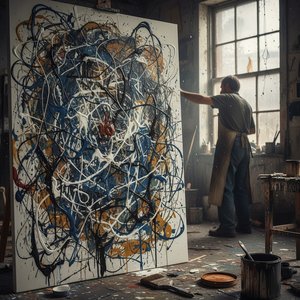 Paul Jackson Pollock: A Radical Departure – Exploring Abstract Expressionism's Pioneering Figure and His Enduring LegacyExplore the revolutionary art of Jackson Pollock & Abstract Expressionism. Discover his iconic drip paintings, lasting impact, and consider…
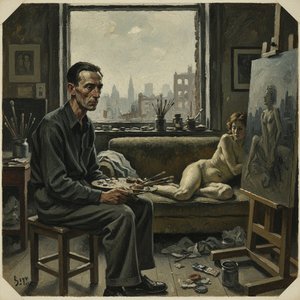 Lucian Freud: A Psychological Portraiture of Post-War ExistenceExplore the profound psychological depth of Lucian Freud's portraits. Discover his unique realism, artistic evolution, and lasting influenc…
 The Triadic Resonance of Artistic Choice: Exploring Emotional Response to Multiple Interpretations of a Singular ConceptExplore the emotional power of art & discover how skilled artists create lasting masterpieces. Custom paintings, expert consultations, & mu…