
 Peržiūrėti realaus dydžio版
 Pasidalinti
 Dalintis
 Išsamiau
 Vadovas

 Atsisiųsti
 Panašūs eksponatai
 Rentgeno spindulių nuotrauka
 Automatinė diorama
 问答
问答 Statistika
Asakusa

- 41.0 x 41.0 cm


 Skaityti daugiau
Šiame puslapyje rodomas meno kūrinys yra saugomas autorių teisių įstatymais, todėl neturime teisės legaliai kurti ar parduoti jo identiškos reprodukcijos. Ši apsauga užtikrinama remiantis tokiais tarptautiniais susitarimais kaip Bernės konvencija ir pagal nacionalines įstatymų nuostatas, įskaitant tas, kurias nurodo JAV autoriškos teisės įstatymas – 17-asis skyrius.
Šis metodas visiškai atitinka autorių teises, nes jame nėra saugomo kūrinio kopijavimo ar dubliavimo. Tai yra kūrybinė reinterpretacija – naujas paveikslas, kurį įkvėpė originalas, tačiau kuris nėra jo identiškas.
Giclée / Meno spausdinimas
Muziejų lygio „giclée“ arba drobos spausdinimas: greita gamyba ir lankstios apdailos parinktys. ( Pirkti rankų darbo tapybą Perejti prie skaitmeninių vaizdų)




P118B €10

P118H €10

P118W €10

P438Z €10

P508JH €12

P508YH €12

P805H €10

P805Z €10

P919BZ €10

P919G €10

P919XJ €10

P959ZH €10

P968JZ €12

W106C €8

W218G €10

W218JH €8

W218Y €10

W307PJ €10

W316G €10

W316PJ €8

W316Y €10

W398PJ €8

W4111J €10

W500HY €15

W500JH €15

W692G €12

W849H €8

W940BG €15

W953PJ €8




Pasirinkite iš mūsų nustatytų dydžių, atitinkančių originalaus meno kūrinio proporcijas.

Įveskite jums reikiamą plotį ir aukštį, kad atvaizdas derėtų prie jūsų rėmo ar sienos. Spausdiną galima tik sumažinti, bet nepadidinti virš originalaus paveikslėlio dydžio, todėl keičiant proporcijas, dalis vaizdo prarandama. Prieš spausdinimą atsiųsime jums skaitmeninį maketą patvirtinimui. Šioje puslapio nuotraukoje matomas pjūvis nėra tikslus – jį rodo tik maketas.
Pristatymas visame pasaulyje () per 2 weeks, o ne įprastas 4/5 savaičių laikotarpis. (5 lapkritis)

Nemokamas greitasis pristatymas visame pasaulyje

Aukštos kokybės lininis drobė

Pilnas siuntimo draudimas

Muitinės mokesčių grąžinimo garantija

Tikro spalvų atitikimo garantija

100 dienų grąžinimo politika (tik esant įtaigoms)

100% pinigų grąžinimo garantija

Nuolaida dideliems užsakymams
 Stiklo variantas prieinamas tik pasirinkus dydį iki 110 cm

Asakusa
Giclée / Meno spausdinimas
Reprodukcijos matmenys
-


Bendroji kaina
€ 72
A Vibrant Dance of Color and Form
In the captivating realm of Noriko Suzuki Bosco, simplicity serves as a gateway to profound visual wonder. Her work Asakusa, created in 1998, invites the viewer into a whimsical, dreamlike space where the boundaries between nature and pattern dissolve. At first glance, the eye is drawn to the striking presence of a fish, rendered in warm, sun-drenched hues of yellow and orange. This central figure, pulsating with life, features a singular, piercing blue dot at its center—a focal point that acts as an anchor for the entire composition. The subject matter, while seemingly playful, carries a rhythmic energy that is characteristic of Suzuki Bosco’s unique ability to transform basic geometric elements into emotive, breathing entities.
The technique employed in this piece showcases a masterful command over texture and contrast. The artist utilizes a bold, graphic approach, placing the organic, fluid form of the fish against a rigid, checkered patterned background. This juxtaposition between the soft, painterly strokes of the creature and the structured geometry of the backdrop creates a dynamic tension that keeps the gaze moving across the canvas. The use of color is particularly evocative; the warmth of the orange tones provides a sense of comfort and vitality, while the cool blue accent introduces a moment of contemplative stillness. It is this delicate balance between movement and stasis that makes Asakusa such a compelling piece for any serious art collection.
Symbolism and the Spirit of Connection
Beyond its surface beauty, Asakusa resonates with deeper symbolic layers. The fish, often a symbol of abundance, perseverance, and fluidity in various cultures, moves through a structured world, perhaps representing the dance between instinct and order. The blue dot, positioned like a third eye or a concentrated kernel of thought, suggests a sense of mindfulness and centeredness amidst the complexity of life. Suzuki Bosco’s work often explores themes of chance and connection—concepts she further investigates through her experimental workshops and interdisciplinary practices. In this painting, every dot and line feels intentional, contributing to a larger narrative of harmony found within chaos.
For the discerning collector or interior designer, this artwork offers more than just aesthetic pleasure; it provides an emotional atmosphere. The piece possesses a joyful spontaneity that can breathe life into a modern living space, acting as a conversation starter that radiates optimism. Whether placed in a minimalist gallery setting or integrated into a richly textured room, Asakusa commands attention through its bright palette and rhythmic composition. It is a testament to the power of fine art to elevate an environment, offering a window into a kaleidoscope of color that remains etched in the viewer's memory long after the first encounter.
Klausimai ir atsakymai
Kur ir kokiam tikslui rekomenduojamas „Asakusa“?
„Asakusa“ siūloma naudoti Conversation, o rekomenduojama erdvė – Children's Room.
Kokią emociją perteikia „Asakusa“ – Noriko Suzuki Bosco?
„Asakusa“ – Noriko Suzuki Bosco perteikia Playful emocinę nuotaiką.
Kokia atmosferą sukelia „Asakusa“?
„Asakusa“ – Noriko Suzuki Bosco nuotaika apibūdinama kaip Playful. Ši klasifikacija gali padėti priderinti kūrinį prie aplinkos.
Autoriaus biografija
A Kaleidoscope of Dots: The World of Noriko Suzuki Bosco
Noriko Suzuki Bosco is an artist whose work immediately captivates, drawing the viewer into a vibrant world built from seemingly simple elements – dots. But to categorize her art as merely “dot art” would be a profound understatement. Her canvases pulse with life, offering serene landscapes and evocative cityscapes rendered in a unique visual language that speaks of both meticulous control and joyful spontaneity. While relatively recent in establishing a wider public profile through platforms like OriginalUniqueArt, Suzuki Bosco’s artistic journey is rooted in a deep engagement with painting and an evolving exploration of interdisciplinary practices. Her story isn't one of overnight success but rather a gradual unfolding of vision honed through dedicated study and experimentation.Early Influences & Academic Foundations
Suzuki Bosco’s background lies firmly within the realm of Fine Art, providing her with a robust technical foundation that underpins the seemingly free-flowing nature of her dot compositions. Details regarding her early life remain somewhat private; however, it is clear that she embarked on an ambitious academic path culminating in a PhD (practice-based) at Winchester School of Art, University of Southampton. This period proved pivotal, pushing her beyond traditional painting boundaries and into the realm of social practice and collaborative art. A blog post from 2018 highlights her participation in “Turn the Page,” an artists’ book fair in Norwich, where she presented work that explored the intersection of artistic creation and community engagement. This foray into socially-minded projects demonstrates a willingness to engage with broader cultural conversations beyond the confines of the studio. Her academic pursuits have clearly informed her approach, fostering a critical awareness of power dynamics within art and society—a theme subtly woven into the seemingly optimistic aesthetic of her dot paintings.The Emergence of a Distinct Style
The signature style for which Suzuki Bosco is becoming known – the use of densely packed pink dots to create luminous images – didn’t emerge fully formed. It represents an evolution, a distillation of years spent experimenting with form and color. The choice of pink itself is significant; it's a hue often associated with femininity, playfulness, and even fragility, yet Suzuki Bosco employs it with a strength and boldness that subverts these conventional associations. Her landscapes aren’t idyllic representations but rather emotional responses to place—evocations of atmosphere and memory. Similarly, her cityscapes are not precise renderings of architectural detail but impressions of urban energy, the bustling rhythm of life captured in a shimmering field of color. Works like “Sakana” (1998), with its striking red shapes and geometric design, offer an early glimpse into this developing aesthetic, showcasing a fascination with abstraction and bold visual impact. The pieces "Asakusa" and "Balance", while lacking detailed descriptions, suggest a continued exploration of composition and color harmony within her signature style.Themes & Historical Context
Suzuki Bosco’s work exists at an interesting intersection of contemporary art trends. While rooted in painting traditions, it also resonates with elements of Pop Art – the use of bold color, repetition, and a focus on visual impact. However, unlike the often-ironic detachment of Pop Art, Suzuki Bosco's work feels deeply personal and emotionally resonant. Her paintings can be seen as a response to the increasingly fragmented nature of modern life, offering moments of calm and contemplation within a chaotic world. The emphasis on meticulous detail—each dot painstakingly applied—suggests a meditative process, a deliberate act of creation in contrast to the speed and superficiality of digital culture. Furthermore, her exploration of spatial knowledge and collaborative practices, as evidenced by her PhD research and participation in artist residencies, positions her within a broader context of artists engaging with social and political issues through their work. Her art isn’t simply about *what* is depicted but *how* it's depicted—the process itself becoming a form of commentary on the nature of perception and representation.Looking Ahead
Although still developing her wider public recognition, Noriko Suzuki Bosco has established herself as a unique voice in contemporary art. Her work offers a compelling blend of technical skill, emotional depth, and intellectual curiosity. Based in Bologna, Italy, she continues to explore the possibilities of painting, pushing the boundaries of her signature style while remaining true to her core artistic vision. As her body of work expands, it will be fascinating to see how she further integrates her academic research into her practice, continuing to challenge conventional notions of art and its role within society. Her paintings are not merely decorative objects but invitations—invitations to slow down, contemplate, and find beauty in the seemingly simple act of looking.
Trumpa informacija
- Artistic Movement Or Style: Pink Dot Art, Abstract
- Current Location: Bologna, Italy
- Full Name: Noriko Suzuki Bosco
- Notable Artworks:
- Sakana
- Asakusa
- Balance
Susiję straipsniai
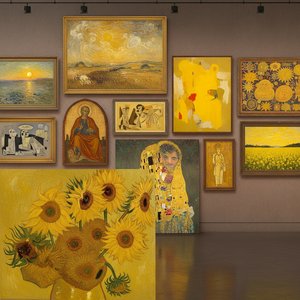
Golden Hues: 10 Masterpieces Dominated by Chrome Yellow | OriginalUniqueArt
Immerse yourself in golden light! Explore 10 famous paintings dominated by 'Chrome Yellow', from Van Gogh’s Sunflowers to Monet's Haystacks. Discover the stories behind these iconic Impressionist & Post-Impressionist masterpieces and find museum-quality art reproductions at OriginalUniqueArt.com.
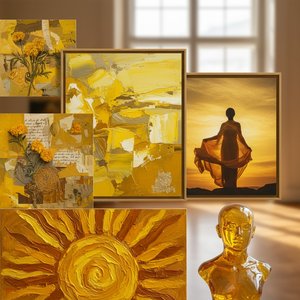
The Golden Hue: Exploring Symbolism & Emotion in Yellow Art
Explore the rich symbolism & emotional power of yellow in art history! From Van Gogh to Kandinsky, discover how artists used this vibrant hue. Expert analysis & high-quality reproductions at OriginalUniqueArt.
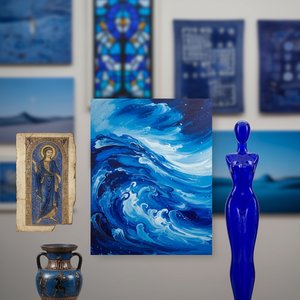
The Allure of Azure: Exploring the Symbolic & Aesthetic Depths of Blue in Art History
Explore the rich history of blue in art! Discover its symbolism, from ancient pigments to modern masterpieces by Kandinsky & Seurat. Uncover the psychological impact and cultural meanings behind this captivating hue.

Slate Blue Masterpieces: 10 Iconic Paintings & Timeless Home Decor Ideas
Immerse yourself in the captivating world of slate blue! Explore 10 iconic paintings by Monet, Van Gogh & Renoir. Discover their stories, techniques & find museum-quality art reproductions for your home at .
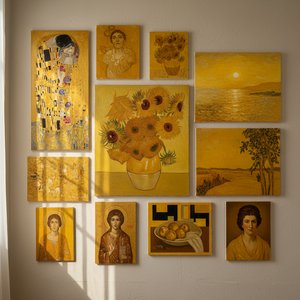
Golden Hues: Top 10 Paintings Dominated by Yellow Ochre |
Explore 10 iconic paintings bathed in golden yellow ochre! From Van Gogh's sunflowers to Monet’s haystacks, discover the stories behind these masterpieces. Find museum-quality art reproductions & elevate your home decor on .