

 Perjungti į spausdinamus版作品
 Skaityti daugiau







































 Dėl meno kūrinių ar reprodukcijų, kurių bet kuri pusė yra didesnė nei 105 cm (apie 41 inch), rėmas bus siunčiamas kaip išskaidytas surinkimo rinkinys. Šis metodas užtikrina saugų pristatymą ir apsaugo nuo transportavimo metu galimos žalos.


A Baroque Celebration of Myth: Unveiling Nicolas Poussin’s *The Triumph of Pan*
Nicolas Poussin's *The Triumph of Pan*, completed in 1636, is a captivating oil on canvas that transports viewers to a realm of ancient mythology and unrestrained revelry. Measuring 134 x 145 cm, this masterpiece resides within the esteemed collection of the National Gallery in London, offering art enthusiasts a tangible connection to Baroque artistry.Decoding the Scene: Pan and His Entourage
The painting centers around Pan, the Greek god of the wild, shepherds, and rustic music. He is depicted not as a solitary figure, but as the joyous focal point of a vibrant celebration. Surrounding him are nude and semi-nude figures – nymphs, satyrs, and mortals – engaged in lively interaction. The composition isn’t one of orderly procession; rather, it evokes a sense of spontaneous joy and uninhibited freedom. The scene feels less like a formal religious rite and more like an ecstatic, earthly festival.Artistic Style & Technique: A Classical Approach
Poussin was a master of the classical Baroque style, and *The Triumph of Pan* exemplifies this perfectly. His approach is characterized by linear clarity, balanced composition, and a meticulous attention to anatomical detail. Unlike some of his contemporaries who favored dramatic chiaroscuro, Poussin employs a more even illumination, allowing each figure to be clearly defined. The brushwork, while visible upon close inspection, contributes to the overall smoothness and polish of the painting. He skillfully uses color to create depth and draw the eye through the complex arrangement of figures.Symbolism & Mythological Context
The presence of two horses – one on either side of the composition – adds dynamism and a sense of untamed energy, mirroring Pan’s own wild nature. While seemingly straightforward in its depiction of celebration, the painting invites deeper interpretation. The figure of Pan himself represents the primal forces of nature, fertility, and instinct. Some scholars suggest that Poussin may have been subtly referencing themes of Bacchic excess and the dangers of unrestrained passion – a common motif in Baroque art. Interestingly, this work shares thematic similarities with Velázquez’s *The Triumph of Bacchus*, though Poussin's treatment is more restrained and less overtly chaotic.Historical Significance & Poussin’s Legacy
Nicolas Poussin (1594-1665) spent much of his career in Rome, deeply influenced by classical antiquity. He became a leading figure in the French Baroque movement, known for his intellectual approach to painting and his commitment to idealized forms. *The Triumph of Pan* reflects this dedication to classical ideals while also showcasing Poussin’s unique ability to blend mythological narratives with contemporary artistic techniques. His work profoundly impacted later artists like Jacques-Louis David and Paul Cézanne, solidifying his place as a pivotal figure in art history.Emotional Impact & Interior Design Considerations
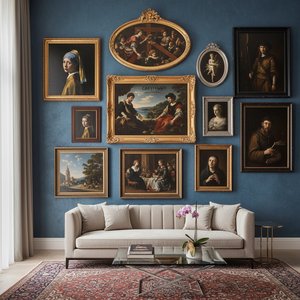
*The Triumph of Pan* evokes a sense of joyous abandon and connection to the natural world. The painting’s warm tones and dynamic composition create an inviting atmosphere, making it a compelling focal point for any space. Its classical aesthetic lends itself well to traditional interiors, but its vibrant energy can also complement more modern designs. A high-quality reproduction would be particularly striking in a living room, library, or dining area, adding a touch of historical grandeur and mythological intrigue.Exploring Further: Other Works by Nicolas Poussin
- The Poet’s Inspiration, housed at the Musée du Louvre, Paris.
- The Marriage of the Virgin.
- The Last Supper.
Klausimai ir atsakymai
Ar galiu pamatyti „Pano triumfas“ – Nikolaj Pusanas skirtingame apšvietime?
„Pano triumfas“ – Nikolaj Pusanas rentginio vaizdas (X-Ray) galima rasti šio kūrinio Rentgeninis vaizdas puslapio: tai interaktyvus vaizdo tyrimas per vienuolika optinių sluoksnių.
Kokia naudojimo paskirtis ir erdvė rekomenduojama kūriniam darbui „Pano triumfas“ – Nikolaj Pusanas?
„Pano triumfas“ – Nikolaj Pusanas rekomenduojamas Manifestas, idealiai – Popieriaus svetainė erdvėje. Naudojimo paskirtis ir erdvė padeda suprasti, kur ši reprodukcija tiktų geriausiai.
Kada buvo sukurta „Pano triumfas“ ir prie kokio meno stiliaus ji priskiriama?
„Pano triumfas“ – Nikolaj Pusanas sukurta 1636 m. ir priklauso Baroko sugrįžimas stiliui.





 Peržiūrėti realaus dydžio版
 Pasidalinti
 Dalintis
 Išsamiau
 Vadovas

 Atsisiųsti
 Panašūs eksponatai
 Rentgeno spindulių nuotrauka
 Automatinė diorama
 Q&A
Q&A Statistika


