

 Peržiūrėti realaus dydžio版
 Siųsti
 Dalintis
 Išsamiau
 Vadovas

 Atsisiųsti
 Panašūs eksponatai
 Rentgeno spindulių nuotrauka
 Diaporama
 Statistika
Gethsemane
 Oil On Board
- Neo-Romanticism
 1926
1926- Modern
 42.0 x 32.0 cm
 Bergen Kunstmuseum
 Rodyti daugiau
Giclée / Meno spausdinimas
Muziejų lygio „giclée“ arba drobos spausdinimas: greita gamyba ir lankstios apdailos parinktys. ( Pirkti rankomis tapytą reprodukciją Perejti prie skaitmeninių vaizdų)




P118B €10

P118H €10

P118W €10

P438Z €10

P508JH €12

P508YH €12

P805H €10

P805Z €10

P919BZ €10

P919G €10

P919XJ €10

P959ZH €10

P968JZ €12

W106C €8

W218G €10

W218JH €8

W218Y €10

W307PJ €10

W316G €10

W316PJ €8

W316Y €10

W398PJ €8

W4111J €10

W500HY €15

W500JH €15

W692G €12

W849H €8

W940BG €15

W953PJ €8




Pasirinkite iš mūsų nustatytų dydžių, atitinkančių originalaus meno kūrinio proporcijas.

Įveskite jums reikiamą plotį ir aukštį, kad atvaizdas derėtų prie jūsų rėmo ar sienos. Spausdiną galima tik sumažinti, bet nepadidinti virš originalaus paveikslėlio dydžio, todėl keičiant proporcijas, dalis vaizdo prarandama. Prieš spausdinimą atsiųsime jums skaitmeninį maketą patvirtinimui. Šioje puslapio nuotraukoje matomas pjūvis nėra tikslus – jį rodo tik maketas.
Pristatymas visame pasaulyje () per 2 weeks, o ne įprastas 4/5 savaičių laikotarpis. (21 spalis)

Nemokamas greitasis pristatymas visame pasaulyje

Aukštos kokybės lininis drobė

Pilnas siuntimo draudimas

Muitinės mokesčių grąžinimo garantija

Tikro spalvų atitikimo garantija

100 dienų grąžinimo politika (tik esant įtaigoms)

100% pinigų grąžinimo garantija

Nuolaida dideliems užsakymams
 Stiklo variantas prieinamas tik pasirinkus dydį iki 110 cm

Gethsemane
Giclée / Meno spausdinimas
Reprodukcijos dydis
-


Visų pasirinktų variantų kaina
€ 70
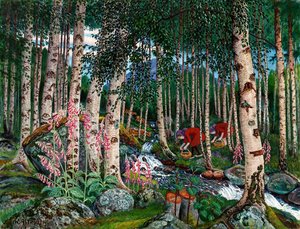
A Visionary Encounter in the Norwegian Garden
In the quiet, evocative depths of Nikolai Astrup’s 1926 masterpiece, Gethsemane, the boundaries between biblical history and the intimate landscapes of Norway begin to dissolve. While the title refers to the sacred garden in Jerusalem where Christ faced his darkest hour, Astrup performs a profound act of artistic localization. He transports this monumental moment of spiritual agony into the familiar, lush surroundings of the parsonage garden in Ålhus. This is not merely a religious illustration; it is a dreamlike fusion of the divine and the terrestrial. The viewer is invited into a space where the heavy atmosphere of the crucifixion narrative meets the verdant, mystical textures of the West Norwegian landscape, creating a scene that feels both ancient and deeply personal.
The composition breathes with a sense of quiet drama, capturing a moment of profound transition. As the eye wanders through the painting, one encounters a scene that oscillates between a somber historical event and a visionary hallucination. The presence of figures—some appearing caught in the weight of the narrative, others seemingly lost in a trance-like state—suggests a world where the veil between reality and the supernatural is perilously thin. This sense of mystery is heightened by the scattered birds that drift through the sky and perch upon the landscape, acting as silent witnesses to the unfolding drama. For the collector or designer, this piece offers more than just a subject; it offers an atmosphere of contemplative depth that can anchor a room with its soulful, introspective energy.
Technique and the Language of Light
Astrup’s technical mastery is evident in his use of oil on cardboard, a medium that allows for a rich, concentrated application of pigment. His style, rooted in Neo-Romanticism, eschews clinical realism in favor of an intense, emotive color palette. The textures are tactile and layered, reflecting the artist's lifelong obsession with the "visual language" of his homeland. He employs light not just to illuminate form, but to evoke mood; the shadows are deep and heavy, yet they are pierced by a spectral luminosity that suggests the presence of a divine vision. This interplay of light and shadow creates a rhythmic movement across the canvas, guiding the viewer through the dense foliage and toward the heart of the spiritual struggle.
The brushwork possesses a certain raw, organic vitality that mirrors the ruggedness of the Norwegian fjords. There is no sterile perfection here; instead, there is a deliberate, expressive quality that celebrates the natural world's untamed spirit. For those seeking to incorporate fine art into a sophisticated interior, a high-quality reproduction of Gethsemane provides a centerpiece of immense character. The painting’s ability to command attention through its complex textures and brooding tones makes it an ideal choice for spaces designed for reflection, such as libraries, study alcoves, or quiet sitting rooms where the interplay of history and nature can be fully appreciated.
A Legacy of Spiritual and National Identity
To understand Gethsemane is to understand Nikolai Astrup’s broader mission: to capture the very soul of Norway. By situating a universal Christian narrative within his own local topography, he elevates the Norwegian landscape to a stage for the eternal. This technique of "sacralizing" the everyday—turning a simple garden patch into a site of cosmic significance—is what makes his work so enduringly powerful. The painting serves as a bridge between the theological and the topographical, making the profound accessible through the familiar.
For the discerning art lover, owning a reproduction of this work is an opportunity to possess a fragment of this visionary legacy. It is a piece that invites continuous re-examination, revealing new layers of symbolism and emotion with every viewing. Whether one is drawn to its historical weight, its masterful use of color, or its ability to evoke the misty, magical atmosphere of a Norwegian night, Gethsemane remains a breathtaking testament to the power of art to transform the world we see into a world we feel.
问答 (or more naturally for a website heading): Klausimai ir atsakymai
Ar Nikolai Astrup kūrinys „Gethsemane“ yra viešosios nuoslegos, ir kodėl?
Autorinės teisės statusas kūriniui „Gethsemane“ – pripa принадле belongs to the public domain – jo autorinė teisė pasibaigusi – nustatomas remiantis to, kad paveikslas buvo sukurtas po to, kai menininkas mirė 1928 m.
Kokios temos pasireiškia kūrynioje „Gethsemane“, autorius – Nikolai Astrup?
„Gethsemane“, autorius – Nikolai Astrup vaizdeletas: biblical scene, religious, jesus christ, gethsemane, norway landscape, night scene, visionary.
Kokia yra „Gethsemane“ istorinė padėtis?
Istoriškai „Gethsemane“ yra šio platesnio Modern laikotarpio Neo-Romanticism stiliaus kūrinys.
Autoriaus biografija
Nikolai Astrup: Vestlanneto vizionierius
Nikolai Astrup (1880–1928) yra išskirtinė figūra Norvegijos meno istorijoje – paveikslautojas, kurio gili ryšys su Vestlanneto kraštovaizdžiu ir tradicijomis užtvirtino jo vietą tarp ryškiausių savo laikmečio neoromantizmo atstovų. Gimęs Bremanger, Sogn og Fjordane regione, Astrupas augo skaičiais žymio Amid šiūragiais fiordais ir ramiomis slėnišiais, kas neįtikėtinai paveikė jo meninę jautriąją prigimtį. Tai paskatino jį kurti stilių, pasižymintį intensyvia spalvų paleta ir nekliudoma atsidavimu vaizduojant kaimo Norvegijos kasdienybę. Jo palikimas slypi ne tik estetiškai gražiuose plėsluose, bet ir pionieriškame pastangų siekiant įamžinti „tautinį vaizdinį kalbą“, primenančią jo tėvynės tradicijas ir folklorą.- Formavimo metai ir išsilavinimas: Astrupo vaikystės ir jaunystės metus žymėjo šeimos religij chuy, kurį įsidiegė jo tėvas, kunigas Christianas Astrupas, skatinęs jį link teologijos studijų. Nepaisant pradinio polinkio į paslavimą, Astrupas aistros piešimui ir tapybai galiausiai privertė jį palikti Trondheim katedros mokyklą ir rinktis meninį kelią Kristianioje (Osluje), kur Harriet Backer priežiūroje jis tobulino savo įgūdžius.
- Parisio įtampų paveikimas: Trumpas laikrodis Paryzuje atsidavė Astrupą augančiam avangardui, suteikdamas galimybę užmegzti ryšius su tokiais kolega autoriais kaip Christian Krohg ir praturtino jo supratimą apie impresionistines technikas. Šis laikotarpis sustiprino jo eksperimentavimo troškimą ir išplėtė menines horizontus.
- Grįžimas į Jølsterį ir meninis evoliucija: 1902 metais grįžęs į savo protėvių namus Jøsterį, Astrupas sukūrė šeimą su savo žmona Engel Sunde, su kuria turėjo aštuonių vaikų. Ekonominės sunkybės, su kuriomis jie susidūrė, dar labiau paskatino jo meninį troškimą ir privertė jį visiškai pasinerti į savo aplinkybių vaizdinimą – kraštovaizdį, kuris tapo nebeįtikėtinu įkvėpimo šaltiniu.
- Svarbios parodos: Astrupas meninė reputacija nuolat augo per tris svarbias parodas, vykusias Kristianioje (1905), Bergene (1908) ir Oslėje (111). Šios parodos sulaukė kritikos pripažinimo ir įtvirtino jį kaip pirmaujančią balsą Norvegijos meno scenoje.
- Didieji pasiekimai ir palikimas: Nuolatinis Astrupas indėlis į Norvegijos meną slypi jo nekliudomame meninio autentiškumo siekyje – įsipareigojime su nepriekaištingu sąžiningumu vaizduoti Vestlanneto grožį ir dvasią. Jo paveikslai ir šiandien kelia emocijas, tarnaujant kaip galingi nacionalinės paveldos simboliai ir įkūnydami neoromantizmo idealus.
Nikolai Astrup
1880 - 1928 , Norvegija
Trumpa informacija apie kūrėją
- Artistic Movement Or Style: Neoromantizmas
- Artists Or Movements Influenced By This Artist: ['Skandinavijos menas']
- Artists Who Influenced This Artist: ['Christian Krohg']
- Date Of Birth: 1880
- Date Of Death: 1928
- Full Name: Nikolai Johannes Astrup
- Nationality: Norvegų
- Notable Artworks:
- Istingas mergieta
- Nuogai medžiai
- Verpanti mergaitė
- Place Of Birth: Bremangeras, Norvegija
Susiję straipsniai

Johan Christian Dahl: Pioneering Norwegian Romantic Landscape Painting
Explore the life & art of Johan Christian Dahl, Norway's first great Romantic painter. Discover his iconic landscapes, cultural impact, and lasting legacy with OriginalUniqueArt.

10 Romantinių Peizažų Simbolių: Tapybos Majestatės Viršūnės
Atraskite 10 legendinių romantinio peizažo kūrinių! Pasinerkite į Claude Lorrain, Caspar David Friedrich ir J.M.W. Turner genijaus pasaulį. Išmokite apie tapybos meistriškumą bei gamtos grožį. Aukščiausios kokybės meno reprodukcijos – OriginalUniqueArt.com. Tyrinėkite kolekciją!

Džono Konsteblio Šedevrai: 25 Išskirtiniai Darbai Jūsų Interjerui | OriginalUniqueArt
Atraskite 25 įspūdingiausius Džono Konsteblio paveikslus! Romantizmo meistro gamtos vaizdai, Dedham Vale peizažai ir meno istorijos šedevrai. Meno reprodukcijos jūsų interjerui – OriginalUniqueArt.com

Evocations of Place: A Historical Journey Through Landscape Art
Explore the rich history of landscape art with OriginalUniqueArt. Discover renowned artists, movements like Impressionism & Romanticism, and expert guidance for collecting timeless pieces. Find your perfect serene escape today!

The Sublime and the Picturesque: Exploring Emotion & Nature in Romantic Landscape Painting
Explore the emotional power of Romantic landscape painting! Discover the sublime & picturesque traditions, key artists like Friedrich & Cole, and find your perfect artwork at OriginalUniqueArt.