 Peržiūrėti realaus dydžio版
 Pasidalinti
 Dalintis
 Išsamiau
 Vadovas

 Atsisiųsti
 Panašūs eksponatai
 Rentgeno spindulių nuotrauka
 Automatinė diorama
 问答
问答 Statistika
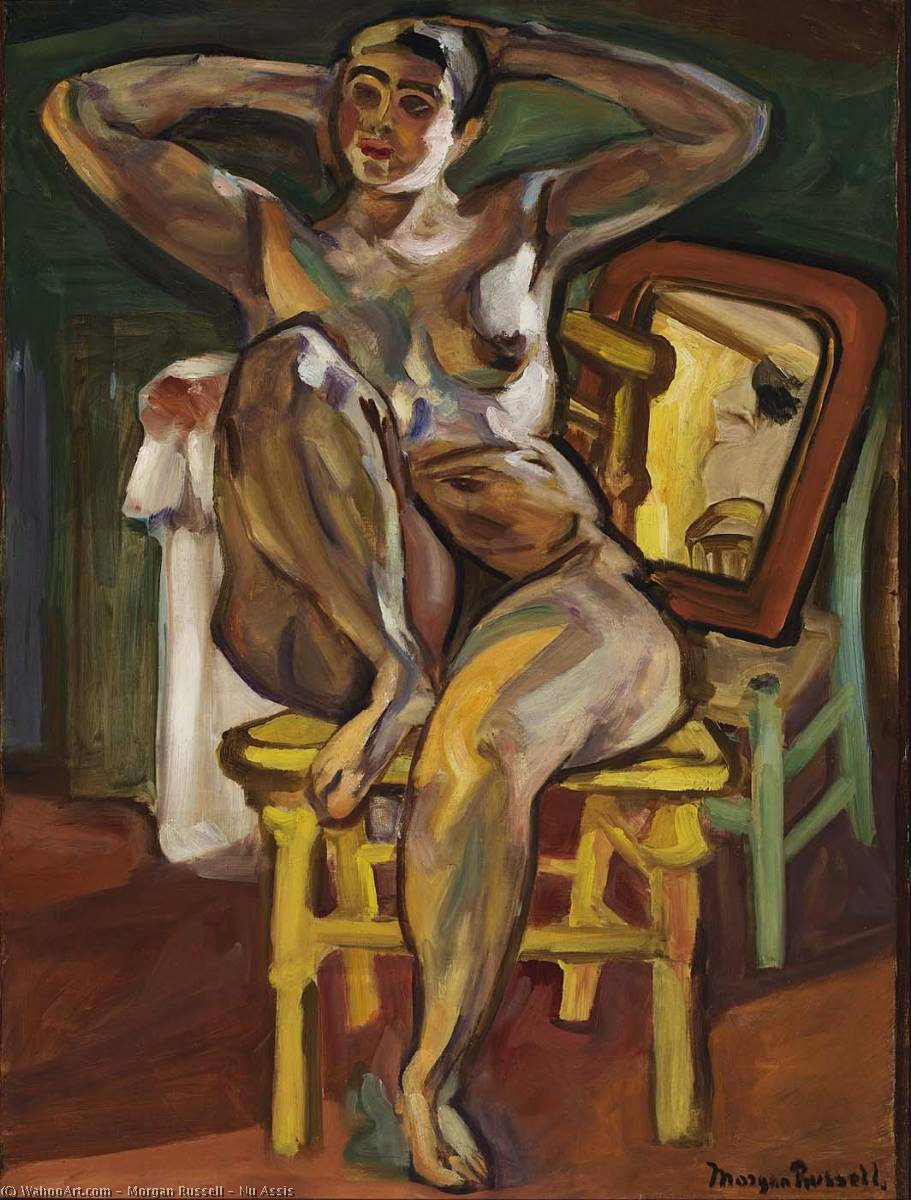
Nu Assis

- 73.0 x 55.0 cm

 Skaityti daugiau
Gaukite spausdinimui paruoštą failą, kurio kokybė gerokai viršija internetinę peržiūrą. Kiekvienas mūsų parduodamas skaitmeninis vaizdas yra ištrauktas iš aukštos raiškos pagrindinio failo mūsų duomenų bazėje — paprastai jis siekia nuo 5 000 iki 15 000 pikselių plotio — todėl galite drąsiai spausdinti didelius formatus, apkirpti vaizdą ar reprodukcija užtikrins visas smulkias detales.
Mūsų studijoje nė viena kopija nelieka neapdorota. Skaitmeninio vaizdo ekspertas, lygiu su originaliu paveikslu, patikrina spalvas ir, jei reikia, jas koreguoja, o tada profesionaliais retušavimo įrankiais padidina aiškumą bei detales — visada išlaikydamas ištikimybę autoriaus teptuko traukoms ir stiliui. Rezultatas – vaizdas, kuris atrodo kaip tikras paveikslas, o ne kaip su filtrais apdorotas skenavimas.
Patvirtinate prieš užsakymo pabaigą: mūsų ekspertas per 72 valandas el. laišku atsiųsta vaizdą jūsų peržiūrai. Nepasitenkinate rezultatu? Paprašykite patobulinimų ar pataisymų arba prašykite pinigų grąžinimo, jei kokybė neatitinka jūsų lūkesčių.
Ši kokybė yra patikima leidybos įstaigoms, dizaino studijoms, galerijoms ir spaudos įmonėms.
Skaitmeninis vaizdas
Atsisiųskite didelės raiškos failą asmeniniam naudojimui, spausdinimui ir kūrybiniams projektams. ( Perjungti į spausdinamus版作品 Pirkti rankų darbo tapybą)
Kiekvieną skaitinio vaizdo užsakymą papildė
Profesionalus skaitmeninis vaizdų pristatymas, garantuotas
Pasirinkę OriginalUniqueArt.com, jūs ne tik gaunate paveikslėlį – jūs gaunate profesionaliai patobudintą skaitmeninį kūrinį, sukurtą itin tikniai ir užtikrinantį pasitenkinimą. Štai viską, kas automatiškai pritékia jūsų užsakymui:

Greitas pristatymas el. paštu
Jūsų aukštos raiškos skaitmeninis vaizdo failas bus išsiųstas el. paštu per 72 valandas nuo užsakymo – jis bus paruoštas naudoti be jokių papildomų veiksmų.

Dirbtiniu intelektu tobulintas skaitmeninis failas
Jūsų meno kūrinys profesionaliai optimizuojamas naudojant pažangius dirbtinio intelekto įrankius ir rankinį redagavimą, užtikrinant maksimalią detalę, aiškumą ir spalvų tikslumą.

Nemokamas visam laikui pakartotinis siuntimas
Atsitiktinai ištrytikote ar praradote savo failą? Nebijokite – bet kuriuo metu atsiųsime jį jums vėl nemokamai.

Jokio importo mokesčio – niekada
Mėgaukitės savo meno kūrynu be jokių muitinės mokesčių, įkainų ar pristatymo išlaidų – skaitiniai failai visada yra neapmokestinami.

Spalvų tikslumo garantija
Naudodami profesionalią įrangą ir spalvų valdymo sistemas, užtikriname, kad jūsų skaitmeninis vaizdas kuo tiksliau atspindėtų originalias spalvas.

100 dienų patikimumo garantija
Jei nebuvosite patenkinti įsigyto skaitmeninio vaizdo, mes jį tališkai koreguosime arba grąžinsime 100% sumą per 100 dienų – be jokių klausimų.

100% pinigų grąžinimo garantija
Nesitenkinate? Gaukite visą sumokėtą sumą per 100 dienų nuo skaitmeninio failo gavimo – be jokių papildomų klausimų.

Nuolaidos dideliems užsakymams
Pirkti 3 nuotraukas – 10% nuolaida – Pirkti 5 – 15% nuolaida – Pirkti 10 ir daugiau – 20% nuolaida. Puikiai tinka kūrybiniams projektams, galerijoms bei agentūroms.
Autoriaus biografija
The Architect of Color: The Life and Legacy of Morgan Russell
Born into the vibrant, burgeoning energy of New York City on January 25, 1886, Morgan Russell emerged as a transformative force in the landscape of American Modernism. His journey was never merely about the application of pigment to canvas, but rather an architectural pursuit of light and form. Before he became a master of abstract color, Russell’s early inclinations leaned toward the structural precision of architecture and the tactile depth of sculpture. Studying at the Art Students League under the guidance of figures like Arthur Lee and James Earle Fraser, he developed a profound sensitivity to materiality and volume. This sculptural foundation would later become the secret engine behind his most famous innovation, allowing him to treat color not as a surface decoration, but as a structural element capable of creating depth and movement within a two-dimensional plane.
The trajectory of Russell’s career was irrevocably altered by his encounters with the European avant-garde. Supported by the visionary patronage of Gertrude Vanderbilt Whitney, Russell traveled to Paris and Rome, immersing himself in the very heart of the modern revolution. In the legendary salons of Gertrude Stein, he moved among the giants of the era—Picasso, Rodini, and Matisse. These encounters were more than mere social engagements; they were intellectual crucibles. While absorbing the rhythmic fragmentation of Cubism and the emotive power of Fauvism, Russell began to seek a way to synthesize these disparate influences into a uniquely American voice. His time in Paris allowed him to witness the birth of new visual languages, yet he remained driven by a desire to find a method where color could function with the same harmonic complexity as a musical symphony.
The Birth of Synchromism and the Symphony of Sight
In 1912, alongside his collaborator Stanton Macdonald-Wright, Russell co-founded Synchromism, one of the first truly abstract movements in American art. The name itself—derived from the Greek for "with color"—encapsulated their radical mission: to orchestrate colors in a way that mimicked the temporal and emotional progression of music. This was not merely an aesthetic choice but a philosophical rebellion against the stagnant traditions of academic realism. Russell’s "synchromies" sought to move beyond representation, using rhythmic arrangements of hues to evoke sensation and structure. He believed that just as a composer arranges notes to create tension and resolution, a painter could use color temperature and saturation to direct the eye and build a sense of sculptural weight.
The technical brilliance of Russell’s work lies in this very intersection of color and construction. His paintings often possess an unexpected muscularity; even in his most abstract compositions, one can sense the influence of his early sculptural training. He utilized contrasting color relationships to create "optical" forms that seem to push forward or recede into space, effectively painting with light. This approach challenged the viewer to experience art as a dynamic, living entity rather than a static image. Through Synchromism, Russell and Macdonald-Wright provided an essential bridge between European experimentation and the development of a distinct American modernism, proving that abstraction could be both intellectually rigorous and viscerally powerful.
A Lasting Impression on Modernist History
Though the height of the Synchromist movement flourished in the 1910s and 1920s, Morgan Russell’s impact resonated far beyond this period. His ability to marry the structural logic of architecture with the fluid emotion of color helped pave the way for subsequent generations of abstract painters. He remained a pivotal figure in the evolution of modern art, constantly refining his understanding of how visual elements interact to create meaning. His legacy is defined by several key contributions:
- The Innovation of Color Theory: He pioneered the idea that color could serve as a primary structural tool, independent of representational subject matter.
- Cross-Disciplinary Synthesis: By blending sculptural form, architectural logic, and musical rhythm, he expanded the boundaries of what a painting could achieve.
- Founding American Abstraction: As a co-founder of Synchromism, he helped establish an early foothold for abstract expression in the United States, moving the center of gravity away from purely European traditions.
- Intellectual Rigor: His work bridged the gap between the visceral experience of art and the complex philosophical inquiries regarding perception and space.
Today, when we look at the works of Morgan Russell, we see more than just beautiful arrangements of pigment; we see the blueprints of a revolution. He remains a testament to the power of the avant-garde spirit—a man who looked at the world not as a collection of objects to be copied, but as a symphony of light and form waiting to be conducted.

Morgan Russell
1886 - 1953 , United States
Trumpa informacija
- Full Name: Morgan Russell
- Nationality: American
- Date Of Birth: 1886
- Date Of Death: 1953
- Place Of Birth: New York City
- Notable Artworks:
- Untitled
- Nu Assis
- Artistic Movement Or Style: Synchromism
- Artists Who Influenced This Artist:
- Percyval Tudor-Hart
- Stanton Macdonald-Wright
- Artists Or Movements Influenced By This Artist: ['Cubism']