

 Peržiūrėti realaus dydžio版
 Siųsti
 Dalintis
 Išsamiau
 Vadovas

 Atsisiųsti
 Panašūs eksponatai
 Rentgeno spindulių nuotrauka
 Diaporama
 Statistika
Working Thought (from the


 Rodyti daugiau
Šiame puslapyje rodomas meno kūrinys yra saugomas autorių teisių įstatymais, todėl neturime teisės legaliai kurti ar parduoti jo identiškos reprodukcijos. Ši apsauga užtikrinama remiantis tokiais tarptautiniais susitarimais kaip Bernės konvencija ir pagal nacionalines įstatymų nuostatas, įskaitant tas, kurias nurodo JAV autoriškos teisės įstatymas – 17-asis skyrius.
Kaip pagarbią ir teisėtą alternatyvą, mes siūlome pagal užsakymą rankomis dažytus paveikslus, įkvėptus originalo. Mūsų įgudę ir profesionalūs menininkai kruopščiai tiria originalo stilių, nuotaiką ir meninę esmę, kad sukurtų naują, unikalią kūrinį, kuris sukelia tą paties jausmą – išlikdamas tuo tarciau originaliu, savarankišku kūrybiniu darbu.
Šis metodas visiškai atitinka autorių teises, nes jame nėra kūrinio kopijavimo ar dubliavimo. Tai yra kūrybinė reinterpretacija – naujas paveikslas, kurį įkvėpė originalas, tačiau kuris nėra jo identiškas.
Rankų darbo aliejinės reprodukcijos
Rankiniu būdu tapytas aliejus ant droblio jūsų pageidaujamame dydį ir rėmuose – mūsų menininkų darbas pagal užsakymą. ( Perjungti į spausdinimą Perejti prie skaitmeninių vaizdų)




P118B €10

P118H €10

P118W €10

P438Z €10

P508JH €12

P508YH €12

P805H €10

P805Z €10

P919BZ €10

P919G €10

P919XJ €10

P959ZH €10

P968JZ €12

W106C €8

W218G €10

W218JH €8

W218Y €10

W307PJ €10

W316G €10

W316PJ €8

W316Y €10

W398PJ €8

W4111J €10

W500HY €15

W500JH €15

W692G €12

W849H €8

W940BG €15

W953PJ €8




Pasirinkite iš mūsų nustatytų dydžių, atitinkančių originalaus meno kūrinio proporcijas.

Įveskite jums reikiamą plotį ir aukštį, kad paveikslas atitiktų jūsų rėmą ar sieną. Kadangi šis darbas yra rankinio darbo, siekiant išgauti kitokio formos dydį, paveikslas gali būti šiek tiek didesnis (nuo kraštų bus palikta daugiau erdvės) arba mažesnis – pasirinkite jums patogiausią variantą. Prieš pradedant tapyti, atsiųsime jums skaitmeninį maketą patvirtinimui. Šioje puslapio nuotraukoje matomas vaizdas nėra galutinis rezultatas – jį parodys tik sukurtas maketas.
Gavus užsakymą, OriginalUniqueArt.com komanda susisieks su klientu el. paštu dėl instrukcijų ir pateiks maketo pavyzdį
Pristatymas visame pasaulyje () per 3–4 savaites, o ne įprastai – per 5 savaites. (25 spalis). Kokybė lieka nepakeičiama.

Nemokamas greitasis pristatymas visame pasaulyje

Aukštos kokybės lininis drobė

Pilnas siuntimo draudimas

Muitinės mokesčių grąžinimo garantija

Tikro spalvų atitikimo garantija

100 dienų grąžinimo politika (tik esant įtaigoms)

100% pinigų grąžinimo garantija

Nuolaida dideliems užsakymams
 Stiklo variantas prieinamas tik pasirinkus dydį iki 110 cm

Working Thought (from the
Reprodukcijos technika
Reprodukcijos dydis
-


Visų pasirinktų variantų kaina
€ 263
Working Thought (from the Lynch Fragment Series) – A Meditation on Resilience
Melvin Edwards’ “Working Thought,” created in 1985, isn't merely a sculpture; it’s a palpable embodiment of memory and struggle—a cornerstone of Edwards’ signature "Lynch Fragments" series. This arresting piece speaks volumes about the artist’s profound engagement with African American history and his unwavering commitment to conveying complex narratives through materiality and form. Captured in a meticulously framed photograph, the sculpture commands attention with its stark simplicity and textured surface, inviting contemplation on themes of perseverance and confronting trauma.Form and Materiality: Industrial Echoes of Trauma
The sculpture itself is constructed from welded steel components—bolts, chains, and a cylindrical form anchored by a rod—a deliberate choice reflecting Edwards’ fascination with industrial materials and their ability to communicate raw emotion. The weathered patina of rust speaks directly to the history of labor and displacement experienced by Black communities across America. Each bolt and chain seems to bear witness to countless hours of effort, mirroring the arduous journey toward liberation and self-expression. The cylindrical form adds a visual counterpoint, hinting at stability amidst disruption—a subtle yet powerful symbol of resilience.Abstraction as Narrative Device
Edwards’ stylistic approach aligns perfectly with abstract expressionism, prioritizing texture and materiality above representational accuracy. Rather than depicting a specific scene or figure, “Working Thought” utilizes geometric shapes – primarily rectangular and cylindrical – to distill the essence of experience into its most fundamental elements. This deliberate simplification allows viewers to project their own interpretations onto the sculpture, fostering dialogue about personal histories and collective struggles. The photograph’s diffused lighting enhances the surface details, emphasizing the roughness and imperfections that contribute to the artwork's emotive power.Historical Context: Lynch Fragments and Confronting Legacy
The “Lynch Fragments” series emerged during a period of significant social upheaval in America—the Civil Rights Movement—and Edwards’ work directly confronts the legacy of slavery and racial injustice. Inspired by the haunting imagery of lynching photographs, these sculptures aim to disrupt conventional notions of beauty and invite viewers to confront uncomfortable truths about American history. “Working Thought” embodies this spirit of resistance, urging us to acknowledge past traumas while striving for a more equitable future. It’s a testament to Edwards' ability to transform raw materials into vehicles for profound emotional resonance.A Reflection on Memory and Transformation
Ultimately, "Working Thought" transcends its physical form to become an emblem of enduring strength—a visual meditation on the transformative power of memory and resilience. The sculpture’s weathered surface serves as a reminder that scars bear witness to battles fought and victories won, and that beauty can emerge from even the most challenging circumstances. Like Edwards himself, it stands firm against adversity, radiating an unwavering conviction in the possibility of progress and healing. Its enduring appeal lies precisely in its ability to provoke contemplation and inspire empathy—a legacy worthy of any discerning collector or interior designer seeking a piece that speaks to the human spirit.问答 (or more naturally for a website heading): Klausimai ir atsakymai
Kur galiu atsisiųsti „Working Thought (from the“, autorius – Melvin Edwards?
Galimybę atsisiųsti „Working Thought (from the“ galima rasti šio kūrinio Atsisiųsti puslapį, kuriame siūloma aukštos raiškos skaitmeninio vaizdo atsisiuntimas.
Kokio Melvin Edwards kūrybos etapo priklauso „Working Thought (from the“ (1985)?
1985 m. data įtraugia "Working Thought (from the" į Melvin Edwards kūrybinio plėtojimo Contemporary laikotarpį.
Ar „Working Thought (from the“, autorius – Melvin Edwards spalvos yra ryškios ar išblukusios?
„Working Thought (from the“, autorius – Melvin Edwards spalvų nasyginimas yra Muted. Nasyginimas apibūdina, kokių spalvos yra ryškių arba išblukusių.
Autoriaus biografija
The Sculptural Language of Resilience: The Life and Legacy of Melvin Edwards
Melvin Edwards stands as a monumental figure in the landscape of contemporary American sculpture, an artist whose work serves as both a profound historical archive and a visceral exploration of abstract form. Born on May 4, 1937, in Houston, Texas, Edwards’ early life was shaped by the starkly divided realities of the segregated South. This formative period, marked by the complexities of racial tension and the pursuit of social justice, would later become the emotional bedrock of his artistic practice. As he moved through the integrated landscapes of Ohio and eventually to California in 1955, Edwards began a transformative journey that would lead him from the foundational disciplines of painting at UCLA to the rugged, industrial mastery of welding and steel assemblage.
The arrival of Edwards in New York City in 1967 marked a definitive turning point in his career. Immersed in the electric atmosphere of postwar abstraction, he began to synthesize the geometric rigor of European modernism with the urgent, socio-political narratives of the African-American experience. It was during this era that he developed his most celebrated contribution to the sculptural canon: the Lynch Fragments. These intricate, small-scale steel reliefs are far more than mere abstract compositions; they are poetic yet harrowing assemblages of metal objects—spikes, chains, and scissors—that evoke the fractured memory of racial trauma. Through these works, Edwards achieved a delicate balance between the reductive aesthetics of artists like Piet Mondrian and a conceptual depth reminiscent of Marcel Duchamp, using the very weight and texture of steel to articulate the tension between oppression and endurance.
Materiality and Memory: The Art of Assemblage
To encounter a Melvin Edwards sculpture is to engage in a dialogue with history through the medium of industrial grit. His technique is characterized by an extraordinary command over metal, where the act of welding becomes a way to fuse disparate fragments of memory into a cohesive, albeit fractured, whole. In works such as Working Thought, one can witness how the artist utilizes the language of the Lynch Fragments to reflect on the resilience of the human spirit. The jagged edges and deliberate asymmetries of his steel reliefs do not merely represent chaos; they mirror the structural complexities of a history that is often broken and reconstructed.
This mastery extends into larger, more complex installations where the artist incorporates found objects to deepen the narrative resonance of his pieces. In Ida W.B., Edwards masterfully blends steel with bicycle parts, creating a poignant sculptural poem that explores themes of social justice and historical continuity. His ability to transform cold, industrial materials into vessels for profound human emotion is what distinguishes his oeuvre. The following elements define the core of his technical and thematic approach:
- The Use of Assemblage: Integrating found metal objects like chains and tools to ground abstract forms in physical reality.
- Geometric Tension: Utilizing sharp angles and asymmetrical compositions to evoke a sense of psychological and social friction.
- Historical Resonance: Drawing directly from the legacies of slavery and the Civil Rights Movement to inform the structural integrity of his work.
- Materiality as Metaphor: Using the permanence and weight of steel to symbolize the unyielding nature of memory and resistance.
A Lasting Impact on Contemporary Sculpture
The historical significance of Melvin Edwards lies in his ability to bridge the gap between formalist abstraction and political activism. He refused to allow the language of modern sculpture to remain detached from the lived realities of the Black experience, instead forcing the medium to confront the scars of the past. His work does not merely document history; it reanimates it, allowing the viewer to feel the weight of the metal and the sharpness of the edges as symbols of a struggle that continues to shape the American identity.
As his career has progressed, Edwards has remained a vital voice in the global art dialogue, proving that sculpture can be simultaneously decorative, intellectual, and deeply political. His legacy is found in every weld and every fragment, reminding us that even from the most broken pieces, a powerful and enduring narrative can be forged. Through his unwavering commitment to truth and form, Melvin Edwards has ensured that the stories of resilience and memory are etched permanently into the fabric of contemporary art.

Melvin Edwards
1937 - , United States of America
Trumpa informacija apie kūrėją
- Full Name: Melvin Edwards
- Nationality: American
- Date Of Birth: 1937
- Place Of Birth: Houston, United States of America
- Notable Artworks:
- Lynch Fragments
- Working Thought
- Artistic Movement Or Style: Abstract Sculpture
Susiję straipsniai
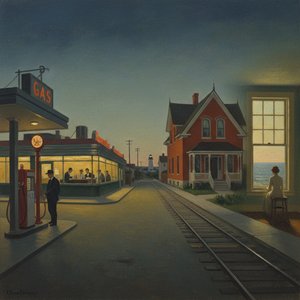
Edward Hopper: 25 Išskirtiniai Darbai | Tapyba, Aliejus, Interjero Dekoras
Atraskite 25 ikoninius Edward Hopper paveikslus! Gilinkitės į amerikietiškojo realizmo šedevrus, spalvų žaidimą ir interjero dekoravimo idėjas. Aliejinės tapybos meistras – OriginalUniqueArt.com kolekcijoje. Explore the full collection online!

The Enduring Form: Sculpture Across History, Technique & Emotional Resonance
Explore the rich history of sculpture with OriginalUniqueArt. Discover key techniques, influential artists & investment potential for discerning collectors. Expert insights into valuing and collecting timeless masterpieces.

Bronze Age to Modern Masters: 10 Sculptures That Redefined Art | OriginalUniqueArt
Journey through art history with 10 legendary bronze sculptures – from Michelangelo's David to Rodin’s Thinker. Explore the stories, techniques & timeless beauty of these masterpieces. Find museum-quality reproductions & elevate your home decor on OriginalUniqueArt.com.

The Enduring Form: Exploring Themes & Techniques in Sculpture Across Historical Periods
Explore the rich history of sculpture from ancient masterpieces to contemporary innovations. Discover key techniques, influential artists & investment potential for discerning art collectors.

Bronze Sculptures That Defined Art History | OriginalUniqueArt
Journey through art history with our Top 10 bronze sculptures! Explore masterpieces by Rodin, Michelangelo & more. Discover stories behind iconic statues and find museum-quality reproductions for your home decor at OriginalUniqueArt.com.