

 Peržiūrėti realaus dydžio版
 Siųsti
 Dalintis
 Išsamiau
 Vadovas

 Atsisiųsti
 Panašūs eksponatai
 Rentgeno spindulių nuotrauka
 Diaporama
 Statistika
Street in Montmartre
 Oil On Canvas
- WallArt
- Post-Impressionism
 19th Century
 41.0 x 51.0 cm
 Rodyti daugiau
Rankų darbo aliejinės reprodukcijos
Rankiniu būdu tapytas aliejus ant droblio jūsų pageidaujamame dydį ir rėmuose – mūsų menininkų darbas pagal užsakymą. ( Perjungti į spausdinimą Perejti prie skaitmeninių vaizdų)




P118B $10

P118H $10

P118W $10

P438Z $10

P508JH $12

P508YH $12

P805H $10

P805Z $10

P919BZ $10

P919G $10

P919XJ $10

P959ZH $10

P968JZ $12

W106C $8

W218G $10

W218JH $8

W218Y $10

W307PJ $10

W316G $10

W316PJ $8

W316Y $10

W398PJ $8

W4111J $10

W500HY $15

W500JH $15

W692G $12

W849H $8

W940BG $15

W953PJ $8




Pasirinkite iš mūsų nustatytų dydžių, atitinkančių originalaus meno kūrinio proporcijas.

Galite įvesti savo matmenis, kad jie atitiktų konkretų rėmą ar erdvę. Jei pasirinktas dydis neatitinka originalaus paveikslėlio proporcijų, mes arba apkropsime meno kūrinį, arba papildysime tapybą rankomis dažytい elementais. Prieš pradėdami gamybą, jūsų patvirtinimui atsiųsime skaitmeninį maketą.
Atkreipkite dėmesį, kad ekrane rodomas vaizdas neatspindi tikrojo apkarpymo ar papildymo. Tik maketas tiksliai parodys galutinę kompoziciją.
Nors galima rinktis ir individualius dydžius, rekomenduojame pasirinkti matmenis iš nustatytos sąrašo, kad būtų išlaikytos originalios proporcijos.
Gavus užsakymą, OriginalUniqueArt.com komanda susisieks su klientu el. paštu dėl instrukcijų ir pateiks maketo pavyzdį
Pristatymas visame pasaulyje () per 3–4 savaites, o ne įprastai – per 5 savaites. (25 rugsėjis). Kokybė lieka nepakeičiama.

Nemokamas greitasis pristatymas visame pasaulyje

Aukštos kokybės lininis drobė

Pilnas siuntimo draudimas

Muitinės mokesčių grąžinimo garantija

Tikro spalvų atitikimo garantija

100 dienų grąžinimo politika (tik esant įtaigoms)

100% pinigų grąžinimo garantija

Nuolaida dideliems užsakymams
 Stiklo variantas prieinamas tik pasirinkus dydį iki 110 cm

Street in Montmartre
Reprodukcijos technika
Reprodukcijos dydis
-


Visų pasirinktų variantų kaina
$ 300
The Enduring Spirit of Parisian Life
To gaze upon this depiction of a street in Montmartre is to step directly into a cherished memory of Paris itself—a moment suspended between the grandeur of history and the intimacy of daily life. Maurice Utrillo, an artist whose very existence seemed woven from the cobblestones and bohemian whispers of this famed Parisian quarter, captures not merely a location, but a feeling. The scene pulses with the gentle energy of human connection; two figures stroll hand-in-hand down the sidewalk, seemingly oblivious to the passing bustle, wrapped in their own shared narrative. This is Montmartre at its most vibrant, a place where art and life do not merely coexist, but intertwine into a single, beautiful tapestry.
A Masterclass in Urban Atmosphere
Utrillo’s technique here is masterful in its ability to convey depth and movement without resorting to dramatic spectacle. The surrounding architecture—a medley of varied styles that speak to centuries of Parisian habitation—provides the necessary scaffolding for the human drama unfolding at ground level. Notice how the background figures drift through the composition; they are suggestions of life, echoes of countless other moments lived on this very pavement. Utrillo employs a rich, earthy palette characteristic of his later work, lending the scene a warm, almost nostalgic glow. It is a celebration of the everyday spectacle, where the monumental backdrop serves only to frame the quiet poetry of human interaction.
Symbolism and the Bohemian Heart
Montmartre itself carries immense symbolic weight in art history—it represents the cradle of modern artistic rebellion, the haven for dreamers, struggling artists, and lovers. By setting his scene here, Utrillo imbues the painting with a sense of romantic yearning. The couple walking together becomes an archetype: a portrait of enduring companionship against the backdrop of a city that has seen so much change. It speaks to the timeless human need for connection, a quiet anchor in the ceaseless current of urban existence. For the collector or designer, this piece offers more than mere decoration; it offers a curated atmosphere—a whisper of Parisian romance for any room.
Bringing Paris Home: Reproduction and Resonance
Owning a reproduction of this work allows one to invite that specific, luminous quality of light and lived-in history into your own space. The scale, 41 x 51 cm, makes it an ideal focal point—substantial enough to command attention yet intimate enough to feel personal. When considering this piece for your interior design scheme, think of it as a window onto a perfect afternoon stroll. It harmonizes beautifully with styles that appreciate patina and narrative depth, lending an air of cultured ease and timeless sophistication to any setting.
Autoriaus biografija
A Life Etched in Parisian Stone
Maurice Utrillo, born Maurice Valadon in the heart of Montmartre in 1883, was a painter inextricably linked to the spirit of Paris itself. His life, marked by both profound artistic talent and personal struggle, unfolded against the backdrop of a rapidly changing city, a world he captured with an almost melancholic tenderness. Unlike many artists who sought inspiration *in* Montmartre, Utrillo was born *of* it – one of the few prominent painters to actually originate within its bohemian boundaries. His story is not simply that of an artist, but a reflection of the district’s own evolving identity at the turn of the 20th century. The question of his paternity remained shrouded in speculation for years; theories ranged from Pierre-Cécile Puvis de Chavannes to Renoir, though Miguel Utrillo eventually legally acknowledged him. This ambiguity perhaps foreshadowed a life lived on the fringes, observing rather than fully participating, and translating those observations into canvases imbued with quiet introspection.From Troubled Youth to Artistic Awakening
Utrillo’s early years were far from idyllic. Marked by truancy and a growing struggle with alcoholism, his path seemed destined for hardship. In 1904, he received a diagnosis of schizophrenia, leading to periods of institutionalization that would continue throughout his life. It was during these times, however, that art began to emerge as a lifeline. Encouraged by his mother, Suzanne Valadon – herself a remarkable figure who transitioned from model to respected artist – Utrillo discovered an innate talent for painting. Valadon’s influence was pivotal; she provided not formal training, but rather a foundational understanding of artistic principles and unwavering encouragement during periods of immense personal difficulty. He began by depicting the familiar streets and buildings around Montmartre, quickly developing a distinctive style characterized by its delicate brushwork and muted palette. These early works weren't merely representations of place, they were emotional landscapes reflecting his own internal world. The artist’s formative years instilled in him a sensitivity to both beauty and suffering—a duality that would permeate his oeuvre.The White Period and Beyond: A Unique Artistic Vision
Utrillo’s artistic development culminated in what is known as his “White Period” (approximately 1909-1914). This phase saw him employ a distinctive technique involving the generous use of zinc white, often mixed with plaster, to create textured surfaces that evoked the weathered walls and timeworn facades of Montmartre. The resulting paintings possess a unique luminosity and a sense of quiet decay, capturing the essence of a neighborhood undergoing transformation. He wasn’t interested in grand narratives or heroic figures; instead, he focused on the everyday – the humble streets, the corner cafes, the solitary buildings standing sentinel against the Parisian sky. His palette favored ochres, browns, and grays, lending his cityscapes a melancholic atmosphere that resonated with the spirit of the time. He wasn’t interested in grand narratives or heroic figures; instead, he focused on the mundane—the quiet dignity of urban life. Notable pieces like “Rue du Mont-Cenis Under The Snow” and "Montmartre Street Corner or Lapin Agile" exemplify his ability to transform ordinary scenes into evocative meditations on urban life.Recognition, Legacy, and Enduring Influence
By the 1920s, Utrillo’s work had gained significant recognition. He was awarded the Cross of the Légion d'honneur in 1928—a testament to his growing reputation within the French art world—and became one of the most celebrated painters of the École de Paris. Despite ongoing battles with illness and institutionalization, he continued to paint prolifically, leaving behind a vast body of work that provides invaluable insight into early 20th-century Paris. His paintings are now held in numerous museums worldwide, including the Musée Maurice Denis and Galerie Paul Pétridès, ensuring his legacy for generations to come. Utrillo’s influence can be seen in subsequent artists who sought to capture the atmosphere and emotion of urban environments—artists who understood that true art resided not in grand pronouncements but in subtle observations. His work remains a poignant reminder of a Paris lost, yet forever preserved on canvas, etched in stone and memory. He stands as an emblem of Parisian artistic spirit – a quiet genius dedicated to portraying the soul of his city.
Maurisė Utrilio
1883 - 1955 , Prancūzija
Trumpa informacija apie kūrėją
- Artistic Movement Or Style: Švičių mokėjimas
- Artists Or Movements Influenced By This Artist: ['Miesto krajobudžio meistrai']
- Artists Who Influenced This Artist: ['Suzanne Valadon']
- Date Of Birth: Dec 26, 1883
- Full Name: Maurice Utrillo
- Nationality: Prancūzas
- Notable Artworks:
- Rouen katedros studija
- Žydų agilė
- Montmartro gatvės kampelis
- Place Of Birth: Montmartre, France
Susiję straipsniai
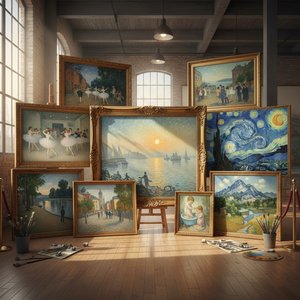
Impresionizmo Šedevrai: 10 Paveikslų, Apibrėžusių Meninę Era | OriginalUniqueArt.com
Atraskite 10 įspūdingiausių impresionizmo šedevrų! Claude Monet, Degas, Renoir ir kiti – meno istorijos perlas. Aliejiniai paveikslai jūsų interjerui. OriginalUniqueArt.com: aukštos kokybės reprodukcijos ir inspiracija namams.
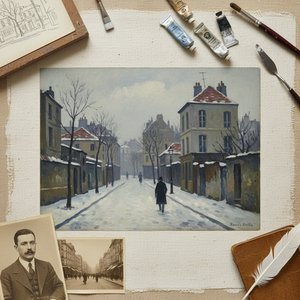
Maurice Utrillo: A Poetic Vision of Parisian Solitude – Life, Style & Legacy
Explore the poignant world of Maurice Utrillo, the master of Parisian cityscapes. Discover his life, distinctive style, and enduring legacy with OriginalUniqueArt – handmade oil reproductions & expert art insights.

Impressionistic Realism's Finest: 10 Masterpieces for Your Home | OriginalUniqueArt
Journey through Impressionistic Realism with 10 iconic masterpieces by Monet, Renoir & Van Gogh. Explore art history, techniques & find museum-quality reproductions for your home at OriginalUniqueArt.com. Discover all masterpieces online!
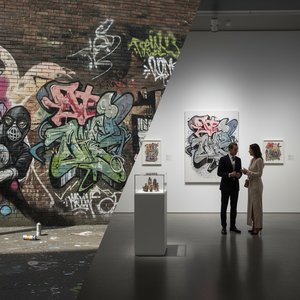
From Walls to Galleries: The Bold Evolution of Street Art and Its Rise into High-End Collectibles
Explore the captivating journey of street art from urban walls to prestigious galleries. Discover how contemporary graffiti has evolved into a high-end collectible movement, redefining modern interior design and global art culture.
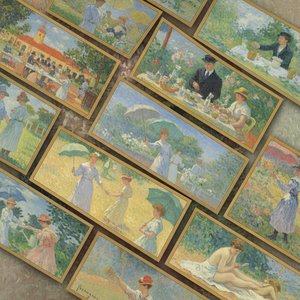
Pierre'Auguste Renoir: 25 Šedevrai, Apšviečiantys Prancūzijos Grožį | OriginalUniqueArt
Atraskite 25 Pierre'Auguste Renoir šedevrus! Impresionizmo meistro paveikslai, kupini šviesos ir grožio. Meno istorija, technikos paslaptys ir įkvėpimas jūsų interjerui. Aukštos kokybės reprodukcijos – OriginalUniqueArt.com
