() ·

Jūsų paties, rankumių darbas

Triptych

Rankų darbo aliejinės reprodukcijos

Rankiniu būdu tapytas aliejus ant droblio jūsų pageidaujamame dydį ir rėmuose – tai mūsų menininkų pagal užsakymą sukurtas darbas. ( Perjungti į spausdinamus版作品 Perejti prie skaitmeninių vaizdų)

Kolekcinio objekto aprašas

Explore Mariotto Albertinelli’s 1500 Triptych: A haunting skull & devotional scenes in monochrome oil on canvas. Renaissance art, memento mori, & a poignant reflection on life.

Autoriaus biografija

Explore Mariotto Albertinelli (1474-1515), a Florentine Renaissance painter known for his collaboration with Fra Bartolomeo & harmonious compositions blending Perugino's grace, Flemish detail, and Leonardo’s sfumato. Discover masterpieces like the Visitation!

nuo ·

1 skyrius

Kokio dydžio turėtų būti?

Slinkite, kad pakeistumėte dydį; kairėje pusėje esančiame paveikslėlyje rodomas tikrasis rėmo plotis. Originalios proporcijų išlaikomos.

Standartinis dydis
pagal užsakymą
CM
INCH

Pasirinkite iš mūsų nustatytų dydžių, atitinkančių originalaus meno kūrinio proporcijas.

plotis
aukštis

Įveskite jums reikiamą plotį ir aukštį, kad paveikslas atitiktų jūsų rėmą ar sieną. Kadangi šis darbas yra rankinio darbo, siekiant išgauti kitokios formos dydį, paveikslas gali būti šiek tiek didesnis (nuo kraštų bus palikta daugiau erdvės) arba mažesnis – pasirinkite jums patogiausią variantą. Prieš pradedant tapyti, atsiųsime jums skaitmeninį maketą patvirtinimui. Šioje puslapio nuotraukoje matomas vaizdas nėra galutinis rezultatas – jį parodys tik sukurtas maketas.

2 skyrius

Kokia būda yra siunčiamas?

Pasirinkite ištempto drobės kraštus

Pasirinkite rėmelį

Corner sample of the WhiteWrap canvas edge finish, stretched on solidus medžio

**Improved version:**
solidus medis bars
Baltas apasutojimas €1
Corner sample of the BlurSideWrap canvas edge finish, stretched on solidus medžio

**Improved version:**
solidus medis bars
Išblėstantis šonas €1
Corner sample of the ExtendedWrap canvas edge finish, stretched on solidus medžio

**Improved version:**
solidus medis bars
Išplėstinis €1
Corner sample of the P118B picture frame: lieto polistirolo detalės, 5 cm wide and 3 cm thick
P118B €10
Corner sample of the P118H picture frame: lieto polistirolo detalės, 5 cm wide and 3 cm thick
P118H €10
Corner sample of the P118W picture frame: lieto polistirolo detalės, 5 cm wide and 3 cm thick
P118W €10
Corner sample of the P438Z picture frame: lieto polistirolo detalės, 5.5 cm wide and 3.5 cm thick
P438Z €10
Corner sample of the P508JH picture frame: lieto polistirolo detalės, 7 cm wide and 3.5 cm thick
P508JH €12
Corner sample of the P508YH picture frame: lieto polistirolo detalės, 7 cm wide and 3.5 cm thick
P508YH €12
Corner sample of the P805H picture frame: lieto polistirolo detalės, 5 cm wide and 3.5 cm thick
P805H €10
Corner sample of the P805Z picture frame: lieto polistirolo detalės, 5 cm wide and 3.5 cm thick
P805Z €10
Corner sample of the P919BZ picture frame: lieto polistirolo detalės, 7 cm wide and 3.5 cm thick
P919BZ €10
Corner sample of the P919G picture frame: lieto polistirolo detalės, 7 cm wide and 3.5 cm thick
P919G €10
Corner sample of the P919XJ picture frame: lieto polistirolo detalės, 7 cm wide and 3.5 cm thick
P919XJ €10
Corner sample of the P959ZH picture frame: lieto polistirolo detalės, 5 cm wide and 3 cm thick
P959ZH €10
Corner sample of the P968JZ picture frame: lieto polistirolo detalės, 6 cm wide and 4 cm thick
P968JZ €12
Corner sample of the W106C picture frame: solidus medžio

**Improved version:**
solidus medis, 5 cm wide and 3 cm thick
W106C €8
Corner sample of the W218G picture frame: solidus medžio

**Improved version:**
solidus medis, 5 cm wide and 3 cm thick
W218G €10
Corner sample of the W218JH picture frame: solidus medžio

**Improved version:**
solidus medis, 5 cm wide and 3 cm thick
W218JH €8
Corner sample of the W218Y picture frame: solidus medžio

**Improved version:**
solidus medis, 5 cm wide and 3 cm thick
W218Y €10
Corner sample of the W307PJ picture frame: solidus medžio

**Improved version:**
solidus medis, 6 cm wide and 3 cm thick
W307PJ €10
Corner sample of the W316G picture frame: solidus medžio

**Improved version:**
solidus medis, 6 cm wide and 3 cm thick
W316G €10
Corner sample of the W316PJ picture frame: solidus medžio

**Improved version:**
solidus medis, 6 cm wide and 3 cm thick
W316PJ €8
Corner sample of the W316Y picture frame: solidus medžio

**Improved version:**
solidus medis, 6 cm wide and 3 cm thick
W316Y €10
Corner sample of the W398PJ picture frame: solidus medžio

**Improved version:**
solidus medis, 5 cm wide and 3 cm thick
W398PJ €8
Corner sample of the W4111J picture frame: solidus medžio

**Improved version:**
solidus medis, 6.5 cm wide and 3.5 cm thick
W4111J €10
Corner sample of the W500HY picture frame: solidus medžio

**Improved version:**
solidus medis, 7 cm wide and 5 cm thick
W500HY €15
Corner sample of the W500JH picture frame: solidus medžio

**Improved version:**
solidus medis, 7 cm wide and 5 cm thick
W500JH €15
Corner sample of the W692G picture frame: solidus medžio

**Improved version:**
solidus medis, 8 cm wide and 4 cm thick
W692G €12
Corner sample of the W849H picture frame: solidus medžio

**Improved version:**
solidus medis, 5 cm wide and 3 cm thick
W849H €8
Corner sample of the W940BG picture frame: solidus medžio

**Improved version:**
solidus medis, 7.5 cm wide and 4.5 cm thick
W940BG €15
Corner sample of the W953PJ picture frame: solidus medžio

**Improved version:**
solidus medis, 6 cm wide and 3.5 cm thick
W953PJ €8
Corner sample of the H24-GOLD picture frame: medžio skulptūra su gipso sluosniu, 10 cm wide and 6 cm thick
H24-GOLD €30
Corner sample of the H24-SILVER picture frame: medžio skulptūra su gipso sluosniu, 10 cm wide and 6 cm thick
H24-SILVER €30
Corner sample of the H36-GOLD picture frame: medžio skulptūra su gipso sluosniu, 15 cm wide and 6.5 cm thick
H36-GOLD €45
Corner sample of the H36-SILVER picture frame: medžio skulptūra su gipso sluosniu, 15 cm wide and 6.5 cm thick
H36-SILVER €45
Rėmo peržiūra
Įrėmintas

Rėmo apvadas: . Bendras dydis su rėmu: .

3 skyrius

Kas jį vaizduoja ir ar turėtų kažkas pasikeisti?

Pavyzdžiai, ką galima pakeisti: pakeisti veidą nuotrauka su klientu; pridėti augintinį (pvz., pakeisti kucingą šuniu); įtraukti paslaptingą žinutę fone; pakeisti fono kraštotvę ar elementus.
Gavus užsakymą, OriginalUniqueArt.com komanda susisieks su klientu el. paštu dėl nurodymų ir pateiks preliminarią maketą.

Pristatymas visame pasaulyje () per 3–4 savaites, o ne įprastai – per 5 savaites. (13 lapkritis). Kokybė lieka nepakeičiama.

4 skyrius

Paskutinės detalės

Pavadinimo plokštelė, kaip muziejuje?

Išgraviruotos bronzinės plokštelės detalės

This elegant plaque features the artist's name and the title of the artwork, finely engraved for a timeless presentation.

It is made from bronze with a refined, elegant finish. The text is precisely laser-engraved for a sharp and permanent result. Measuring 9x2 cm, the plaque is compact yet easy to read. It's built to be durable and scratch-resistant, offering a professional, museum-quality look. Mounting is simple thanks to the included adhesive backing.

Skaidrios akrilo plokštelės informacija

The plaque includes essential engraved details such as the artist's name, the title of the artwork, the date it was created, the type of media used-like oil on canvas or watercolor-a brief description of the piece, and a QR code that links to the complete artwork information.

It is crafted from clear acrylic, offering a sleek, modern appearance. The text is UV-engraved in black to ensure strong visual contrast. With a size of 10x15 cm, it ensures optimal readability. It comes equipped with two metal hooks for secure wall mounting. The plaque is designed to be weather-resistant, making it suitable for various environments, and it includes interactive features that work seamlessly with smartphone scanning.

Juodos akrilo plokštelės informacija

This elegant plaque includes engraved information such as the artist's name, the title of the artwork, the date it was created, the type of media used (like oil on canvas or watercolor), a short description of the artwork, and a QR code for quick access to more information.

The plaque itself is made from refined black acrylic with a premium finish. The text is laser-engraved in white for high contrast and readability. Its size is 10x15 cm, designed to be easy to read. It comes with two metal hooks for professional mounting. The design is sleek and fits any interior style. It is also weather-resistant and durable, with built-in digital integration for mobile compatibility.

Apsauginis lakas?

Kada jums reikia?

5 skyrius

Jūsų paveikslas, tiksliai taip, kaip užsakėte

Triptych

Reprodukcijos technika

Reprodukcijos matmenys

-

Aukščiausios klasės meistras

Daugiau detalių, meistriškumo ir papildomo gamybos laiko

-

Reprodukcijos rėmėjimo parinktys

-

-

Dėl meno kūrinių ar reprodukcijų, kurių bet kuri pusė yra didesnė nei 105 cm (apie 41 inch), rėmas bus siunčiamas kaip išskaidytas surinkimo rinkinys. Šis metodas užtikrina saugų pristatymą ir apsaugo nuo transportavimo metu galimos žalos.

Reikalingas profesionalus surinkimas – tai nėra „pasidaryk pats“ (DIY) produktas.
Rinkinys turi būti surinktas, o drobė išplėsta naudojant patyrį profesionalų rėmininką, medžio klijus (nėra įtraukti į rinkinį), drobės plėšimo kleslę bei presas, kad rėmo rėžiai išliktų tiesūs, kol klijai išdžiūvus. Netinkamas surinkimas arba netolydus drobės įtampa gali negrįžtamai sugadinti meno kūrinį, todėl šie atvejai nėra užtraukiami mūsų garantijos.

  • Į komplektą įeina visi vientisos medienos elementai, tiksliai išpjauti pagal dydį.

  • Surmontinama naudojant pridėtus varžtus bei papildomai reikalingą medžio kliją kampų jungtims, kuris nėra pridėtas ir turi būti parinktas rėmininkui.

  • Reikalingi profesionalūs įrankiai, kurie nėra įtraukti į rinkinį: drobės kėlimo plytelės (stiprintuvai) ir klemiai, laikantys rėmo strygius tiesiu kampu, kol džiūsta lipas.

Svarbu:
Kampų jungtims reikalingi medžio klijai, barams reikia laikyti naudojant presas, kol klijai visiškai išdžiūvės, o surinktam rėmui įtempiamai privilgti būtinos drobės įtempimo plytযুক্ত. Šios priemonės į rinkinį neįtrauktos. Prieš užsakydami šio dydžio rinkinį, rekomenduojame pasimalkoti patyrusiu rėmų meistru.

Pavadinimo lentelė

-

-

Apsauginis lakas

Blizgus lakas (ryškina spalvas, saugo nuo šviesos ir drėgmės)

-

Personalizuoti kūrinį

Ką galima pakeisti (pavyzdžiui): pakeisti veidą klientui skirta nuotrauka; pridėti augintinį (pvz., katę pakeisti šuniu); įtraukti paslėptą žinutę fone; pakeisti fono kraštovaizdį ar elementus.

-

Skubiai

Pristatymas visame pasaulyje () per 3–4 savaites, o ne įprastai – per 5 savaites. (13 lapkritis). Kokybė lieka nepakeičiama.

-

Skubus pristatymas

Pristatymas visame pasaulyje () per 5 weeks. (20 lapkritis).

Įskaičiuota

Bendroji kaina

€ 268

Visos kainos suma € 268

Stiklo variantas prieinamas tik pasirinkus dydį iki 110 cm

Pridedama prie kiekvieno užsakymo

  • Nemokamas greitasis pristatymas visame pasaulyje
  • Aukštos kokybės lininis drobė
  • Pilnas siuntimo draudimas
  • Muitinės mokesčių grąžinimo garantija
  • Tikro spalvų atitikimo garantija
  • 100 dienų grąžinimo politika (tik esant įtaigoms)
  • 100% pinigų grąžinimo garantija
  • Nuolaida dideliems užsakymams

A Meditation on Mortality: Mariotto Albertinelli’s Triptych (c. 1500)

Mariotto Albertinelli's "Triptych," a remarkably preserved example of early Renaissance artistry, offers far more than a simple religious depiction; it is a profound meditation on the human condition – a stark reminder of our fleeting existence rendered with unsettling beauty and meticulous detail. Executed around 1500, this triptych, measuring 21 x 30 cm, reveals Albertinelli’s mastery of color, composition, and symbolism, hallmarks of his Florentine training and the burgeoning artistic currents of the era. The work's immediate impact is undeniably driven by its central element: a meticulously rendered skull presented as a still life against a somber backdrop. This isn’t merely a morbid fascination; it’s a deliberate invocation of *memento mori*, a tradition deeply rooted in Christian thought, reminding viewers of the inevitability of death and urging contemplation on spiritual matters.

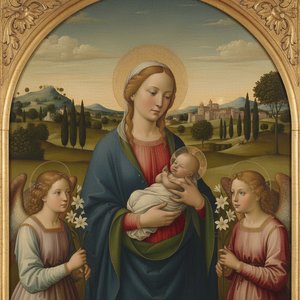
  • Subject Matter: The triptych unfolds with layers of religious iconography. When closed, the tabernacle displays an Annunciation rendered in monochrome, a poignant contrast to the vibrant scenes revealed when opened.
  • Central Panel: The Virgin enthroned nursing the Child dominates the central panel, embodying maternal grace and divine protection.
  • Side Panels: Saint Catherine of Alexandria, kneeling on her spiked wheel – a testament to unwavering faith – and Saint Barbara, kneeling beside her executioner father Dioscurus, create a powerful narrative of martyrdom and sacrifice.

Albertinelli’s technical skill is immediately apparent in the painting's construction. Executed in oil paints on canvas, the artist demonstrates a sophisticated understanding of *chiaroscuro*, utilizing subtle gradations of light and shadow to sculpt the skull and imbue it with a startling sense of volume and realism. The brushwork, though visible, is expertly controlled, contributing to a polished finish that speaks to Albertinelli’s dedication to detail. The geometric shapes – the tabletop, the skull itself, the curved shadow – are rendered with precision, creating a stable and grounded composition. The muted color palette—browns, ochres, and blacks—further emphasizes the solemnity of the subject matter.

Symbolism and Narrative

Beyond its immediate visual impact, the "Triptych" is rich in symbolic meaning. The skull, as a central motif, transcends mere representation; it functions as a potent symbol of mortality, echoing themes prevalent throughout Western art history. The inclusion of scenes depicting martyrdom – Catherine’s ordeal and Barbara’s plight – reinforces the Christian narrative of sacrifice and redemption. Dioscurus, Barbara's father, acting as her executioner, adds another layer of complexity to the scene, highlighting the tragic consequences of religious persecution. The landscape elements, featuring further depictions of saintly deaths, serve not just as background but as integral components of the overall theological message.

Historical Context and Artistic Influences

Created around 1500, this triptych represents a pivotal moment in Mariotto Albertinelli’s career. Born in Florence in 1474, he benefited from the artistic ferment of the Renaissance, absorbing influences from masters such as Perugino, Piero di Cosimo, and even the Flemish painters whose techniques – particularly their mastery of detail and use of light – profoundly shaped his style. The abbreviation “MD” on the frame likely indicates the year of creation, solidifying its place within a significant period of artistic innovation. Albertinelli’s joint studio with Fra Bartolomeo further enriched his artistic development, exposing him to diverse perspectives and techniques.

Emotional Impact and Collectible Value

The "Triptych" is not simply a beautiful artwork; it's an emotionally resonant piece that invites contemplation on profound themes. Its somber mood, coupled with the arresting image of the skull, evokes a sense of melancholy and reminds us of our own mortality. This triptych by Mariotto Albertinelli represents a rare opportunity to own a significant work from one of Florence’s most accomplished Renaissance painters. Its size (21 x 30 cm) makes it suitable for a variety of settings, while its historical importance and artistic merit ensure its enduring value as an investment piece and a source of inspiration.

Klausimai ir atsakymai

Kokios nacionalinės kilmės šaknys slypi „Triptych“ Early Renaissance?

Early Renaissance stiliaus kūrinys „Triptych“ sukurtas menininko, gimęs Italy.

Ar „Triptych“ saugoma kūrijėjo šalyje?

Ne – kūrinys saugomas užsienyje. kūrinys „Triptych“ saugomas इटली, o Mariotto Albertinelli gimė Italy.

Ar galėčiau „Triptych“ peržiūrėti kaip pilno ekrano nuotraukų rodyklę?

„Triptych“ diapora prieinama puslapio Slaydšou kūrinio apžvalgos skiltyje.

Daugiau informacijos apie šį paveikslą

Peržiūrėti realaus dydžio版 Peržiūrėti AR realybėje Perjungti į spausdinamus版作品 Perejti prie skaitmeninių vaizdų Pasidalinti
Išsamiau Vadovas Pridėti į mėgstamiausius Atsisiųsti Panašūs eksponatai Rentgeno spindulių nuotrauka Automatinė diorama 问答 Statistika

Skaičiais

  • 1500metai, kai buvo nupiežta
  • 29pasirinkimo rėmai
  • standartinės dydžio, savo proporcijomis
  • 5savaitės sugryžti ir pristatyti
Mariotto Albertinelli

Mariotto Albertinelli

1474 - 1515, Italy

Trumpa informacija apie Mariotto Albertinelli

  • Full Name: Mariotto Albertinelli
  • Nationality: Italian
  • Date Of Birth: 1474
  • Date Of Death: 1515
  • Place Of Birth: Florence, Italy
  • Notable Artworks:
    • Visitation (1503)
    • Scenes from Genesis panels
  • Artistic Movement Or Style: Florentine Renaissance
  • Artists Who Influenced This Artist:
    • Perugino
    • Piero di Cosimo
    • Lorenzo di Credi
    • Leonardo da Vinci
    • Fra Bartolomeo
  • Artists Or Movements Influenced By This Artist:
    • Jacopo da Pontormo
    • Giuliano Bugiardini

Autoriaus biografija

Mariotto Albertinelli: A Florentine Renaissance Painter

  • Born: Florence, Italy (1474)
  • Died: 1515

Early Life and Training

Mariotto di Bigio di Bindo Albertinelli was born in Florence as the son of a gold beater. He was an only child, and his mother died when he was just five years old. Initially trained as a gold beater until the age of 12, he then became a pupil of Cosimo Rosselli, sharing studies with Fra Bartolomeo. The close friendship between Albertinelli and Fra Bartolomeo led them to establish a joint studio in Florence by 1494.

Artistic Development and Influences

Albertinelli’s style demonstrates the influence of several prominent artists including Perugino, Piero di Cosimo, Lorenzo di Credi, and Flemish painters. His early works, produced independently of Fra Bartolomeo, are stylistically distinct and reveal a sophisticated taste for detail. Piero di Cosimo introduced him to Flemish techniques, enriching his artistic palette. A period of independence followed Fra Bartolomeo’s entry into the Dominican order in 1500, allowing Albertinelli to develop his own voice while still maintaining a connection to his former mentor's style.

Major Works and Collaborations

  • The Visitation (1503): Housed in the Uffizi Gallery, this is considered Albertinelli’s masterpiece. It depicts the biblical story of Elizabeth visiting Mary, showcasing his skill in composition, narrative depiction, and blending influences from Fra Bartolomeo and Perugino.
  • Altarpiece for the Chapel of Congregazione di San Martino: This altarpiece includes panels depicting the Visitation, Annunciation, Nativity, and Circumcision. It demonstrates Albertinelli's ability to create a cohesive narrative across multiple panels.
  • Kress Tondo: Initially attributed solely to Fra Bartolomeo, it is now believed that Albertinelli used his partner’s cartoon in its creation, highlighting their collaborative relationship.
  • Annunciation (1511): A joint work with Fra Bartolomeo, showcasing a period of stylistic convergence and collaboration.

Historical Significance and Legacy

Albertinelli's artistic career reflects the dynamic shifts within Florentine painting during the High Renaissance. His ability to synthesize diverse influences—Perugino’s grace, Flemish detail, and Leonardo’s sfumato technique—created a unique style that contributed to the richness of Florentine art. He trained notable artists such as Jacopo da Pontormo, Innocenzo di Pietro Francucci da Imola, and Giuliano Bugiardini, ensuring his influence extended beyond his own works. Despite facing financial difficulties later in life, Albertinelli left behind a body of work that demonstrates his skill and artistic versatility, solidifying his place within the Florentine Renaissance.

Trumpa informacija

  • Medium: Oil on canvas
  • Title: Triptych
  • Movement: Renaissance
  • Year: 1500
  • Artist: Mariotto Albertinelli