

 Peržiūrėti realybėje
 Pasidalinti
 Dalintis
 Išsamiau

 Atsisiųsti
 Panašūs eksponatai
 Rentgeno nuotrauka
 Automatinė diorama
 Statistika
Portrait of Anna Codde
 Oil On Canvas
- WallArt
- Renaissance
 1529
1529 86.0 x 66.0 cm
 Rijksmuseum
 Skaityti daugiau
Rankų darbo aliejinės reprodukcijos
Rankiniu būdu tapytas aliejus ant droblio jūsų pageidaujamame dydį ir rėmuose – mūsų menininkų darbas pagal užsakymą. ( Perejti prie spausdinimo Perejti prie skaitmeninio vaizdo)




P118B $10

P118H $10

P118W $10

P438Z $10

P508JH $12

P508YH $12

P805H $10

P805Z $10

P919BZ $10

P919G $10

P919XJ $10

P959ZH $10

P968JZ $12

W106C $8

W218G $10

W218JH $8

W218Y $10

W307PJ $10

W316G $10

W316PJ $8

W316Y $10

W398PJ $8

W4111J $10

W500HY $15

W500JH $15

W692G $12

W849H $8

W940BG $15

W953PJ $8




Pasirinkite iš mūsų nustatytų dydžių, atitinkančių originalaus meno kūrinio proporcijas.

Galite įvesti savo matmenis, kad jie atitiktų konkretų rėmą ar erdvę. Jei pasirinktas dydis neatitinka originalaus paveikslėlio proporcijų, mes arba apkropsime meno kūrinį, arba papildysime tapybą rankomis dažytい elementais. Prieš pradėdami gamybą, jūsų patvirtinimui atsiųsime skaitmeninį maketą.
Atkreipkite dėmesį, kad ekrane rodomas vaizdas neatspindi tikrojo apkarpymo ar papildymo. Tik maketas tiksliai parodys galutinę kompoziciją.
Nors galima rinktis ir individualius dydžius, rekomenduojame pasirinkti matmenis iš nustatytos sąrašo, kad būtų išlaikytos originalios proporcijos.
Gavus užsakymą, OriginalUniqueArt.com komanda susisieks su klientu el. paštu dėl instrukcijų ir pateiks maketo pavyzdį.
Pristatymas visame pasaulyje () per 3–4 savaites, o ne įprastai – per 5 savaites. (17 rugsėjis). Kokybė lieka nepakeičiama.

Nemokamas greitasis pristatymas visame pasaulyje

Aukštos kokybės lininis drobė

Pilnas siuntimo draudimas

Muitinės mokesčių grąžinimo garantija

Tikro spalvų atitikimo garantija

100 dienų grąžinimo politika (tik esant įtaigoms)

100% pinigų grąžinimo garantija

Nuolaida už kelias reprodukcijas
 Stiklo variantas prieinamas tik pasirinkus dydį iki 110 cm

Portrait of Anna Codde
Reprodukcijos technika
Reprodukcijos matmenys
-


Galutinė kaina
$ 300
A Window into the Dutch Renaissance: The Portrait of Anna Codde
Maerten van Heemskerck’s “Portrait of Anna Codde,” painted in 1529, isn't merely a likeness; it’s a meticulously crafted tableau vivant – a snapshot of life within the burgeoning world of early Dutch Renaissance society. More than just a portrait, this work offers a rare glimpse into the domestic sphere, revealing a woman engaged in a timeless activity: spinning wool. The scene unfolds with quiet dignity and understated elegance, capturing not only Anna’s physical appearance but also her role as a skilled artisan and devoted wife – a common yet increasingly valued ideal within the Dutch merchant class of the era.
The painting immediately draws the eye to Anna herself, seated comfortably in a simple chair. Her long, flowing hair is partially arranged, suggesting a deliberate effort towards presentation, while her gaze is direct and engaging, inviting the viewer into her world. The spindle she holds isn’t just an object of craft; it's a symbol of domesticity, industry, and the woman’s vital contribution to the household economy. Her dress, though modest in style, speaks volumes about her status – a subtle indication of wealth and refinement. Notice the careful attention to detail in the rendering of her hands, demonstrating Heemskerck’s mastery of capturing texture and form.
The Painter's Palette: Technique and Style
Heemskerck’s style is immediately recognizable as a masterful blend of Italian Renaissance ideals with distinctly Dutch sensibilities. The influence of Jan van Scorel, his former teacher, is evident in the use of light and shadow – a technique known as *chiaroscuro* – which creates a sense of depth and volume within the composition. However, Heemskerck departs from the purely idealized forms often found in Italian portraits, opting for a more naturalistic approach that reflects the growing interest in portraying individuals with greater realism.
The painting’s color palette is restrained yet sophisticated, dominated by earthy tones – browns, ochres, and muted greens – which evoke the textures of the wool and the surrounding domestic environment. The background, featuring a chair and a clock on the wall, provides context without overwhelming the central figure. Heemskerck's skill lies not just in depicting individual features but also in creating a harmonious whole, where every element contributes to the overall narrative.
A Portrait of an Era: Historical Context
“Portrait of Anna Codde” was painted during a period of significant social and economic transformation in the Netherlands. The rise of merchant families like the Coddes fueled a burgeoning economy and a growing emphasis on wealth, status, and family lineage. Portraits became increasingly important as a means of documenting these achievements and solidifying one’s place within society. The inclusion of domestic scenes like this one was not uncommon; it served to portray the subject as both a successful businesswoman and a devoted wife – qualities highly valued in 16th-century Dutch culture.
Furthermore, the painting reflects the growing interest in secular portraiture during this time. While religious subjects remained important, artists began experimenting with depicting everyday life and capturing the personalities of their patrons. The meticulous detail and realistic portrayal of Anna Codde demonstrate Heemskerck’s commitment to portraying his subject with honesty and dignity.
Symbolism and Emotional Resonance
Beyond its technical merits, “Portrait of Anna Codde” is rich in symbolism. The spinning wheel represents not only her craft but also the woman's role as a provider for her household – a vital contribution to the family’s well-being. The clock on the wall serves as a reminder of time and the passage of life, subtly emphasizing the importance of cherishing each moment. The birds in the background, one near the top right corner and another towards the bottom left of the painting, may represent good fortune or simply add to the idyllic scene.
Ultimately, “Portrait of Anna Codde” is a poignant reminder of a bygone era – a time when domesticity was intertwined with prosperity and artistry. It’s a testament to Heemskerck's skill as a painter and his ability to capture not just a likeness but also the essence of a human being within her historical context. Reproductions of this captivating work offer a beautiful window into the heart of the Dutch Renaissance.
Autoriaus biografija
ankstyvasis gyvenimas ir mokslas
maerten van heemskerck, iškilmingas olandų portretų ir religinių temų paveikslų meistras, gimė 1498 m. birželio 1 dieną Heemskerko kaime, Šiaurės Hollandijoje. Jo meninė kelionė prasidėjo Haarleme po cornelius willemsz vadovavimu, vėliau sekant trumpą laiką Delft'e dirbant su jan lucasz. Galiausiai jis tapo jan van scorel mokinio, perėmimdamas savo mokytojo itališko įtakos stilių.karjeros iškilmės
- maerten van heemskerck kūrybai būdingas inovatyvus olandų ir italių įtakų derinys, kaip matoma jo garsiajame šeimyniniame portretė, kuris laikomas pirmakaukiu ilgos olandų šeimyninių paveikslų serijosje.
- jo bendradarbiavimas su antonio da sangallo the younger, battista franco ir francesco de' rossi (il salviati) romoje dekoruojant porta san sebastiano – triumfo arką garbinti karaliui karoliui V – demonstruoja jo gebėjimą greitai ir meistriškai kurti scenografinius paveikslus.
- heemskerck'o klasikinės skulptūros ir architektūros piešiniai, dabar saugomi dviejuose eskizečiuose kupferstichkabinett berlin, įtraukia foy skelbiamą jo meistriškumą įbendiant itališko meno esmę.
pastebimieji darbai ir palikimas
- darczyja ir šv. marija magdalena (žiūrėti OriginalUniqueArt)
- чему viržinė ir šv. jonas evangelistas (žiūrėti OriginalUniqueArt)
- samsonas griaujas st
išvados
maerten van heemskerck gilus poveikis menui yra neabejingas. jo darbai, dabar esantys įtraukti į įvairius muziejų kolekcijas, įskaitant rijksmuseum, ir toliau įkvepia tiek menininkus, tiek meno entuziastus. norėdami tyrinėti daugiau jo šedevrų, apsilankykite maerten van heemskerck puslapyje OriginalUniqueArt. siekdami gilesnio jo gyvenimo ir kūrybos supratimo, skaitykite jo biografiją wikipedia.
Maertenas Van Heemskerckas
1498 - 1574 , Nyderlandai
Trumpa informacija
- Artistic Movement Or Style: Mannerizmas
- Artists Who Influenced This Artist:
- Jan van Scorel
- Antonio da Sangallo jaunesysis
- Date Of Birth: 1498 m. birčio 1 d.
- Date Of Death: 1574 m. spalio 1 d.
- Full Name: Maerten Jacobsz van Heemskerck
- Nationality: Olandas
- Notable Artworks:
- Christo miravimas ant mirušio Kristaus
- Pieter Jan Foppeszoon ir jo šeima
- Kristus kaip Sielos skausčių žmogus
- Place Of Birth: Heemskerk, Nyderlandai
Susiję straipsniai

Rembrandto van Rijn šedevrai: 25 paveikslai, įkvėpę amžius | OriginalUniqueArt
Atraskite 25 įspūdingiausius Rembrandto paveikslus! Išsami istorija, meno technikos ir simbolika. Olandų baroko šedevrai jūsų interjerui – aukštos kokybės reprodukcijos OriginalUniqueArt.com. Explore the full collection online!

Jan van Goyen: Master of Dutch Landscape & Atmospheric Perspective
Discover Jan van Goyen, the master of Dutch landscape painting. Explore his subtle technique, atmospheric realism & lasting influence on art history. Learn about this 17th-century pioneer at OriginalUniqueArt.
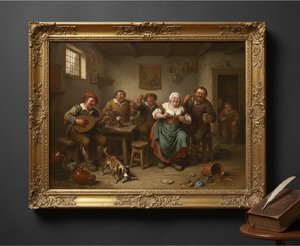
Adriaen van Ostade: A Master of Dutch Genre Painting & Social Commentary
Explore the life & work of Adriaen van Ostade, a leading Dutch Golden Age painter. Discover his realistic genre scenes, social commentary, and lasting influence on art history. Learn more at OriginalUniqueArt.

Willem van de Velde the Elder: Master of Maritime Painting & Chronicler of the Dutch Golden Age
Discover the captivating maritime paintings of Willem van de Velde the Elder, a master chronicler of the Dutch Golden Age. Explore his unparalleled realism and lasting influence on naval art history.

Maerten van Heemskerck: Bridging Mannerism & Renaissance Ideals
Explore the captivating world of Maerten van Heemskerck, a pivotal Dutch Renaissance painter bridging Mannerism & Italian influence. Discover his masterpieces and legacy with OriginalUniqueArt.