

 Peržiūrėti realaus dydžio版
 Siųsti
 Dalintis
 Išsamiau
 Vadovas

 Atsisiųsti
 Panašūs eksponatai
 Rentgeno spindulių nuotrauka
 Diaporama
 Statistika
Ludwig van Beethoven,


 Rodyti daugiau
Giclée / Meno spausdinimas
Muziejų lygio „giclée“ arba drobos spausdinimas: greita gamyba ir lankstios apdailos parinktys. ( Pirkti rankomis tapytą reprodukciją Perejti prie skaitmeninių vaizdų)




P118B €10

P118H €10

P118W €10

P438Z €10

P508JH €12

P508YH €12

P805H €10

P805Z €10

P919BZ €10

P919G €10

P919XJ €10

P959ZH €10

P968JZ €12

W106C €8

W218G €10

W218JH €8

W218Y €10

W307PJ €10

W316G €10

W316PJ €8

W316Y €10

W398PJ €8

W4111J €10

W500HY €15

W500JH €15

W692G €12

W849H €8

W940BG €15

W953PJ €8




Pasirinkite iš mūsų nustatytų dydžių, atitinkančių originalaus meno kūrinio proporcijas.

Galite nurodyti savo matmenis, kad vaizdas atitiktų konkretų rėmą ar erdvę. Jei pasirinktas dydis nesutaps su originalaus paveikslėlio proporcijomis, mes arba apkirpsime kūrinį, arba išplėsime vaizdą naudojant veideliu atspindėtą arba vientisą šoną. Skaitmeninis maketas bus išsiųstas jums patvirtinti prieš pradedant gamybą.
Atkreipkite dėmesį, kad ekrane matomas vaizdinys neatspindi tikrojo apkirpimo ar išplėtimo. Tik maketas tiksliai parodytų galutinę kompoziciją.
Nors galima rinktis ir individualius dydžius, rekomenduojame pasirinkti vieną iš išanksti nustatytų matmenų, kad būtų išlaikytos originalios proporcijos.
Pristatymas visame pasaulyje () per 2 weeks, o ne įprastas 4/5 savaičių laikotarpis. (27 rugsėjis)

Nemokamas greitasis pristatymas visame pasaulyje

Aukštos kokybės lininis drobė

Pilnas siuntimo draudimas

Muitinės mokesčių grąžinimo garantija

Tikro spalvų atitikimo garantija

100 dienų grąžinimo politika (tik esant įtaigoms)

100% pinigų grąžinimo garantija

Nuolaida dideliems užsakymams
 Stiklo variantas prieinamas tik pasirinkus dydį iki 110 cm

Ludwig van Beethoven,
Giclée / Meno spausdinimas
Reprodukcijos dydis
-


Visų pasirinktų variantų kaina
€ 69
A Window Into Genius: Examining Ludwig van Beethoven’s ‘Beethoven’ Manuscript
Within the realm of classical music, few figures command as much reverence and enduring fascination as Ludwig van Beethoven. This meticulously reproduced manuscript, titled “Ludwig van Beethoven,” offers a rare and intimate glimpse into the creative process of one of history's most transformative composers. More than just musical notation, it’s a tangible artifact—a weathered testament to years of dedication, struggle, and unparalleled artistic vision. The image presented here captures a close-up view of an aged sheet of paper, dominated by densely packed notes, symbols, and textual annotations, hinting at the complex intellectual landscape from which this masterpiece emerged.
The paper itself speaks volumes about its history. Its rough texture, marked with creases and stains, immediately conveys a sense of authenticity and time’s passage. These imperfections aren't flaws; they are evidence of countless readings, revisions, and perhaps even the occasional spilled ink—each mark contributing to the manuscript’s unique character. The vertical and horizontal lines of the staff create a framework for the intricate musical language, while the handwritten elements – likely Beethoven’s own annotations – add layers of personal reflection and artistic intent. The composition is deliberately restrained, focusing entirely on the core subject: the music itself, rather than extraneous details.
Decoding the Technique and Historical Context
This manuscript exemplifies the conventions of classical musical notation, utilizing established systems for representing pitch, rhythm, dynamics, and articulation. The meticulous detail in each note—the precise placement of rests, the subtle variations in duration—reflects Beethoven’s unwavering commitment to accuracy and clarity. The date, 1817, places this work within a pivotal period in Beethoven's life – a time marked by increasing deafness and a profound shift in his musical style. It was during this era that he began to move away from the strictures of the Classical era, experimenting with new harmonic structures and dramatic forms, ultimately paving the way for the Romantic movement.
The manuscript’s creation is inextricably linked to Beethoven's personal journey. His struggles with hearing loss profoundly impacted his compositional process, forcing him to rely increasingly on memory and intuition. This piece, therefore, can be interpreted as a deliberate act of self-expression—a way for the composer to translate his inner world into a tangible form. The meticulousness of the notation suggests an intense focus and a desire to capture every nuance of his musical ideas.
Symbolism and Emotional Resonance
Beyond its technical aspects, the manuscript carries significant symbolic weight. The aged paper represents the passage of time and the enduring legacy of Beethoven’s work. The handwritten annotations hint at the composer's intellectual process—his struggles, his insights, and his unwavering determination to express himself through music. The very act of examining this document invites us to connect with Beethoven on a deeply personal level, fostering an appreciation for his genius and resilience.
The image evokes a sense of quiet contemplation – a feeling of being transported back in time to witness the birth of a musical masterpiece. It’s a reminder that art is not merely about aesthetics; it's about human experience—about the triumphs, the challenges, and the profound emotions that shape our lives. This reproduction offers more than just an image; it provides a portal into the mind of one of history’s greatest composers.
Resources for Further Exploration
- Beethoven-Haus Bonn: Explore Beethoven's birthplace and delve deeper into his life and music at the Beethoven-Haus in Bonn, a UNESCO World Heritage site.
- Ludwig van Beethoven (Artist Database): Discover more about Beethoven's life and career on ArtNet, including biographical information and images of his works.
- Beethoven’s Missa Solemnis (Wikipedia): Explore the monumental “Missa Solemnis,” a cornerstone of Beethoven's late-period output.
Consider commissioning a high-quality reproduction to add a touch of timeless elegance and intellectual depth to your home or office. Each piece is meticulously crafted to capture the essence of this remarkable manuscript, ensuring that you own a tangible connection to one of music’s most enduring legacies.
Autoriaus biografija
ankstyvasis gyvenimas ir muzikiniai pradžiai
ludwig van beethoven, garsus vokiečių kompozitorius ir pianistas, gimė 1770 m. Bonde, Vokietijoje. Rodydamas muzikinį talentą jau mažame amžiuje, jis pradėjo mokytis muzikos pas įvairius mokytojus prieš persikeldamas į Vieną, kur praleis didžiąją savo gyvenimo dalį.muzika ir inovacijos bei klaudas
nepaisant to, kad didžiąją savo karjeros dalį kietėms išklausymas, beethovenas toliau kūrė vienus ikoniniškiausių klasikinės muzikos kūrinių, įskaitant 9-ąją simfoniją ir mėnulio šviesos sonatą. Jo inovatyvios kompozicijos sujungė vokalus ir instrumentus, sukurdamos unikalią garso tekstūrą, kuri šimtmečius daro įtaką nesuskaičiuojamiems muzikantams.svarbiausi kūriniai ir palikimas
kai kurie žinomiausi beethoveno darbai apima:- sonatą fortepionui ir violončeliui (A dur) op. 69, 1-ąjį kūrinį (galima rasti OriginalUniqueArt.com svetainėje)
- beethoveno Missa Solemnis manuskriptą (galima peržiūrėti wikipedia)
- tris opus 1 fortepiono sonatas, kurias remė princas karl alois lichnowsky
įtaka ir reputacija
didžiausias beethoveno pasiekimas buvo instrumentinė muzika, iki tada laikyta prastesne nei vokalinė, pakelti į aukščiausią meno lygmenį. jo įtaka klasikinės muzikos istorijai yra neįvairinama, o jo kūriniai užima vieną svarbiausių vietų repertuare, būdamas dažniausiai atlikiami pasaulyje. ištraukite daugiau beethoveno darbų OriginalUniqueArt.com: ludwig van beethoven | 30 paveikslų sužinokite daugiau apie beethoveno gyvenimą ir muziką wikipedia: ludwig van beethoven - wikipedia
Ludwigas Van Beethovenas
1770 - 1827 , Vokietija
Trumpa informacija apie kūrėją
- Artistic Movement Or Style: Klasicizmas, Romantizmas
- Artists Or Movements Influenced By This Artist:
- Johannes Brahms
- Robert Schumann
- Artists Who Influenced This Artist:
- Franz Joseph Haydn
- Christian Gottlob Schulze
- Date Of Birth: 1770 m., Bonn, Vokietija
- Date Of Death: 1827 m., Viena, Austrija
- Full Name: Ludwig van Beethoven
- Nationality: Vokietis
- Notable Artworks:
- Mėnulio šviesos sonata
- 9-oji simfonija
- Place Of Birth: Bonn, Vokietija
Susiję straipsniai
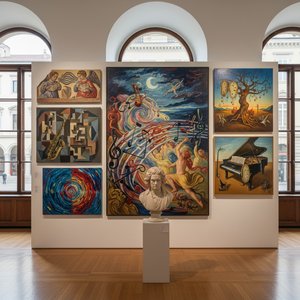
Harmonies on Canvas: Exploring the Visual Representation of Music in Art History
Explore the fascinating history of music's visual representation in art! From ancient symbolism to modern abstraction, discover how artists have captured sound and emotion on canvas. Expert insights & stunning examples.

Neo-Classicism's Greatest Hits: 10 Masterpieces for Your Home |
Journey through Neo-Classicism's finest! Explore 10 iconic masterpieces by David, Ingres & Canova. Discover art history, techniques & timeless beauty – perfect for inspiring your home decor. Find museum-quality reproductions at
The Enduring Legacy of Classicism: Principles, Evolution & Influence in Western Art
Explore the enduring legacy of Classicism in Western art! Discover its historical context, key principles, iconic masterpieces & lasting influence. Learn about Renaissance and Neoclassical movements with OriginalUniqueArt.
Timeless Resonance: Exploring Classic Vibe in Art – A Historical & Aesthetic Analysis
Explore the rich history & enduring aesthetic of Classicism art! Discover key movements, iconic artists like Raphael & David, and its lasting influence on Western art. Deepen your appreciation today.
The Enduring Legacy of Classical Style: Form, Narrative & Influence in Art
Explore the enduring legacy of classical art – from ancient Greece & Rome to Neoclassicism. Discover key artists, philosophical roots & build a timeless collection with OriginalUniqueArt's expert guidance.