Peržiūrėti realaus dydžio版
 Siųsti
 Dalintis
 Išsamiau
 Vadovas

 Atsisiųsti
 Panašūs eksponatai
 Rentgeno spindulių nuotrauka
 Diaporama
 Statistika
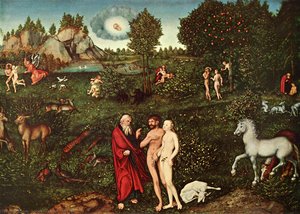
The Paradise
 Aliejus ant plokštės
- German Renaissance
 1530
1530 81.0 x 114.0 cm
 Kunsthistorisches Museum
 Rodyti daugiau
Giclée / Meno spausdinimas
Muziejų lygio „giclée“ arba drobos spausdinimas: greita gamyba ir lankstios apdailos parinktys. ( Pirkti rankomis tapytą reprodukciją Perejti prie skaitmeninių vaizdų)




P118B €10

P118H €10

P118W €10

P438Z €10

P508JH €12

P508YH €12

P805H €10

P805Z €10

P919BZ €10

P919G €10

P919XJ €10

P959ZH €10

P968JZ €12

W106C €8

W218G €10

W218JH €8

W218Y €10

W307PJ €10

W316G €10

W316PJ €8

W316Y €10

W398PJ €8

W4111J €10

W500HY €15

W500JH €15

W692G €12

W849H €8

W940BG €15

W953PJ €8




Pasirinkite iš mūsų nustatytų dydžių, atitinkančių originalaus meno kūrinio proporcijas.

Įveskite jums reikiamą plotį ir aukštį, kad atvaizdas derėtų prie jūsų rėmo ar sienos. Spausdiną galima tik sumažinti, bet nepadidinti virš originalaus paveikslėlio dydžio, todėl keičiant proporcijas, dalis vaizdo prarandama. Prieš spausdinimą atsiųsime jums skaitmeninį maketą patvirtinimui. Šioje puslapio nuotraukoje matomas pjūvis nėra tikslus – jį rodo tik maketas.
Pristatymas visame pasaulyje () per 2 weeks, o ne įprastas 4/5 savaičių laikotarpis. (21 spalis)

Nemokamas greitasis pristatymas visame pasaulyje

Aukštos kokybės lininis drobė

Pilnas siuntimo draudimas

Muitinės mokesčių grąžinimo garantija

Tikro spalvų atitikimo garantija

100 dienų grąžinimo politika (tik esant įtaigoms)

100% pinigų grąžinimo garantija

Nuolaida dideliems užsakymams
 Stiklo variantas prieinamas tik pasirinkus dydį iki 110 cm

The Paradise
Giclée / Meno spausdinimas
Reprodukcijos dydis
-


Visų pasirinktų variantų kaina
€ 70
A Renaissance Tableau of Divine Grace: Exploring "The Paradise"
Lucas Cranach the Elder’s “The Paradise,” painted in 1530, isn't merely a depiction of a biblical scene; it’s a carefully constructed dialogue between faith, mythology, and the burgeoning anxieties of the Reformation. Housed within the Kunsthistorisches Museum in Vienna, this oil-on-panel masterpiece transcends its religious subject matter to become a profound meditation on humanity’s relationship with God, temptation, and redemption. Cranach masterfully blends the formality of Northern Renaissance portraiture with the vibrant color palette and dynamic composition characteristic of his era, creating an image that simultaneously invites contemplation and draws the viewer into its intricate narrative.

At the heart of “The Paradise” stands a striking figure: a man, clad in arresting crimson robes, holding a child nude against his chest. This central scene immediately commands attention, drawing us into a moment of profound intimacy and vulnerability. The red, a color often associated with royalty, sacrifice, and divine authority, elevates this father-son tableau to a position of symbolic importance. Surrounding them is a carefully orchestrated gathering – kneeling figures, standing attendants, and even a powerful horse positioned on the right, adding an element of dynamism and perhaps hinting at earthly power and dominion. Cranach’s skill lies not just in rendering individual forms with meticulous detail but also in creating a palpable sense of atmosphere; the lighting, the positioning of the figures, all contribute to a feeling of solemn reverence.
Symbolism Woven into the Fabric of Faith
Beyond its immediate depiction of Adam and Eve’s expulsion from Paradise, “The Paradise” is rich in symbolic layers. The horse, frequently associated with pagan deities like Mars, can be interpreted as a reminder of humanity's fallen state – a connection to earthly desires and temptations that led to their expulsion from Eden. The figures kneeling represent the faithful, seeking solace and guidance within the divine realm. Cranach subtly incorporates elements of classical mythology, suggesting a continuity between the biblical narrative and the broader human story. The very act of holding the child is laden with meaning: it represents both the promise of new life and the responsibility of nurturing faith – a theme central to the Reformation’s emphasis on personal piety.
Technique and Artistic Innovation
Cranach's mastery of oil paint on panel is evident in every brushstroke. The rich, layered textures, the subtle gradations of color, and the remarkable detail with which he renders fabrics and skin tones demonstrate his technical virtuosity. He was a pioneer in utilizing this medium to achieve both luminous effects and intricate realism. Cranach’s ability to balance detailed observation with expressive gesture is particularly noteworthy; the figures are not merely representations but seem imbued with genuine emotion. The composition itself, carefully balanced and meticulously arranged, reflects Cranach's deep understanding of perspective and his desire to create a visually compelling and intellectually stimulating work.
A Legacy of Religious Art and Reformation
“The Paradise” stands as a pivotal work in Lucas Cranach the Elder’s oeuvre and a significant example of German Renaissance art. It reflects the complex religious and political landscape of his time, embodying both Catholic tradition and the emerging Protestant ideals. Cranach's willingness to engage with the Reformation through his art cemented his place as a key figure in shaping the visual language of the era. Today, reproductions of “The Paradise” offer a captivating glimpse into this pivotal moment in history, inviting viewers to contemplate timeless themes of faith, temptation, and redemption – themes that continue to resonate powerfully across centuries.
问答 (or more naturally for a website heading): Klausimai ir atsakymai
Kokie yra „The Paradise“ reprodukcijos teisės Kunsthistorisches Museum kolekcijoje?
„The Paradise“, autorius – Lukaso Kranacho Vyresniojo Vardas autoriškos teisės statusas yra aiškus: kūrinys priklauso pripa принадле belongs to the public domain – jo autorinė teisė pasibaigusi. Jo buvimas Kunsthistorisches Museum šio statuso nekeičia.
Kokia yra „The Paradise“, autorius – Lukaso Kranacho Vyresniojo Vardas technika ir kūrybos data?
„The Paradise“ sukurtas 1530 m. naudojant Aliejus ant plokštės techniką. Medžiaga ir data nurodo, kaip ir kada buvo sukurtas originalas.
Kokio meno kryžmės dalis yra „The Paradise“, autorius – Lukaso Kranacho Vyresniojo Vardas?
„The Paradise“, autorius – Lukaso Kranacho Vyresniojo Vardas priklauso German Renaissance stiliui. Šis dailės kryptys suteikia šiam kūriniui stilistinį kontekstą.
Autoriaus biografija
Lucas Cranach the Elder
Lucas Cranach the Elder, born in Kronach, Germany around 1472, stands as a pivotal figure of the German Renaissance. His life unfolded during a period of immense religious and political upheaval, and his art became inextricably linked to both the burgeoning Protestant Reformation and the opulent courts he served. Initially trained by his father, Hans Maler, Cranach’s early artistic development remains somewhat shrouded in mystery, though influences from South German masters are evident in his evolving style. He quickly distinguished himself not merely as a skilled craftsman but as an artist capable of capturing psychological depth alongside technical precision – qualities that would soon draw the attention of powerful patrons. In 1504, he entered the service of Frederick III, Elector of Saxony, a relationship that would define much of his career and provide him with both stability and access to influential circles. This appointment as court painter in Wittenberg wasn’t simply about producing decorative works; it placed Cranach at the very heart of one of the most transformative movements in European history.Early Life and Artistic Training
Little is known definitively about Lucas Cranach's formative years, but evidence suggests he received a comprehensive artistic education from his father, Hans Maler—a respected painter and craftsman who practiced in Kronach and Nuremberg. Hans Maler instilled in Lucas a meticulous attention to detail and a mastery of traditional techniques – skills that would serve as the foundation for Cranach’s subsequent artistic endeavors. While biographical information remains scarce, scholars believe Cranach's exposure to the artistic traditions of Nuremberg—particularly the influence of Albrecht Dürer—contributed significantly to his stylistic development. Dürer’s pioneering use of engraving and printmaking techniques undoubtedly shaped Cranach’s approach to visual communication, fostering a fascination with precision and clarity that would characterize much of his oeuvre. The workshop environment fostered by Hans Maler instilled in Lucas not only technical proficiency but also an understanding of the collaborative process—a practice that would become central to Cranach's artistic career.Service to Frederick III and Wittenberg
Cranach’s ascension to prominence began with his appointment as court painter to Frederick III, Elector of Saxony, a patronage that proved remarkably fruitful both artistically and financially. Frederick III recognized Cranach’s talent for portraiture and commissioned numerous portraits of himself and members of the Saxon nobility—works that exemplify Cranach's stylistic innovations and demonstrate his ability to convey psychological nuance alongside technical virtuosity. Wittenberg, where Cranach served as court painter during Luther’s tenure, became a crucible of artistic and intellectual ferment—a place where Cranach wrestled with theological debates and engaged in dialogues with leading humanist thinkers. This engagement with the Reformation profoundly influenced Cranach's artistic vision, prompting him to explore themes of faith, morality, and human dignity—subjects that would permeate his paintings and woodcuts throughout his career. The patronage of Frederick III provided Cranach with access to resources and opportunities unavailable to many other artists of his time—allowing him to establish a thriving workshop and produce an astonishingly diverse body of work.Style and Technique: Northern Renaissance Elegance
Lucas Cranach’s artistic style is characterized by its refined elegance and meticulous attention to detail—qualities that align perfectly with the aesthetic sensibilities of the Northern Renaissance. He employed a distinctive technique combining oil painting, woodcut, and engraving—a combination that enabled him to achieve remarkable visual effects while maximizing accessibility through affordable prints. Cranach's figures possess elongated proportions—a stylistic convention reflecting influences from Flemish masters—and are rendered with subtle shading and modeling that convey a sense of depth and realism. His use of color is vibrant yet restrained—creating harmonious compositions that prioritize clarity and balance. The artist’s meticulous rendering of drapery—particularly in portraits—demonstrates his mastery of traditional techniques and underscores the importance he placed on conveying visual accuracy. Cranach's woodcuts, in particular, stand out for their expressive power—capturing fleeting moments of emotion with remarkable immediacy.Legacy and Influence
Lucas Cranach the Elder died in 1553, leaving behind an unparalleled artistic legacy that continues to inspire admiration and scholarly inquiry. He was a master of portraiture, a skilled interpreter of religious themes, and a shrewd businessman who understood the transformative potential of visual communication. His work not only reflects the cultural and intellectual landscape of his era but also actively shaped it—particularly through his engagement with the Protestant Reformation and his contribution to the dissemination of humanist ideas. Cranach’s influence extended far beyond Wittenberg and Saxony—reaching artists across Europe and establishing him as one of the most celebrated figures of the German Renaissance. His stylistic innovations—including elongated proportions, vibrant colors, and meticulous attention to detail—became hallmarks of Northern Renaissance art—and his legacy persists in the works of subsequent generations of painters. Cranach’s enduring fascination with mythology—evident in paintings depicting Venus and other classical deities—demonstrates his intellectual curiosity and underscores his commitment to exploring universal themes of beauty, love, and human aspiration. He remains a testament to the power of artistic vision—a figure whose work continues to captivate audiences worldwide.
Lukaso Kranacho Vyresniojo Vardas
1472 - 1553 , Vokietija
Trumpa informacija apie kūrėją
- Artistic Movement Or Style: Nordrenaissance
- Artists Or Movements Influenced By This Artist: ['Martin Luther']
- Artists Who Influenced This Artist: ['Hans Maler']
- Date Of Birth: Kronach, Deutschland
- Date Of Death: 1553
- Full Name: Lucas Cranach der Ältere
- Nationality: Deutsch
- Notable Artworks:
- Jagd der Hirsche
- Selbstbildnis
- Ankündigung an Joachim
- Place Of Birth: Deutschland
Susiję straipsniai

German Expressionism's 10 Defining Masterpieces | Art for Your Home
Explore 10 defining German Expressionism masterpieces – from Munch's 'The Scream' to Kandinsky’s abstracts. Discover the artists, stories & bold colors behind this powerful art movement. Find museum-quality reproductions at OriginalUniqueArt.com.
The Northern Awakening: Artistic Innovation & Cultural Transformation in the German Renaissance
Explore the artistic innovation of the German Renaissance! Discover Dürer, the Danube School & Reformation art. Learn about techniques, materials & lasting influence. Find museum-quality reproductions at OriginalUniqueArt.
Sacred Narratives on Canvas: Exploring Religious Painting Through History
Explore the rich history of religious painting with OriginalUniqueArt.com! Discover iconic artworks, symbolism & techniques from antiquity to the Renaissance. Enhance your art appreciation today.
Sacred Narratives Embodied: A Comprehensive Exploration of Religious Iconography in Art History
Explore the rich history of religious iconography in art! Discover symbolism, movements & masterpieces from Byzantine to Renaissance periods. Expert insights for collectors and enthusiasts at OriginalUniqueArt.
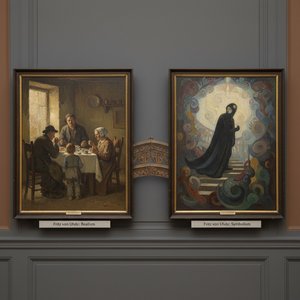
Fritz von Uhde: Bridging Realism & Symbolism in Late 19th-Century German Painting
Explore the captivating world of Fritz von Uhde, a pivotal German painter bridging Realism & Symbolism. Discover his plein-air techniques, religious themes, and influence on modern art. Learn about this fascinating artist at OriginalUniqueArt.