Peržiūrėti realaus dydžio版
 Siųsti
 Dalintis
 Išsamiau
 Vadovas

 Atsisiųsti
 Panašūs eksponatai
 Rentgeno spindulių nuotrauka
 Diaporama
 Statistika
Hercules with Omphale


 Rodyti daugiau
Giclée / Meno spausdinimas
Muziejų lygio „giclée“ arba drobos spausdinimas: greita gamyba ir lankstios apdailos parinktys. ( Pirkti rankomis tapytą reprodukciją Perejti prie skaitmeninių vaizdų)




P118B €10

P118H €10

P118W €10

P438Z €10

P508JH €12

P508YH €12

P805H €10

P805Z €10

P919BZ €10

P919G €10

P919XJ €10

P959ZH €10

P968JZ €12

W106C €8

W218G €10

W218JH €8

W218Y €10

W307PJ €10

W316G €10

W316PJ €8

W316Y €10

W398PJ €8

W4111J €10

W500HY €15

W500JH €15

W692G €12

W849H €8

W940BG €15

W953PJ €8




Pasirinkite iš mūsų nustatytų dydžių, atitinkančių originalaus meno kūrinio proporcijas.

Įveskite jums reikiamą plotį ir aukštį, kad atvaizdas derėtų prie jūsų rėmo ar sienos. Spausdiną galima tik sumažinti, bet nepadidinti virš originalaus paveikslėlio dydžio, todėl keičiant proporcijas, dalis vaizdo prarandama. Prieš spausdinimą atsiųsime jums skaitmeninį maketą patvirtinimui. Šioje puslapio nuotraukoje matomas pjūvis nėra tikslus – jį rodo tik maketas.
Pristatymas visame pasaulyje () per 2 weeks, o ne įprastas 4/5 savaičių laikotarpis. (22 spalis)

Nemokamas greitasis pristatymas visame pasaulyje

Aukštos kokybės lininis drobė

Pilnas siuntimo draudimas

Muitinės mokesčių grąžinimo garantija

Tikro spalvų atitikimo garantija

100 dienų grąžinimo politika (tik esant įtaigoms)

100% pinigų grąžinimo garantija

Nuolaida dideliems užsakymams
 Stiklo variantas prieinamas tik pasirinkus dydį iki 110 cm

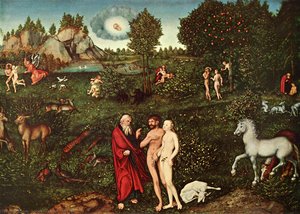
Hercules with Omphale
Giclée / Meno spausdinimas
Reprodukcijos dydis
-


Visų pasirinktų variantų kaina
€ 70
A Tale of Strength and Servitude: Lucas Cranach’s Hercules with Omphale
Lucas Cranach the Elder's "Hercules with Omphale," painted around 1548, is more than just a portrait; it’s a masterful distillation of Greek mythology interwoven with humanist ideals and skillfully executed in the distinctive style of the Saxon Renaissance. The painting depicts Hercules—the legendary hero famed for his unparalleled physical prowess—engaged in an act of humbling servitude: spinning wool alongside Omphale, Queen of Lydia, a gesture that encapsulates the central theme of the artwork – the paradoxical triumph of vulnerability over dominance.- Subject Matter and Narrative Context: Cranach’s depiction draws directly from Apollonian mythology, specifically Euripides' tragedy “Hercules and Omphale.” The myth recounts how Hercules, weary after his labors, was captured by Omphale and forced to adopt Lydiaian customs, including spinning wool – an occupation deemed utterly unsuitable for a titan of strength. This reversal serves as a potent commentary on the limitations of power and the transformative potential of accepting humility.
- Style and Technique: Cranach’s style is characterized by its meticulous realism combined with idealized beauty—a hallmark of German Renaissance art. He employs oil paint on panel, applying thin glazes to achieve luminous color palettes and subtle tonal gradations. The artist's masterful brushwork captures the textures of fabric and skin with remarkable accuracy, while simultaneously conveying a sense of grace and elegance.
Symbolism: Beyond Mythological Narrative
The painting overflows with symbolic significance that extends far beyond its immediate mythological narrative. Hercules’ spinning wheel represents not merely an act of domestic labor but symbolizes the relinquishment of ego and the acceptance of a lower status—a deliberate stripping away of his heroic identity. Omphale, portrayed as regal yet receptive, embodies feminine wisdom and compassion. Her gaze towards Hercules suggests admiration for his noble spirit despite his apparent weakness.Emotional Impact: A Meditation on Transformation
“Hercules with Omphale” transcends mere visual representation; it evokes a profound emotional response in the observer. The painting compels contemplation on themes of humility, transformation, and the acceptance of limitations—concepts that resonated deeply within humanist circles of the time. Cranach’s ability to convey psychological depth through subtle gestures and expressions contributes significantly to the artwork's enduring power.Concluding Remarks
Lucas Cranach's "Hercules with Omphale" stands as a testament to the Renaissance artist’s genius – a captivating blend of mythology, technique, and humanist philosophy. It is an artwork that invites viewers to consider the complexities of human experience and celebrates the transformative potential inherent in embracing vulnerability. Its enduring beauty and profound symbolism ensure its continued appreciation for generations to come.问答 (or more naturally for a website heading): Klausimai ir atsakymai
Kur galiu rasti „Hercules with Omphale“ vadovą?
Gidas apie „Hercules with Omphale“ yra šio kūrinio Gidas puslapis – spausdinamas informacinį lapelis, kuriame pateikiamas kūrinys su antrašte, autorių nurodymu bei duomenų lentele (autorius, datos, technika, originalus dydis, kolekcija).
Kaip rasti panašių kūrinių kaip „Hercules with Omphale“, autorius – Lukaso Kranacho Vyresniojo Vardas?
Darbai, panašūs į „Hercules with Omphale“, yra pateikti kūrinio Panašūs kūriniai puslapyje.
Kur ir kokiam tikslui rekomenduojamas kūrinys „Hercules with Omphale"]?
Naudojimas (Accent) ir erdvė (Living Room) yra du rekomendacijos, nurodyti šiam kūriniui „Hercules with Omphale“, autorius – Lukaso Kranacho Vyresniojo Vardas.
Autoriaus biografija
Lucas Cranach the Elder
Lucas Cranach the Elder, born in Kronach, Germany around 1472, stands as a pivotal figure of the German Renaissance. His life unfolded during a period of immense religious and political upheaval, and his art became inextricably linked to both the burgeoning Protestant Reformation and the opulent courts he served. Initially trained by his father, Hans Maler, Cranach’s early artistic development remains somewhat shrouded in mystery, though influences from South German masters are evident in his evolving style. He quickly distinguished himself not merely as a skilled craftsman but as an artist capable of capturing psychological depth alongside technical precision – qualities that would soon draw the attention of powerful patrons. In 1504, he entered the service of Frederick III, Elector of Saxony, a relationship that would define much of his career and provide him with both stability and access to influential circles. This appointment as court painter in Wittenberg wasn’t simply about producing decorative works; it placed Cranach at the very heart of one of the most transformative movements in European history.Early Life and Artistic Training
Little is known definitively about Lucas Cranach's formative years, but evidence suggests he received a comprehensive artistic education from his father, Hans Maler—a respected painter and craftsman who practiced in Kronach and Nuremberg. Hans Maler instilled in Lucas a meticulous attention to detail and a mastery of traditional techniques – skills that would serve as the foundation for Cranach’s subsequent artistic endeavors. While biographical information remains scarce, scholars believe Cranach's exposure to the artistic traditions of Nuremberg—particularly the influence of Albrecht Dürer—contributed significantly to his stylistic development. Dürer’s pioneering use of engraving and printmaking techniques undoubtedly shaped Cranach’s approach to visual communication, fostering a fascination with precision and clarity that would characterize much of his oeuvre. The workshop environment fostered by Hans Maler instilled in Lucas not only technical proficiency but also an understanding of the collaborative process—a practice that would become central to Cranach's artistic career.Service to Frederick III and Wittenberg
Cranach’s ascension to prominence began with his appointment as court painter to Frederick III, Elector of Saxony, a patronage that proved remarkably fruitful both artistically and financially. Frederick III recognized Cranach’s talent for portraiture and commissioned numerous portraits of himself and members of the Saxon nobility—works that exemplify Cranach's stylistic innovations and demonstrate his ability to convey psychological nuance alongside technical virtuosity. Wittenberg, where Cranach served as court painter during Luther’s tenure, became a crucible of artistic and intellectual ferment—a place where Cranach wrestled with theological debates and engaged in dialogues with leading humanist thinkers. This engagement with the Reformation profoundly influenced Cranach's artistic vision, prompting him to explore themes of faith, morality, and human dignity—subjects that would permeate his paintings and woodcuts throughout his career. The patronage of Frederick III provided Cranach with access to resources and opportunities unavailable to many other artists of his time—allowing him to establish a thriving workshop and produce an astonishingly diverse body of work.Style and Technique: Northern Renaissance Elegance
Lucas Cranach’s artistic style is characterized by its refined elegance and meticulous attention to detail—qualities that align perfectly with the aesthetic sensibilities of the Northern Renaissance. He employed a distinctive technique combining oil painting, woodcut, and engraving—a combination that enabled him to achieve remarkable visual effects while maximizing accessibility through affordable prints. Cranach's figures possess elongated proportions—a stylistic convention reflecting influences from Flemish masters—and are rendered with subtle shading and modeling that convey a sense of depth and realism. His use of color is vibrant yet restrained—creating harmonious compositions that prioritize clarity and balance. The artist’s meticulous rendering of drapery—particularly in portraits—demonstrates his mastery of traditional techniques and underscores the importance he placed on conveying visual accuracy. Cranach's woodcuts, in particular, stand out for their expressive power—capturing fleeting moments of emotion with remarkable immediacy.Legacy and Influence
Lucas Cranach the Elder died in 1553, leaving behind an unparalleled artistic legacy that continues to inspire admiration and scholarly inquiry. He was a master of portraiture, a skilled interpreter of religious themes, and a shrewd businessman who understood the transformative potential of visual communication. His work not only reflects the cultural and intellectual landscape of his era but also actively shaped it—particularly through his engagement with the Protestant Reformation and his contribution to the dissemination of humanist ideas. Cranach’s influence extended far beyond Wittenberg and Saxony—reaching artists across Europe and establishing him as one of the most celebrated figures of the German Renaissance. His stylistic innovations—including elongated proportions, vibrant colors, and meticulous attention to detail—became hallmarks of Northern Renaissance art—and his legacy persists in the works of subsequent generations of painters. Cranach’s enduring fascination with mythology—evident in paintings depicting Venus and other classical deities—demonstrates his intellectual curiosity and underscores his commitment to exploring universal themes of beauty, love, and human aspiration. He remains a testament to the power of artistic vision—a figure whose work continues to captivate audiences worldwide.
Lukaso Kranacho Vyresniojo Vardas
1472 - 1553 , Vokietija
Trumpa informacija apie kūrėją
- Artistic Movement Or Style: Nordrenaissance
- Artists Or Movements Influenced By This Artist: ['Martin Luther']
- Artists Who Influenced This Artist: ['Hans Maler']
- Date Of Birth: Kronach, Deutschland
- Date Of Death: 1553
- Full Name: Lucas Cranach der Ältere
- Nationality: Deutsch
- Notable Artworks:
- Jagd der Hirsche
- Selbstbildnis
- Ankündigung an Joachim
- Place Of Birth: Deutschland
Susiję straipsniai

Aliejinės tapybos paveldas drobėje: technika, istorija ir šiuolaikinės praktikos subtilybės
Atraskite aliejinės tapybos paslaptis! Istorija, technika, drobės pasirinkimas ir šiuolaikinė praktika. Patarimai meno kolekcionieriams ir kūrėjams iš ekspertų.

The Enduring Power of Painting: A Historical & Contemporary Exploration of Form and Emotion
Explore the rich history & enduring techniques of oil painting with OriginalUniqueArt. Discover masterpieces, learn about art collecting, and find authentic handmade reproductions crafted by skilled artists.
The Timeless Charm of Oil on Board: Reimagining Texture and Light through the Impressionist Lens
Discover the profound intimacy of oil on panel. Explore how Impressionist masters used rigid supports to capture light, texture, and impasto depth through exquisite, handmade oil reproductions for discerning collectors.

Oil on Canvas: A Historical & Technical Exploration of a Timeless Artistic Medium
Explore the rich history & enduring techniques of oil painting on canvas. Discover the science behind its longevity, conservation practices, and contemporary relevance. Expert insights for art enthusiasts.

The Enduring Legacy of Oil on Canvas: Technique, History & Aesthetic Impact
Explore the rich history & techniques of oil painting – from Renaissance masters to Impressionism. Discover pigments, layering methods, and why this timeless medium endures. Expert insights for artists & art enthusiasts.