Teksto dydis

() ·

Jūsų paties, rankumių darbas

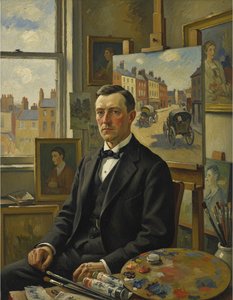
Self-portrait

Rankų darbo aliejinės reprodukcijos

Rankiniu būdu tapytas aliejus ant droblio jūsų pageidaujamame dydį ir rėmuose – tai mūsų menininkų pagal užsakymą sukurtas darbas. ( Perjungti į spausdinamus版作品 Perejti prie skaitmeninių vaizdų)

Kolekcinio objekto aprašas

A meticulously crafted self-portrait by Sir Lawrence Alma Tadema, reflecting Victorian artistic ideals and showcasing his dedication to realism and psychological depth. Presented to the Royal Academy alongside "The Golden Hour," it embodies the era's fascination with capturing inner contemplation amidst formal conventions.

Autoriaus biografija

Lotras Alma Tadema buvo XIX amžiaus viktorijinis dailėjas, žinomas savo įmantriomis Romos interjero dekoracijomis ir kruopščiu klasikiniu detalėmis – meistras šviesai ir atmosferai! Atraskite jo paveldą.

nuo ·

1 skyrius

Kokio dydžio turėtų būti?

Slinkite, kad pakeistumėte dydį; kairėje pusėje esančiame paveikslėlyje rodomas tikrasis rėmo plotis. Originalios proporcijų išlaikomos.

Standartinis dydis
pagal užsakymą
CM
INCH

Pasirinkite iš mūsų nustatytų dydžių, atitinkančių originalaus meno kūrinio proporcijas.

plotis
aukštis

Įveskite jums reikiamą plotį ir aukštį, kad paveikslas atitiktų jūsų rėmą ar sieną. Kadangi šis darbas yra rankinio darbo, siekiant išgauti kitokios formos dydį, paveikslas gali būti šiek tiek didesnis (nuo kraštų bus palikta daugiau erdvės) arba mažesnis – pasirinkite jums patogiausią variantą. Prieš pradedant tapyti, atsiųsime jums skaitmeninį maketą patvirtinimui. Šioje puslapio nuotraukoje matomas vaizdas nėra galutinis rezultatas – jį parodys tik sukurtas maketas.

2 skyrius

Kokia būda yra siunčiamas?

Pasirinkite ištempto drobės kraštus

Pasirinkite rėmelį

Corner sample of the WhiteWrap canvas edge finish, stretched on solidus medžio

**Improved version:**
solidus medis bars
Baltas apasutojimas €1
Corner sample of the BlurSideWrap canvas edge finish, stretched on solidus medžio

**Improved version:**
solidus medis bars
Išblėstantis šonas €1
Corner sample of the ExtendedWrap canvas edge finish, stretched on solidus medžio

**Improved version:**
solidus medis bars
Išplėstinis €1
Corner sample of the P118B picture frame: lieto polistirolo detalės, 5 cm wide and 3 cm thick
P118B €10
Corner sample of the P118H picture frame: lieto polistirolo detalės, 5 cm wide and 3 cm thick
P118H €10
Corner sample of the P118W picture frame: lieto polistirolo detalės, 5 cm wide and 3 cm thick
P118W €10
Corner sample of the P438Z picture frame: lieto polistirolo detalės, 5.5 cm wide and 3.5 cm thick
P438Z €10
Corner sample of the P508JH picture frame: lieto polistirolo detalės, 7 cm wide and 3.5 cm thick
P508JH €12
Corner sample of the P508YH picture frame: lieto polistirolo detalės, 7 cm wide and 3.5 cm thick
P508YH €12
Corner sample of the P805H picture frame: lieto polistirolo detalės, 5 cm wide and 3.5 cm thick
P805H €10
Corner sample of the P805Z picture frame: lieto polistirolo detalės, 5 cm wide and 3.5 cm thick
P805Z €10
Corner sample of the P919BZ picture frame: lieto polistirolo detalės, 7 cm wide and 3.5 cm thick
P919BZ €10
Corner sample of the P919G picture frame: lieto polistirolo detalės, 7 cm wide and 3.5 cm thick
P919G €10
Corner sample of the P919XJ picture frame: lieto polistirolo detalės, 7 cm wide and 3.5 cm thick
P919XJ €10
Corner sample of the P959ZH picture frame: lieto polistirolo detalės, 5 cm wide and 3 cm thick
P959ZH €10
Corner sample of the P968JZ picture frame: lieto polistirolo detalės, 6 cm wide and 4 cm thick
P968JZ €12
Corner sample of the W106C picture frame: solidus medžio

**Improved version:**
solidus medis, 5 cm wide and 3 cm thick
W106C €8
Corner sample of the W218G picture frame: solidus medžio

**Improved version:**
solidus medis, 5 cm wide and 3 cm thick
W218G €10
Corner sample of the W218JH picture frame: solidus medžio

**Improved version:**
solidus medis, 5 cm wide and 3 cm thick
W218JH €8
Corner sample of the W218Y picture frame: solidus medžio

**Improved version:**
solidus medis, 5 cm wide and 3 cm thick
W218Y €10
Corner sample of the W307PJ picture frame: solidus medžio

**Improved version:**
solidus medis, 6 cm wide and 3 cm thick
W307PJ €10
Corner sample of the W316G picture frame: solidus medžio

**Improved version:**
solidus medis, 6 cm wide and 3 cm thick
W316G €10
Corner sample of the W316PJ picture frame: solidus medžio

**Improved version:**
solidus medis, 6 cm wide and 3 cm thick
W316PJ €8
Corner sample of the W316Y picture frame: solidus medžio

**Improved version:**
solidus medis, 6 cm wide and 3 cm thick
W316Y €10
Corner sample of the W398PJ picture frame: solidus medžio

**Improved version:**
solidus medis, 5 cm wide and 3 cm thick
W398PJ €8
Corner sample of the W4111J picture frame: solidus medžio

**Improved version:**
solidus medis, 6.5 cm wide and 3.5 cm thick
W4111J €10
Corner sample of the W500HY picture frame: solidus medžio

**Improved version:**
solidus medis, 7 cm wide and 5 cm thick
W500HY €15
Corner sample of the W500JH picture frame: solidus medžio

**Improved version:**
solidus medis, 7 cm wide and 5 cm thick
W500JH €15
Corner sample of the W692G picture frame: solidus medžio

**Improved version:**
solidus medis, 8 cm wide and 4 cm thick
W692G €12
Corner sample of the W849H picture frame: solidus medžio

**Improved version:**
solidus medis, 5 cm wide and 3 cm thick
W849H €8
Corner sample of the W940BG picture frame: solidus medžio

**Improved version:**
solidus medis, 7.5 cm wide and 4.5 cm thick
W940BG €15
Corner sample of the W953PJ picture frame: solidus medžio

**Improved version:**
solidus medis, 6 cm wide and 3.5 cm thick
W953PJ €8
Corner sample of the H24-GOLD picture frame: medžio skulptūra su gipso sluosniu, 10 cm wide and 6 cm thick
H24-GOLD €30
Corner sample of the H24-SILVER picture frame: medžio skulptūra su gipso sluosniu, 10 cm wide and 6 cm thick
H24-SILVER €30
Corner sample of the H36-GOLD picture frame: medžio skulptūra su gipso sluosniu, 15 cm wide and 6.5 cm thick
H36-GOLD €45
Corner sample of the H36-SILVER picture frame: medžio skulptūra su gipso sluosniu, 15 cm wide and 6.5 cm thick
H36-SILVER €45
Rėmo peržiūra
Įrėmintas

Rėmo apvadas: . Bendras dydis su rėmu: .

3 skyrius

Kas jį vaizduoja ir ar turėtų kažkas pasikeisti?

Pavyzdžiai, ką galima pakeisti: pakeisti veidą nuotrauka su klientu; pridėti augintinį (pvz., pakeisti kucingą šuniu); įtraukti paslaptingą žinutę fone; pakeisti fono kraštotvę ar elementus.
Gavus užsakymą, OriginalUniqueArt.com komanda susisieks su klientu el. paštu dėl nurodymų ir pateiks preliminarią maketą.

Pristatymas visame pasaulyje () per 3–4 savaites, o ne įprastai – per 5 savaites. (8 lapkritis). Kokybė lieka nepakeičiama.

4 skyrius

Paskutinės detalės

Pavadinimo plokštelė, kaip muziejuje?

Išgraviruotos bronzinės plokštelės detalės

This elegant plaque features the artist's name and the title of the artwork, finely engraved for a timeless presentation.

It is made from bronze with a refined, elegant finish. The text is precisely laser-engraved for a sharp and permanent result. Measuring 9x2 cm, the plaque is compact yet easy to read. It's built to be durable and scratch-resistant, offering a professional, museum-quality look. Mounting is simple thanks to the included adhesive backing.

Skaidrios akrilo plokštelės informacija

The plaque includes essential engraved details such as the artist's name, the title of the artwork, the date it was created, the type of media used-like oil on canvas or watercolor-a brief description of the piece, and a QR code that links to the complete artwork information.

It is crafted from clear acrylic, offering a sleek, modern appearance. The text is UV-engraved in black to ensure strong visual contrast. With a size of 10x15 cm, it ensures optimal readability. It comes equipped with two metal hooks for secure wall mounting. The plaque is designed to be weather-resistant, making it suitable for various environments, and it includes interactive features that work seamlessly with smartphone scanning.

Juodos akrilo plokštelės informacija

This elegant plaque includes engraved information such as the artist's name, the title of the artwork, the date it was created, the type of media used (like oil on canvas or watercolor), a short description of the artwork, and a QR code for quick access to more information.

The plaque itself is made from refined black acrylic with a premium finish. The text is laser-engraved in white for high contrast and readability. Its size is 10x15 cm, designed to be easy to read. It comes with two metal hooks for professional mounting. The design is sleek and fits any interior style. It is also weather-resistant and durable, with built-in digital integration for mobile compatibility.

Apsauginis lakas?

Kada jums reikia?

5 skyrius

Jūsų paveikslas, tiksliai taip, kaip užsakėte

Self-portrait

Reprodukcijos technika

Reprodukcijos matmenys

-

Aukščiausios klasės meistras

Daugiau detalių, meistriškumo ir papildomo gamybos laiko

-

Reprodukcijos rėmėjimo parinktys

-

-

Dėl meno kūrinių ar reprodukcijų, kurių bet kuri pusė yra didesnė nei 105 cm (apie 41 inch), rėmas bus siunčiamas kaip išskaidytas surinkimo rinkinys. Šis metodas užtikrina saugų pristatymą ir apsaugo nuo transportavimo metu galimos žalos.

Reikalingas profesionalus surinkimas – tai nėra „pasidaryk pats“ (DIY) produktas.
Rinkinys turi būti surinktas, o drobė išplėsta naudojant patyrį profesionalų rėmininką, medžio klijus (nėra įtraukti į rinkinį), drobės plėšimo kleslę bei presas, kad rėmo rėžiai išliktų tiesūs, kol klijai išdžiūvus. Netinkamas surinkimas arba netolydus drobės įtampa gali negrįžtamai sugadinti meno kūrinį, todėl šie atvejai nėra užtraukiami mūsų garantijos.

  • Į komplektą įeina visi vientisos medienos elementai, tiksliai išpjauti pagal dydį.

  • Surmontinama naudojant pridėtus varžtus bei papildomai reikalingą medžio kliją kampų jungtims, kuris nėra pridėtas ir turi būti parinktas rėmininkui.

  • Reikalingi profesionalūs įrankiai, kurie nėra įtraukti į rinkinį: drobės kėlimo plytelės (stiprintuvai) ir klemiai, laikantys rėmo strygius tiesiu kampu, kol džiūsta lipas.

Svarbu:
Kampų jungtims reikalingi medžio klijai, barams reikia laikyti naudojant presas, kol klijai visiškai išdžiūvės, o surinktam rėmui įtempiamai privilgti būtinos drobės įtempimo plytযুক্ত. Šios priemonės į rinkinį neįtrauktos. Prieš užsakydami šio dydžio rinkinį, rekomenduojame pasimalkoti patyrusiu rėmų meistru.

Pavadinimo lentelė

-

-

Apsauginis lakas

Blizgus lakas (ryškina spalvas, saugo nuo šviesos ir drėgmės)

-

Personalizuoti kūrinį

Ką galima pakeisti (pavyzdžiui): pakeisti veidą klientui skirta nuotrauka; pridėti augintinį (pvz., katę pakeisti šuniu); įtraukti paslėptą žinutę fone; pakeisti fono kraštovaizdį ar elementus.

-

Skubiai

Pristatymas visame pasaulyje () per 3–4 savaites, o ne įprastai – per 5 savaites. (8 lapkritis). Kokybė lieka nepakeičiama.

-

Skubus pristatymas

Pristatymas visame pasaulyje () per 5 weeks. (15 lapkritis).

Įskaičiuota

Bendroji kaina

€ 268

Visos kainos suma € 268

Stiklo variantas prieinamas tik pasirinkus dydį iki 110 cm

Pridedama prie kiekvieno užsakymo

  • Nemokamas greitasis pristatymas visame pasaulyje
  • Aukštos kokybės lininis drobė
  • Pilnas siuntimo draudimas
  • Muitinės mokesčių grąžinimo garantija
  • Tikro spalvų atitikimo garantija
  • 100 dienų grąžinimo politika (tik esant įtaigoms)
  • 100% pinigų grąžinimo garantija
  • Nuolaida dideliems užsakymams

A Window Into Victorian Intimacy

The painting “Self Portrait”, executed by Sir Lawrence Alma Tadema, stands as a profound testament to Victorian artistic sensibilities, offering a meticulously crafted depiction of an artist grappling with both physical fragility and intellectual contemplation. Through the lens of Academic Impressionism, the work seeks to reconcile the spontaneity of Impressionist brushstrokes with the formal conventions of classical painting. In this piece, Tadema focuses on a carefully constructed interior scene, bathed in diffused natural illumination, reflecting a Victorian preoccupation with domestic tranquility and idealized beauty.

Technically masterful, the artist employs chiaroscuro—the dramatic interplay between light and shadow—to sculpt form and convey emotion, creating an atmosphere of quiet introspection. By layering thin glazes of oil paint over a toned canvas, Tadema achieves a remarkable luminosity and textural richness, capturing the subtle nuances of skin tone and reflected light. The inclusion of a mirror serves as a symbolic device representing self-awareness and artistic reflection, as the artist's gaze is directed inward, suggesting an engagement with his own identity and creative process amidst a rapidly changing cultural landscape.

Visual Elements of the Portrait

The painting depicts the artist, Sir Lawrence Alma Tadema, in a moment of artistic endeavor. The following details are visible within the composition:

  • The man is wearing a yellow hat and holding a paintbrush.
  • A mirror is located on the right side of the painting, which the artist appears to be looking into.
  • Another person can be seen in the background, possibly observing or interacting with the artist.

Klausimai ir atsakymai

Kiek šviesos, kaip atrodo, atspindi „Self-portrait“ spalvos?

Įrašytas kūrinio „Self-portrait“ – Lauras Alma Tademas šviesumas yra Dark.

Kokia yra „Self-portrait“ istorinė padėtis?

Dailos istorinė „Self-portrait“ – Lauras Alma Tademas klasifikacija – tai Victorian Realism stilius, 19th Century laikotarpiu.

Kur galiu peržiūrėti „Self-portrait“ išsamiai?

„Self-portrait“ – Lauras Alma Tademas peržiūra galima kūrinio Peržiūra interjere puslapyje.

Daugiau informacijos apie šį paveikslą

Peržiūrėti realaus dydžio版 Peržiūrėti AR realybėje Perjungti į spausdinamus版作品 Perejti prie skaitmeninių vaizdų Pasidalinti
Išsamiau Vadovas Pridėti į mėgstamiausius Atsisiųsti Panašūs eksponatai Rentgeno spindulių nuotrauka Automatinė diorama 问答 Statistika

Skaičiais

  • 29pasirinkimo rėmai
  • standartinės dydžio, savo proporcijomis
  • 5savaitės sugryžti ir pristatyti
Lauras Alma Tademas

Lauras Alma Tademas

1836 - 1912, Olandija

Trumpa informacija apie Lauras Alma Tademas

  • Artistic Movement Or Style: Viktorijinė malba
  • Artists Or Movements Influenced By This Artist: ['Romantizmas']
  • Artists Who Influenced This Artist: ['Louis Jan de Taeye']
  • Date Of Birth: Januaris 8, 1836
  • Date Of Death: Jūnė 25, 1912
  • Full Name: Lourens Alma Tadema
  • Nationality: Nyderlands
  • Notable Artworks:
    • A Kiss
    • Ask Me No More
    • A Coign of Vantage
  • Place Of Birth: Dronryp, Nyderlandai

Autoriaus biografija

Early Life and Artistic Training

Lourens Alma Tadema, later Lawrence Alma Tadema, was born in Dronryp, Friesland, Netherlands, on January 8, 1836. His father, Pieter Jiltes Tadema, a village notary, had three sons by his first marriage, and his mother, Hinke Dirks Brouwer, was the half sister of Pieter’s first wife. The Tadema family moved to Leeuwarden in 1838 where Pieter's position as a notary would be more lucrative. His father died when Laurens was four, leaving his mother with five children: Laurens, his sister, and three boys from his father’s first marriage. Hinke Brouwer had artistic leanings, and decided that drawing lessons should be incorporated into the children’s education. He received his first art training with a local drawing master hired to teach his older half-brothers. It was intended that Laurens would become a lawyer; but in 1851 he suffered a physical and mental breakdown. Diagnosed as consumptive; given only a short time to live, he was allowed to spend his remaining days at his leisure, drawing and painting. Left to his own devices he regained his health and decided to pursue a career as an artist. In 1852 he entered The Royal Academy of Antwerp where he studied early Dutch and Flemish masters, alongside absorbing the meticulous detail demanded by historical accuracy. During Laurens’ four years as a registered student at the Academy, he won several respectable awards. Before leaving school, towards the end of 1855, he became assistant to the painter Louis Jan de Taeye, whose courses in history and historical costume he had greatly enjoyed at the Academy. De Taeye introduced him to books that influenced his desire to portray Merovingian subjects early in his career. He was encouraged to depict historic accuracy in his paintings, a trait for which the artist became known. Laurens Tadema took this criticism very seriously, and it led him to improve his technique and to become the world’s foremost painter of marble and variegated granite.

Exploring Antiquity: Merovingian Mysteries and Egyptian Visions

Laurens Alma Tadema's artistic trajectory began with explorations of Merovingian themes—the Frankish dynasty that ruled after the fall of the Western Roman Empire. These early works, though demonstrating his burgeoning talent for historical detail and narrative composition, didn’t achieve the widespread acclaim he would later find. He was encouraged to depict historic accuracy in his paintings, a trait for which the artist became known. However Merovingian subjects did not have a wide international appeal, so he switched to themes of life in ancient Egypt, then to the classical world of Greece and Rome. This transition wasn't arbitrary; it reflected a growing public appetite for romanticized visions of antiquity, fueled by archaeological discoveries and a Victorian fascination with moral lessons drawn from the past. He was encouraged to depict historic accuracy in his paintings, a trait for which the artist became known. It is perhaps in this series that Laurens Tadema moved by the deepest feeling and the strongest spirit of romance. He was encouraged to depict historic accuracy in his paintings, a trait for which the artist became known.

The Architect of Atmosphere: Detail and Light

What truly set Alma Tadema apart was his unparalleled ability to create atmosphere. He wasn’t just painting objects; he was capturing the very *feeling* of sunlight on marble, the coolness of mosaic floors underfoot, the gentle murmur of fountains in a Roman atrium. This mastery stemmed from an obsessive attention to detail and a deep understanding of materials. He meticulously researched ancient architecture, furniture, and clothing, ensuring that every element within his compositions was historically plausible. But beyond accuracy, he possessed a remarkable talent for rendering light and texture. He wasn’t merely copying what he saw; he was transforming it into something luminous and emotionally resonant. His marble gleamed with a lifelike luminosity, his fabrics flowed with graceful realism, and his water shimmered with captivating clarity. This dedication to verisimilitude wasn’t merely about technical skill; it was about creating an illusion of reality so convincing that viewers felt transported to another time and place. He even went as far as to build miniature models of the settings he intended to paint, ensuring perfect perspective and architectural accuracy.

Victorian Fame and Legacy

Alma Tadema enjoyed immense popularity during his lifetime, becoming a household name and receiving numerous accolades, including knighthood in 1899. However, following his death in 1912, his work fell into relative obscurity. The changing tastes of the early 20th century favored more modernist styles, and Alma Tadema’s meticulous realism seemed out of step with the prevailing artistic trends. It wasn't until the 1960s that a renewed appreciation for his art began to emerge. Scholars and collectors rediscovered the beauty and technical brilliance of his paintings, recognizing him as a master of Victorian art and a significant figure in the history of classical representation. Today, his works are highly sought after by museums and private collectors worldwide, and his influence can be seen in contemporary artists who strive for similar levels of detail and atmospheric realism. He wasn’t just an artist; he was a cultural phenomenon, creating a visual language that continues to resonate today.

Influence Beyond Canvas

Alma Tadema's depictions of Roman life profoundly influenced popular perceptions of antiquity, shaping how generations imagined the world of emperors, gladiators, and philosophers. His meticulous attention to detail inspired costume designers for film and theater.Architects drew inspiration from his renderings of classical buildings.Writers incorporated his imagery into their descriptions of ancient Rome. He wasn’t just an artist; he was a cultural phenomenon, creating a visual language that continues to resonate today.

Trumpa informacija

  • Notable elements or techniques: Detailed realism; Mirror reflection
  • Location: Private Collection
  • Title: Self Portrait
  • Movement: Victorian Art
  • Medium: Oil on canvas

Karo viktorina

Kiekviename klausime yra tik vienas teisingas atsakymas.

Klausimas 1:
What is the primary subject matter of Alma-Tadema’s ‘Self Portrait’?
Klausimas 2:
In what year was the painting exhibited at the Royal Academy’s annual show?
Klausimas 3:
The artist included a straw hat in the self-portrait. What does this detail suggest about Alma-Tadema’s artistic practice?
Klausimas 4:
Alma-Tadema collaborated with Frederic Leighton on ‘The Golden Hour,’ which is also housed in the Royal Academy. What artistic movement did both artists represent?
Klausimas 5:
What stylistic characteristic distinguishes Alma-Tadema’s ‘Self Portrait’ from other portraits of the era?